

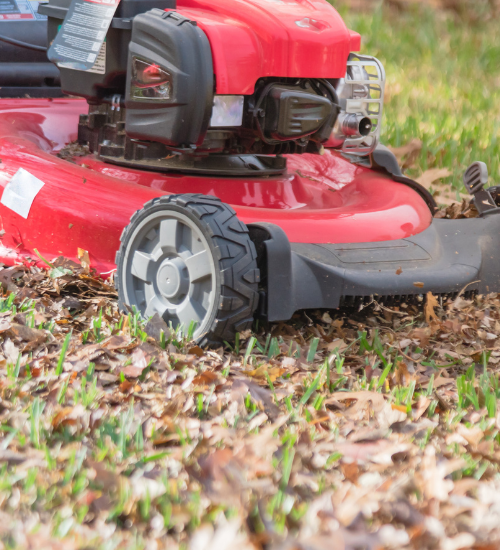
A blanket of autumn leaves doesn’t have to mean hours of raking and bagging. If you chop the leaves finely and keep the layer light, your mower can turn much of that seasonal cleanup into organic matter for the lawn.
The important part is knowing when to mulch, and when there are simply too many leaves to leave on the grass. Whole leaves or a thick layer of fragments can block light, while finely chopped leaves that settle between grass blades are much easier for the lawn to handle. Here’s how to mulch fall leaves safely, plus what to do with the extra.
Why mulch leaves into the lawn?
Leaves contain organic matter and nutrients. As finely chopped pieces break down, they contribute to soil health and can reduce the need for some supplemental fertilizer. Leaf mulching can also help preserve moisture and cover bare soil where weeds might otherwise germinate.
The aim isn’t to leave a thick layer of leaves sitting on top of the grass. It’s to cut them small enough that the fragments fall between the blades and onto the soil. If the lawn disappears beneath a solid mat, the leaves need another pass, or some of them need to be collected.
When to start leaf mulching
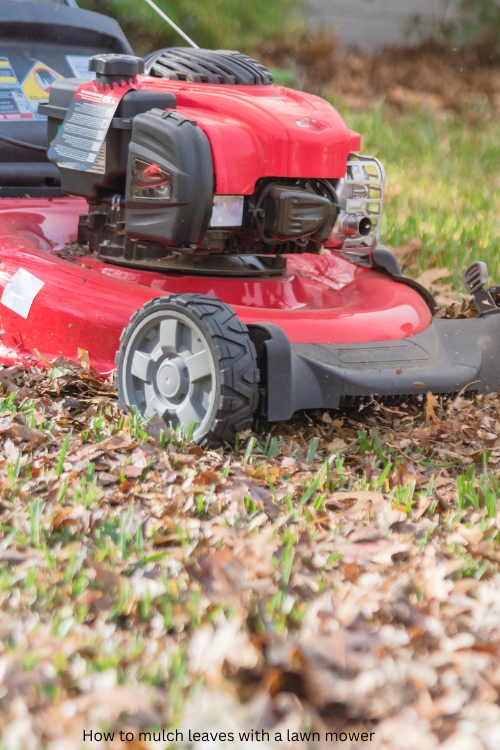
How to mulch leaves with a lawn mower
Begin when leaves start accumulating and the grass is still growing enough to recover from mowing. In many regions, that means several light mowings over the fall rather than waiting until every tree has dropped its leaves. The right timing depends on your local weather, the type of grass, and how quickly leaves are falling.
Try to mow when the leaves are dry. Wet leaves are harder to chop and may clump together, leaving uneven patches on the lawn. If rain has soaked the yard, give the leaves time to dry before mowing.
How to mulch leaves with a lawn mower
1. Check how much of the lawn is covered
A few scattered leaves are easy to mulch. For a heavier layer, use the grass as your guide: if you can still see much of the lawn through the leaves, there’s room to mow them in. If the leaves hide most of the grass, mulch part of the layer and collect the rest.
One practical benchmark from University of Minnesota Extension is to keep mulching while about half of the lawn surface remains visible. When less than half is visible, begin collecting the excess to compost elsewhere. Fall leaf mulching is good for your lawn
2. Set up your mower
A mulching mower is designed to cut leaves repeatedly, but a standard mower can work too. Raise the deck if the leaf cover is heavy, and remove the bagging attachment if you’re mulching in place. University of Connecticut Extension notes that a regular mower may need several passes, including passes in different directions, to chop leaves finely enough. Leaf Disposal & Mulch Mowing – University of Connecticut
Keep the mower blade sharp and follow the manufacturer’s operating and safety instructions. Don’t try to force a mower through a dense, wet pile.
3. Make a first pass, then inspect the result
Mow across the lawn once, then look at the fragments. If large pieces remain or the grass is still covered, make another pass in a different direction. Several light mowings during the leaf-drop season are often easier on the lawn than waiting and tackling a deep layer all at once.
As you mow, keep to the usual rule of removing no more than one-third of the grass blade at a time. If leaves are too deep to mow without cutting too much grass or leaving clumps, collect some of them instead. Leaf Disposal & Mulch Mowing – University of Connecticut
4. Make sure the fragments settle into the turf
After mowing, you should be able to see grass blades above the leaf pieces. If chopped leaves form a continuous layer that blocks the grass, make another pass or rake up the excess.
This check matters because sunlight still needs to reach the grass while it is actively growing. University of Connecticut Extension cautions that an overly thick layer or large fragments can block light. Leaf Disposal & Mulch Mowing – University of Connecticut
What to do with extra leaves
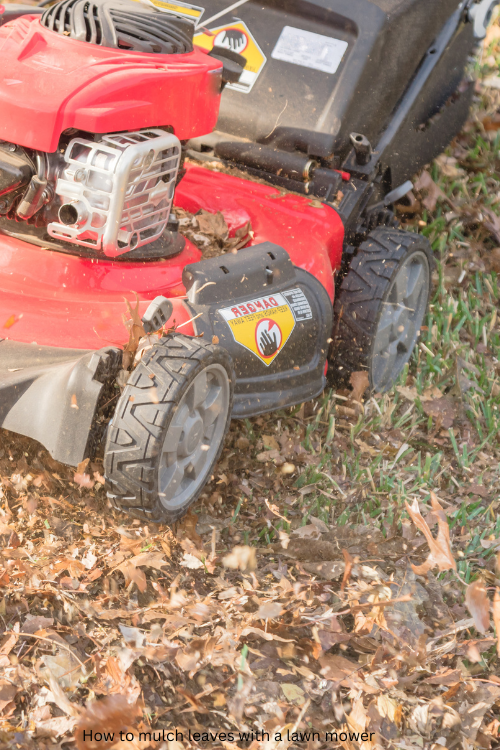
How to mulch leaves with a lawn mower
You don’t have to send the remainder to the curb. Shred extra leaves and use them in a compost pile, or spread them as mulch in garden beds. Leaves are carbon-rich “brown” material for compost, so they work best alongside nitrogen-rich “green” ingredients such as fresh plant trimmings or suitable kitchen scraps. Colorado State University Extension also describes using leaves in garden beds and as landscape mulch. Using Leaves in the Landscape | CSU
Keep leaf mulch from piling directly against plant stems or tree trunks. In garden beds, a loose layer of chopped leaves is easier to manage than a compressed mat. If you’re using leaves in a compost pile, mix them with other materials rather than leaving a thick, compacted stack.
Common leaf-mulching mistakes
Waiting until leaves cover the whole lawn. A heavy layer takes more passes and is more likely to leave clumps. Mow periodically as leaves fall.
Trying to mulch wet leaves. They can bunch up instead of spreading evenly. Wait for drier conditions when practical.
Leaving large leaf pieces behind. If fragments cover the grass, mow again or collect some of them.
Assuming every lawn can take the same amount. Lawn condition, grass growth, leaf size, and climate all affect what works. Watch the turf rather than relying on a fixed number of leaves or mowings.
Overlooking the mower’s limits. If it struggles or leaves a windrow of chopped leaves, stop and collect part of the layer before making another pass.
Should you mulch every leaf?
No. Mulching works best when you can chop the leaves finely and keep the lawn visible through the fragments. If leaves are very thick, wet, or too large for your mower to handle well, collect the excess and use it in compost or garden beds. That still puts the leaves to use without leaving the lawn smothered.
Conclusion
To mulch leaves into your lawn in fall, mow regularly while leaves are dry, make extra passes when needed, and check that the grass remains visible afterward. Leave a thin layer of fine fragments; collect the rest for compost or garden mulch. A quick inspection after each mow is the simplest way to turn fall leaves into a resource without burying the lawn beneath them.
Last modified: October 19, 2026
