

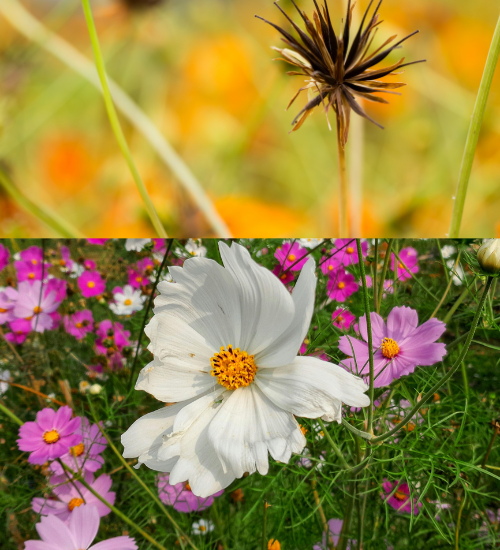
A fading cosmos bloom can hold the beginnings of next season’s flower bed. Saving the seeds is a simple task, but picking too early or storing damp seed can spoil the effort. The useful skill is learning to recognize a mature seed head, then giving the seeds enough time to dry before they go into storage.
This guide covers how to collect and store cosmos seeds from a home garden, including what to expect if your plant is a hybrid and how to do a small germination test before sowing.
Start with the right plants
If you want seedlings that resemble the flowers you grew, check the variety information before collecting. Open-pollinated varieties are generally a more predictable choice for saving seed. Seeds from hybrid plants may grow, but their offspring can vary in flower color, height, or other traits.
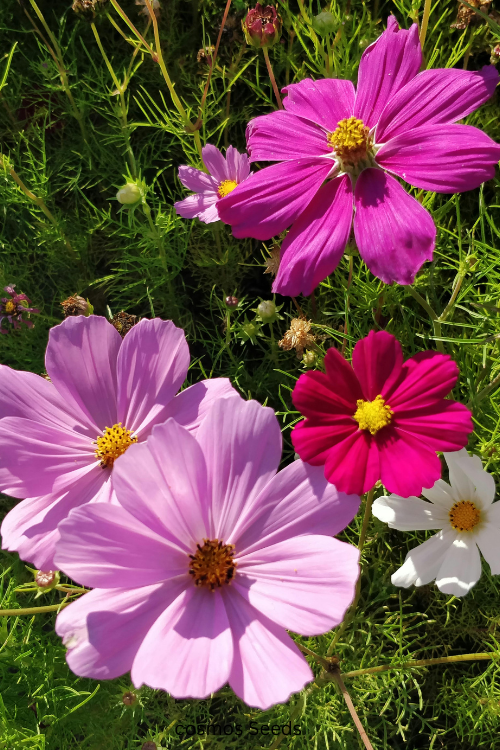
how to collect and store cosmos seeds
Choose healthy, vigorous plants with flowers you like. If a plant had serious disease or persistent problems, it is sensible to avoid saving its seed heads. Mark the selected plants while they are still flowering so you know which blooms to leave uncut.
Remember that seed-grown plants do not always repeat every feature of a named variety. If keeping an exact color or form matters, buying seed from a reliable source each year may be more dependable than relying on saved seed.
Know when cosmos seeds are ready
Cosmos blooms do not all finish at the same time. Leave a few selected flowers on the plant instead of deadheading every spent bloom. As the petals fade and fall, the center develops into a seed head. Wait for it to turn brown and dry rather than gathering it while it is still green or soft.
A mature head feels papery and dry, and its seeds may be close to loosening. But waiting too long can mean seeds scatter in wind or rain.
Check the plants every few days as seed heads mature. Harvest on a dry day when practical. If a head is nearly ready but rain is coming, you can cut it and let it finish drying indoors.
How to collect cosmos seeds
- Select a dry seed head. Look for a flower that has finished blooming and turned brown and papery.
- Hold a paper bag or tray beneath it. This catches loose seeds as you handle the head.
- Snip the stem below the head. Leave a short piece of stem attached so it is easy to hold and label.
- Collect different varieties separately. Place each type in its own labeled paper bag or envelope to prevent mixing.
- Gather only what you need. Leave some seed heads for wildlife or allow a few to self-sow if you want volunteers next season.
If you are worried about seeds dropping before you get back to the garden, place a loose paper bag around a nearly mature head and secure it gently. Check it often so the bag does not trap dampness around a wet flower head.
Dry the seed heads completely
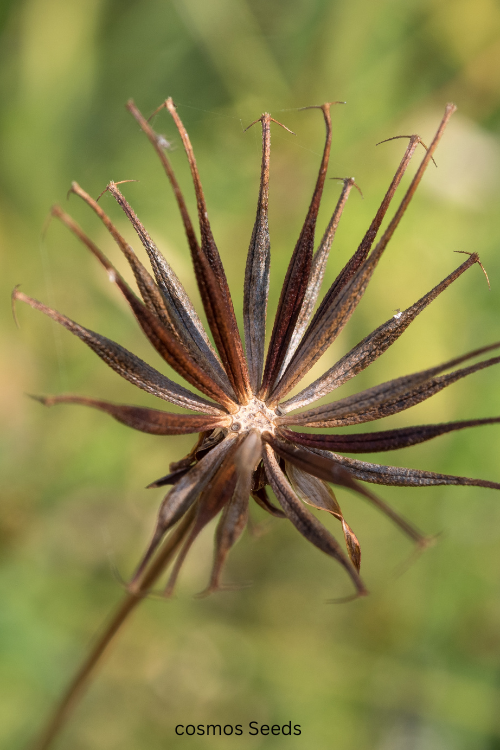
Bring the harvested heads indoors and spread them in a single layer on a tray, paper, or screen. Choose a dry, well-ventilated spot out of harsh direct sunlight. Keep the varieties labeled while they dry. Do not pile damp heads together; trapped moisture can encourage mold.
Wait until the heads and seeds feel dry before removing and storing them. Dry-seed flowers are commonly left on the plant until mature, then finished drying in a protected place if needed.
After drying, rub or crumble the seed head gently over a clean sheet of paper. Separate the seeds from large pieces of dry flower material. A little chaff is harmless for home sowing, but removing bulky debris makes it easier to see whether the seed is clean and dry.
Do not use heat to speed the process. Warm air from a heater or a hot windowsill can make conditions uneven and may damage seeds. Ordinary indoor airflow and patience are safer.
Store seeds in a cool, dry place
Put thoroughly dry seeds in a labeled paper envelope or another container that protects them from light and moisture. Write the flower name, variety if known, and the harvest year on the label. Then keep the packets in a cool, dark, dry location.
A sealed container can add protection from humidity, but only use it once the seeds are fully dry. If you store envelopes inside a jar or box, include clear labels on both the packet and the outer container. Keep the seeds away from warm cupboards, damp basements, and places where condensation can form.
Test a few seeds before sowing
If your saved packet is old or you are unsure whether the seeds stayed dry, test a small sample before filling a garden bed. Place several seeds between damp paper towels, put the towels in a loose container or bag, and keep them warm. Check every few days to see whether seeds begin to sprout.
A simple test does not guarantee every seed in the packet will germinate, but it gives you a practical signal. If few or none sprout, sow more densely or replace the seed rather than relying on that packet for a full display.
Sow when the weather suits cosmos
Cosmos are usually sown outdoors after the danger of frost has passed, though exact timing depends on the local climate and the species or variety. Use the seed packet’s depth and spacing instructions when available. Avoid sowing into cold, waterlogged soil; wait until the bed is workable and conditions are appropriate for the variety.
Keep the packet handy when planting. It can remind you which cosmos you saved and how those plants performed. If the seedlings vary from the parent flowers, note the differences; you may find a new favorite among them.
Common seed-saving mistakes
- Harvesting green heads: immature seed may not be ready to store or sprout.
- Waiting until all seeds have fallen: mature seed can disperse before you collect it.
- Storing damp seed: moisture can lead to mold and reduce the usefulness of the packet.
- Leaving labels off: unidentified seed is difficult to manage next spring.
- Assuming hybrids grow true: saved seeds from hybrids may produce varied offspring. How to save seeds from volunteer Cosmos
- Saving only from the first plant you see: choose healthy plants with traits you actually want to grow again.
Saving cosmos seed is a small end-of-season task with a satisfying payoff: a labeled packet of flowers you already know you enjoy. Let the heads mature, dry them fully, store them somewhere cool and dry, and test uncertain seed before you depend on it for next year’s garden.
Last modified: October 20, 2026
