

I like container plants that keep going through hot afternoons, bright decks, and reflected heat from brick, stone, or metal railings. You probably want the same thing: bold color, rich texture, and pots that still look fresh in late summer.
These 12 ideas help you skip the plants that burn out early. You will see strong bloomers, leafy fillers, and trailing choices that hold their shape, brighten your porch, and make every container feel full, lively, and worth the effort.
Why Containers Need Tough Plants
Full-sun containers need plants that can handle heat, fast drying soil, and long weeks of bright light.
I have learned that pots live by different rules than garden beds. Their soil warms up faster, dries faster, and gives roots less room, therefore plant choice matters more if I want color that lasts instead of a tired planter by July.
Material also changes the pressure on your plants. Terra-cotta breathes and dries quickly, dark plastic heats up, and metal containers can get hot enough to stress roots on very bright days.
12 sun loving plants to consider
- Geranium
Steady blooms, neat shape, and strong heat tolerance make this one of my first picks for reliable summer color. - Lantana
Clusters of bright flowers keep coming in heat, and butterflies love it. It also handles dry spells better than many annuals. - Petunia
Great for spill and color. Newer varieties bloom hard through summer and recover well after rain. - Calibrachoa
Small bell-shaped flowers cover the plant for months. It works well in hanging baskets and mixed pots. - Zinnia
Bold blooms and upright growth give containers a cheerful, cottage-garden look. It loves hot, bright spots. - Portulaca
Fleshy leaves store water, therefore this plant shines in dry, sunny containers. Its flowers open wide in direct sun. - Verbena
Low, spreading growth fills edges fast. It keeps blooming well with regular trimming. - Angelonia
Tall flower spikes add height and movement. It looks fresh even in steamy summer weather. - Salvia
Spikes of purple, blue, red, or white attract pollinators and stand up well to heat. - Marigold
Easy color, tidy growth, and strong sun tolerance make marigolds a simple win for small pots. - Coleus
Many sun-tolerant types now hold rich leaf color in bright light. Foliage gives contrast all season. - Sweet potato vine
This is one of my favorite trailing fillers because it grows fast and adds strong leaf texture.
Why people love it
- Less summer collapse
Tough plants keep their shape longer, even when watering is not perfect every single day. - Better color payoff
You get fuller pots, brighter flowers, and stronger texture from early summer into fall. - Lower maintenance stress
Plants that can take heat and wind need less rescuing after every hot spell.
When it’s a good idea
- ✓ Hot decks and patios
Reflective surfaces raise the temperature around containers, so sturdy plants do much better. - ✓ Busy watering schedules
If I miss a watering now and then, I want plants that bounce back fast. - ✓ Long summer displays
Choose tougher plants when you want one planting to carry the whole season.
One smart tip
Match plant to pot material.
Use the toughest, most drought-tolerant plants in terra-cotta or small containers because they dry out fast. Save thirstier bloomers for larger pots or glazed containers that hold moisture longer.
What Makes A Plant Last
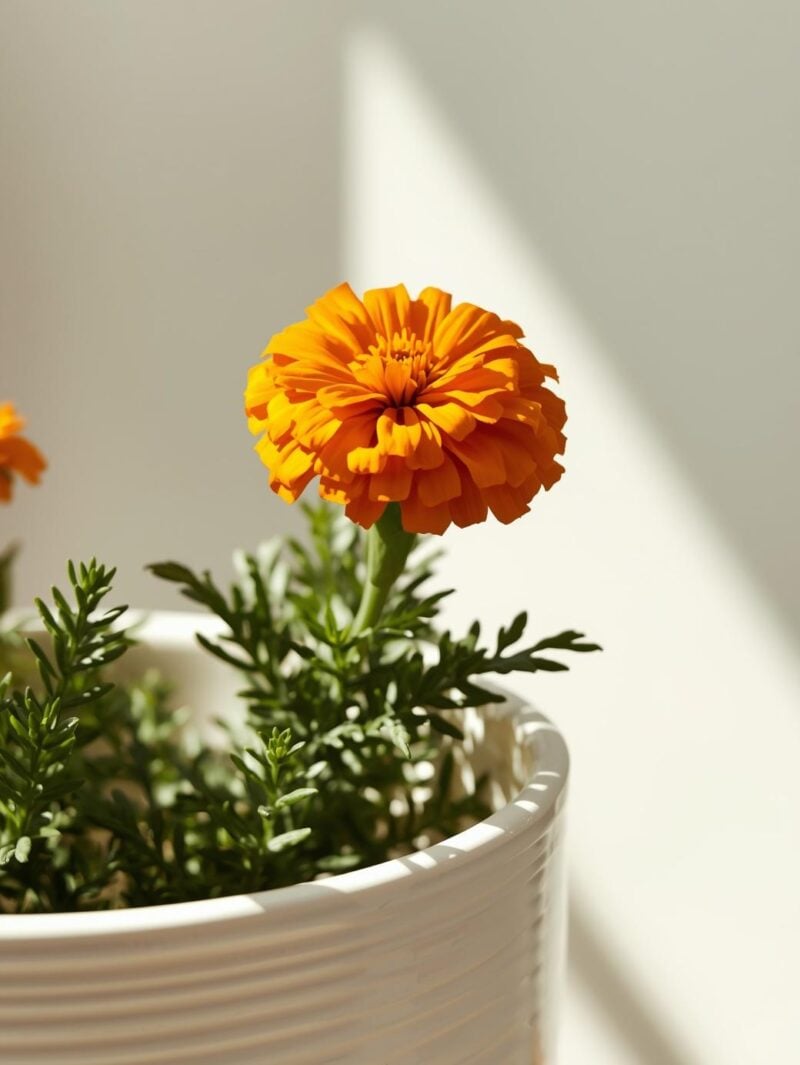
A lasting container plant keeps looking good through heat, repeat blooming, and the everyday stress of pot life.
For me, “lasting” does not just mean staying alive. I want a plant that still looks intentional in August, with good leaf color, steady flowers, and growth that does not turn wild or thin after a few hot weeks.
Heat tolerance matters first because full sun can be harsh from noon to late afternoon. A plant that loves bright light in the ground may still struggle in a pot if its roots get too warm or too dry.
Repeat blooming is another big part of strong performance. Geranium, lantana, angelonia, verbena, and calibrachoa keep producing when I feed them regularly and remove spent blooms or straggly stems.
Tidy growth matters too. Some plants bloom well but become messy, floppy, or bare in the center, and that weakens the whole container design. I look for plants that stay compact, branch well, or respond well to light trimming.
Resilience is what ties it all together. Good container plants recover after wind, missed watering, or a blast of heat because they have tougher leaves, stronger roots, or a growth habit that keeps filling in.
Why people love it
- Longer beauty window
The right plant keeps color and shape for months, not just for a short early-summer peak. - Cleaner-looking pots
Tidy growers need less cutting back, therefore containers stay polished with less work. - Better value
If a plant flowers for a long season, every container dollar goes further.
When it’s a good idea
- ✓ You want low-fuss color
Choose repeat bloomers and strong foliage plants when you prefer easy upkeep. - ✓ Your containers sit in all-day sun
Plants with proven heat tolerance handle long bright stretches much better. - ✓ You build mixed planters
Long-lasting plants help the whole design stay balanced instead of falling apart midseason.
One smart tip
Judge leaves before flowers.
I always check the foliage first because healthy leaves tell you how a plant handles stress. Thick, glossy, fuzzy, or slightly leathery leaves often point to better sun and heat tolerance in containers.
Quick Comparison Table
This table helps you compare the 12 best options fast, so you can build containers with more confidence.
A quick side-by-side view saves time at the garden center. I use it to balance bloom power, watering needs, height, and spread before I mix plants in one pot.
Some plants shine as thrillers, some as fillers, and some as trailers. Also, a few work in more than one role, which makes them even more useful for sunny container gardens.
| Plant | Light Needs | Mature Size | Watering Frequency | Bloom Period | Why It Works In Containers |
|---|---|---|---|---|---|
| Geranium | Full sun | 12-18 in tall, 12-16 in wide | Moderate | Late spring to frost | Compact, colorful, heat tolerant |
| Lantana | Full sun | 12-24 in tall and wide | Low to moderate | Summer to frost | Handles heat and dry soil very well |
| Petunia | Full sun | 8-14 in tall, 18-30 in wide | Moderate | Spring to frost | Heavy bloom and strong trailing habit |
| Calibrachoa | Full sun | 6-10 in tall, 12-24 in wide | Moderate | Spring to frost | Dense flowers, great for edges and baskets |
| Zinnia | Full sun | 10-24 in tall, 8-18 in wide | Moderate | Summer to frost | Bright upright blooms with strong summer color |
| Portulaca | Full sun | 4-8 in tall, 10-18 in wide | Low | Summer to frost | Loves heat, dry soil, and small pots |
| Verbena | Full sun | 6-12 in tall, 12-24 in wide | Moderate | Late spring to frost | Spreads well and reblooms after trimming |
| Angelonia | Full sun | 12-18 in tall, 10-14 in wide | Moderate | Summer to frost | Vertical shape and strong heat tolerance |
| Salvia | Full sun | 12-24 in tall, 10-18 in wide | Moderate | Late spring to frost | Pollinator-friendly spikes stay neat in pots |
| Marigold | Full sun | 8-18 in tall, 8-14 in wide | Moderate | Late spring to frost | Easy care and strong nonstop color |
| Coleus | Sun to part sun | 12-24 in tall, 12-18 in wide | Moderate | Grown for foliage | Rich leaf color adds contrast all season |
| Sweet potato vine | Full sun | 6-12 in tall, 24-48 in wide | Moderate to high | Grown for foliage | Fast trailing growth fills large containers |
Why people love it
- Easy planning
The table helps you compare size and care needs before you buy anything. - Better plant pairings
You can spot which plants share similar watering needs, and that makes mixed pots easier to manage. - Less guesswork
Seeing bloom season and growth habit together helps avoid weak combinations.
When it’s a good idea
- ✓ You shop with a list
A quick chart keeps you focused and stops random plant choices. - ✓ You mix thrillers, fillers, and trailers
Size and spread are easier to judge side by side. - ✓ You care for several containers
Matching plants by water needs makes daily care simpler.
One smart tip
Group by thirst level.
Put drought-tolerant plants like portulaca and lantana together, and keep thirstier choices like petunia or sweet potato vine in their own pots. That one move helps prevent both soggy roots and dried-out flowers.
1. Geranium For Reliable Color
Geranium gives containers a long season of color without turning wild or hard to manage.
I start with geranium because it is dependable. It handles heat well, keeps a rounded shape, and still looks tidy in a pot after many weeks of sun, which is not true for every flowering annual.
The flowers come in bold reds, pinks, coral shades, salmon tones, and clean white. The leaves add value too. Their soft, scalloped shape gives the pot body even between bloom cycles, therefore the planter never feels empty.
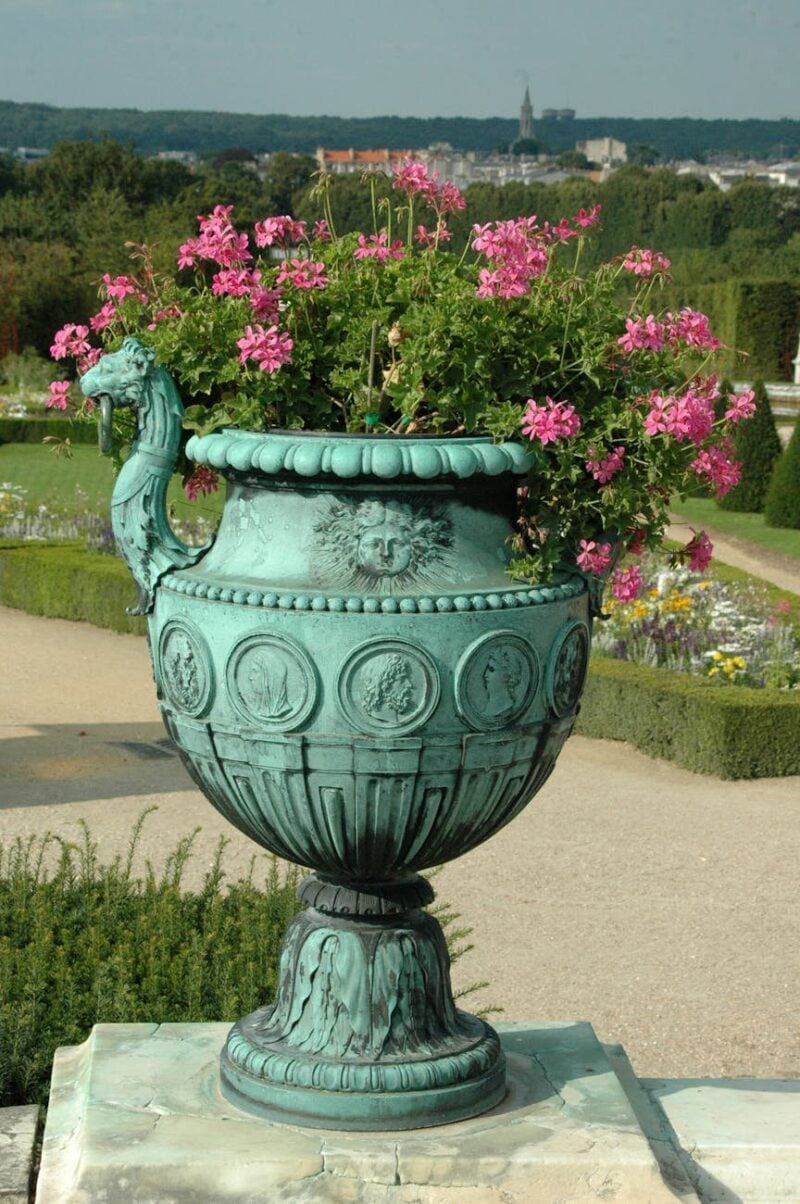
Geranium also works in many styles. I use it in classic urns, simple porch pots, window boxes, and mixed planters with trailing ivy, calibrachoa, or sweet potato vine. It brings structure, and it does not bully nearby plants.
Care is simple but steady. Give it full sun, decent drainage, and regular feeding. Deadheading helps, although newer varieties keep blooming well with only modest cleanup. If the plant stretches later in summer, a light trim can push fresh growth and another flush of flowers.
One small caution: geranium likes the soil to dry slightly between waterings. If it sits wet for too long, the roots can sulk and the bloom show slows down.
Why people love it
- Steady bloom power
Geranium keeps producing through long, bright summer weather with simple care. - Manageable size
It stays neat in containers, so pots look full without becoming crowded or floppy. - Classic style
The flower heads look crisp and cheerful, fitting both cottage and formal porch designs.
When it’s a good idea
- ✓ You want dependable color
This is a strong choice for front steps, patios, and entry containers that need to look good every day. - ✓ You prefer easy upkeep
Geranium does not ask for constant trimming, although feeding helps keep blooms coming. - ✓ You need a centerpiece plant
Its upright, rounded form works well as the main plant in medium pots.
One smart tip
2. Lantana For Hot Patios
A heat-loving bloomer that keeps going when many container flowers slow down.
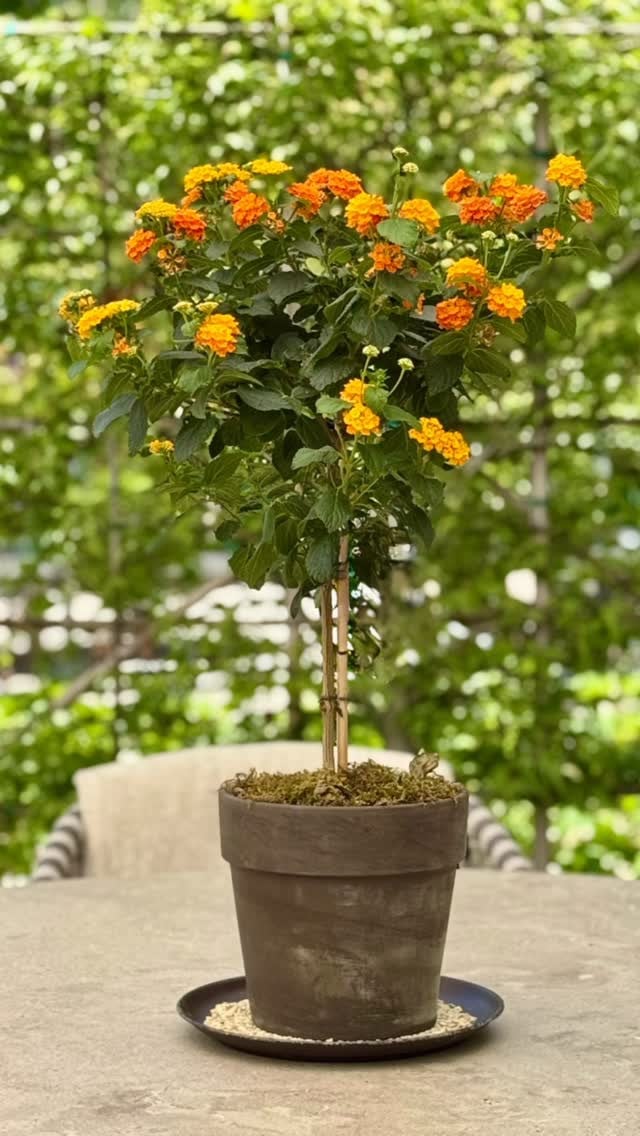
Lantana earns its place in sunny containers because it thrives in heat, keeps blooming for months, and does not panic when the soil dries a little. I reach for it when a patio gets reflected heat from stone, brick, or concrete. That is where weaker plants often fade.
The flower clusters are bright and busy, often mixing yellow, orange, pink, red, or white on one plant. Butterflies love it, which gives your containers more life and movement. However, lantana can spread wider than people expect, so it needs room and sharp drainage to stay at its best.
Why people love it
- Strong in real heat
Some flowers survive full sun. Lantana seems to enjoy it. That makes it a smart choice for exposed decks and hot patios. - Long bloom stretch
It flowers steadily through summer, and often into early fall. You get a full look for longer, therefore your pots do not feel tired halfway through the season. - Pollinator draw
Butterflies visit often, and bees do too. Your container becomes more than decoration because it also supports garden life.
When it’s a good idea
- ✓ Your patio bakes all day
Lantana handles harsh afternoon sun better than many soft annuals. - ✓ You miss a watering now and then
It still needs care, but it forgives light drought better than thirstier plants. - ✓ You want one plant to fill a pot
Many lantanas grow broad and rounded, so one plant can make a container look full fast.
One smart tip
Use a fast-draining mix.
Lantana hates sitting in soggy compost, especially in a container after summer rain. I use potting mix with extra perlite or grit, and I always choose a pot with open drainage holes. If the plant starts to look heavy or loose by midsummer, trim it back lightly. It will branch again and keep the shape tighter.
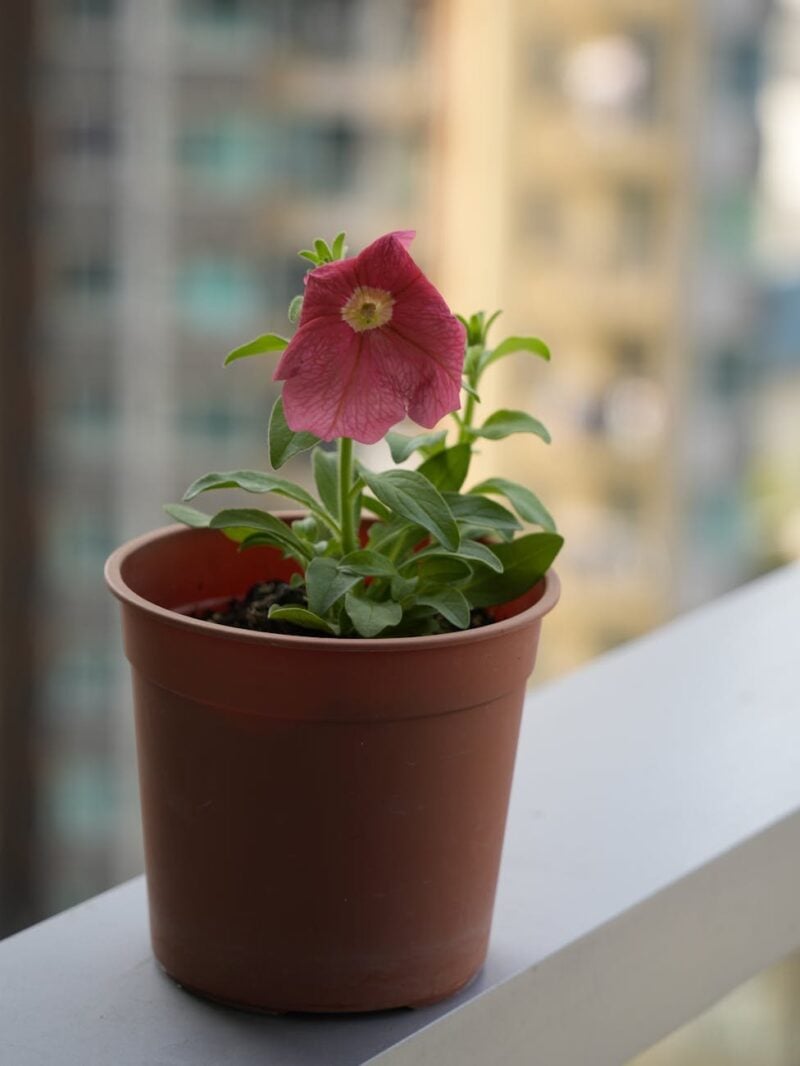
3. Petunia For Long Blooming Pots
A classic container flower that still earns its spot because modern types bloom hard for months.
Petunias work in full sun pots because they give big color with very little waiting time. A small plant can turn into a mound or spill of flowers by early summer, and newer varieties recover much better after heat and summer rain. I used to think petunias were high maintenance, but my view changed once I started using improved trailing and mounding types.
They also offer more style options than almost any other annual. You can go soft and simple with white or lavender, or choose stripes, deep purple, bright pink, or near-black shades for drama. Their one weakness is hunger. If you want nonstop bloom, feed them well and keep dead growth from building up in the center.
Why people love it
- Months of color
Petunias can flower from late spring into fall in the right conditions. That long season makes each pot work harder for the space it takes. - Huge color range
Few plants give you this many shades and patterns. It is easy to match them with your front door, furniture, or other plants. - Better weather recovery
Modern petunias handle rough summer weather better than older kinds. A storm may flatten them for a day, but many bounce back quickly.
When it’s a good idea
- ✓ You want a bold focal pot
Petunias can carry a whole container with color alone, especially in wide bowls or window boxes. - ✓ You enjoy seasonal updates
They come in so many colors that you can refresh your look every year without changing your basic pot setup. - ✓ Your container gets six or more hours of sun
Petunias bloom best in strong light, and they show it fast.
One smart tip
Feed every week in midsummer.
Petunias bloom so heavily that they burn through nutrients fast. I use a diluted liquid feed once a week during peak summer, and I trim off any long, bare stems if the plant starts to look thin. That small reset often brings a fresh wave of flowers within two weeks.
4. Calibrachoa For Cascading Edges
A small-flowered trailer that softens container edges and keeps blooming without taking over.
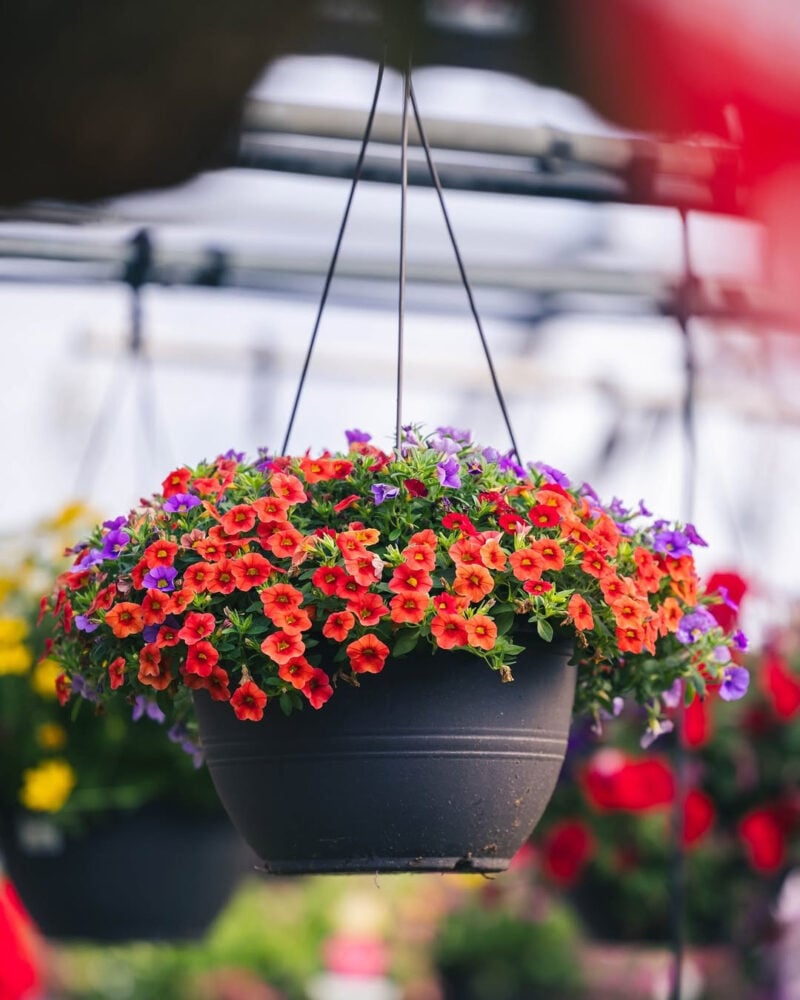
Calibrachoa is often called million bells, and the name fits. It covers itself with small trumpet-shaped flowers that spill over the rim of a pot in a neat, graceful way. If you like the look of petunias but want a finer texture, this is a strong choice.
I use calibrachoa when a planter needs movement. It fills space, yet it rarely smothers nearby plants if you give it a sensible start. That balance matters in mixed containers. You want a spiller, however you do not want one plant to swallow the whole design by July.
Why people love it
- Perfect spill
The stems trail over the edge in a soft curtain. This makes even a simple pot look fuller and more finished. - Small flowers, big impact
The blooms are smaller than petunias, but they show up in large numbers. From a few feet away, the plant looks packed with color. - Easy mixing partner
Calibrachoa works well beside upright plants like angelonia, salvia, or dwarf grasses. It supports the design instead of fighting it.
When it’s a good idea
- ✓ You are planting a mixed container
Its size and habit make it ideal around the edge of larger center plants. - ✓ You want hanging-basket color
Calibrachoa shines in baskets because the stems can fall naturally. - ✓ You prefer a tidy trailing plant
It gives a softer, more controlled cascade than some fast growers.
One smart tip
Watch the water balance.
Calibrachoa dislikes two extremes. Bone-dry soil can stop flowering, and waterlogged soil can lead to root trouble. I check the top inch of potting mix and water when it feels lightly dry, not dusty and not soaked. If leaves start to yellow, the mix may be staying too wet, or the plant may need a light feeding with an iron-friendly fertilizer.
5. Verbena For Airy Flower Clusters
A sun-loving container plant with a lighter, looser look and better drought endurance than many annuals.
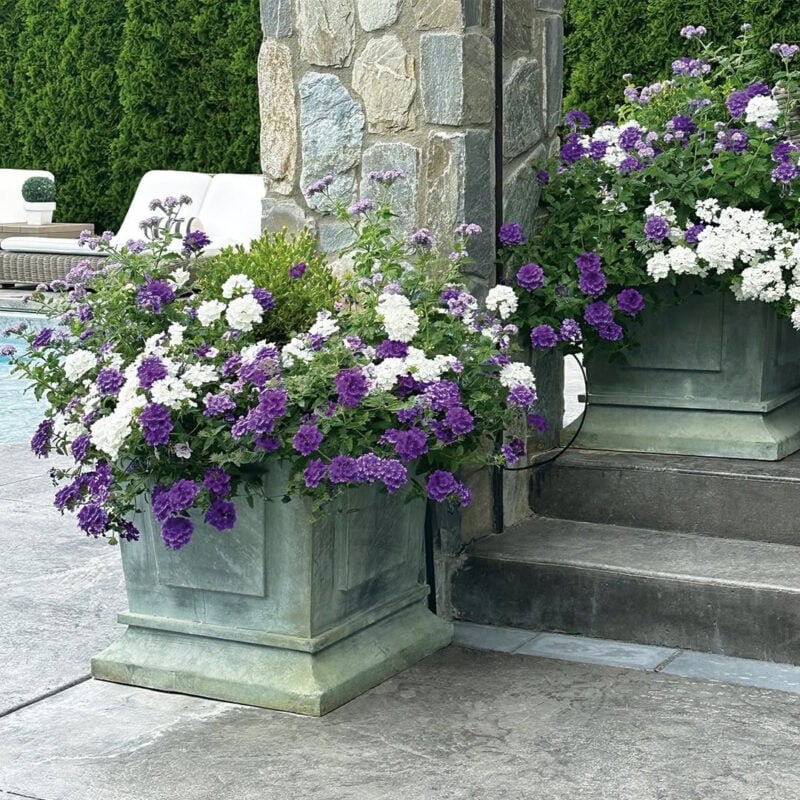
Verbena brings a different mood to container gardening. Instead of making a dense ball of color, it sends out clusters of small flowers on trailing or spreading stems. The look is airy, relaxed, and a little wild in the best way. I like that effect because a patio pot can feel less stiff and more natural.
This plant also suits gardeners who want repeat bloom without constant fuss. In strong sun, verbena keeps producing flowers over a long stretch, and it handles dry spells better than many bedding plants. Therefore, it is useful in containers that warm up quickly, especially on balconies or open decks.
Why people love it
- Light, open shape
Verbena gives movement and space to a container. That helps mixed pots look layered instead of crowded. - Repeat flowers
It blooms, rests a bit, then blooms again with good care. A light trim can keep that cycle going. - Good drought tolerance
Once settled in, verbena handles dry conditions better than many softer annuals. That makes it useful in hot, bright spots.
When it’s a good idea
- ✓ You want a softer cottage look
Verbena pairs well with upright bloomers and silver foliage for a looser design. - ✓ Your containers dry fast
It still needs water, but it does not collapse as quickly as thirstier plants. - ✓ You want flowers without a heavy mound
Its airy habit works well when you want color with more breathing room.
One smart tip
Give it a midsummer haircut.
Verbena can get stringy after its first strong flush of bloom. I cut the stems back by about one third, remove faded flower heads, and then water deeply. Add a light feeding after trimming, and new growth usually fills in fast. That simple reset keeps the plant blooming and stops it from looking tired late in summer.
6. Portulaca For Dry Conditions
A low, flowering plant with succulent leaves that stays bright in punishing sun.
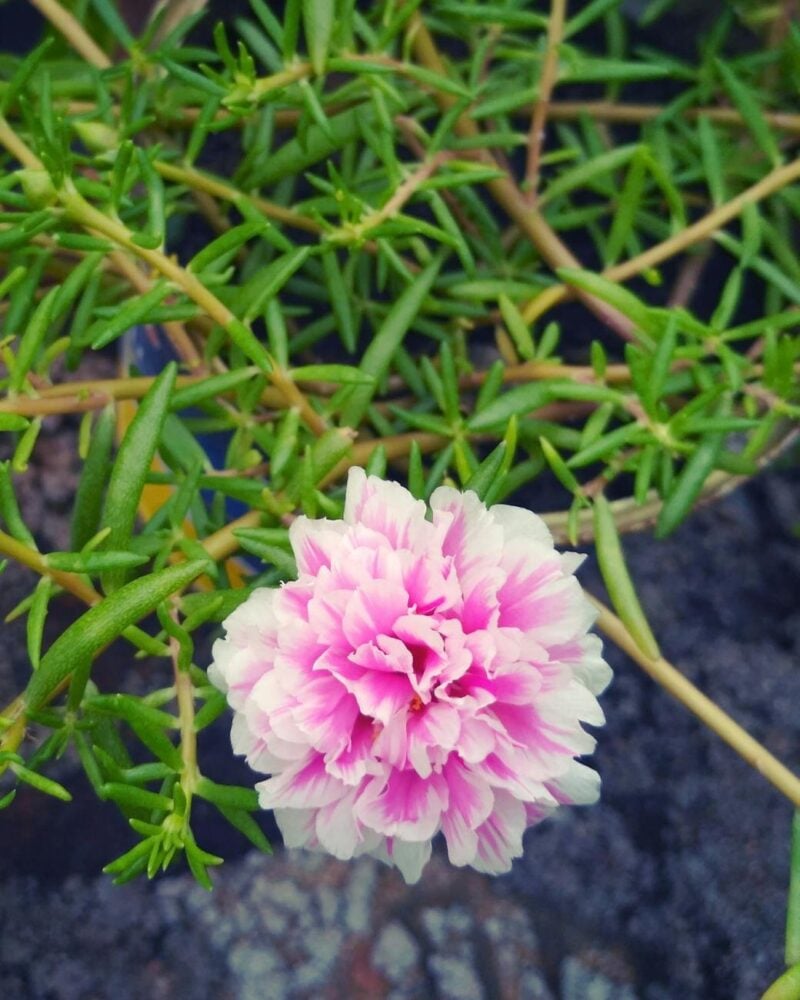
Portulaca, also called moss rose, is one of my first picks for containers that bake all day. It stores water in its fleshy stems and leaves, so it handles dry spells better than many flowering annuals. The blooms look delicate, yet the plant is much tougher than it seems.
I use it on balconies, steps, and patio edges where reflected heat can fry softer plants by July. It spreads nicely over the rim of a pot, which also helps containers look fuller with less effort. Because it likes lean, fast-draining soil, it often does better when gardeners stop babying it.
Why people love it
- Thrives in dry heat
Portulaca keeps going when the top of the pot dries fast. That makes it a smart choice for hot decks and sunny rail boxes. - Bright color, small footprint
The flowers come in vivid pink, orange, yellow, red, and white. Even a modest container can look lively for months. - Low-fuss growth
It does not ask for much deadheading or constant care. Give it sun and drainage, and it usually does the rest.
When it’s a good idea
- ✓ Blazing balconies
I like it where walls and concrete bounce heat back onto the pot all afternoon. - ✓ Shallow bowls and window boxes
Its low, spreading habit fits wide containers without turning messy. - ✓ Busy summer schedules
If you sometimes miss a watering, this plant forgives more than petunias or impatiens would.
One smart tip
Skip rich soil.
Too much compost can push leafy growth and fewer flowers. I use a light potting mix and make sure the container drains fast, because soggy roots are one thing portulaca hates. Therefore, avoid saucers that keep water sitting under the pot for long periods.
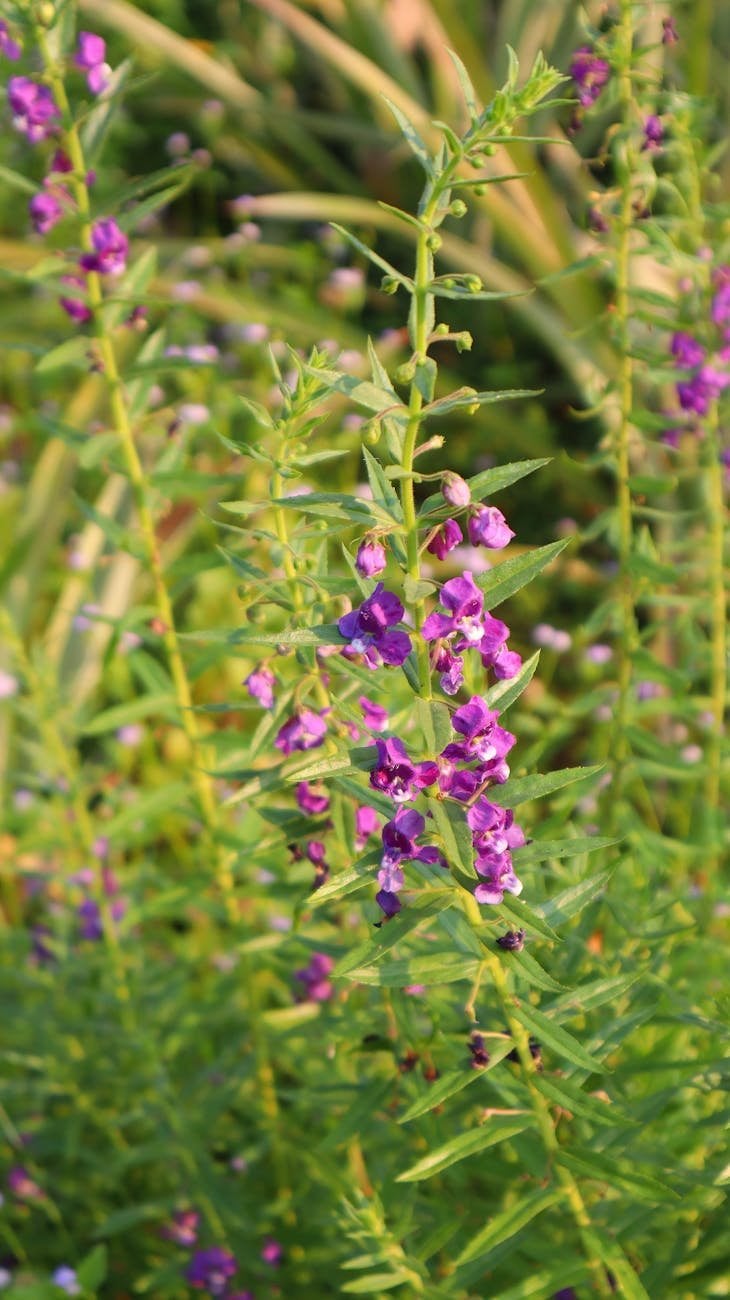
7. Angelonia For Upright Structure
A tall, heat-tolerant bloomer that gives containers height and a cleaner shape.
Some pots need more than color. They need shape. Angelonia solves that problem because its flower spikes rise above mounded and trailing plants, which makes the whole design feel balanced. I think of it as the plant that pulls a mixed container together.
The flowers resemble tiny snapdragons, and they hold up well through hot weather. That matters in midsummer, when many upright annuals start to look tired or stretched. Angelonia stays neat, also blooms for a long stretch, and rarely turns into a floppy mess if it gets enough sun.
Why people love it
- Strong vertical line
Its upright stems add height without taking over the container. This helps mixed pots look more planned and less flat. - Handles summer heat
Angelonia keeps flowering in weather that slows softer annuals. It is a dependable pick for long, hot spells. - Works with many colors
Purple, white, pink, and blue shades mix easily with bold flowers and silver foliage. That makes design choices simpler.
When it’s a good idea
- ✓ Mixed patio planters
Use it in the center or back of a pot to give shorter plants a frame. - ✓ Formal-looking designs
If you want containers to look polished, angelonia brings order fast. - ✓ Windy sunny spots
Its stems are firmer than many soft annual blooms, so the plant often stays upright longer.
One smart tip
Plant in odd numbers.
One angelonia can look thin in a large pot. I usually plant three in a triangle in a wide container, then tuck mounding or trailing plants around them. The result looks fuller, and the vertical spikes repeat across the pot instead of standing there alone.
8. Zinnia For Bold Summer Flowers
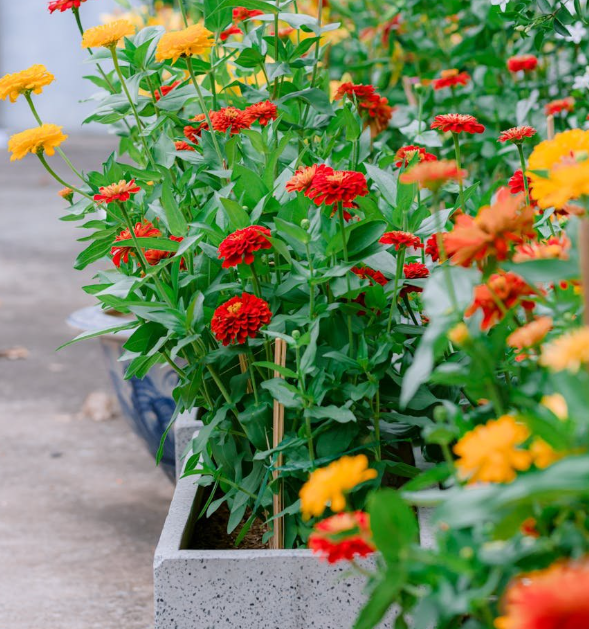
A bright, sturdy bloomer that brings strong stems and big summer color to large containers.
Zinnia has a different feel from softer trailing annuals. It is bolder. The flowers sit up high, the colors are saturated, and the stems hold their shape well in heat. If you want a pot that reads from across the yard, zinnia does that job fast.
I like zinnias best in roomy containers, not crowded little pots. They need airflow because packed leaves can hold moisture and invite mildew. That is the main trade-off. Still, if you place them well and remove spent blooms, they stay cleaner and flower longer than many people expect.
Why people love it
- Big color impact
Zinnias come in hot pink, orange, red, yellow, white, and lime. A single pot can feel like a full summer display. - Strong cut flowers
You can snip stems for a vase without ruining the whole container. More blooms usually follow. - Heat-ready growth
Once established, zinnias handle sunny weather very well. They often look better in July than in early June.
When it’s a good idea
- ✓ Large statement pots
Taller varieties need root space and look best where they can stand out. - ✓ Sunny entryways
Use them where guests see them first, because the flower color is hard to miss. - ✓ Cut-and-come-again gardens in pots
If you enjoy bringing flowers indoors, zinnias give you that option all season.
One smart tip
Give each plant breathing room.
Do not crowd zinnias tightly into a container, even if the pot looks sparse at first. Leave space between stems so air can move, then deadhead often to keep fresh buds coming. I do this because cleaner foliage usually means a better-looking pot by late summer.
9. Salvia For Bees And Heat
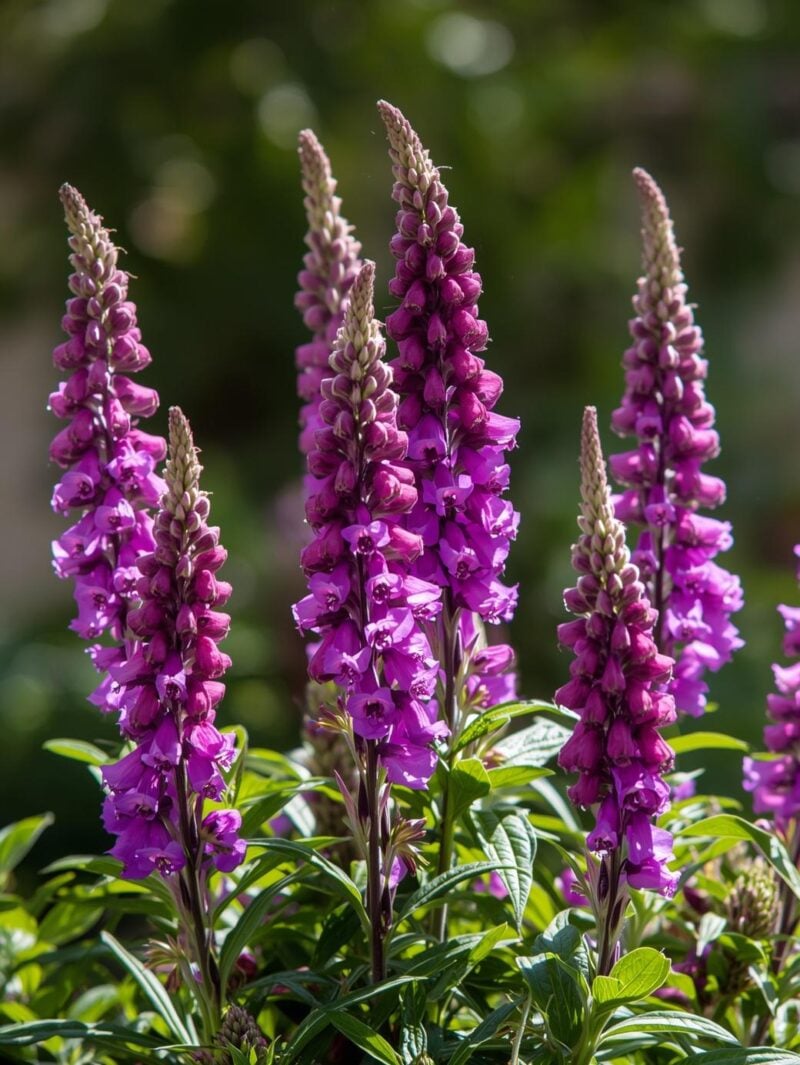
A spiky, fragrant bloomer that stands up to hot weather and keeps pollinators coming.
Salvia earns its place in sunny containers for two reasons right away. It tolerates heat well, and bees notice it fast. The bloom spikes rise above the foliage and move with the breeze, which gives pots a looser, more natural look.
I also like the leaves. Many salvias have a light herbal scent, so the plant offers more than flower color alone. On a patio, that small detail matters. You brush past the pot, catch the scent, and the container feels more alive.
Why people love it
- Pollinator traffic
Bees and butterflies visit salvia often, especially in warm weather. That adds motion and makes a simple pot feel active. - Long flower spikes
The vertical blooms contrast nicely with rounded or trailing plants. This gives containers more depth. - Tough in heat
Salvia keeps its shape well during hot stretches. It rarely looks weak by midday if the roots are established.
When it’s a good idea
- ✓ Pollinator-friendly patios
If you want bees in your outdoor space, salvia is an easy place to start. - ✓ Mixed containers needing movement
The flower spikes sway lightly, which softens a stiff planting plan. - ✓ Hot, bright corners
Use it where sun lasts most of the day and the container dries between waterings.
One smart tip
Trim after the first flush.
Once the first heavy round of flowers starts to fade, cut the spent spikes back instead of waiting too long. Fresh stems often push up quickly, and the plant keeps a tidier shape. Nonetheless, do not shear the whole plant too hard at once, because light trimming brings faster recovery.
10. Marigold For Easy Brightness
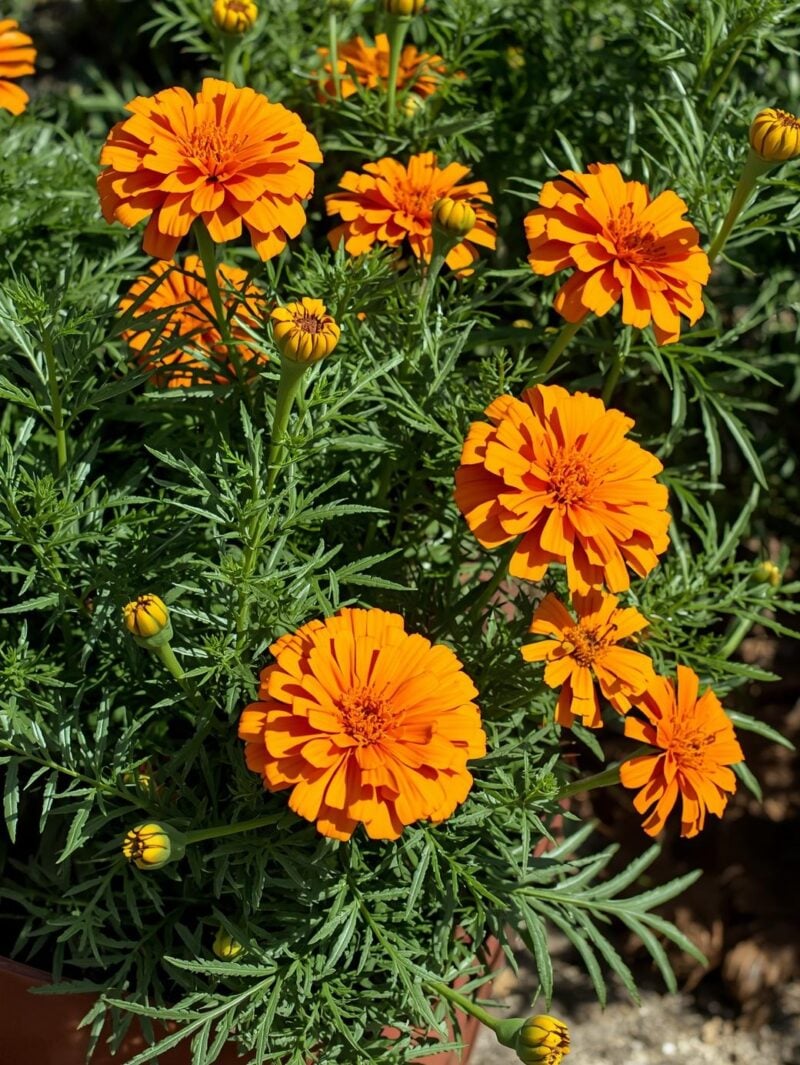
Marigold brings long-lasting color to hot containers without asking for much.
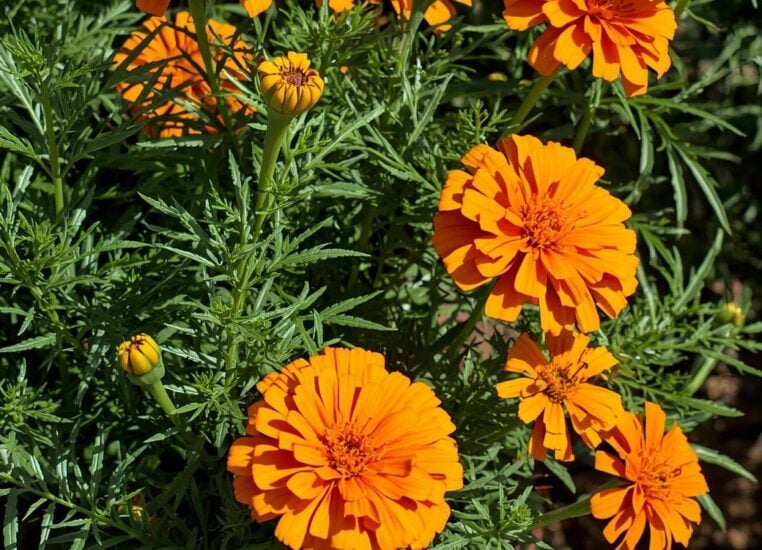
Marigold is one of my favorite filler plants for sunny pots because it stays compact, blooms fast, and comes in warm shades that show up from a distance. Gold, orange, yellow, and deep rust all work well in summer displays. It also pairs easily with herbs, grasses, and trailing flowers.
People often think marigolds are too common to be special. I disagree. In containers, that reliable nature is exactly the point. They keep working when fussier plants slow down, and they bounce back well after trimming.
Why people love it
- Fast color
Marigolds start blooming early and keep going with simple care. A pot can look full and cheerful in a short time. - Compact habit
Most kinds stay neat, so they do not swallow the whole container. That makes them easy to mix with other sun loving plants for containers. - Heat tolerance
Strong sun does not bother them much. They keep their shape better than many soft-stemmed annuals.
When it’s a good idea
- ✓ You want color near a front door
Marigolds read bright and friendly right away, even in a small pot. - ✓ Your patio gets reflected heat
They can handle hot walls, paved spaces, and bright afternoon light. - ✓ You need a simple beginner plant
They give a lot back, even if your routine is still hit or miss.
One smart tip
Water evenly, not wildly.
Marigolds last longer when the soil stays lightly moist instead of swinging from bone dry to soaked. That up-and-down stress can make flowers fade early in midsummer. I check the top inch of soil, then water deeply only when it feels dry. Because the roots sit in a pot, steady moisture matters more than people think.
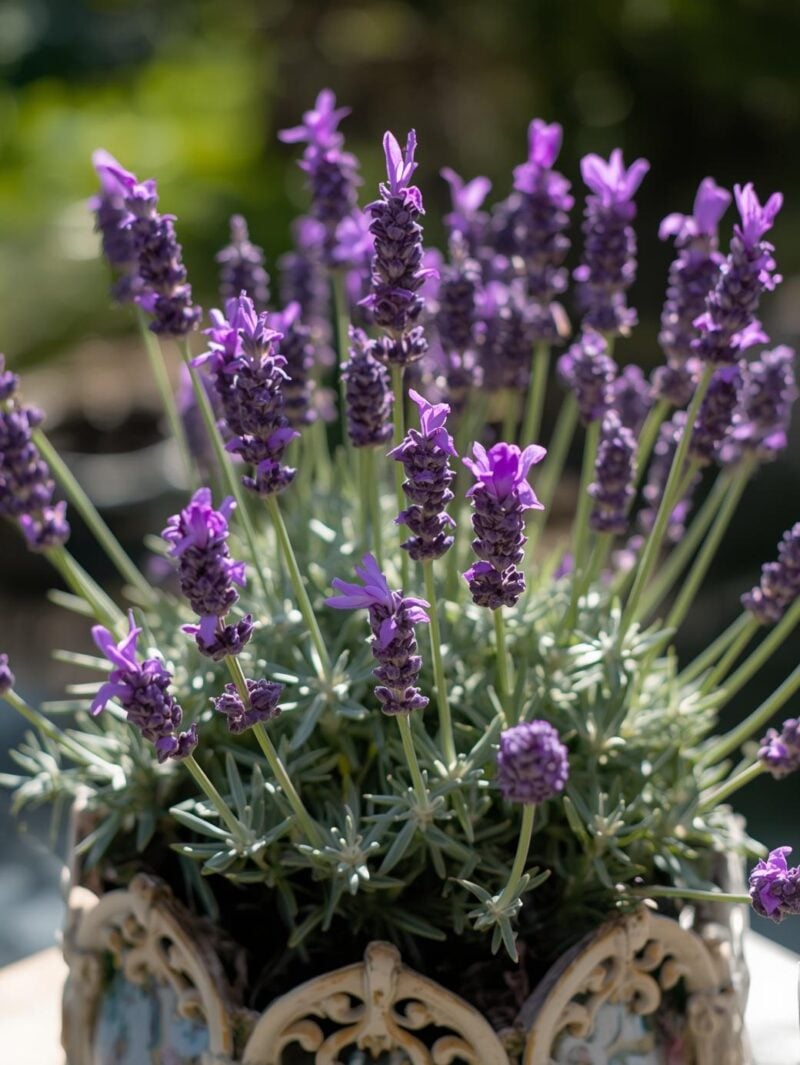
11. Lavender For Fragrant Containers
Lavender gives containers scent, soft color, and a calm look that fits hot, bright spaces.
Lavender loves full sun, and that makes it a smart choice for a dry porch, balcony, or patio table. Its gray-green leaves look good even when the plant is not in bloom. Then the flower spikes arrive and add a light purple haze that feels clean and classic.
I think many people lose lavender in pots for one simple reason. They water it like a thirsty flower. Lavender comes from places with sharp drainage and lean soil, so wet roots are often the bigger problem. Full sun helps, but air around the roots matters just as much.
Why people love it
- Beautiful scent
Brush past the stems and you notice it at once. That makes a seating area feel more inviting without extra effort. - Pretty even out of bloom
The silvery foliage gives contrast beside green annuals and bright flowers. It keeps a pot from looking flat. - Good drought manners
Once settled in, lavender does better with less water than many summer plants. That helps on busy weeks.
When it’s a good idea
- ✓ Your container gets all-day sun
Lavender needs strong light to stay dense and flower well. - ✓ You like a softer color palette
It works beautifully with white, blue, blush, and silver plantings. - ✓ You tend to overwater
This plant reminds you to hold back. A lighter hand often gives better results.
One smart tip
Use a gritty potting mix.
Mix regular potting soil with extra coarse sand or fine gravel so water moves through faster. Also choose a pot with a drainage hole that never stays blocked. Lavender can forgive heat, wind, and dry air. It is far less forgiving of soggy soil, however, especially in humid weather.
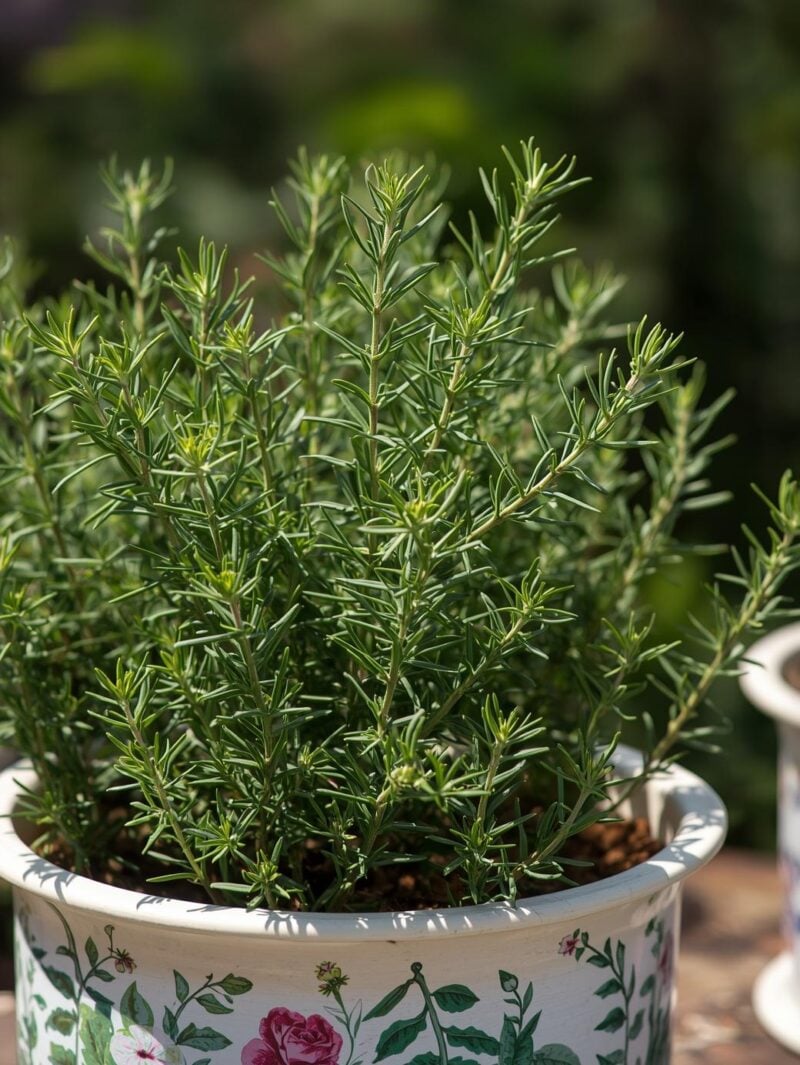
12. Rosemary For Edible Structure
Rosemary adds shape, scent, and kitchen use, so one plant does three jobs in a sunny pot.
Rosemary earns its place because it looks good for the whole season and gives you something to harvest. The narrow evergreen leaves bring texture that softer flowers cannot. Its upright form also helps anchor mixed containers that need a stronger center or back layer.
I like rosemary in a pot near the door or grill because I actually use it. A quick snip flavors potatoes, chicken, bread, and roasted vegetables. That practical side matters. Many sun loving plants for containers are pretty, but rosemary is pretty and useful.
Why people love it
- Strong shape
Rosemary keeps a firm outline in summer heat. That makes a mixed pot look less floppy and more finished. - Edible harvest
You can cut stems often without ruining the plant. Small harvests even help keep it bushy. - Long-season appeal
The plant stays handsome long after some flowers tire out. Needle-like foliage keeps the container from feeling empty.
When it’s a good idea
- ✓ You want a patio plant with purpose
Rosemary decorates the space and feeds you at the same time. - ✓ Your container needs height
Its upright habit helps balance trailing or mounding plants around it. - ✓ You like Mediterranean-style planting
It looks right at home with lavender, terracotta, and gravelly soil.
One smart tip
Do not crowd the roots.
Rosemary lasts longer in a container that gives it room to dry between waterings. Pick a pot a bit larger than the root ball, then use fast-draining mix. If the plant sits too tight in a small plastic pot, the soil can swing from dry to soaked too fast, and that stress shows in the leaves.
Final Note On Container Success
Good plant choices help, but daily habits are what make sunny containers actually last.
The biggest win is pot size. Small pots dry fast, heat up fast, and stress roots by afternoon. If I want a container to keep going through real summer weather, I start larger than I think I need. More soil holds moisture longer, keeps temperatures steadier, and gives roots room to grow.
Soil matters too. Use a quality potting mix, not garden soil from the yard. Garden soil packs down in containers and can trap water around roots. A light mix drains better, and therefore plants like lavender and rosemary have a much better shot at lasting.
Feeding should stay simple. Flowering plants in pots burn through nutrients faster because each watering washes a little more out. I like a slow-release fertilizer at planting time, then a light liquid feed every couple of weeks for heavy bloomers. Herbs usually need less, so do not push them too hard.
Watering is where most problems begin. Some people water too little, then flood the pot the next day. Others keep the soil wet all the time. I check the soil first, because sun, wind, and pot material all change how fast a container dries. Clay pots dry faster than plastic, and dark pots heat up more.
Also think about placement. A sunny corner with strong afternoon wind can dry a pot twice as fast as a sheltered porch. Grouping containers together can slow moisture loss a bit, and mulch on top of the soil can also help.
Why people love it
- Better staying power
Smart setup means less stress on roots and fewer tired, crispy plants by midsummer. - Less daily guesswork
With the right pot, soil, and feeding plan, care gets easier and more predictable. - More blooms and stronger growth
Healthy roots support fuller flowers, better color, and sturdier stems.
When it’s a good idea
- ✓ You lose plants by July
A bigger pot and steadier watering usually fix a lot. - ✓ Your patio gets intense heat
Container setup matters even more in bright, exposed spaces. - ✓ You want low-fuss results
Good habits at the start save time later.
One smart tip
Conclusion
Great sunny containers are not built on luck. They last because the plants match the conditions, and because the pot setup supports them from the start.
My final advice is simple. Pick a few proven sun lovers, give them enough root space, and water with a plan instead of by habit. Save the combinations you like, try one or two this season, and pay attention to what holds up best in your own space. That is how you build containers that still look good weeks later.
Last modified: May 21, 2026
