

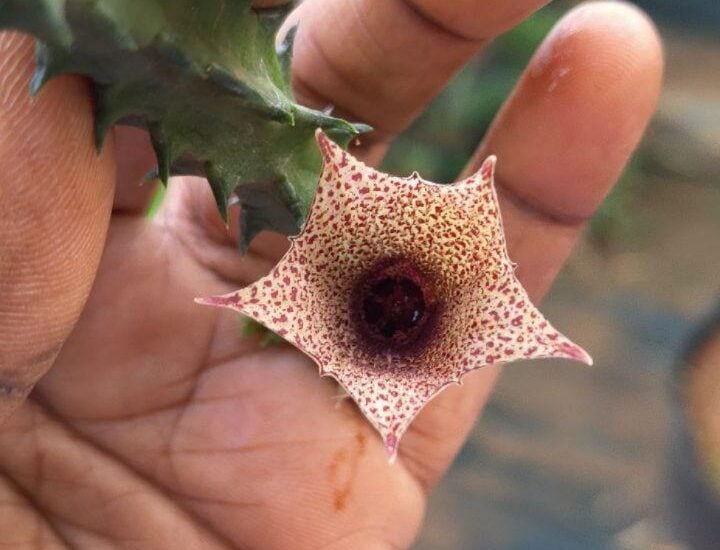
You do not need a huge greenhouse to enjoy strange, beautiful blooms.
These 8 ideas help you spot the best Huernia types, avoid common care mistakes, and grow plants with thick green stems and wild, starry flowers that look almost painted by hand.
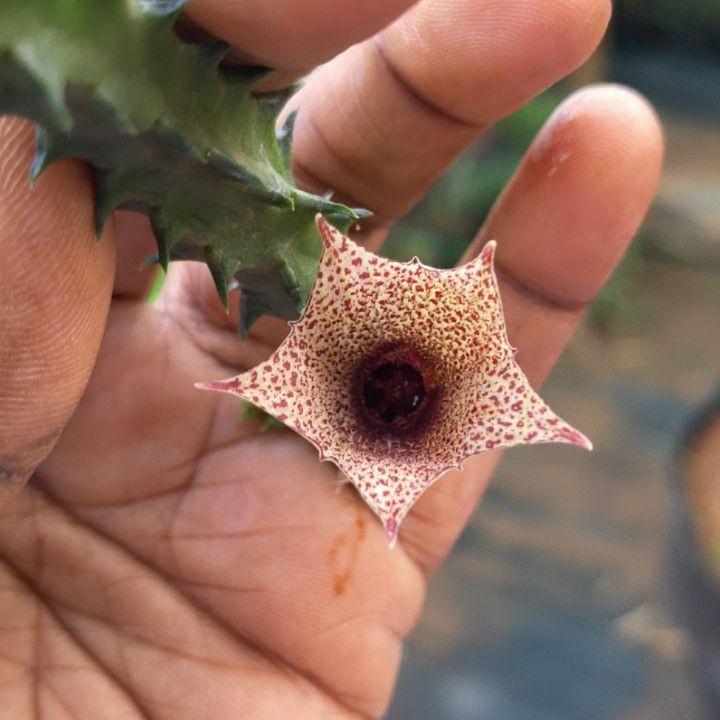
Some blooms have deep red rings. Others show soft cream, yellow, or spotted burgundy.
The stems form tight little clumps that look sculpted in a small clay pot, on a sunny shelf, or in a dry rock garden.
In the next 5 sections, you will see 8 Huernia varieties, simple care tips, easy tables, and plain-English flower terms.
If these plants have ever felt confusing, this guide makes them feel easy, fun, and far less mysterious.
What Makes Huernia Succulent Special
Star-shaped flowers are the big reason people fall for Huernia.
These succulents stay small, but their blooms steal the whole show.
Many flowers look like stars, bells, or little sea creatures.
The colors can be creamy yellow, dark red, pinkish brown, or dotted like animal print.
Huernia comes from hot, dry parts of Africa and nearby areas.
That origin explains a lot. It likes bright light, fast-draining soil, and careful watering. It does not ask for much, but it does want the right setup.
| Variety | Flower Look | Good to Know |
|---|---|---|
| Huernia zebrina | Yellow star with dark red ring | One of the most loved kinds |
| Huernia macrocarpa | Deep red to brown star | Often easy for collectors to find |
| Huernia keniensis | Velvety dark red flower | Strong color, compact plant |
| Huernia schneideriana | Red, starry, lightly hairy | Free-flowering in warm months |
| Huernia pillansii | Small red and cream tones | Neat clumping habit |
| Huernia thuretii | Star with raised center | Interesting texture |
| Huernia hystrix | Spiny-looking flower edges | Very dramatic bloom |
| Huernia verekeri | Cream to yellow, often speckled | Soft color range |
This guide also covers care, plant parts, growth, and flower shapes in simple words. That way, you can enjoy the strange beauty without feeling lost.
Huernia Basics for Beginners
Huernia is a succulent, which means it stores water inside its stems. Think of the stems like little green water bottles. That is why the plant can handle dry days better than many leafy houseplants.
Why it looks so different
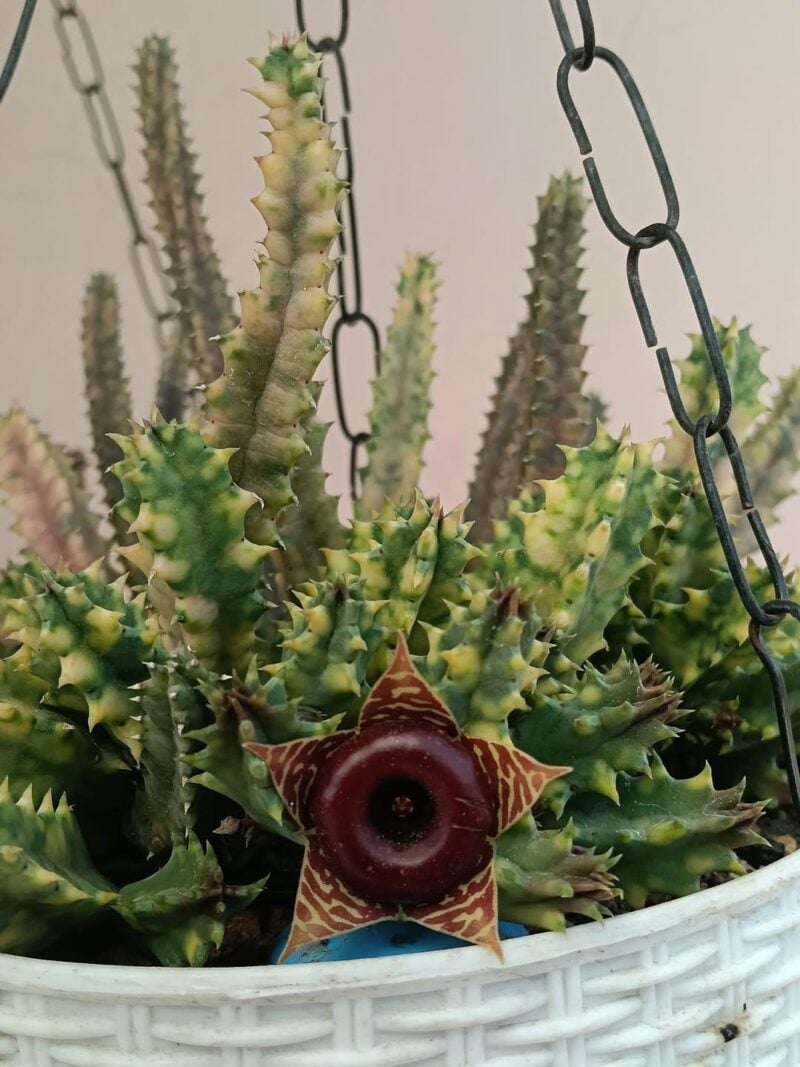
Most houseplants show off leaves. Huernia does not. Its thick stems do the work instead. They are usually angled, soft-green to gray-green, and lined with tiny teeth that look a bit like small bumps on a zipper.
Easy care in plain words
Give it bright light, but avoid harsh all-day burning sun if your home gets very hot. Water well, then let the soil dry. If the pot stays wet for too long, the stems can rot fast.
Use a gritty cactus mix and a pot with a drainage hole. For a beginner, that one step solves many problems before they start.
Natural Habitat and Growth
Huernia grows in dry African regions where the ground is rocky and rain can be rare. The air is warm, the sun is strong, and water drains away fast. That harsh setting shaped the plant into a tough little clumper with fleshy stems instead of big soft leaves.
At home, copy that pattern. Think bright light, warm rooms, and loose soil with grit or pumice. Heavy, soggy soil feels wrong to this plant. It is like making a desert plant wear wet socks all week.
- Light: Bright light keeps stems compact and helps flowers form.
- Water: Let the mix dry before watering again.
- Soil: Rocky, fast-draining soil keeps roots healthy.
- Temperature: Warm is best. Protect from frost.
| Home Condition | Best Range | What Happens If Wrong |
|---|---|---|
| Light | Bright indirect light or gentle sun | Too little light causes weak, stretched stems |
| Watering | Only after soil dries | Too much causes rot |
| Temperature | Warm, above 50°F or 10°C | Cold can scar or kill stems |
| Potting Mix | Cactus mix with extra grit | Dense soil traps too much water |
Growth is usually low and spreading. New stems pop up beside older ones, and soon you get a crowded little mound. That clumping habit makes Huernia look full even in a small pot.
How to Identify Huernia Succlents
If you confuse Huernia with Stapelia or Orbea, you are not alone. They are cousins, and they can look very close. The easiest way to spot angled stems is to look at the sides. Huernia stems often have clear ridges and small teeth along the edges.
Stem clues
- Shape: Stems are usually 4 to 6-angled, like soft green columns.
- Teeth: Tiny pointed bumps sit on the ridges.
- Growth: Stems cluster together and spread into clumps.
Flower clues
The flowers often sit near the base of the stems, not high above them. Many Huernia blooms have a thick center ring and a waxy, bumpy, or velvet-like surface. Some can smell unpleasant. That smell attracts flies in nature, which help pollinate the flowers.
Here are 8 more Huernia varieties to know:
| Variety | Stem or Flower Trait | Care Note |
|---|---|---|
| Huernia aspera | Rough-textured flower | Likes bright, dry conditions |
| Huernia pendurata | Distinct drooping flower form | Keep dry in cool weather |
| Huernia procumbens | Low, spreading growth | Good for shallow pots |
| Huernia guttata | Spotted bloom pattern | Needs strong light for best color |
| Huernia saudi-arabica | Compact stems, striking flower | Do not overwater |
| Huernia rubrosticta | Red spotting on pale flower | Excellent collector plant |
| Huernia boleana | Unusual ringed center | Warmth helps blooming |
| Huernia loeseneriana | Detailed star-like flower | Fast drainage matters |
If you check stems, flower position, and the raised center of the bloom, you can usually tell Huernia apart with much more confidence.
Huernia Flower Shapes Explained
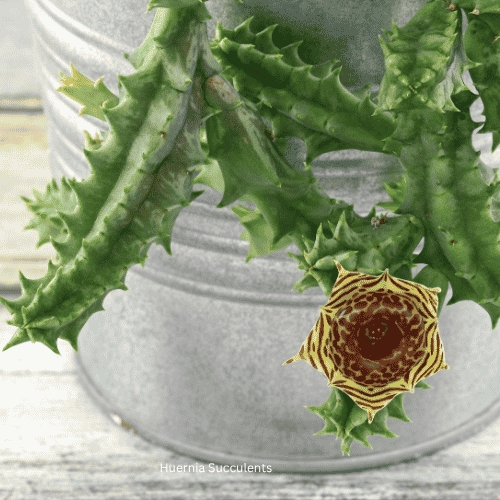
Huernia flowers can look strange at first. Once you learn the parts, they make sense. A flower tube is the hollow middle, like a tiny cup or short straw. The lobes are the star points, like pizza slices spread open.
The ring in the center is called an annulus in plant books, but you can think of it as a donut-shaped bump. Some flowers have a smooth ring. Others look thick, shiny, or almost rubbery. The surface may look hairy, dotted, wrinkled, or pebbled, much like a small crafted ornament.
These shapes help you tell one variety from another. They also explain why Huernia flowers feel so memorable. If you are choosing your first plant, start with Huernia zebrina or Huernia keniensis. They are bold, easy to notice, and a great way to begin your collection.
8 Huernia Varieties List
There are many Huernia species, and each one has its own flower mood. Some look fuzzy. Some look glossy. Some bloom with bold rings and stripes that make people stare twice.
| Variety | Flower color | Stem form | Rarity | Beginner friendly |
|---|---|---|---|---|
| Huernia zebrina | Yellow with red stripes | Short, toothed stems | Common | Yes |
| Huernia schneideriana | Red to deep pink | Clumping, angular stems | Common | Yes |
| Huernia keniensis | Dark red, velvety | Thick upright stems | Uncommon | Yes |
| Huernia aspera | Cream with maroon dots | Rough, spiny-looking edges | Uncommon | Moderate |
| Huernia pillansii | Red-brown | Compact stems | Rare | Moderate |
| Huernia hystrix | Cream to yellow with red marks | Fine teeth, neat clumps | Uncommon | Yes |
| Huernia thuretii | Speckled maroon and cream | Slim stems | Rare | Moderate |
| Huernia pendurata | Dark reddish purple | Trailing habit | Rare | Moderate |
| Huernia procumbens | Red-brown star | Low, spreading stems | Uncommon | Yes |
| Huernia macrocarpa | Yellow with red center | Strong, chunky stems | Uncommon | Yes |
| Huernia verekeri | Cream, pink, or maroon speckles | Softly toothed stems | Rare | Moderate |
| Huernia boleana | Dark wine red | Small clumping stems | Rare | Moderate |
| Huernia hallii | Yellow-brown with fine spots | Short, thick stems | Rare | Moderate |
| Huernia saudi-arabica | Dark maroon | Compact, upright stems | Rare | Moderate |
| Huernia kirkii | Cream and red speckled | Tidy, branching stems | Uncommon | Yes |
| Huernia insigniflora | Pale yellow with red markings | Neat clusters | Rare | Moderate |
If you are starting out, pick Huernia zebrina, schneideriana, or keniensis first. They grow well in pots, forgive small mistakes, and still give you the wild flowers that make Huernia so fun.
Huernia zebrina Care Notes
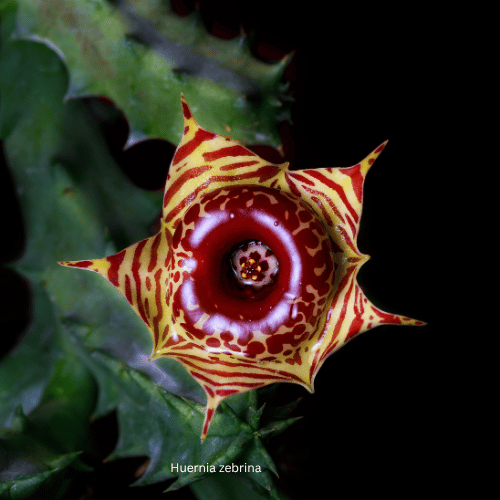
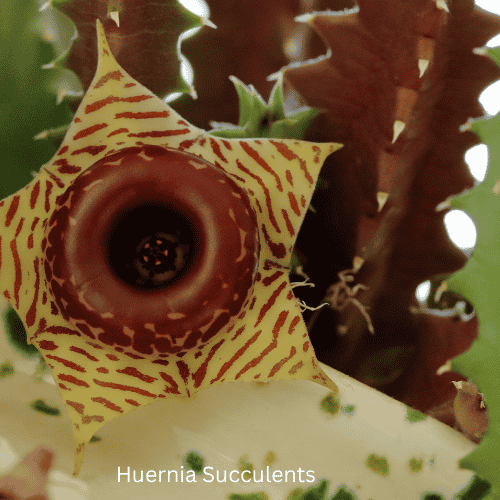
Huernia zebrina is the one most people remember. Its flower has zebra-like stripes and a thick ring in the middle, which is why many growers call it the lifesaver plant.
What makes it special
The flower looks flat and starry, then surprises you with that raised center ring. The stems stay short and clump over time, so one small plant can fill a pot in a season or two.
How to keep it healthy indoors
Give it bright light near a sunny window. Morning sun is usually safe, but harsh afternoon sun can scar the stems. Water only after the potting mix dries out well. Think of the roots like socks. They hate staying wet.
Use a small pot with a drainage hole. If the stems get soft at the base, the soil stayed wet too long. If the stems stretch and look pale, move the plant closer to light.
Other Standout Huernia Types
After zebrina, the fun is in the details. Some Huernia varieties stay tiny and tidy. Others spread fast and make a thick mat of stems. A few have flowers so dark they almost look black in low light.
For a compact plant, Huernia hystrix and Huernia kirkii are strong picks. They fit small shelves and windowsills well. If you want a bolder flower, Huernia keniensis stands out with deep red tones and a rich, velvet look. It feels dramatic without being hard to grow.
Love spots and speckles? Try Huernia aspera or Huernia verekeri. Want quick clumps? Huernia schneideriana usually fills out faster than the rare collector types. Your best choice depends on space, flower taste, and patience. Rare forms can be slower and fussier, but common ones often bloom more freely in normal home conditions.
Light Needs Without Confusion
Light confuses many new growers, but it does not need to. Huernia wants bright light, not punishment. The goal is bright indirect light with a little gentle sun if your window allows it.
How to read the light
- Bright indirect light: The spot is very bright, but the sun rays do not hit the plant hard for hours. Near an east window is often perfect.
- Morning sun: Soft early sun is usually safe and helps flowering. Two to four hours works well for many plants.
- Too little light: Stems stretch, lean, and lose color. The plant looks weak because it is reaching.
- Too much sun: Stems bleach, turn red in a stressed way, or get dry burn marks.
Think of light like toast. Pale bread means not enough. Burnt bread means too much. You want golden.
Best Soil and Potting Mix
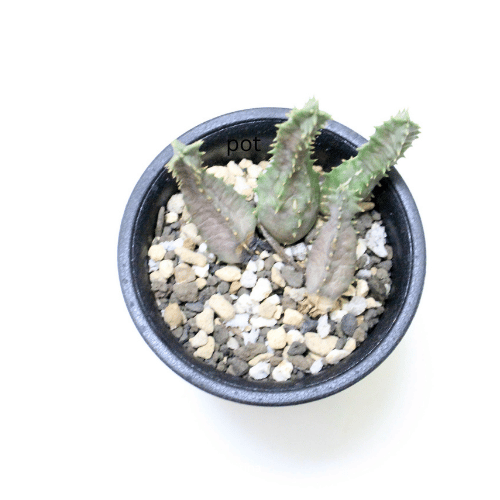
Huernia roots need air around them. If the soil stays dense and soggy, the roots can rot fast. Rot means the roots turn mushy, like fruit left too long in a bag.
Simple mix that works
Use a cactus mix, then make it looser with gritty material. A good starting blend is two parts cactus soil, one part pumice or perlite, and one part coarse sand or fine gravel. The water should run through fast, like rain through a basket, not sit there like soup in a bowl.
| Ingredient | What it does |
|---|---|
| Cactus soil | Holds some food and moisture |
| Pumice or perlite | Adds air spaces and helps water leave |
| Coarse sand or fine gravel | Keeps the mix loose and fast draining |
| Clay or ტერra-cotta pot | Helps the mix dry faster than plastic |
Repot only when the clump outgrows the pot or the soil has broken down. Keep the crown of the plant above the soil line. That small step helps prevent stem rot. If you remember one thing from this guide, remember drainage. Good light and fast-draining soil solve most Huernia problems.
Watering Rules Through Seasons
Watering Huernia is all about timing, not habit. The roots like a full drink, then a dry rest. The word dormancy just means the plant is taking a nap and using less water.
- Spring and summer: Water when the mix is dry almost all the way through. In active growth, stems stay firm and may push new buds.
- Fall: Start spacing out watering. Cooler days slow growth, so wet soil hangs around longer.
- Winter: Water very lightly and much less often. If the plant is cool and resting, too much water can turn roots soft.
- Moisture check: Put a finger or wooden stick into the soil. If it comes out dry and clean, you can water. If it feels cool or damp, wait.
A wrinkled stem does not always mean panic. Check the soil first. Huernia survives short dryness better than soggy roots.
Temperature and Humidity Limits
Huernia likes warmth and steady air. It does best where days feel mild to hot, and nights do not drop too far. Dry indoor air is usually fine, which makes this succulent easier than many tropical plants.
Warmth Wins
Most Huernia types grow best between 65°F and 85°F. They can handle hotter days if the potting mix drains fast and air moves around the stems. Cold is the bigger problem. Once temperatures fall near 50°F, growth slows hard, and wet soil becomes risky.
Why Airflow Matters
Good airflow helps the stems dry after watering. It also lowers the chance of rot and fungus. Do not trap Huernia in a dark, stuffy corner. A bright shelf near a window with moving air works much better.
| Range | What It Means |
|---|---|
| 65°F to 85°F | Safe zone for active growth and flowering |
| 55°F to 64°F | Usually fine, but water less |
| 45°F to 54°F | Risky if soil stays wet |
| Below 45°F | Danger zone for cold damage |
If your home is dry, do not rush to add humidity. Huernia does not need muggy air. It needs warmth, light, and space to breathe.
Feeding and Repotting Schedule
Huernia is a light feeder. Too much fertilizer can make weak, swollen growth that looks fast but does not last. Feed during active growth, usually in spring and summer, with a cactus fertilizer at half strength about once a month.
Skip feeding in winter. The plant is resting then, so extra nutrients sit in the soil and can stress the roots. Think of fertilizer like a snack, not a giant meal.
Repotting helps when the soil has broken down, the clump has outgrown the pot, or watering suddenly stays uneven. Fresh mix improves drainage and gives roots more air. Many growers refresh soil every one to two years, even if the pot size stays the same.
Watch for signs of crowding. Stems may spill hard over the rim, roots may push up, and the center can dry poorly after watering. A slightly snug pot is fine, but a packed clump often needs more room. Move up only one pot size. Huge pots hold too much moisture.
How to Propagate Huernia
Propagating Huernia is simple if you stay patient. A healthy stem cutting can become a new plant with very little fuss. The trick is letting the cut dry first.
Simple Cutting Steps
- Clean cut: Use a clean blade and remove a firm, healthy stem.
- Dry time: Leave the cutting out for a few days until the cut end feels dry. This is like a tiny scab forming on skin.
- Planting: Set the cutting on or slightly into dry cactus mix. Do not soak it right away.
- First watering: Wait several days, then water lightly. After roots start, return to normal careful watering.
Keep the cutting warm and bright, but out of harsh direct sun. If you water before the cut seals, rot can start fast. If you wait, the odds improve a lot.
Blooming Tips and Flowering Table
Huernia flowers look wild, almost unreal. Blooms come more often when the plant gets bright light, a warm growing season, and a dry rest in cooler months. A plant that stays too dark may grow stems but never set buds.
Flowers do not last forever. Many stay open for a few days to about a week, depending on the variety and the weather. Some smell faint and odd. Others smell like something spoiled. That scent attracts flies in nature, which help with pollination.
The table below gives a simple guide. The smell note can change with heat, age of the bloom, and time of day.
| Huernia Variety | Bloom Habit | Flower Life | Smell |
|---|---|---|---|
| Huernia zebrina | Reliable in bright warmth | 4 to 7 days | Mild to noticeable |
| Huernia macrocarpa | Seasonal flushes | 3 to 5 days | Light musky scent |
| Huernia schneideriana | Good bloomer in summer | 5 to 7 days | Usually mild |
| Huernia pillansii | Can bloom in waves | 3 to 6 days | May be stronger |
| Huernia aspera | Needs steady care to bloom well | 4 to 6 days | Light to medium |
| Huernia hystrix | Often blooms after active growth | 4 to 7 days | Noticeable |
If you want more flowers, keep the routine steady. Bright light, careful watering, and a snug pot often do more than extra fertilizer. Huernia rewards consistency.
Huernia Trouble Signs
Huernia plants give warnings early. You just need to read them right. A wrinkled stem, weak bloom, or soft patch usually points to one clear mistake. The best fix starts with the real cause, not guesswork.
Shriveled Or Stretching?
Shriveling often means the roots are too dry or too damaged to drink. Check the soil first. If it is bone dry, water deeply and let extra water drain out. If the soil is wet and the stem still looks thin, root rot may be stopping water uptake.
Stretching means the plant wants more light. The stems grow longer and weaker, and the color may fade. Move it to a brighter spot in stages so the plant does not scorch.
Mushy Stems Or No Flowers?
Mushy stems mean rot has started. Cut off damaged parts with a clean blade, let healthy pieces dry, and replant them in dry gritty mix. Poor blooming often comes from low light, too much nitrogen, or a winter that stayed too warm and wet.
Watch the plant for a week after changes. Small signs tell a big story.
Stop Pests Before Spread
Pests and rot move fast on Huernia. Soft stems and tight stem angles give bugs places to hide, and soggy soil invites disease. Good habits beat rescue work every time.
- Mealybugs: These look like tiny bits of white cotton. They suck sap and weaken stems. Dab them with rubbing alcohol on a cotton swab, then check nearby plants too.
- Fungus gnats: These are small flying bugs around wet soil. The adults are annoying, but the babies can bother roots. Let the mix dry more between waterings and remove old fallen bits from the pot.
- Root rot: Roots turn dark, weak, and smelly when the soil stays wet too long. Take the plant out, cut off bad roots, and repot in fresh dry mix.
- Stem rot: Black or soft spots spread quickly on the stems. Cut above the damage and save only firm healthy pieces.
Keep pots clean, give plants airflow, and never let water sit under the pot for long. That simple routine prevents most trouble.
Huernia Shelf Style
Huernia looks best when the pot and plant balance each other. A low clay pot works well because it dries faster and keeps tall stems from tipping. Shallow bowls can look great too, but only if the soil drains fast and the plant gets enough moving air.
Companion plants matter. Pair Huernia with other small succulents that like bright light and careful watering, such as Gasteria, Haworthia, or compact Stapelia relatives. Avoid thirsty plants in the same pot. One plant wanting more water can ruin the whole arrangement.
Place Huernia near a bright window with filtered sun or gentle morning light. Keep it out of reach of curious pets and small children, especially when flowers appear and tempt people to touch. The plant is not a toy, and broken stems invite rot fast.
Huernia Care Chart
Need a fast refresher? These simple tables give you the care chart view. They turn a lot of plant talk into quick answers you can scan in seconds.
Basic Care Guide
| Topic | Quick Answer |
|---|---|
| Watering | Water well, then let the mix dry most of the way before watering again. |
| Light | Bright light with some gentle direct sun. Too little light causes stretching. |
| Soil | Very gritty cactus mix with extra pumice, perlite, or coarse sand. |
| Temperature | Warm growing season, protect from cold and frost. |
| Propagation | Stem cuttings are easiest. Let cuts dry before planting. |
Trait Snapshot
| Feature | What To Expect |
|---|---|
| Stems | Fleshy, angled, often toothed, green to gray-green. |
| Flowers | Star or bell shapes, often spotted, striped, or ringed. |
| Bloom Season | Usually warmer months, if light and watering are right. |
| Common Problems | Rot, weak light, pests, and overwatering. |
Save these notes where you can see them. They make Huernia care much less confusing.
Huernia Care Tips
Huernia rewards simple care. Give it bright light, gritty soil, and a pot that dries fast. Water deeply, then wait until the mix dries most of the way.
Watch for soft stems, white bugs, and stretched growth, because those signs show trouble early. Consistency matters more than doing a lot. Choose a healthy plant, keep airflow around it, and do not crowd it with thirsty companions.
If a stem rots, cut and save the firm part. If the plant stays compact and flowers well, your routine is working. Keep it simple, and Huernia stays striking.
Warp up
Huernia succulents may look unusual, but their care is not hard once you know the pattern. Keep the roots dry enough, give the stems bright light, and act fast when you see pests or rot.
That alone solves most problems.
A smart way to remember it is this: bright spot, gritty mix, careful watering, quick checks. Save this guide and use the care chart when your plant starts acting different. Small changes make a big difference with Huernia.
With the right setup, these odd little succulents can become the most talked-about plants on your shelf.
Last modified: June 1, 2026

[…] Succulent health resources note that wrinkled stems can actually mean two different things: either the plant is thirsty (which is fixable) or the roots are already damaged from overwatering and can’t absorb water anymore (which is harder to fix). Always check the soil before adding water. If the soil is bone dry and the stems are wrinkled, water normally. If the soil is damp and the stems are still wrinkled, pull the plant out and inspect the roots for rot. […]