

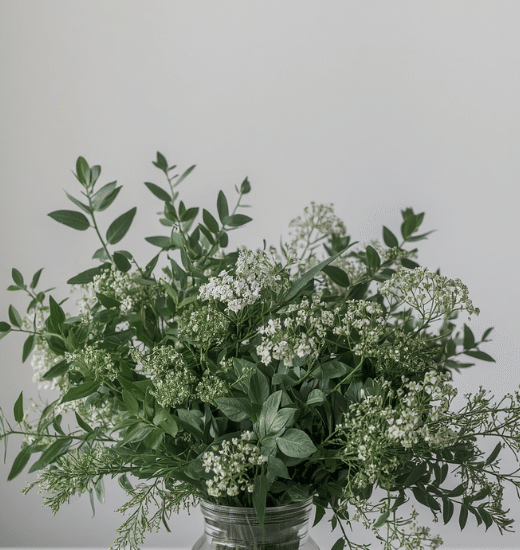
A shady garden may not produce the same flowers as a sunny cutting patch, but it can still provide beautiful material for arrangements. In fact, shade-grown flowers often have a softer, woodland character that works especially well in relaxed bouquets.
The best shade-loving flowers for a bouquet include flowers, foliage, and fillers that tolerate filtered light or morning sun. Some are strong cut flowers, while others are most valuable for their leaves, shape, or delicate texture.
A successful shade-garden bouquet does not need to be large. A few stems of hellebore, Japanese anemone, astilbe, fern, or hosta foliage can create an arrangement with depth and personality.
Understand your garden’s shade
Not all shade is the same.
- Light shade: Several hours of sunlight or bright filtered light.
- Partial shade: Direct sun for part of the day, often morning sun.
- Dappled shade: Moving sunlight filtered through trees.
- Deep shade: Very little direct sunlight.
Many flowering plants described as shade-loving perform best with some indirect light. A completely dark corner may support foliage but produce fewer flowers.
Before cutting anything, observe where your plants receive morning and afternoon light. A bed with morning sun may support more flowering than one shaded all day by a building.
1. Hellebores
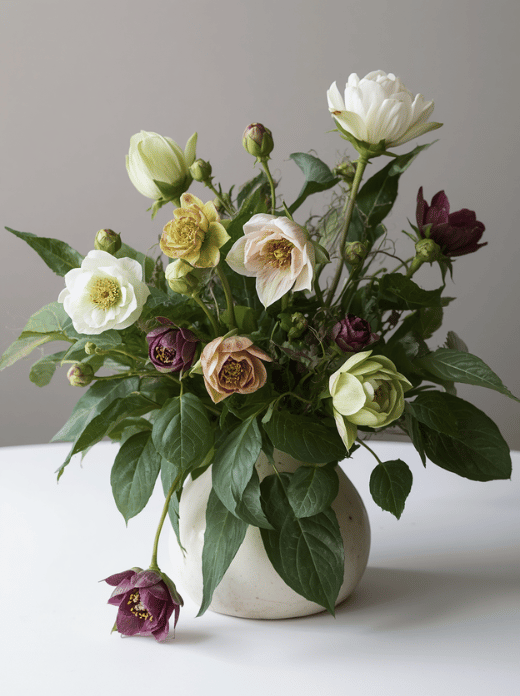
Hellebores flower early in the season and bring nodding, cup-shaped blooms to winter and spring arrangements. Their colors range from white and cream to rose, plum, green, and near-black.
They are often best cut when the flowers are mature and the seed pods have begun to form. Young flowers may wilt quickly after cutting.
Use hellebores in small arrangements with:
- Bare branches
- Fern fronds
- Hosta leaves
- Spring bulbs
- Mossy textures
Because the flowers face downward, place them where the viewer can see their shape rather than hiding them among upright stems.
2. Astilbe
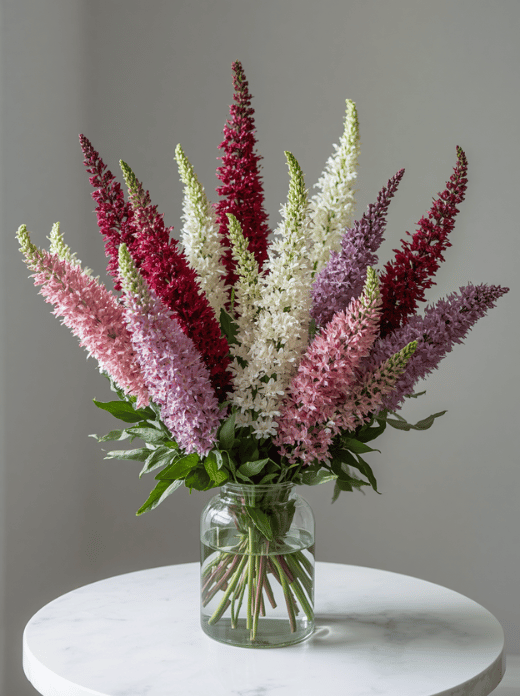
Astilbe produces feathery flower plumes in white, pink, red, and lavender. It is one of the most useful shade-loving flowers for a bouquet when you want vertical texture without a heavy appearance.
Cut astilbe when most of the flowers on the plume have opened. If harvested too early, the tiny flowers may fail to develop fully.
Astilbe works well as:
- A soft filler
- A vertical accent
- A bridge between large and small flowers
- A companion to roses or hydrangeas
Keep the stems well hydrated because the foliage can wilt when the plant loses water.
3. Japanese anemone
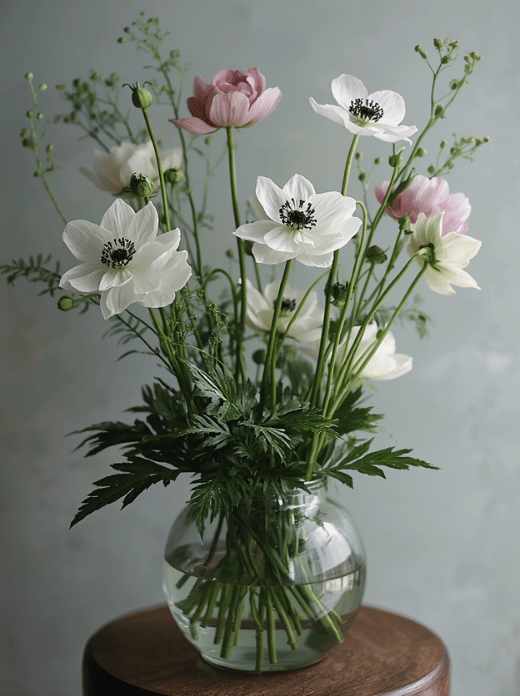
Japanese anemones bloom later in the season and produce graceful flowers on tall stems. White and pink varieties are especially attractive in loose arrangements.
They can look delicate, but the tall stems give them presence. Combine them with grasses, ferns, or dark foliage for contrast.
Cut the stems when the flowers are open but still fresh. Remove leaves that would sit below the waterline.
4. Foxglove
Foxglove brings height and a cottage-garden feeling to a bouquet. The tubular flowers may be pink, purple, white, or cream.
Because foxglove is poisonous if eaten, use it carefully around children and pets. It should not be placed near edible displays or handled casually by guests.
In an arrangement, one or two stems can provide strong vertical structure. Balance the height with rounded flowers and lower foliage.
5. Columbine
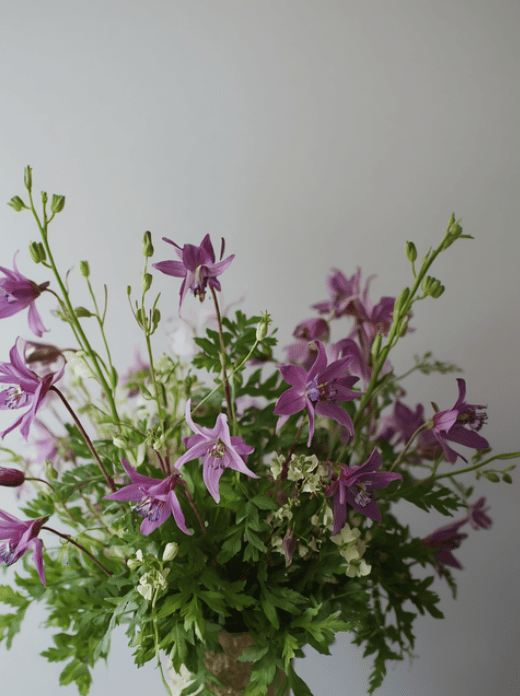
Columbine has nodding flowers with distinctive spurs and delicate, divided foliage. It adds movement and an informal woodland character.
The stems are not always as long-lasting as those of roses or chrysanthemums, so use columbine in arrangements intended for short-term enjoyment. It is particularly attractive in small bud vases.
Pair it with:
- Ferns
- Sweet woodruff
- Hellebores
- Small branches
- Other spring flowers
6. Hydrangea

Hydrangea Plants
Many hydrangeas tolerate partial shade and can provide large flower heads for arrangements. White, blue, pink, and green blooms can all work in bouquets.
Hydrangea stems need careful conditioning. Cut them when the flower head feels firm and developed rather than soft and newly opened. Remove excess leaves and place the stems in plenty of water.
Hydrangeas create volume quickly, so use fewer stems than you might expect. One large head can serve as the central shape of a small arrangement.
7. Heuchera foliage
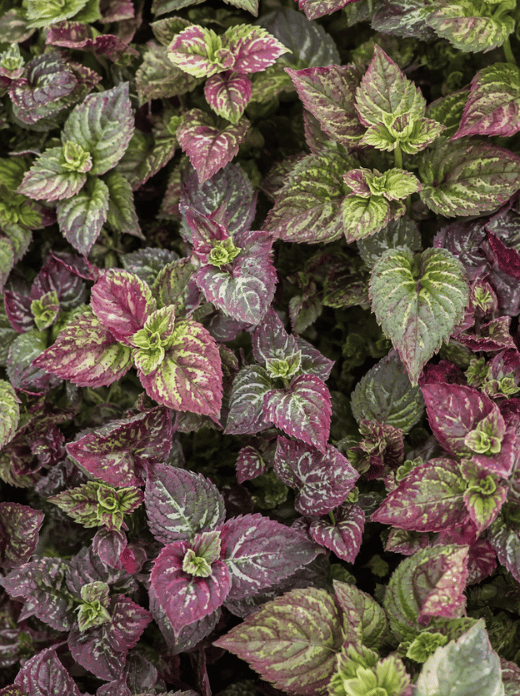
Heuchera is grown primarily for its colorful leaves, which may be burgundy, lime, bronze, silver, or green. The foliage can add contrast even when the shade garden has limited flowers.
Use individual leaves around the rim of a vase or group several stems beneath lighter flowers. Heuchera is particularly helpful in arrangements that feel too pale or visually soft.
8. Ferns
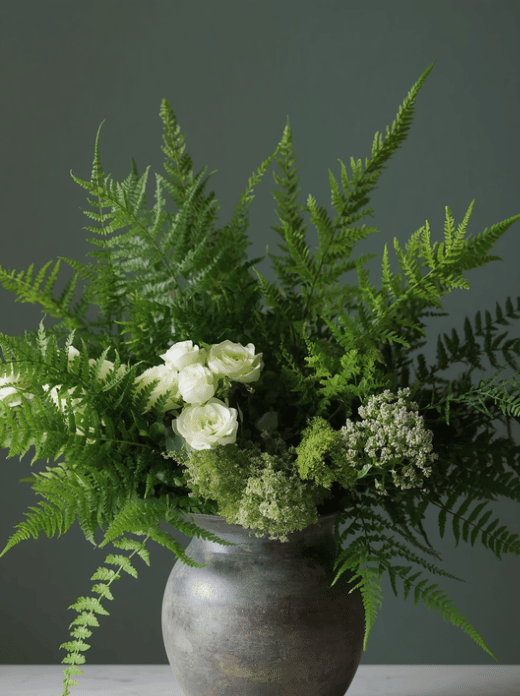
Ferns are among the most dependable foliage plants for shade. Their fronds add movement, texture, and a natural woodland feeling.
Use fern foliage to:
- Frame the outside of a bouquet
- Fill gaps beneath taller flowers
- Create a loose, asymmetrical shape
- Add contrast to rounded blooms
Check the exact plant before using it, especially if the arrangement will be around pets or children.
9. Hosta leaves

Hosta leaves are broad, bold, and available in green, blue-green, and variegated forms. They can be folded, rolled, or used flat to create structure.
A single large leaf can make a small arrangement look intentional. Place hosta leaves around the inside of a vase, or fold them into a loop and secure them with a floral pin.
Remove damaged leaves and avoid using foliage that has been exposed to disease or pest damage.
10. Tiarella and woodland fillers
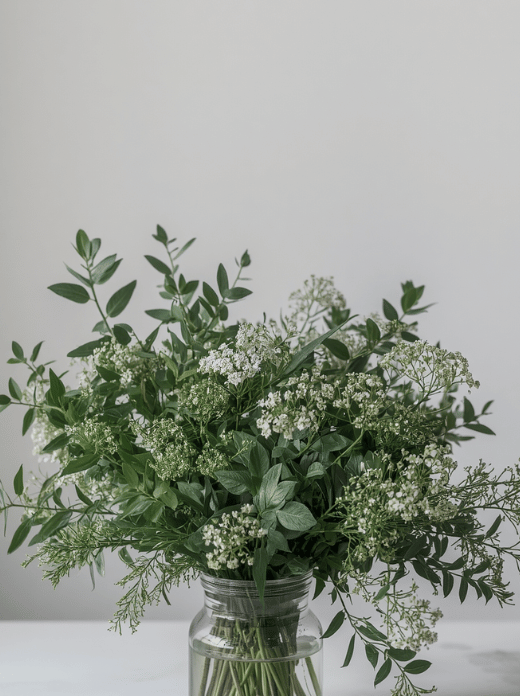
How to Arrange Shade-Loving Flowers for a Soft, Romantic Bouquet
Tiarella and other small woodland plants can add delicate sprays to an arrangement. They are useful when you want a fine texture rather than another large focal flower.
Harvest sparingly and only from plants that are healthy and well established. Never collect protected wild plants or cut from property you do not own.
A simple bouquet recipe
For a soft shade-garden bouquet, try:
- One hydrangea head
- Three stems of astilbe
- Three stems of Japanese anemone
- Two fern fronds
- Two hosta leaves
- A few stems of heuchera foliage
This combination creates a rounded center, light vertical accents, and a leafy base.
How to cut flowers from a shade garden
Cut flowers early in the morning or in the evening when temperatures are cooler. Take a clean bucket filled with water into the garden so stems do not dry out while you continue cutting.
Use sharp scissors or pruners. Make clean cuts and place stems in water immediately.
Once indoors:
- Remove lower leaves.
- Recut the stems at an angle.
- Fill a clean vase with fresh water.
- Keep foliage below the waterline.
- Place the arrangement away from heat and direct sun.
- Change the water when it becomes cloudy.
Color combinations that suit shade flowers
Shade flowers often look beautiful in restrained palettes.
| Style | Suggested colors |
|---|---|
| Woodland | Cream, green, brown, soft pink |
| Romantic | Blush, lavender, white |
| Dramatic | Burgundy, plum, deep green |
| Fresh | White, pale green, blue-green |
| Cottage | Pink, purple, yellow, white |
Use foliage to connect different flower colors. Green is not merely background material; it helps the arrangement feel unified.
Final arranging technique
Begin with the foliage. Place the largest leaves low and slightly outward. Add the largest flower next, then insert taller flowers at different heights. Finish with delicate fillers around the edges.
Avoid making every stem the same length. A natural bouquet should have movement. Turn the vase as you work so the arrangement looks balanced from multiple sides.
The most successful shade-loving flowers for a bouquet are often the plants that provide a mixture of flower shape, leaf texture, and seasonal interest. Look beyond traditional cutting flowers. A shady garden may offer everything needed for a small, elegant arrangement, especially when you combine blooms with foliage thoughtfully.
Last modified: October 22, 2026
