

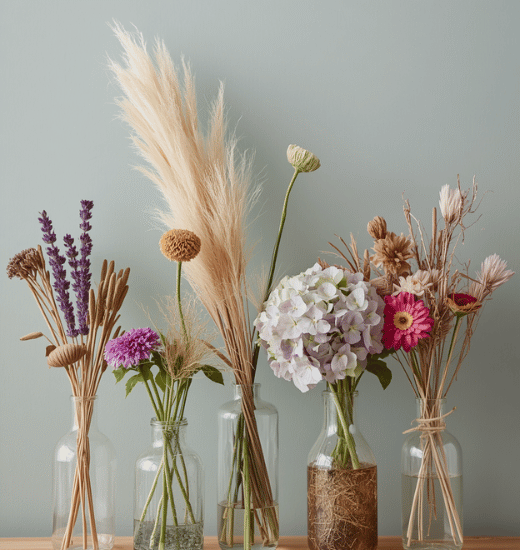
Fresh flowers are beautiful, but they are temporary. A dried bouquet offers a different kind of pleasure: muted color, lasting texture, and a reminder of the season in which the flowers were grown.
You do not need expensive florist materials to make one. Many garden flowers can be dried at home if they are harvested at the right stage and given good airflow. The most successful dried flower bouquet ideas using garden flowers begin with choosing flowers that hold their shape after moisture leaves the stems.
Choose flowers that dry well
Not every flower keeps its form after drying. Soft petals may collapse, while thick flower heads can develop mold if they are bundled too tightly.
Useful garden flowers for drying include:
- Strawflower
- Statice
- Celosia
- Yarrow
- Gomphrena
- Globe amaranth
- Lavender
- Sea holly
- Hydrangea
- Baby’s breath
- Scabiosa seed heads
- Ornamental grasses
- Dill and fennel seed heads
- Queen Anne’s lace, where permitted and safely identified
Roses can dry successfully, but the results depend on variety and timing. Choose blooms that are partly open rather than fully mature and soft.
Harvest at the right stage
Harvest on a dry day after morning moisture has evaporated. Wet stems take longer to dry and are more likely to develop mold.
For many flowers, the best time is just before full bloom. Strawflowers should be cut when the outer petals are open but the center remains firm. Lavender is usually harvested when some buds are open and others are still closed.
Do not wait until every flower looks perfect. Overmature blooms may drop petals or bend while drying.
Use clean, sharp scissors or pruners. Remove damaged leaves and lower foliage immediately.
The easiest drying method: air drying
Air drying is the simplest method for most stems.
- Gather small bundles of similar flowers.
- Tie the stems with string or a rubber band.
- Hang the bundles upside down.
- Choose a dark, dry, well-ventilated room.
- Leave them undisturbed until the stems and petals feel dry.
Small bundles are better than large ones because air can move through them. A crowded bundle may dry unevenly and trap moisture in the center.
Avoid hanging flowers in a humid bathroom, beside a steamy kitchen, or in direct sun. Strong light can fade colors before the flowers finish drying.
1. Soft neutral bouquet
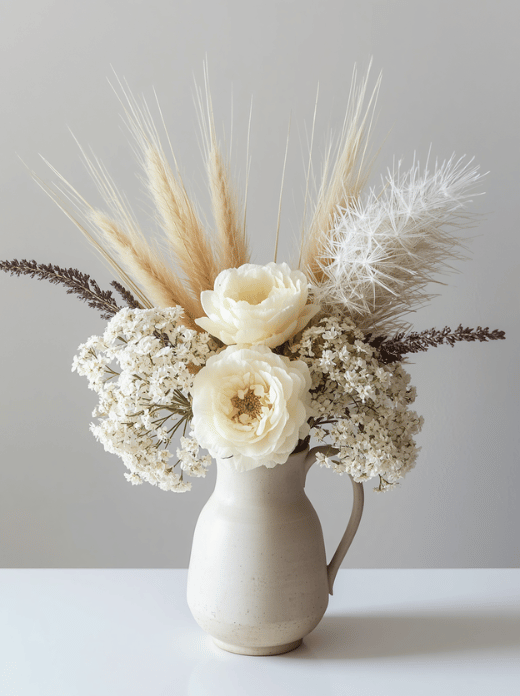
For a calm, natural arrangement, combine cream-colored strawflowers, pale grasses, white yarrow, and dried lavender.
Keep the stems at different heights. Place the larger flowers slightly below the tallest grasses, then add small clusters of lavender around the center.
This bouquet looks good in a ceramic pitcher, stoneware vase, or simple glass bottle. It works especially well in bedrooms, entryways, and quiet reading corners.
2. Warm sunset bouquet
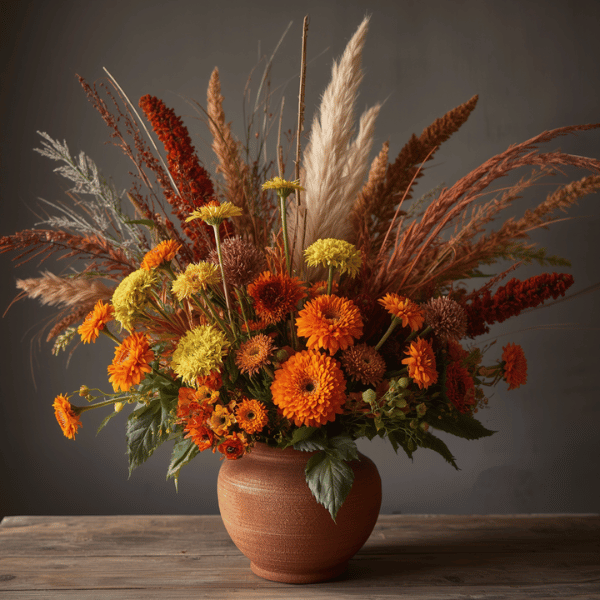
Use orange strawflowers, yellow yarrow, bronze celosia, and reddish grasses for a warm autumn-inspired display.
The key is variation in texture. Choose one rounded flower, one feathery filler, one spiky stem, and one arching grass.
A terracotta vase or woven basket reinforces the color palette. Keep the arrangement loose rather than tightly packed so individual flower shapes remain visible.
3. Purple and silver bouquet
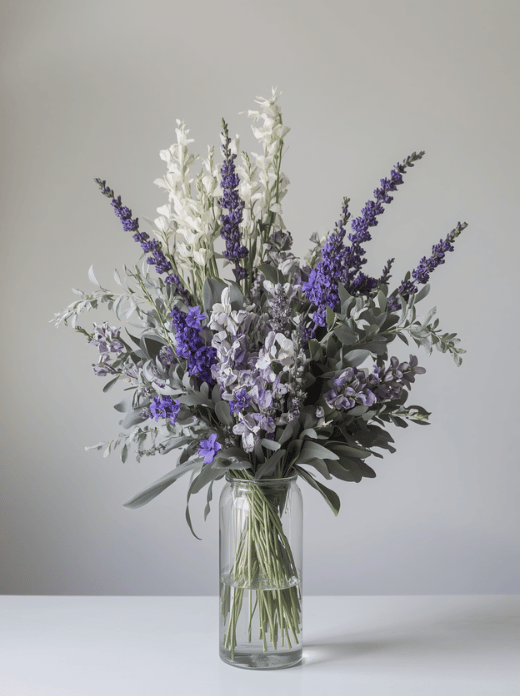
Combine lavender, purple statice, silver foliage, and pale seed heads. This palette feels cool and understated, making it suitable for modern interiors.
Silver foliage often becomes more noticeable after drying because its texture contrasts with the papery flowers. Use a narrow vase to create a vertical arrangement or a wide bowl for a lower display.
If the bouquet becomes too monochromatic, add a few cream stems for balance.
4. Cottage-garden bouquet
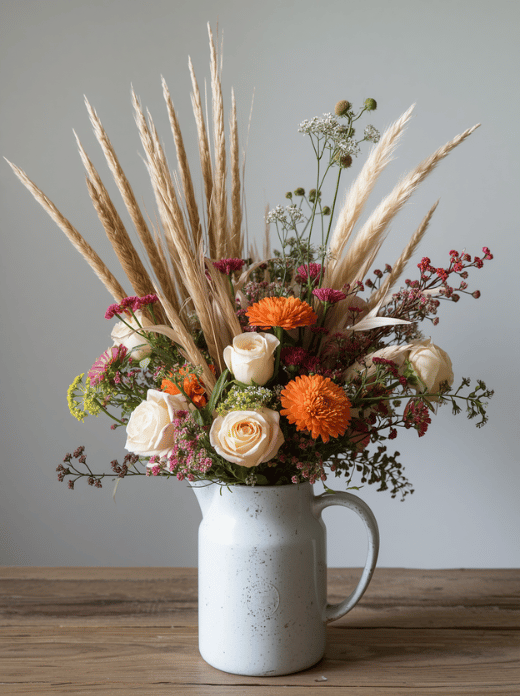
For a relaxed arrangement, combine dried roses, yarrow, cosmos seed heads, grasses, and small clusters of statice.
Do not make every stem the same length. A cottage-style bouquet looks better when some stems rise above the main shape and others curve outward.
Use a vintage jar, enamel pitcher, or recycled bottle. The informal container supports the garden-grown character of the bouquet.
5. Sculptural celosia arrangement
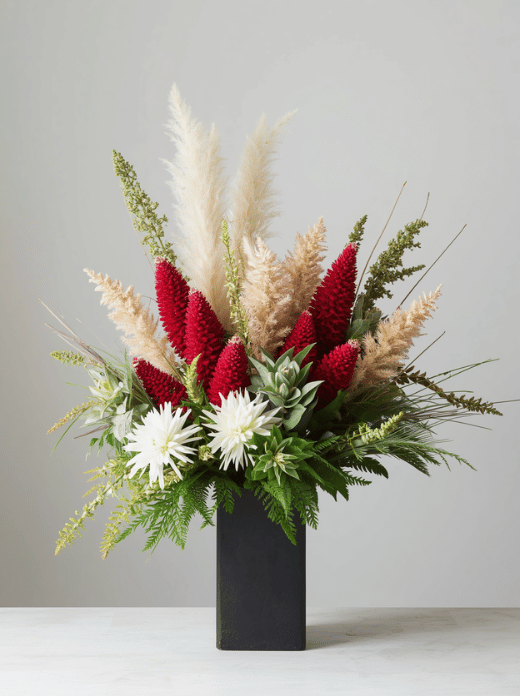
Celosia is useful when you want a bold, modern display. Crested types provide unusual shapes, while plume types add vertical texture.
Arrange several celosia stems together as the focal point. Surround them with a few grasses or slim seed heads rather than adding too many competing flowers.
A plain black, white, or concrete-colored vase allows the flower shapes to take center stage.
6. Small bud vase collection
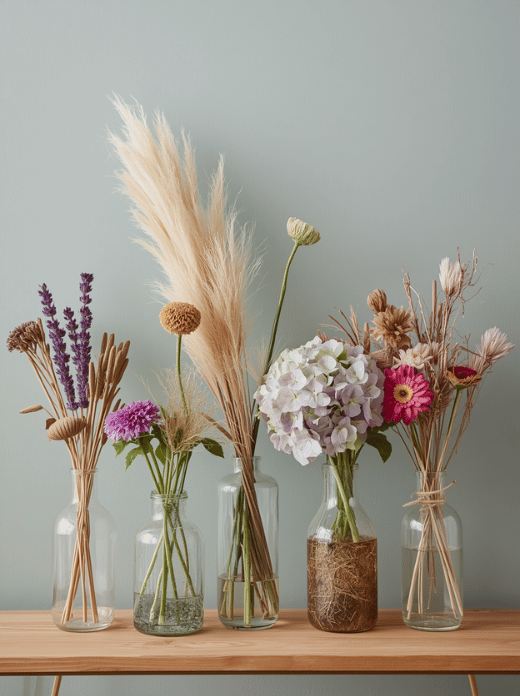
A dried display does not have to be one large bouquet. Use several small bud vases, each holding two or three stems.
Try combinations such as:
- Lavender and cream grass
- Statice and yarrow
- One strawflower and a seed head
- A small hydrangea head with dried foliage
- Gomphrena and a slim grass stem
Arrange the vases in a row on a shelf or group them on a tray. This approach is useful when you have only a small number of flowers from the garden.
7. Dried hydrangea bouquet
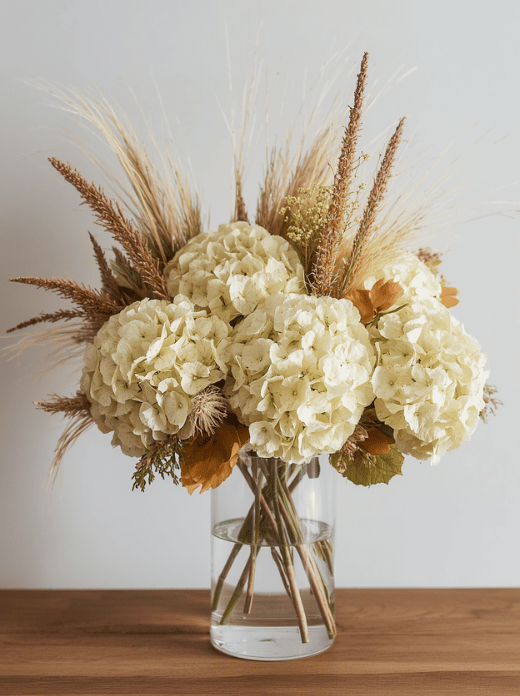
Hydrangea heads can become large focal points in dried arrangements. Select blooms that have begun to feel papery rather than soft and freshly hydrated.
Place the stems in a vase with very little water or allow them to dry naturally in an upright container. Remove leaves that wilt unattractively.
Combine dried hydrangea with grasses, seed heads, or a few contrasting flowers. Avoid crowding the head because its broad shape already provides plenty of visual volume.
8. Fragrant lavender and herb bouquet
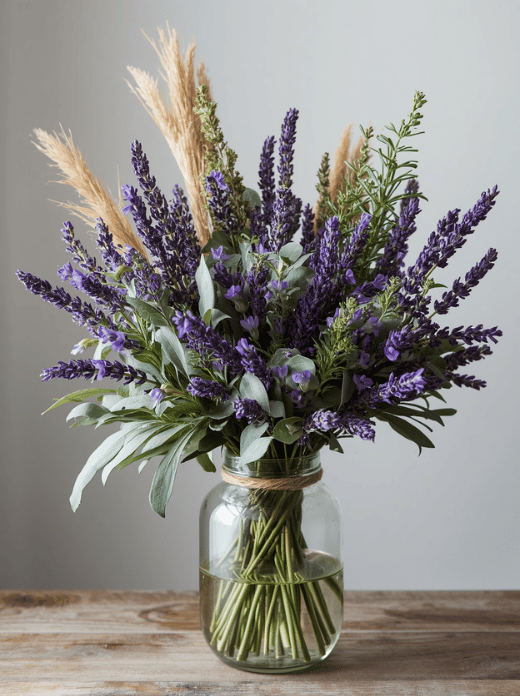
Lavender can be combined with rosemary, sage, oregano flower stems, and dried grasses. This creates a bouquet with fragrance as well as visual interest.
Make sure the herbs are clean and completely dry before arranging. A damp bundle can spoil quickly.
This style suits kitchens, mudrooms, linen closets, and entryways. Keep fragrant bouquets away from areas where they may be constantly brushed or exposed to moisture.
9. Dramatic burgundy arrangement
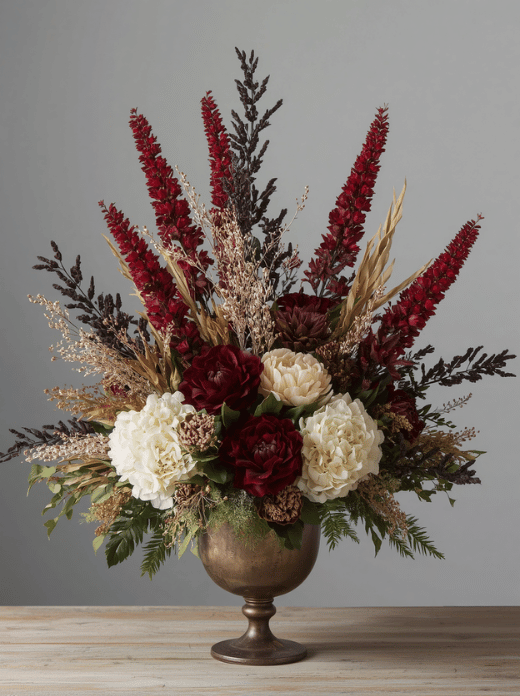
For a deeper, richer design, combine burgundy celosia, dark grasses, dried hydrangea, and pale filler flowers.
Limit the number of colors to avoid a muddy result. Cream, blush, tan, and muted green can soften the darker stems.
Use a heavy vase with a stable base because dried flowers can create a taller, lighter arrangement that tips easily.
10. Minimal single-flower bouquet
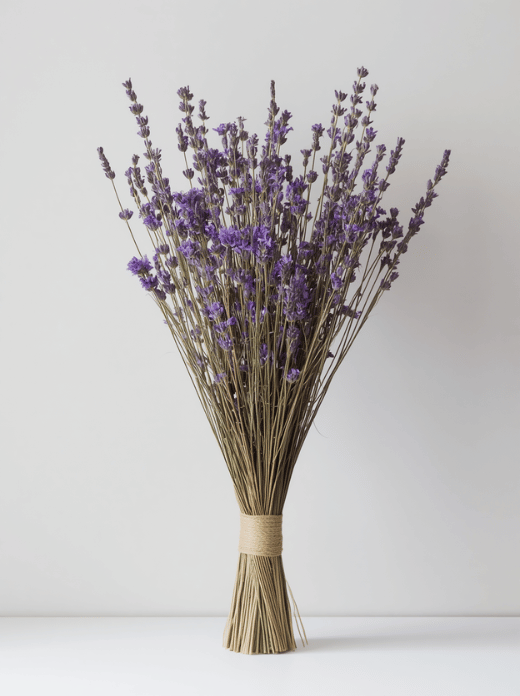
Sometimes the strongest display uses only one flower. A bundle of dried lavender, statice, strawflower, or ornamental grass can look intentional and elegant.
Choose a generous number of stems and trim them to a consistent length. Wrap the base with twine or ribbon if you want the bouquet to be displayed without a vase.
Single-flower arrangements are especially useful for small rooms, shelves, bedside tables, and simple seasonal decorating.
Build the bouquet in layers
When arranging dried flowers, begin with the largest or most important stems. Hold them in one hand and add smaller flowers around them.
Turn the bouquet as you work so the shape remains balanced from different angles. Add fillers in small groups rather than distributing single stems randomly.
Finish with grasses or curved stems around the outside. These create movement and prevent the bouquet from looking like a stiff ball.
Secure the stems with floral tape, twine, or a thin rubber band. Cover the binding with ribbon if desired.
Preserve color as much as possible
Dried flowers naturally become softer in color, but you can reduce excessive fading by drying them away from direct sunlight. Store unused flowers in a dark, dry box until you are ready to arrange them.
Some flowers may be lightly tinted after drying, but test a small stem first. Water-based products can add moisture and cause problems if the flowers are not allowed to dry again thoroughly.
Accept some color change as part of the charm. Dried bouquets often look better when their colors are muted and harmonious rather than perfectly bright.
How to care for a dried bouquet
Keep dried flowers away from moisture, direct sunlight, and high heat. Dust them gently with a soft brush or use a hair dryer on the coolest setting from a distance.
Do not place a dried bouquet in a bathroom or beside a humidifier. Avoid overhandling the petals because they become fragile over time.
If one stem breaks, remove it cleanly rather than trying to force it back into the arrangement. Replace it with another dried stem or reshape the bouquet.
When a bouquet should be discarded
Dried flowers can last a long time, but they should be discarded if they develop visible mold, a musty smell, or severe brittleness. Do not try to save moldy stems by spraying them indoors.
A healthy dried bouquet should smell neutral or lightly fragrant, feel dry, and show no fuzzy growth.
Final thoughts
The best dried flower bouquet ideas using garden flowers are often simple. Start with a few reliable flowers, dry them carefully, and combine different shapes rather than collecting too many colors. A small harvest of lavender, strawflower, celosia, grasses, or statice can become an attractive piece of home décor long after the growing season ends.
Dried flowers do not need to look formal or perfect. Their uneven stems, faded tones, and natural textures are exactly what make them feel personal.
Last modified: October 7, 2026
