

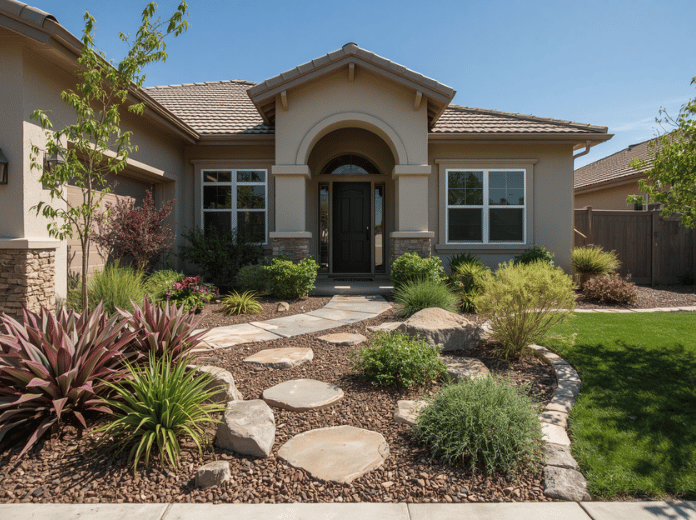
A beautiful front yard does not have to require hours of mowing, watering, pruning, and weeding every week. With the right plants and a simple layout, you can create a welcoming entrance that looks neat throughout the year without constant maintenance.
The best low-maintenance front yard landscaping ideas focus on durable plants, defined garden beds, mulch, gravel, and hardscaping. These features can reduce lawn care while adding color, texture, and structure around your home.
Before buying plants, consider how much sunlight your yard receives, how water moves across the property, and how much time you want to spend maintaining the landscape. A front yard that fits your lifestyle will be easier to care for and more enjoyable to look at.
What Makes Front Yard Landscaping Low-Maintenance?
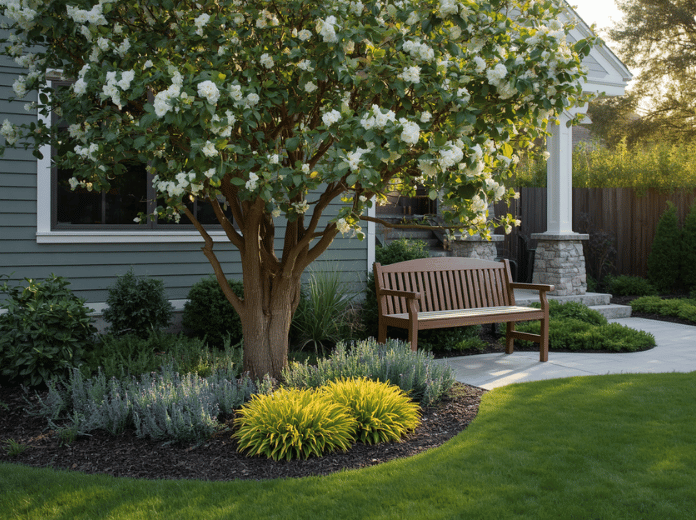
Low-maintenance landscaping does not mean completely maintenance-free. Every landscape needs occasional watering, trimming, weeding, or cleanup. The goal is to reduce unnecessary work.
A low-maintenance front yard usually includes:
- Plants suited to the local climate
- Fewer annual flowers that need replacing
- Perennials that return each year
- Mulch or gravel to reduce weeds
- Less lawn to mow
- Simple planting beds
- Durable shrubs and ground covers
- Efficient watering methods
- Clear borders around garden areas
The design should also be easy to reach. Plants that are difficult to access can make pruning and weeding more frustrating.
1. Replace Part of the Lawn With Mulch Beds
Large areas of grass can require regular mowing, watering, and fertilizing. Replacing a section of lawn with a mulch bed is one of the easiest ways to lower maintenance.
Create a curved bed around a tree, along the front walkway, or beneath a window. Add a few shrubs, grasses, or perennial flowers, then cover the soil with two to three inches of mulch.
The mulch helps hold moisture, reduce weeds, and give the front yard a finished appearance.
2. Plant Evergreen Shrubs
Evergreen shrubs provide structure throughout the year. They do not disappear during winter, and many varieties require only occasional trimming once established.
Good locations for evergreen shrubs include:
- Along the front of the house
- Beside the walkway
- Near the driveway
- Around the porch
- At the corners of the home
Choose shrubs according to their mature size. Planting a shrub that becomes too large can create years of unnecessary pruning.
3. Use Native Plants
Native plants are adapted to the local climate, soil, rainfall, and wildlife. Once established, they often require less watering and attention than plants that struggle in the area.
Native plants can also support birds, butterflies, and other pollinators. Visit a local nursery or extension office to find species that naturally grow in your region.
Arrange native plants in groups instead of scattering one plant at a time. Repeating the same plants creates a more organized appearance.
4. Create a Rock Garden
A rock garden can add texture and interest while reducing the amount of grass and water needed in the front yard.
Use a combination of:
- Decorative rocks
- Gravel
- Boulders
- Drought-tolerant plants
- Ornamental grasses
- Low-growing ground covers
Place larger rocks first, then add smaller stones around them. Avoid making the area look too evenly spaced. A natural arrangement usually appears more attractive.
5. Add Drought-Tolerant Plants
If your area experiences hot summers or limited rainfall, drought-tolerant plants can make front yard care much easier.
Possible choices include:
- Lavender
- Sedum
- Yarrow
- Coneflowers
- Russian sage
- Ornamental grasses
- Agave in suitable climates
- Black-eyed Susans
- Catmint
Choose plants that match your region and soil. Even drought-tolerant plants need regular watering while they are becoming established.
6. Install a Simple Stone Walkway
A walkway gives the front yard structure and creates a clear path to the entrance. Gravel, stepping stones, brick, and concrete pavers can all work well.
A simple gravel path is often less expensive than a professionally installed concrete walkway. Install edging along both sides to keep the gravel from spreading into the lawn or garden beds.
Use large, flat stones in areas where people walk frequently. Uneven stones can become a tripping hazard.
7. Use Ornamental Grasses
Ornamental grasses add movement, height, and texture without needing constant care. Many varieties tolerate heat and dry conditions once established.
Use ornamental grasses:
- Around mailboxes
- Near the driveway
- Along a porch
- In front of fences
- At the corners of planting beds
Some grasses should be cut back once a year, usually in late winter or early spring. Check the mature height before planting because certain varieties can grow larger than expected.
8. Plant Perennials Instead of Annuals
Annual flowers often need to be replaced every year. Perennials return season after season, making them a practical choice for a low-maintenance front yard.
A mix of perennials can provide color from spring through fall. Choose plants with different blooming periods so the garden does not look bare after one variety finishes flowering.
Combine flowers with evergreen shrubs and ornamental grasses for year-round structure.
9. Add a Defined Border
A clear border separates the lawn from planting beds and makes the entire yard look more organized. It also keeps mulch, soil, and gravel from spreading into the grass.
Affordable border options include:
- Bricks
- Natural stones
- Metal edging
- Concrete pavers
- Timber edging
- Recycled landscape blocks
Keep the border easy to mow around. Sharp corners and narrow spaces can make lawn maintenance more difficult.
10. Create a Small Front Porch Garden
If your front yard is small, use the area around the porch to add plants and color. Large containers can hold shrubs, flowers, herbs, or ornamental grasses.
Choose containers that are large enough to support healthy roots and have drainage holes. Group three containers of different heights together for a balanced display.
Use durable plants that can handle the amount of sunlight the porch receives.
11. Use Ground Cover Plants
Ground covers can fill empty spaces beneath trees, along slopes, or around taller shrubs. They may require less mowing than grass and can help reduce weeds once established.
Possible ground covers include:
- Creeping thyme
- Creeping phlox
- Lily of the valley
- Ajuga
- Native sedges
- Low-growing ornamental grasses
Check that the plant is suitable for your region and not invasive. Some ground covers spread quickly and may move beyond the area where they were planted.
12. Install Gravel Around the Mailbox
The mailbox area often becomes worn because people and delivery workers walk across it regularly. Gravel can create a tidy, durable surface that does not need mowing.
Add a small garden bed around the mailbox with a few tough plants. Avoid thorny varieties or plants that grow into the path.
A simple combination of gravel, one shrub, and two or three flowers can improve the area without creating extra work.
13. Use Large Plant Groupings
Planting too many different varieties can make a front yard look cluttered and create more maintenance. Instead, repeat a small number of plants throughout the landscape.
For example, use the same ornamental grass near the walkway and driveway. Repeat one flowering perennial in several beds to create a consistent appearance.
Large groups are also easier to water, mulch, and weed than scattered individual plants.
14. Add a Small Rain Garden
If water collects in part of your front yard, consider creating a rain garden. A rain garden uses moisture-tolerant plants to help manage runoff.
Choose a low area away from the home’s foundation. Use plants that can handle both wet conditions and occasional dry periods.
A rain garden can turn a drainage problem into an attractive landscape feature, but the soil must drain appropriately. Avoid placing one directly beside the foundation.
15. Choose a Simple Color Scheme
A simple color scheme can make a low-maintenance garden look intentional. Choose two or three main colors instead of planting every color available.
For example, combine:
- Purple flowers with white flowers and green foliage
- Yellow flowers with blue flowers and silver leaves
- Pink flowers with white blooms and evergreen shrubs
A limited color palette also makes it easier to replace plants if one does not survive.
16. Use Mulch Around Trees
Grass growing around trees can be difficult to mow and may damage the tree trunk if the mower gets too close. Create a mulch ring instead.
Keep mulch away from direct contact with the trunk. A thick pile of mulch against the bark can hold moisture and encourage decay.
The mulch ring should look like a shallow doughnut, not a volcano. Keep the area wide enough to protect the tree roots and simplify mowing.
17. Add Solar Path Lights
Solar lights can improve the appearance and safety of a front walkway without requiring electrical wiring.
Place lights along:
- Steps
- Driveways
- Walkways
- Garden edges
- Porch entrances
Use a few lights evenly spaced rather than installing too many. Make sure the solar panels receive enough sunlight during the day.
18. Create a Gravel Front Yard
In dry climates or areas where lawn is difficult to maintain, a gravel front yard may be a practical option. Combine gravel with boulders, shrubs, grasses, and raised planting beds.
Use landscape fabric beneath the gravel if appropriate, but remember that weeds can still appear from seeds that land on the surface. Occasional maintenance will still be needed.
Select gravel that complements the exterior color of your home.
19. Plant Along the Driveway
A narrow planting bed along the driveway can soften hard surfaces and improve curb appeal. Choose plants that stay compact and do not spread into the driving area.
Low-growing shrubs, grasses, lavender, and hardy perennials can work well. Leave enough space for opening car doors and walking safely.
Avoid plants with sharp thorns if people regularly pass close to the bed.
20. Use Decorative Boulders
Large boulders can act as permanent focal points in the landscape. They do not need watering, pruning, or seasonal replacement.
Use one large stone as a feature rather than placing many small rocks in a straight line. Partially burying the base can make the boulder look more natural.
Add low-growing plants around it to soften the edges.
21. Keep Plant Beds Wide Enough
Very narrow beds can be difficult to plant and maintain. If possible, make beds wide enough to include a taller plant in the back, medium plants in the middle, and low plants along the front.
A wider bed may also reduce the amount of grass that needs mowing.
Use a garden hose to outline the shape before digging. This lets you adjust the design before committing to the final border.
22. Add a Privacy Screen
A small privacy screen can make the front porch or side yard feel more comfortable. Use a trellis, fence panel, evergreen shrub, or group of tall ornamental grasses.
Choose a screen that fits the scale of the house. An oversized structure may make a small front yard feel crowded.
Check local rules before installing a tall fence or permanent structure.
23. Choose Low-Maintenance Trees Carefully
A small ornamental tree can provide shade, flowers, or seasonal interest. Choose a variety that fits the available space and will not interfere with power lines, sidewalks, or the roof.
Avoid planting a tree too close to the foundation or driveway. Consider the mature canopy and root system before purchasing.
A well-placed tree can improve the yard for many years, but a poor location can create expensive problems.
24. Use Raised Planting Beds
Raised beds can give a front yard a clean, structured appearance. They are useful when the existing soil is poor or drainage is a problem.
Build the beds from stone, brick, timber, or landscape blocks. Keep them low enough that they do not block windows or make the home look hidden.
Fill them with quality soil and choose plants suited to the amount of sunlight they receive.
25. Keep the Design Simple
The most effective low-maintenance front yard landscaping ideas are often the simplest. A few evergreen shrubs, a defined mulch bed, one attractive tree, and a clear walkway may be all your home needs.
Too many plants, colors, decorations, and separate garden areas can create more work and make the yard feel crowded.
Choose a design that matches your home and your available time. A simple landscape that stays neat is better than an elaborate garden that becomes difficult to manage.
How to Plan a Low-Maintenance Front Yard
Use this quick planning process:
- Measure the front yard.
- Note the sunny and shady areas.
- Identify drainage problems.
- Decide how much lawn you want to keep.
- Choose plants that fit your climate.
- Add paths and borders first.
- Plant shrubs and trees before flowers.
- Finish with mulch or gravel.
- Add lighting and containers last.
- Water new plants consistently until established.
Frequently Asked Questions
What is the easiest low-maintenance landscaping?
The easiest approach combines mulch beds, evergreen shrubs, native plants, ornamental grasses, and a small amount of lawn.
How can I reduce mowing in my front yard?
Replace part of the grass with garden beds, gravel, native ground covers, or hardscaping. Even a small reduction can save time.
Is gravel better than mulch for low-maintenance landscaping?
Gravel lasts longer and does not need to be replaced as often, but mulch improves soil and is usually easier to plant in. The best choice depends on your design and climate.
How many plants should I use in a front yard?
Use fewer plant varieties in larger groups. This creates a more organized appearance and makes watering and maintenance easier.
Do low-maintenance plants need water?
Yes. All new plants need regular water while their roots become established. Afterward, many suitable plants can survive with less supplemental watering.
Final Thoughts
Low-maintenance front yard landscaping can make your home look welcoming without turning your weekends into a constant gardening project. Start with the basics: reduce unnecessary lawn, choose plants that suit your climate, define garden beds, and use mulch or gravel to control weeds.
You do not need to complete every project at once. Begin with one planting bed, walkway, or porch area and build from there. With a simple plan and the right plants, your front yard can stay attractive, practical, and easier to care for throughout the year.
Last modified: September 28, 2026
