

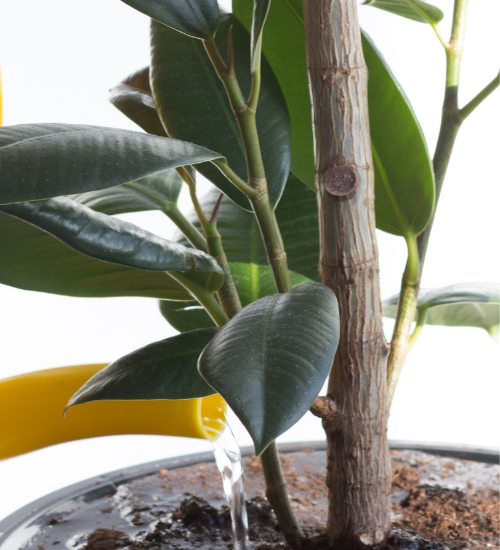
You water a potted plant, and the water disappears down the sides or straight out of the drainage holes. The surface may look damp for a moment, but the plant still wilts and the pot feels unusually light. In some cases, the water is bypassing the dry root ball rather than soaking it.
This can happen when potting mix becomes water-repellent, or hydrophobic, after drying out. Peat-based mixes are especially difficult to rewet once they have dried thoroughly. The good news: a dry mix can often be rehydrated with patience. Watering Hydrophobic Soil | UC Master Gardeners of Santa Clara County
First, check that the mix is actually dry
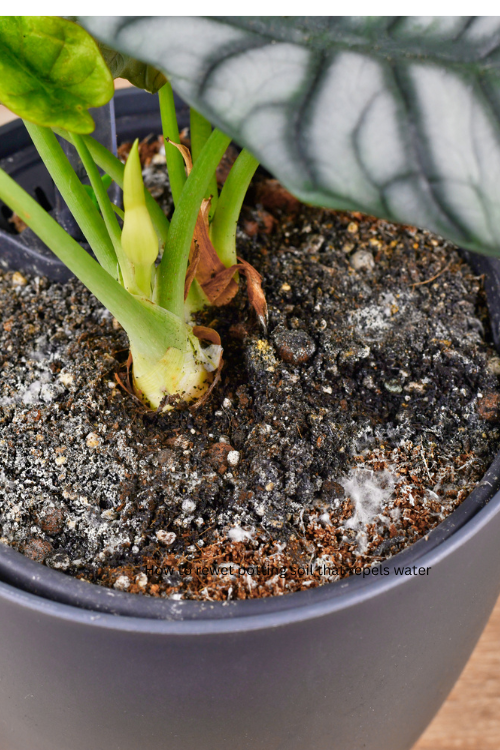
Water draining from a pot doesn’t always mean the root zone is wet. Water can run through a gap between the pot wall and the dried mix, leaving the center of the root ball dry. Check the mix below the surface with a finger or wooden stick, and lift the pot if you can: a very light pot can be a clue that it needs water. Watering Hydrophobic Soil | UC Master Gardeners of Santa Clara County
Also check the drainage holes. If they’re blocked, water may be pooling in the pot rather than passing through normally. A plant in waterlogged mix can wilt too, so don’t keep watering just because the leaves look droopy. If the mix feels wet throughout, investigate drainage or root health instead of treating it as a dry-soil problem.
How to rewet potting soil that repels water
How to rewet potting soil that repels water
Choose the method that fits the pot’s size and the plant’s needs. The goal is to give the mix time to absorb water, not to pour on more water as quickly as possible.
Method 1: Bottom-water a small or medium pot
- Place the pot in a tray or basin of water.
- Let the mix draw water up through the drainage holes.
- Check the pot after about an hour. If the mix is still dry, give it more time and check again.
- Once the root ball is hydrated, remove the pot and let excess water drain.
University of California Master Gardeners note that bottom-watering may take an hour or more, depending on the pot and how dry the mix is. Don’t leave the plant standing in water continuously; remove it once the mix has rehydrated. Watering Hydrophobic Soil | UC Master Gardeners of Santa Clara County
Method 2: Soak a pot that can be safely lifted
For a small pot with very dry mix, you can lower the pot into a bucket or basin of water so the root ball can absorb moisture from below. A very dry root ball may float at first as air escapes. Remove the pot when the bubbling subsides, then let it drain.
Use this approach only if you can handle the pot safely and the plant can tolerate the temporary soak. Avoid rough handling, especially if the plant has fragile stems or a disturbed root system.
Method 3: Water a large container slowly
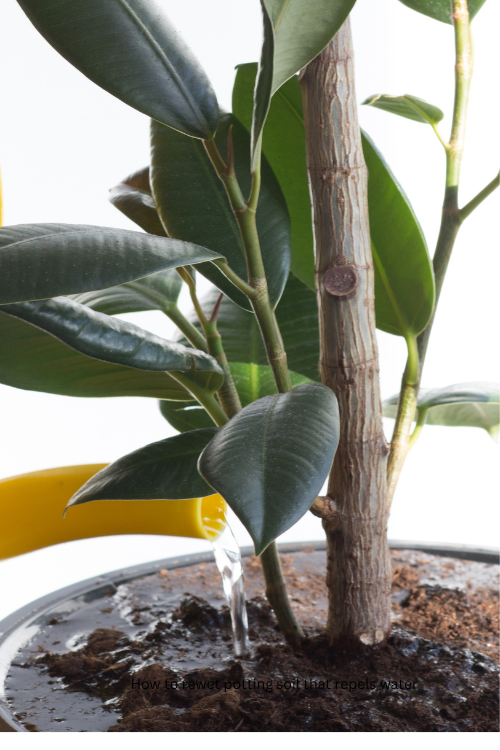
If a container is too large to move, apply water in a slow, steady trickle rather than dumping it on all at once. Pause if water begins running off the surface or down the sides, then resume gently so the mix has time to absorb it.
Set a timer if you’re using a hose, and check the container afterward.
After rewetting, let the pot drain
How to rewet potting soil that repels water
Once the mix feels evenly moist, allow excess water to drain from the bottom. Empty any saucer or outer pot so the plant isn’t left sitting in standing water. Containers need drainage, and roots in waterlogged mix can struggle to get the air they need. Container Vegetable Gardening – Four Keys to Success
Don’t assume that more frequent watering is the permanent fix. First confirm that water is reaching the root zone; then return to a schedule suited to the plant, pot, and growing conditions. For many container plants, checking the mix directly is more useful than following a rigid calendar.
Why potting mix becomes difficult to wet
Potting mixes are designed to hold both air and moisture, but very dry mix can be stubborn to rehydrate. Peat moss, a common potting-mix ingredient, can be particularly hard to wet again after it dries out. A gap between the mix and the pot can also let water bypass the root ball.
Small nursery plants can be vulnerable when the roots have become crowded in the pot. If the root ball is tightly packed with roots, water may have trouble moving evenly through it. In that case, restoring moisture can help in the short term, but the plant may also need a larger container or fresh mix.
When rewetting isn’t enough
If water continues to bypass the center after a careful soak, slide the plant gently from its pot and inspect the root ball. If roots are densely circling the outside, repotting may be a better long-term solution than repeated soaking. Choose a container with drainage holes and use a potting mix suited to the plant.
If the mix has collapsed, become compacted, or no longer drains properly, replacing it may be more practical than trying to restore it. Avoid adding garden soil to a container as a quick fix; container plants need a growing medium that allows water to drain while retaining moisture.
How to prevent potting mix from drying out completely
- Check the mix before watering. The surface can look wet while the center remains dry, or look dry while deeper mix is still moist. Check below the surface before deciding.
- Water thoroughly when the plant needs it. For a healthy container with working drainage, water until some drains from the bottom, then empty the saucer. This helps moisten the root zone without leaving the pot standing in water. Container gardening basics – OSU Extension Service
- Don’t wait until the mix pulls away and becomes extremely dry. Repeated cycles of severe drying can make rewetting harder, especially with peat-based mix. Watering Hydrophobic Soil | UC Master Gardeners of Santa Clara County
- Use the right container and mix. Make sure drainage holes are open and choose a potting mix intended for containers. Container mixes are formulated for conditions that differ from garden beds. Starting your garden and containers off right
- Keep an eye on smaller pots. Small containers can dry faster than larger ones, so check them more often rather than assuming all pots need water at the same time.
Conclusion
When potting soil won’t absorb water, check whether the root ball is truly dry and whether water is bypassing it. Rehydrate small pots by bottom-watering or soaking briefly; water large containers slowly. Let every pot drain afterward, and don’t leave it sitting in water. If the problem keeps returning, inspect the roots, drainage, and condition of the mix so you can address the cause, not just the symptoms.
Last modified: October 19, 2026
