

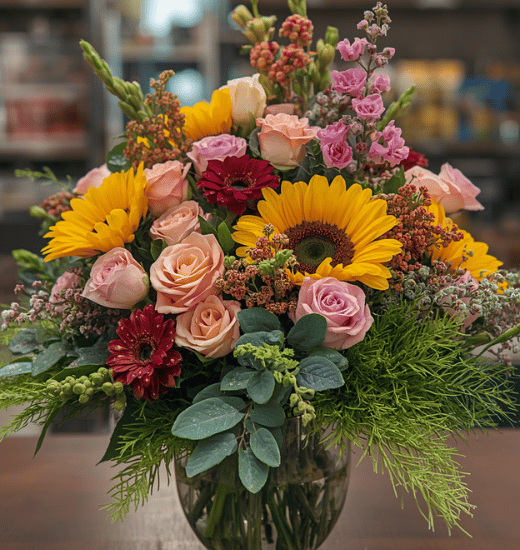
A beautiful fall centerpiece does not require a florist, expensive flowers, or a complicated floral recipe. With a few grocery store bouquets, one sturdy container, and several simple arranging techniques, you can create a warm centerpiece for a dining table, entryway, coffee table, or seasonal gathering.
The key is to shop for flowers by color, shape, and texture instead of buying a prearranged bouquet and placing it directly in a vase. Grocery stores often carry useful flowers such as chrysanthemums, roses, carnations, alstroemeria, sunflowers, and seasonal greenery. These flowers can look much more intentional when separated and recombined.
If you want to know how to make a fall flower centerpiece with grocery store flowers, begin by choosing a color palette and a container that suits the size of your table.
Choose a Fall Color Palette
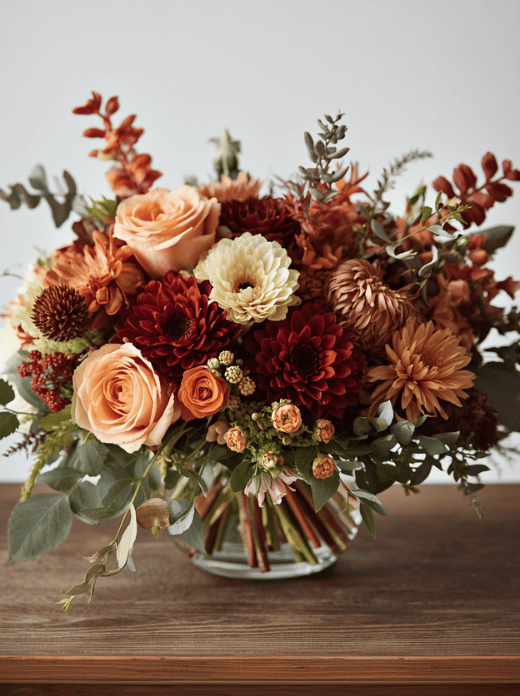
Autumn arrangements do not have to be limited to orange and red. A controlled color palette usually looks more polished than a mixture of every bright flower available.
Try one of these combinations:
| Style | Colors |
|---|---|
| Traditional autumn | Orange, rust, gold, burgundy |
| Soft fall | Blush, cream, peach, muted terracotta |
| Moody autumn | Deep red, plum, bronze, chocolate brown |
| Modern neutral | White, tan, pale green, copper |
| Harvest-inspired | Yellow, orange, red, green |
Choose two main colors and one supporting color. For example, orange chrysanthemums can be paired with burgundy carnations and cream filler flowers.
Buy Flowers With Different Shapes
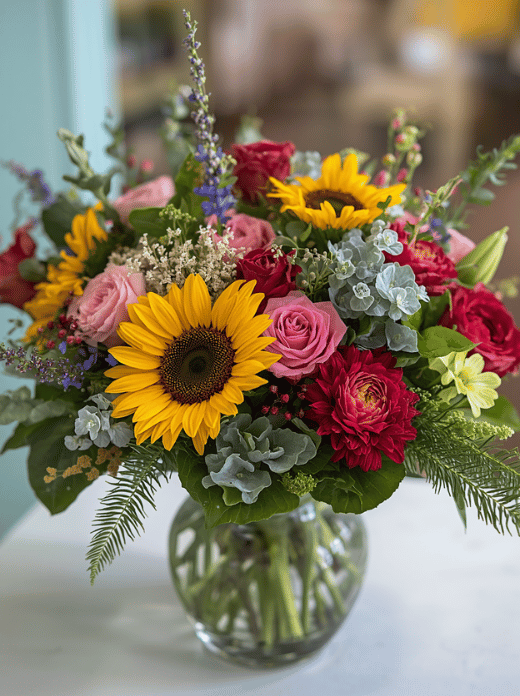
How to Make a Fall Flower Centerpiece With Grocery Store Flowers
A successful centerpiece usually combines three flower roles:
- Focal flowers: The blooms that attract attention first.
- Supporting flowers: Medium-sized blooms that fill the arrangement.
- Texture or filler: Small flowers, berries, grasses, or greenery.
Good grocery store combinations may include:
- Sunflowers with chrysanthemums and eucalyptus
- Roses with carnations and baby’s breath
- Alstroemeria with mums and ruscus
- Gerbera daisies with solidago and fern
- Chrysanthemums with roses and seeded greenery
Do not worry if the flowers are not sold as a matching collection. Your color choices and arrangement shape will make them feel connected.
Select the Right Container
The container affects the arrangement as much as the flowers.
For a long dining table, use a low bowl, shallow ceramic vase, or several small jars grouped together. Tall arrangements can block conversation and make it difficult for guests to see across the table.
For an entry table or buffet, a taller vase may work well. Choose a container that is stable and heavy enough to support the flowers.
Before shopping, measure the space where the centerpiece will sit. A large arrangement can overwhelm a small table, while a tiny vase may disappear on a long surface.
Gather Your Supplies
You will need:
- Clean vase or container
- Sharp floral scissors or pruners
- Fresh water
- Flower food, if available
- Clean towel
- Floral tape, optional
- Small jars or bottles, optional
- Seasonal accents, optional
Avoid using dull household scissors because they can crush stems. Clean tools also reduce the chance of transferring bacteria into the vase water.
Prepare the Flowers
When you bring the flowers home, unwrap them and inspect the stems. Remove damaged leaves and flowers.
Cut about an inch from the bottom of each stem at an angle. Place the flowers in clean water while you prepare the arrangement. If the flowers have been out of water for a while, let them hydrate for several hours before arranging.
Remove all leaves that would sit below the waterline. Submerged leaves decay quickly and can make the water cloudy.
If the flowers are tightly closed, give them time to open. A centerpiece does not have to look fully mature on the first day.
Build a Simple Framework
If your vase has a narrow opening, the stems may hold themselves in place. For a wide bowl, use a grid of floral tape across the top or place a small jar inside the larger container.
Another simple method is to create a loose framework with greenery. Place several stems at angles around the edge of the vase. This forms a natural outline and gives the other flowers something to rest against.
Keep the arrangement slightly wider than the container opening. This creates a balanced shape without making the flowers look crowded.
Add the Focal Flowers First
Begin with the largest or most visually important flowers. Place them at different heights rather than creating a perfectly even row.
For example, if using sunflowers, place one slightly above the center and another lower to one side. If using roses, position the best blooms where they can be seen from the main viewing angle.
Do not place every focal flower in the middle. A few blooms toward the edge create movement and make the arrangement feel less rigid.
Fill With Supporting Flowers
Add medium-sized flowers between the focal blooms. Turn the vase as you work so the arrangement looks attractive from every side.
Keep some flowers facing outward and others angled slightly upward. Natural variation is more appealing than having every flower head point in exactly the same direction.
If your arrangement is intended for a wall or side table, you can create a front-facing design with more height at the back and lower flowers toward the front.
Add Texture and Seasonal Details
Texture makes a fall centerpiece feel complete. Consider adding:
- Eucalyptus
- Ruscus
- Fern
- Solidago
- Seeded stems
- Ornamental grasses
- Dried wheat
- Small branches
- Artificial or fresh berries
Use dried accents sparingly. Too many can make the arrangement look stiff or dusty. A few stems of wheat or grass are often enough to suggest autumn.
You can also place small pumpkins, pears, apples, pinecones, or acorns around the base of the vase. Keep produce away from standing water so it does not rot against the container.
Three Easy Arrangement Styles
Low and Wide
Use a shallow bowl with chrysanthemums, roses, and greenery. Keep the flowers close to the tabletop so guests can see across the arrangement.
This style is ideal for dinner parties and family meals.
Loose and Garden-Inspired
Use flowers at different heights and allow some greenery to extend outward. The result should look gathered rather than perfectly symmetrical.
This works well with mums, alstroemeria, carnations, and seasonal branches.
Grouped Mini-Arrangements
Instead of one large centerpiece, divide the flowers among three small vases. Place the vases in a row or cluster them in the middle of the table.
This approach is useful when flowers have different stem lengths. It also allows guests to see through the arrangement.
Use Color Repetition
Repeat each major color at least twice. If you use one burgundy flower, include another burgundy accent elsewhere in the design. Repetition helps the arrangement feel intentional.
Greenery also acts as a unifying color. Even unrelated flowers can look coordinated when they share similar foliage or are arranged with the same green accents.
Maintain the Centerpiece
To keep the arrangement fresh:
- Change the water every one to two days.
- Rinse the vase before refilling.
- Recut stems when changing the water.
- Remove fading flowers promptly.
- Keep the arrangement away from heating vents.
- Avoid direct afternoon sun.
- Move fruit away if it begins to soften.
Different flowers age at different rates. Remove tired stems while leaving the fresher flowers in place. You can also transfer the remaining blooms into a smaller vase as the arrangement becomes shorter.
A Budget-Friendly Shopping Plan
You do not need a large bouquet to create a full centerpiece. Try buying:
- One bunch of chrysanthemums
- One bunch of roses or carnations
- One bunch of greenery or filler
- One small seasonal accent
Separate the flowers and arrange them in groups. If the stems are short, use small jars or a low container rather than forcing them into a tall vase.
Grocery store flowers are often sold in mixed colors, so shop with flexibility. If the exact shade you want is unavailable, choose a nearby color and keep the rest of the palette simple.
Final Styling Tips
Place the centerpiece where it receives enough light during the day but is not exposed to heat or drafts. Use a neutral table runner so the flowers remain the focus.
If the arrangement feels too formal, remove a few stems and allow more space between the blooms. If it looks thin, add greenery before buying more flowers. Often, the problem is not a lack of flowers but a lack of structure.
Learning how to make a fall flower centerpiece with grocery store flowers is mostly about selection and proportion. Choose a limited palette, combine different textures, and build the arrangement gradually. The result can look personal, seasonal, and polished without being expensive or difficult.
Last modified: October 11, 2026
