

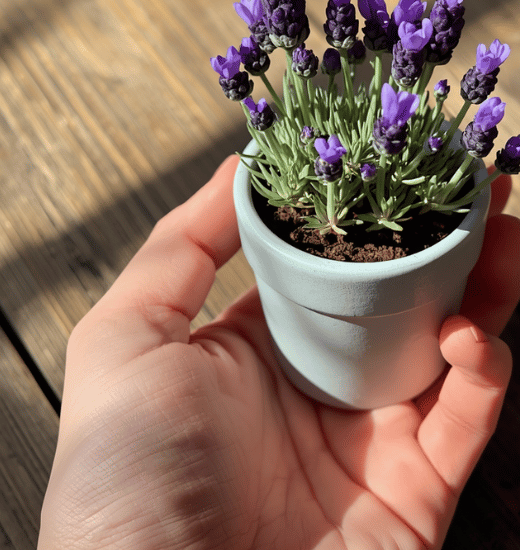
Lavender is valued for its fragrant foliage, colorful flower spikes, and ability to thrive in sunny, well-drained locations. Once you have a healthy plant, you may want to grow additional plants for borders, containers, walkways, or gifts.
Growing lavender from seed can produce variation in flower color, fragrance, and plant shape. Cuttings are a practical way to create new plants that resemble the parent plant.
Learning how to propagate lavender from cuttings is relatively simple, but timing and moisture control matter. Lavender stems can rot if kept too wet, while cuttings can wilt if they dry out before roots form.
The most reliable method for beginners is to take nonflowering shoots, prepare them carefully, and place them in a clean, free-draining rooting medium.
When to Take Lavender Cuttings
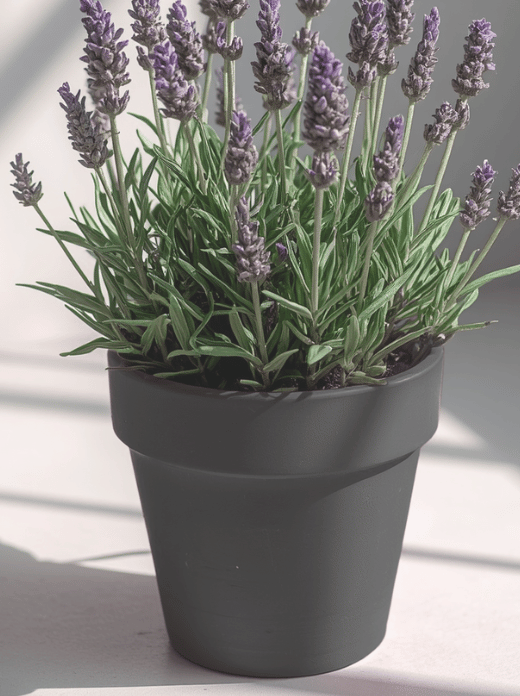
The best time is usually during active growth, when the plant has healthy new shoots but the stems are not extremely soft.
Useful timing windows include:
- Late spring
- Early summer
- Late summer, using semi-ripe growth
- After flowering, if healthy nonflowering shoots are available
Avoid taking cuttings from a plant that is stressed by drought, disease, extreme heat, or recent heavy pruning.
Morning is a good time to collect cuttings because the stems are often well hydrated. Do not take material from a plant with obvious pest damage or discolored foliage.
Softwood or Semi-Ripe Cuttings?
Lavender can be propagated from different types of stem cuttings.
Softwood cuttings
Softwood is the flexible new growth near the tips of branches. It roots quickly but can wilt easily.
Semi-ripe cuttings
Semi-ripe stems are firmer and beginning to mature. They are less fragile and often easier for beginners to handle.
Choose stems that bend slightly but are not completely soft or woody. Avoid old, thick branches because they may root slowly or fail to produce a strong new plant.
What You Need
Gather the following supplies:
- A healthy lavender plant
- Clean, sharp scissors or pruners
- Small pots or a propagation tray
- Fresh, well-drained rooting mix
- A pencil or dibber
- Clean water
- Optional rooting hormone
- Clear plastic cover or a loose plastic bag
A suitable rooting mix might contain:
- Perlite
- Coarse sand
- Coconut coir
- Peat-free seed-starting mix
- Fine pine bark
The medium should hold the cutting upright while allowing air around the developing roots.
Step-by-Step: How to Propagate Lavender From Cuttings
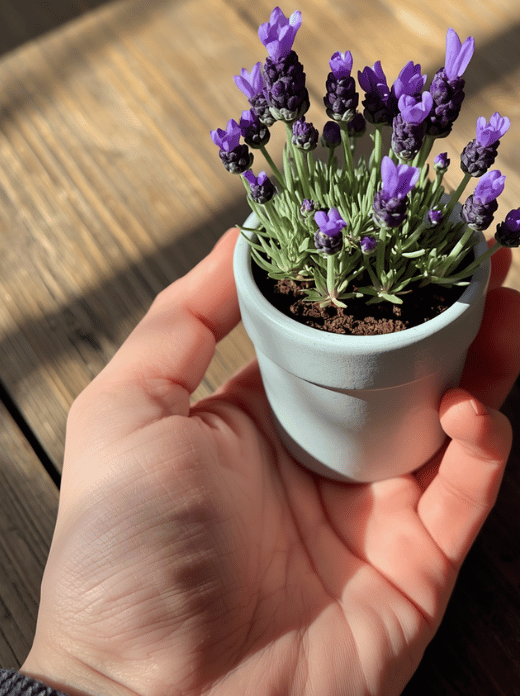
How to Propagate Lavender From Cuttings
1. Select a healthy stem
Choose a nonflowering shoot about 3 to 5 inches long. Look for firm green growth with several leaf pairs.
Avoid stems with flower buds because the cutting will spend energy supporting flowers instead of producing roots.
2. Make the cut
Use clean pruners to cut just below a leaf node. A node is the point where leaves attach to the stem.
The lower portion of the cutting will be placed into the rooting mix, so choose a section with enough length to insert securely.
3. Remove the lower leaves
Strip the leaves from the bottom half of the cutting. Leave a few sets of leaves near the top.
Do not remove every leaf. The remaining foliage helps the cutting produce energy, but too many leaves increase water loss.
4. Prepare the pot
Fill a small pot with moist rooting mix. Make sure the container has drainage holes.
Use a pencil to make a planting hole. This prevents the leaves and stem from being scraped away when you insert the cutting.
5. Apply rooting hormone if desired
Rooting hormone is optional. If you use it, dip only the lower portion of the stem and tap off excess powder.
Do not bury the treated cutting in a wet clump of hormone. Too much product can create problems rather than improve rooting.
6. Insert the cutting
Place the bare lower stem into the hole. Firm the mix gently around it so the cutting stands upright.
At least one leaf node should be below the surface, while the leaves remain above it.
7. Water carefully
Water just enough to settle the mix around the stem. Allow excess water to drain completely.
Lavender cuttings are vulnerable to rot when the medium stays saturated. The mix should remain lightly moist, not muddy.
8. Provide bright, indirect light
Place the pot in bright light away from intense midday sun. Direct hot sunlight can cause the cutting to wilt before roots develop.
A sheltered outdoor location or bright indoor windowsill can work well.
9. Maintain moderate humidity
A loose plastic cover can slow moisture loss, but it should not seal the cutting in stagnant, dripping conditions.
Vent the cover regularly. If condensation covers the inside continuously, increase airflow and reduce moisture.
How Long Does Lavender Take to Root?
Rooting time varies with temperature, stem maturity, moisture, and plant health. Some cuttings may begin forming roots within a few weeks, while others take longer.
Do not pull on the cutting every few days to check. This can break new roots before they become established.
Instead, look for signs such as:
- New leaf growth
- Resistance when the cutting is gently touched
- Roots appearing through drainage holes
- A cutting that remains firm rather than wilting
New growth does not always prove that roots have formed, but it is encouraging.
How to Care for Rooted Cuttings
Once the cutting has developed a healthy root system, transplant it into a slightly larger pot.
Use a well-drained potting mix and place the young lavender in bright light. Water when the mix begins to dry rather than keeping it constantly moist.
Do not move a newly rooted cutting directly from sheltered light into strong outdoor sun. Gradually increase its exposure over several days.
This adjustment process helps reduce stress and leaf scorch.
Common Lavender Propagation Problems
| Problem | Likely cause | Solution |
|---|---|---|
| Cutting turns black | Excess moisture or disease | Remove it and use a drier, cleaner medium |
| Leaves wilt quickly | Too much foliage or heat | Reduce leaf area and provide bright indirect light |
| No roots after several weeks | Old wood, poor timing, or low vigor | Try fresh, semi-ripe shoots |
| Leaves fall off | Water stress or excessive humidity | Improve moisture balance and ventilation |
| Stem pulls out easily | Roots have not developed | Replant gently and wait longer |
| Mold appears | Poor airflow and wet conditions | Remove mold, ventilate, and reduce watering |
Can Lavender Cuttings Root in Water?
Lavender may produce roots in water, but water propagation is not always the best method. Roots formed in water can be delicate and may struggle when moved into soil.
A free-draining rooting mix more closely matches the conditions lavender prefers. It also reduces the risk of keeping the stem submerged or waterlogged for too long.
If you try water propagation, keep only the lower node in water and change the water regularly. Move the cutting into a light potting mix once roots are visible.
Aftercare in the First Season
A young lavender plant needs time to establish before it becomes a large flowering specimen.
During the first season:
- Provide plenty of light.
- Avoid heavy fertilizer.
- Water deeply but infrequently once established.
- Protect the plant from prolonged wet soil.
- Pinch off a few early flower buds if the plant is very small.
- Avoid severe pruning until the plant has developed several strong shoots.
Lavender naturally prefers well-drained conditions. Existing Dirtgreen coverage also emphasizes the importance of drainage and avoiding overly wet soil for lavender. How to Grow Pink Lavender Plants Indoor and Outdoor At Home
How Many Cuttings Should You Take?
Not every cutting will root, so taking several at once improves your chances. Prepare more cuttings than you ultimately need, then keep the strongest plants.
Do not take so many cuttings that the parent plant becomes sparse or stressed. Leave enough healthy foliage for the original plant to continue growing.
Final Thoughts
The most important lessons in how to propagate lavender from cuttings are choosing healthy nonflowering stems, using a clean and airy rooting medium, and controlling moisture carefully.
Lavender does not need complicated equipment. With a few cuttings, clean pruners, a small pot, and patience, you can create new plants that match the fragrance and appearance of the parent.
The biggest mistake is keeping the cutting too wet. When in doubt, improve drainage, increase airflow, and allow the surface of the mix to dry slightly between careful waterings.
Last modified: October 11, 2026
