

Root rot can be difficult to spot because the first symptoms often appear above the soil. A flowering plant may wilt, turn yellow, stop producing buds, or look thirsty even when the potting mix is wet.
That combination is an important warning sign. The roots may be damaged and unable to absorb water properly.
Learning how to save a flowering plant from root rot begins with understanding that adding more water usually makes the situation worse. The goal is to inspect the roots, remove damaged tissue, improve drainage, and give the plant time to recover.
Not every plant can be saved. A plant with a completely rotted crown or no healthy roots may be beyond recovery. However, early action can sometimes preserve the plant or allow you to take healthy cuttings.
How to Save a Flowering Plant From Root Rot
What Is Root Rot?
Root rot is a general term for root damage associated with excessive moisture, poor drainage, low oxygen, and disease-causing organisms.
Roots need both moisture and oxygen. When soil remains saturated, air spaces fill with water. The roots become stressed, and damaged tissue may begin to decay.
Root rot in flowering plants may involve organisms such as Pythium or Rhizoctonia. Symptoms can include yellow leaves, wilting, stunted growth, brown or black roots, and a damaged stem base. What’s wrong with my plant? : Garden : University of Minnesota Extension
Signs of Root Rot
Look for several symptoms together rather than relying on one symptom alone.
Common signs include:
- Leaves turning yellow
- Wilting despite wet soil
- Sudden loss of flower buds
- Slow or stunted growth
- A soft or dark stem base
- Brown, black, or mushy roots
- Roots that smell unpleasant
- Soil that remains wet for many days
- Leaves dropping after watering
Yellow leaves can have many causes, including natural aging, underwatering, poor light, nutrient problems, or pests. Root inspection is the best way to confirm whether the roots are involved.
Why Flowering Plants Develop Root Rot
Overwatering
Watering too frequently is a common cause. Many gardeners water when the surface looks dry without checking moisture deeper in the container.
Poor drainage
A pot without drainage holes traps water around the roots. A heavy soil mix can create the same problem even when the container has holes.
A pot that is too large
An oversized container holds more wet soil than a small root system can use. This can keep the mix damp for too long.
Cold, wet conditions
Cool temperatures slow growth and water use. If the soil remains wet during cold weather, roots may become more vulnerable.
Compact soil
Compacted soil contains fewer air spaces and may drain poorly. Roots can suffocate even when the plant receives adequate water.
Step-by-Step: How to Save a Flowering Plant From Root Rot
1. Stop watering temporarily
Do not add more water while you assess the plant. Move it away from rain or automatic irrigation.
This does not mean allowing every root to dry completely. It simply prevents the problem from becoming worse while you inspect the plant.
2. Remove the plant from its container
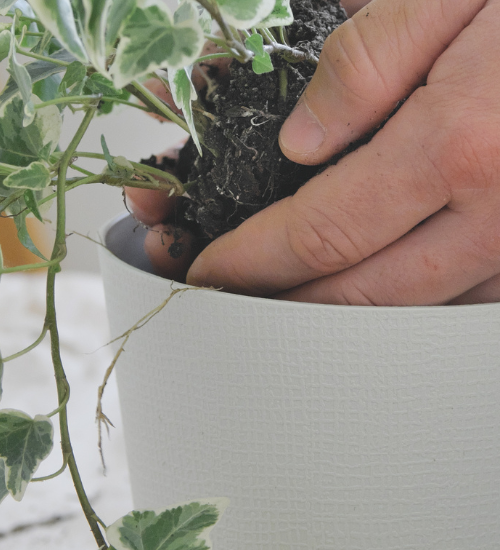
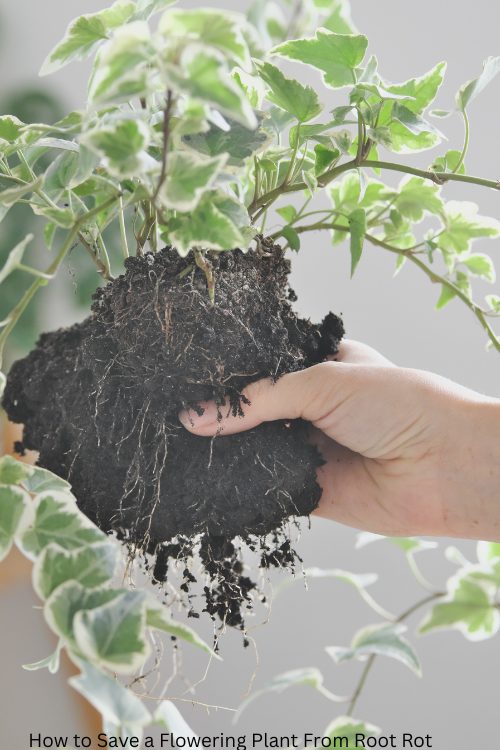
Turn the pot sideways and slide the plant out carefully. Do not pull hard on the stem.
If the root ball is tightly packed, loosen the outside gently with your fingers. Examine the roots instead of judging the plant only by its leaves.
3. Inspect healthy and damaged roots
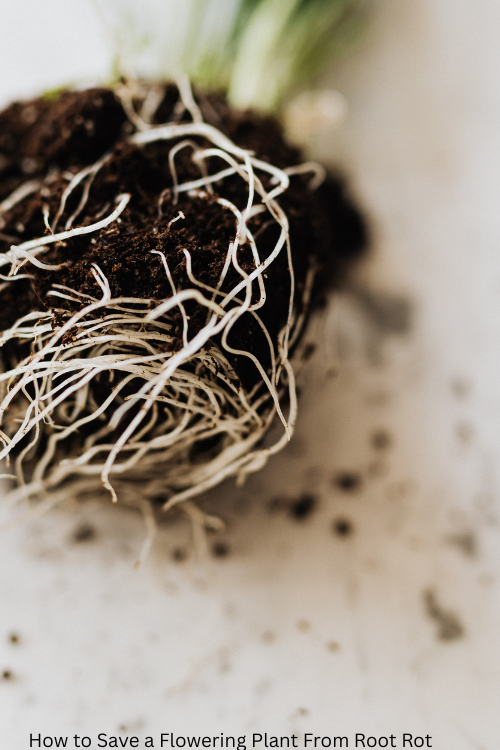
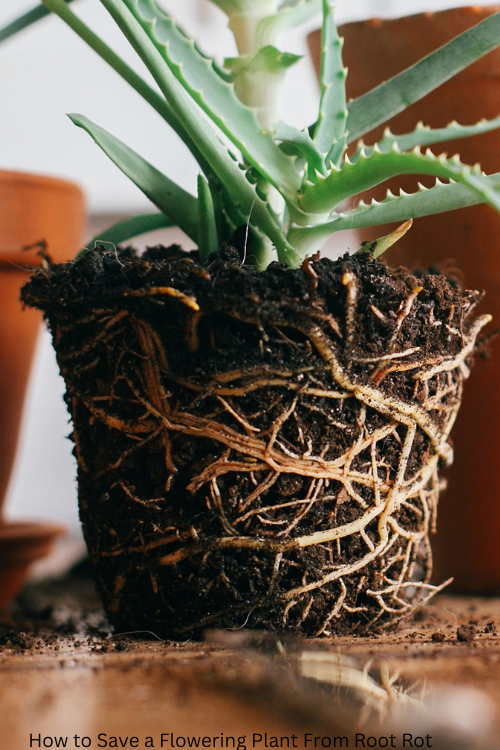
Healthy roots are generally firm and light-colored, although the exact color varies by plant.
Damaged roots may be:
- Brown or black
- Soft or mushy
- Hollow
- Sloughing their outer tissue
- Bad-smelling
- Easily pulled apart
Cut away damaged roots with clean, sharp scissors or pruners. Make each cut into firm, healthy tissue.
4. Remove severely affected foliage
Remove yellow, collapsed, or diseased leaves. If the plant has flowers, remove open blooms and weak buds temporarily.
This reduces the amount of water the damaged root system needs to supply. It also allows the plant to direct energy toward recovery.
Do not remove every healthy leaf unless the roots are extremely limited.
5. Clean the container
Wash the pot with warm soapy water and rinse it thoroughly. If the container previously held diseased roots, disinfect it before reuse.
Never reuse contaminated potting mix. Place it in the trash or use it only where local guidance permits. Do not spread visibly diseased mix around healthy plants.
6. Repot into fresh, airy mix
Use a clean container with drainage holes. Choose a pot only slightly larger than the remaining root system.
A suitable mix should drain freely while holding enough moisture for the plant. Depending on the flower, you might combine quality potting mix with perlite, pine bark, or another drainage-improving material.
Do not press the mix down heavily. Roots need access to air.
7. Plant at the original depth
Set the plant at the same depth it was growing before. Avoid burying the crown or stem deeper than necessary.
A buried stem base may stay wet and develop further problems.
8. Water lightly after repotting
Water enough to settle the fresh mix around the roots. Allow the container to drain fully.
Do not immediately soak the plant repeatedly. The remaining roots need time to adjust.
9. Provide gentle recovery conditions
Place the plant in bright, indirect light unless the species specifically requires strong direct sun. Avoid intense heat, cold drafts, and strong wind while the root system is recovering.
Once new growth appears, gradually return the plant to its normal light conditions.
Should You Fertilize a Plant With Root Rot?
Avoid heavy fertilizer immediately after root pruning or repotting. Damaged roots may not absorb nutrients efficiently, and excess fertilizer can stress the plant further.
Wait until you see signs of recovery, such as new leaves or firm stems. Then use a diluted fertilizer appropriate for the flower and follow the label directions.
Healthy light, moisture, and airflow are more important than fertilizer during the first stage of recovery.
Can You Save a Plant With Few Roots?
Possibly, depending on the species and the condition of the crown.
A plant with a firm crown and a few healthy roots may recover if it receives careful aftercare. Reduce watering and keep the plant in an appropriately sized container.
If the roots are gone but healthy stems remain, some flowering plants can be saved through cuttings. This is species-specific, so use only healthy, disease-free tissue and avoid propagating visibly infected material.
How to Prevent Root Rot
Prevention is easier than rescue.
Check the soil before watering
Insert a finger into the mix or lift the container to judge its weight. Do not water automatically every day.
Use containers with drainage holes
Every flowering plant in a pot needs a reliable path for excess water to escape.
Match pot size to the root system
Move plants into larger containers gradually instead of jumping to an oversized pot.
Improve air circulation
Give plants space between one another. Crowded, damp foliage can increase disease pressure.
Water at the base
Directing water toward the soil reduces prolonged wetness on flowers and leaves.
Empty saucers
Do not allow the container to sit in a pool of water after irrigation.
Troubleshooting Table
| Symptom | Possible explanation | Recommended action |
|---|---|---|
| Plant wilts while soil is wet | Root damage | Inspect roots immediately |
| Lower leaves turn yellow | Overwatering, aging, or poor light | Check roots and growing conditions |
| Stem base is soft | Crown or stem rot | Remove affected tissue; consider healthy cuttings |
| Roots are brown but firm | Stress or early damage | Improve drainage and reduce watering |
| Soil smells sour | Poor aeration or decay | Repot with fresh mix |
| Plant improves after repotting | Root problem was addressed | Resume light feeding only after new growth |
When to Give Up
A plant may not recover if:
- The entire root system is mushy.
- The crown is soft and discolored.
- The stem is collapsing.
- Disease has spread throughout the plant.
- No healthy tissue remains for propagation.
Removing a severely diseased plant can protect nearby flowers. Clean tools and containers before working with healthy plants.
Final Thoughts
The central lesson in how to save a flowering plant from root rot is to stop treating wilt as automatic proof that the plant needs more water.
Check the roots, remove damaged tissue, replace contaminated soil, and correct the drainage problem that caused the decline. Recovery may take weeks, and some leaves may continue to yellow before the plant stabilizes.
With patience and careful watering, a flowering plant with some healthy roots can sometimes recover and produce new growth. The sooner you inspect the root system, the better your chances of saving the plant.
Last modified: October 11, 2026
