

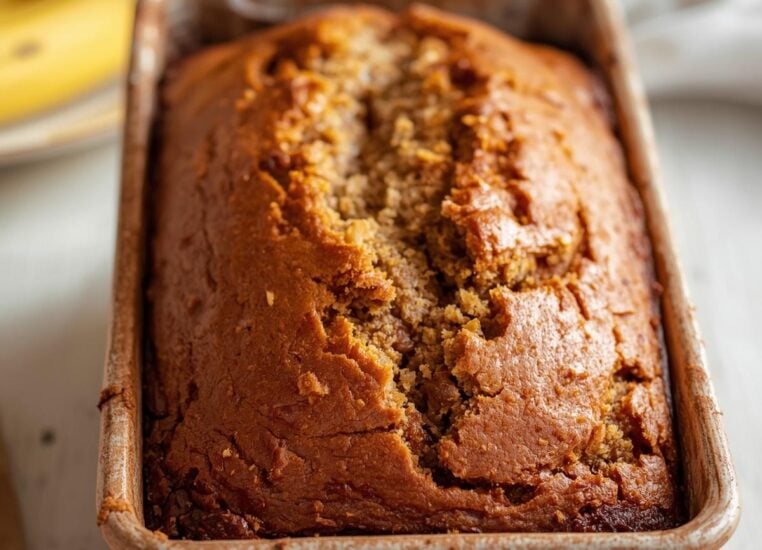
Banana bread breaks hearts in very boring ways. You pull out a loaf that smells amazing, you slice it warm, and then by tomorrow it turns dry and sad.
I have done this more times than I want to admit, because I used to treat banana bread like a casual side project. Mash bananas, stir stuff, hope for the best. Cute idea. Terrible plan.
After a lot of trial, a few brick-like loaves, and one pan I definitely overfilled like a genius, I figured out what actually keeps banana bread moist and soft.
It comes down to a few specific choices, not luck. If you want a moist banana bread recipe that still tastes good on day three, this will help.
Why Moisture Matters Most
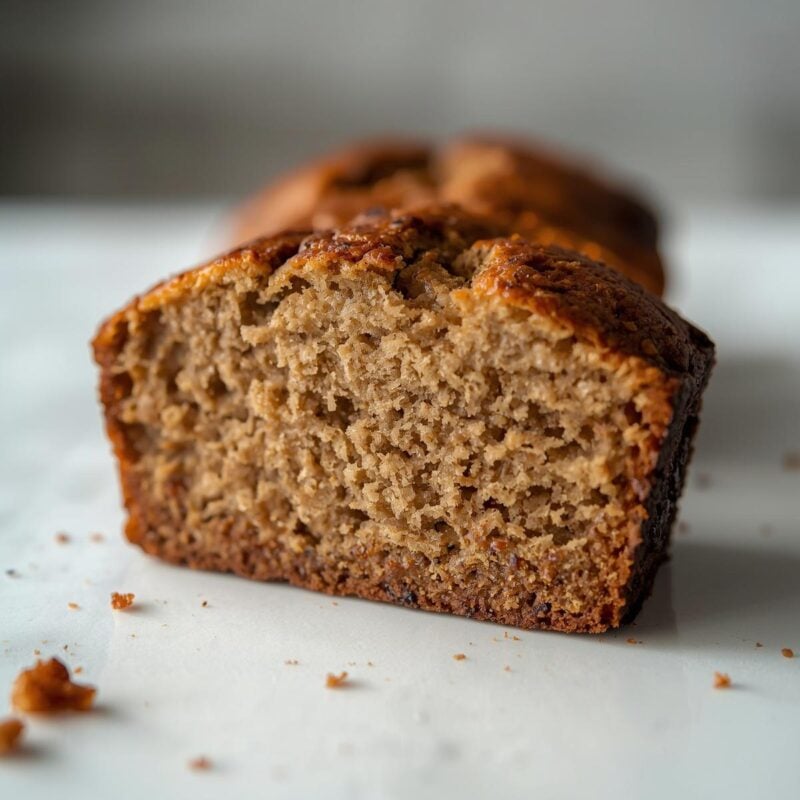
A soft loaf starts long before the oven. Moisture balance decides everything, because banana bread needs enough wet ingredients to stay tender, but not so much that the center turns gummy.
I use very ripe bananas, melted butter, brown sugar, and the right bake time. That combo gives me a loaf that feels rich instead of soggy.
Bananas matter more than people think. I use bananas with lots of brown spots, almost black in patches. Those bananas taste sweeter, mash faster, and carry more moisture into the batter.
If your bananas still look cheerful and yellow, wait a day or two. Banana bread likes drama.
Mixing matters too. I stir just until the flour disappears. That sounds fussy, but it works. If you beat the batter hard or keep mixing after it looks combined, the gluten gets stronger and the loaf gets tougher. Nobody wants chewy banana bread. That feels rude.
I also watch the bake time like a hawk. A few extra minutes can dry out the loaf fast, especially in a dark metal pan. I start checking at 50 minutes with a toothpick. A few moist crumbs are perfect. Wet batter means it needs more time. A bone-dry pick often means you already pushed it too far.
Ingredients That Keep It Soft
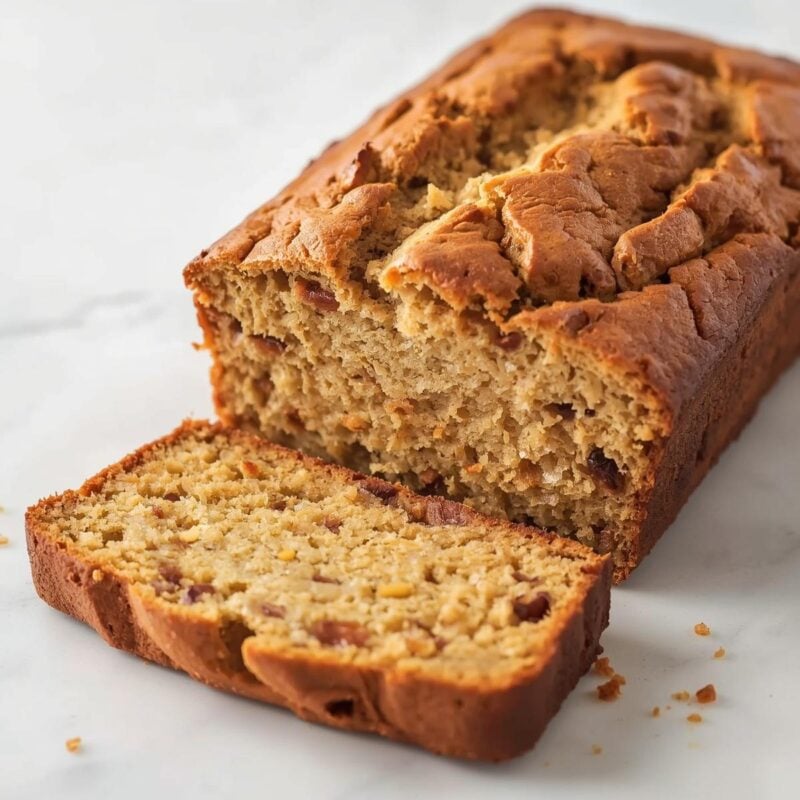
I keep this recipe simple, because banana bread does not need a pantry full of mystery powders. Each ingredient has a job. Change one thing, and the texture can shift more than you expect.
| Ingredient | Amount | What it does | My notes and swaps |
|---|---|---|---|
| Very ripe bananas | 1 1/2 cups mashed, about 3 large | Adds flavor, sugar, and moisture | Use spotty, soft bananas. If you only have 1 cup, add 2 tablespoons yogurt. |
| All-purpose flour | 1 3/4 cups | Builds the loaf structure | Spoon into the cup and level it. Too much flour dries everything out fast. |
| Baking soda | 1 teaspoon | Helps the loaf rise | Replace old baking soda if it has sat around for ages. |
| Salt | 1/2 teaspoon | Sharpens flavor | Do not skip it. The bread tastes flat without it. |
| Brown sugar | 3/4 cup | Adds sweetness and softness | Brown sugar holds more moisture than white sugar, so I pick it almost every time. |
| Unsalted butter, melted | 1/2 cup | Adds richness and tender texture | You can use neutral oil for extra softness, but butter tastes better, IMO. |
| Eggs | 2 large | Bind the batter and support rise | Use room temp eggs if you remember. If not, life goes on. |
| Vanilla extract | 1 teaspoon | Rounds out flavor | Small amount, big payoff. |
| Sour cream or Greek yogurt | 1/4 cup | Keeps the crumb moist for days | This is my favorite trick. Full-fat works best. |
| Optional add-ins | 1/2 to 3/4 cup | Adds texture and flavor | Use chopped walnuts or chocolate chips. More than 3/4 cup can weigh down the loaf. |
The one ingredient I refuse to skip is sour cream. Just 1/4 cup makes a real difference, because it adds fat and moisture without making the batter loose. I tested loaves with and without it, and the one with sour cream stayed softer on day two. That loaf also disappeared faster, which felt very scientific 🙂
Tools and Batter Setup
You do not need fancy gear here. You need a decent bowl, a loaf pan, and five quiet minutes to set things up before you start tossing flour around like a baking show contestant. Prep saves the loaf, because banana bread batter comes together fast once the wet ingredients hit the dry.
My basic setup
I use one medium bowl for dry ingredients and one large bowl for wet ingredients. I grab a whisk, a rubber spatula, measuring cups, and a 9 x 5-inch loaf pan. I line the pan with parchment paper and leave a little overhang on the long sides, because I like lifting the loaf out cleanly instead of poking at it with a knife and bad attitude.
What I do before mixing
I heat the oven to 350°F first. Then I grease the pan lightly, press in the parchment, and mash the bananas until only small lumps remain. I melt the butter and let it cool for a minute so it does not scramble the eggs. Small move, big help.
Once the bowls are ready, I whisk flour, baking soda, and salt in one bowl. In the other bowl, I mix bananas, brown sugar, butter, eggs, vanilla, and sour cream until smooth. Then I fold the dry mix into the wet mix with a spatula. I stop as soon as I no longer see dry streaks. That last little streak of flour? Stir it once or twice and move on.
Step By Step Recipe Table
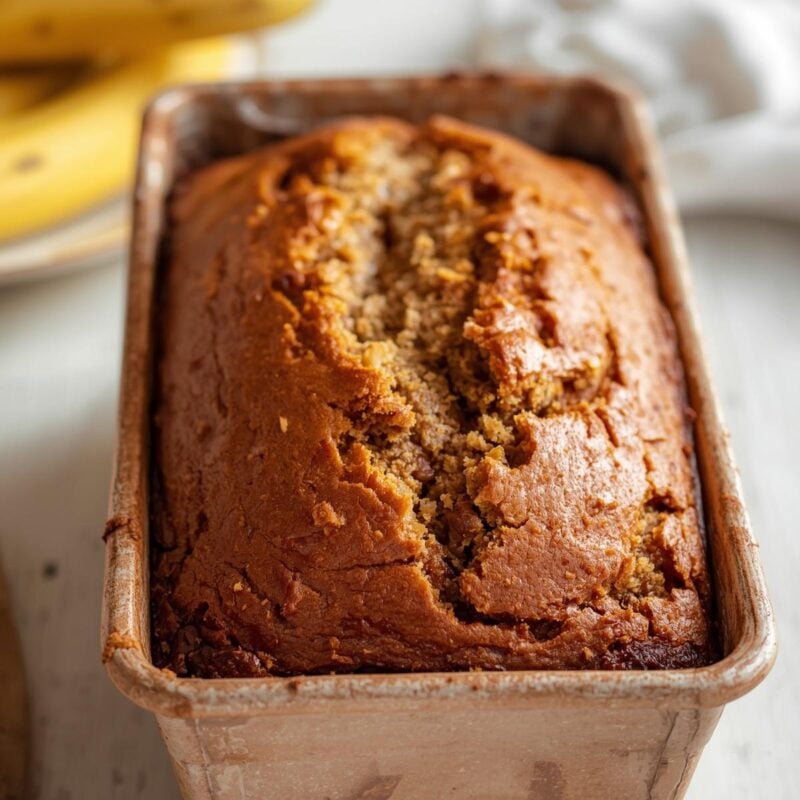
I like a recipe that reads like a map, because halfway through baking I do not want to play detective. This is the exact order I use for my banana bread recipe, and it gives me a moist loaf with a soft center and a golden top.
| Step | What to do | Helpful detail |
|---|---|---|
| 1 | Heat oven to 350°F and line a 9 x 5-inch loaf pan with parchment. | Grease under the parchment so it stays put. |
| 2 | Whisk 1 3/4 cups flour, 1 teaspoon baking soda, and 1/2 teaspoon salt in a bowl. | This spreads the baking soda evenly. |
| 3 | In a large bowl, mash 3 ripe bananas until mostly smooth. | A few small lumps add texture. Huge chunks do not. |
| 4 | Whisk in 3/4 cup brown sugar, 1/2 cup melted butter, 2 eggs, 1 teaspoon vanilla, and 1/4 cup sour cream. | Mix until smooth and glossy. |
| 5 | Fold the dry ingredients into the wet ingredients with a spatula. | Stop as soon as the flour disappears. |
| 6 | Fold in 1/2 cup chocolate chips or walnuts if you want them. | I dust nuts with 1 teaspoon flour so they do not sink. |
| 7 | Pour batter into the pan and smooth the top. | Tap the pan once on the counter to settle the batter. |
| 8 | Bake for 50 to 60 minutes. | Check at 50 minutes. Cover loosely with foil if the top browns too fast. |
| 9 | Test with a toothpick in the center. | Look for moist crumbs, not wet batter. |
| 10 | Cool in the pan for 15 minutes, then lift out and cool fully on a rack. | If you slice too soon, the loaf can look gummy in the middle. |
If I want a bakery-style top, I slice one extra banana lengthwise and lay it on top before baking. It looks great, but it adds moisture to the surface, so I bake closer to 60 minutes when I do that. If your loaf sinks in the middle, the batter likely needed a few more minutes in the oven.
Baking Mistakes To Avoid
I made every classic mistake at least once, because apparently I like learning the hard way. Overmixing ruins texture fast. If you beat the batter until it looks super smooth, you build too much gluten and the loaf turns dense. Fold gently with a spatula instead of using a mixer.
Overbaking causes the other big disaster. Banana bread keeps cooking a little after it leaves the oven, so I pull it when the center shows moist crumbs on the toothpick. If you wait for a perfectly dry pick, the loaf often dries out by the time it cools. I learned that after producing a loaf fit for a very disappointed bird.
Measuring flour the wrong way also causes dryness. I never scoop the measuring cup straight into the flour bag. That packs in too much flour. I fluff the flour, spoon it into the cup, and level it with a knife. If you own a digital scale, even better. Use 220 grams of flour and skip the guessing.
One more thing: do not bake banana bread in a tiny pan and hope for mercy. If your pan is smaller than 9 x 5, fill it only two-thirds full and bake the rest as muffins. Muffins bake in about 18 to 22 minutes. Easy fix, less batter overflow, less oven smoke. Everyone wins.
Storage, Freezing, and Serving
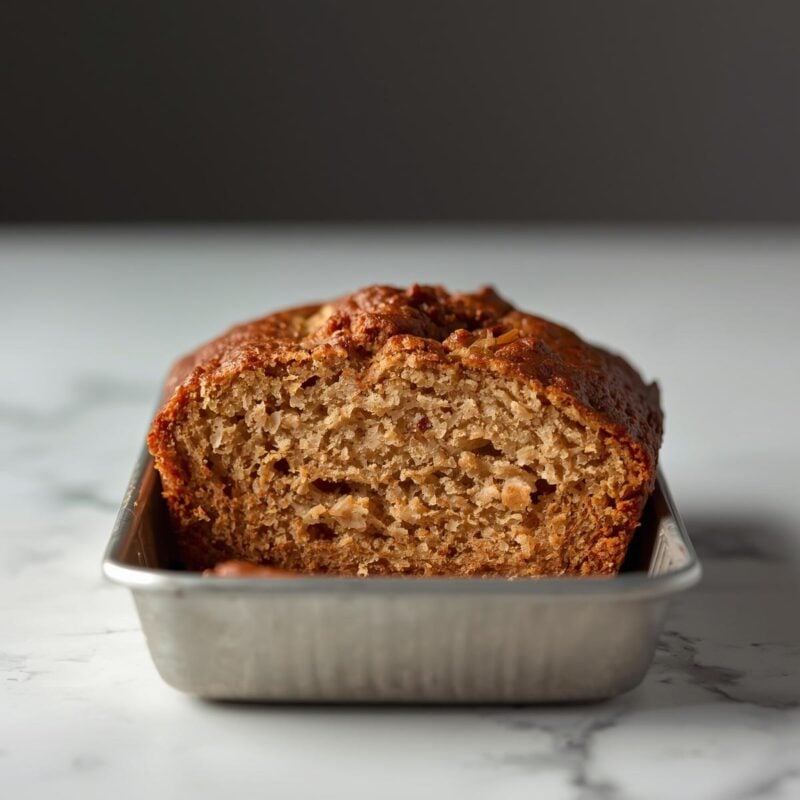
Fresh banana bread tastes amazing, but smart storage keeps it soft after day one. I focus on wrapping, because air dries out the loaf much faster than most people expect.
- Room temperature: Cool the loaf fully. Wrap it in plastic wrap or foil, then keep it in an airtight container. It stays soft for 3 to 4 days.
- Fridge: I avoid the fridge unless my kitchen runs hot. The fridge can dry baked goods out. If you must use it, wrap the loaf tightly and warm slices for 10 to 15 seconds in the microwave before eating.
- Freezer: Slice the loaf first, wrap each slice in plastic, then place them in a freezer bag. Freeze for up to 3 months. Pull out one slice at a time, which feels wildly efficient for homemade banana bread.
I like to place a paper towel under and over the loaf inside the container if the weather feels humid. That helps absorb extra condensation without drying the bread. For serving, I warm a slice for about 12 seconds and add salted butter or peanut butter. If I want dessert energy, I toast a slice lightly and add a few chocolate chips on top. Zero regrets.
Helpful FAQs and Quick Summary
People usually ask the same few things after their first loaf, so I keep quick answers handy. This section does double duty. It clears up common problems, and it gives you a fast reminder before the next bake.
Fast answers I use all the time
- Can I use frozen bananas? Yes. Thaw them first and include the juices. Those juices hold flavor and moisture.
- Why did my banana bread turn gummy? You likely underbaked it or used too much banana. Stick close to 1 1/2 cups mashed banana.
- Can I cut the sugar? Yes, but do not slash it too far. Try 1/2 cup brown sugar first. Less sugar can make the loaf less moist.
- Can I make muffins? Yes. Fill muffin cups about three-quarters full and bake at 350°F for 18 to 22 minutes.
If you remember only a few things, remember these. Use very ripe bananas. Measure flour carefully. Mix the batter gently. Pull the loaf when the toothpick shows moist crumbs. Ripeness and bake time do most of the heavy lifting, because they control both flavor and texture.
I keep this recipe on repeat because it works without any weird steps, and it forgives small mistakes better than a lot of quick breads. Bake it once, take notes on your pan and oven, and your next loaf will be even better. That part feels unfair, honestly, because now store-bought slices seem kind of pointless :/
Conclusion
If you want banana bread that stays soft, focus on the parts that actually move the needle. Use deeply ripe bananas, brown sugar, melted butter, and 1/4 cup sour cream or Greek yogurt. Measure 1 3/4 cups flour carefully, fold the batter just until combined, and start checking the loaf at 50 minutes in a 350°F oven. Let it cool for 15 minutes in the pan, then wrap it well once it cools fully. If you bake often, write down your exact pan size and final bake time, because that tiny note helps more than any random baking hack. A good moist banana bread recipe does not need magic. It just needs a few smart choices, done in the right order.
Last modified: April 23, 2026
