

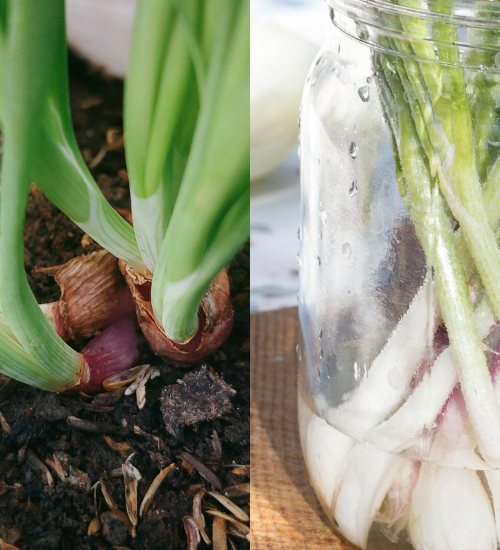
Green onions are one of the easiest kitchen scraps to regrow. If you save the white ends with their roots attached, they can produce fresh green shoots again with very little space, equipment, or gardening experience.
Growing green onions from scraps will not provide an endless supply of large onions. The plants eventually become weaker, and the roots may need to be replaced. Still, this simple project can provide several harvests, reduce food waste, and give you fresh flavor for soups, salads, rice, eggs, and other meals.
You can regrow green onions in a glass of water, plant them in soil, or begin in water and move them into a container. Each method has advantages.
What You Need
To regrow green onions, gather:
- Green onion ends with roots attached
- A clean glass or shallow jar
- Fresh water
- A small container with drainage holes
- Potting mix
- A sunny window or grow light
- Clean scissors
Choose onions with firm white bases and healthy roots. The green tops can be short or already used. The important part is the rooted base.
Avoid pieces that are slimy, moldy, soft, or strongly discolored.
Method 1: Regrow Green Onions in Water
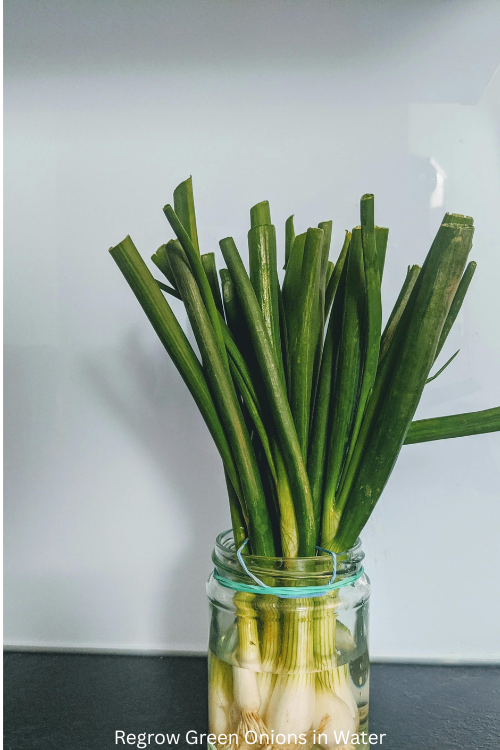
Growing green onions in water is the quickest way to see new growth.
Step 1: Cut the onions
Use the green tops for cooking, leaving the white base and roots intact. A base about one to two inches long is usually enough.
Do not cut away the roots. They help the plant absorb water and support new growth.
Step 2: Place the roots in a container
Set the onion ends upright in a glass or small jar. Add enough water to cover the roots and the lower part of the white stem.
Do not submerge the entire onion. Keeping most of the white base above water helps reduce the chance of rot.
Step 3: Put the container in bright light
Place it near a bright window. Green onions need light to produce healthy green leaves. A dim room may produce pale, thin growth.
Rotate the container every few days if the shoots lean strongly toward the window.
Step 4: Change the water regularly
Replace the water every day or two, especially if it becomes cloudy or develops an odor. Rinse the container and roots gently when changing the water.
Fresh water helps prevent bacterial growth and keeps the roots oxygenated.
Step 5: Harvest the green tops
When the shoots are several inches tall, cut what you need with clean scissors. Leave part of the green growth behind so the plant can continue producing leaves.
The University of Illinois Extension describes regrowing green onions as a quick kitchen-scrap project and recommends cutting the tops to encourage fresh growth. DIY: Regrowing Green Onions – Illinois Extension
How Long Will Green Onions Grow in Water?
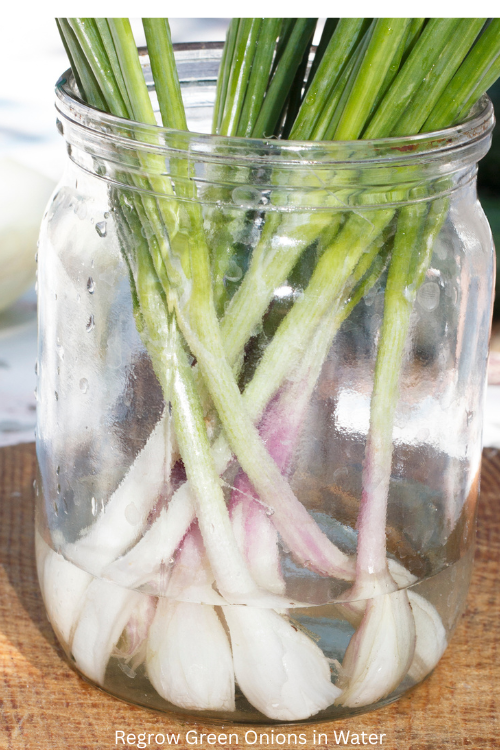
Green onions may produce several rounds of leaves in water, but their growth usually slows over time. Water contains little nutrition, so the plant is relying mainly on stored energy in the base.
Signs that the onion should be moved to soil or replaced include:
- New leaves becoming thin
- Pale or yellow growth
- Roots turning brown and mushy
- A sour or unpleasant smell
- Little new growth after cutting
- The white base becoming soft
If the roots remain white or cream-colored and the plant is producing healthy green leaves, it can continue growing in water.
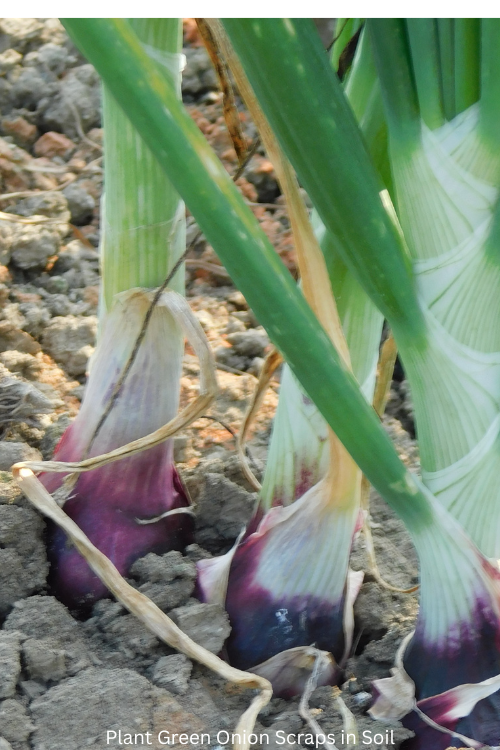
Method 2: Plant Green Onion Scraps in Soil
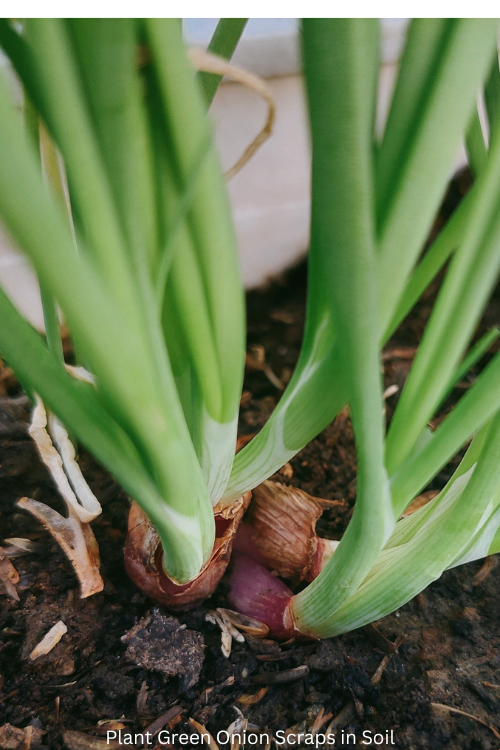
Moving green onions into soil gives the roots access to nutrients and usually provides stronger, longer-lasting growth.
Step 1: Prepare the container
Choose a pot with drainage holes. A container four to six inches deep is sufficient for a small group of green onions.
Fill it with a quality potting mix. Avoid using heavy garden soil in a small indoor container because it may drain poorly and become compacted.
Step 2: Plant the rooted ends
Make a small hole and place each onion base into the soil. Cover the roots and most of the white portion, leaving the green shoots above the surface.
You can plant several onions together, but leave enough space for air circulation. Crowded plants are more difficult to water and harvest.
Step 3: Water thoroughly
Water until a little moisture drains from the bottom of the pot. Empty any water that collects in the saucer.
After the first watering, allow the surface of the soil to dry slightly before watering again. Green onions prefer consistent moisture but do not grow well in waterlogged soil.
Step 4: Provide light
Place the container in a sunny window that receives several hours of bright light. If indoor light is weak, a small grow light can help keep the leaves upright and green.
Turn the pot every few days so the plants grow evenly.
Step 5: Harvest correctly
Cut the outer leaves first, or trim the tops while leaving the central growing point intact. Avoid removing every leaf at once.
Harvesting gradually gives the plant more leaf tissue to continue photosynthesizing and producing new growth.
Water Versus Soil: Which Method Is Better?
Both methods work, but they suit different goals.
| Growing Method | Best For | Main Advantage | Main Limitation |
|---|---|---|---|
| Water | Quick regrowth and short-term use | Simple and easy to observe | Limited nutrition |
| Soil | Longer-term growth | Stronger roots and repeated harvests | Requires a container and regular care |
| Water first, then soil | Beginners who want both | Easy to monitor root development | Requires transplanting |
If you only want a few fresh green leaves, water is convenient. If you want to keep the plants for weeks or months, soil is usually the better choice.
How Often Should You Water Green Onions in Soil?
Check the soil with your finger. If the top inch feels dry, water slowly until excess moisture drains from the pot.
Avoid watering on a fixed schedule without checking the soil. Indoor conditions vary widely. A plant near a sunny window may dry quickly, while one in a cool room may stay moist for several days.
Overwatering can cause:
- Yellow leaves
- Mushy roots
- Fungus gnats
- Mold on the soil surface
- Slow growth
- A rotten smell
Underwatering may cause limp, curling, or crispy leaves. If the soil has become completely dry, water thoroughly and allow the excess to drain.
Green onions have relatively shallow roots and perform best in fertile, well-drained, consistently moist soil. How to Grow Onions in Your Garden | USU
When Should You Add Fertilizer?
Green onions grown in water may eventually need nutrients. Once the stored energy in the base is used, new growth often becomes thin and pale.
For onions grown in soil, a rich potting mix may provide enough nutrition for several weeks. If growth slows, use a diluted, balanced liquid fertilizer according to the product label.
Do not pour concentrated fertilizer directly onto dry soil. Water the plant first if the potting mix is very dry, then apply the diluted fertilizer.
Too much fertilizer can cause excessive leafy growth, salt buildup, and root damage. More is not better.
Can You Regrow Store-Bought Green Onions?
Yes. Most common scallions or bunching onions sold with roots attached can be regrown.
Look for:
- Firm white bases
- Intact roots
- No mold
- No slimy tissue
- Green tops that are not completely dried out
Some grocery-store onions may have been stored for a long time and regrow slowly. That does not necessarily mean your method is wrong. Try several rooted pieces at once, since individual scraps may vary in vitality.
Can You Grow Green Onions Outside?
Green onions can be planted outdoors in a sunny garden bed or container. Choose a location with well-drained soil and regular moisture.
Plant the rooted ends so the roots are covered and the white base sits just below or at the soil surface. Keep the bed weed-free while the plants establish.
Onions generally grow best in fertile, well-drained soil with adequate organic matter. Soil testing can help identify nutrient or pH problems before planting a larger crop. How to Grow Onions in Your Garden | USU
In hot weather, provide consistent water. In cold climates, protect containers from hard freezes because roots in small pots are more exposed than roots in garden soil.
Common Problems and Solutions
The roots are turning mushy
The onion is probably sitting in too much water. Change the water more often, reduce the water level, or move the plant into fresh soil.
The green shoots are pale
The plant may need brighter light. Move it closer to a sunny window or provide supplemental light.
The onion smells bad
Discard it. A foul odor usually indicates decay or bacterial growth. Clean the container before starting again.
New growth is very thin
The plant may have used most of its stored energy. Move it into soil, provide better light, or replace it with a fresh rooted base.
Mold is growing on the soil
Remove the affected surface soil, improve air circulation, and allow the top layer to dry slightly between waterings. Persistent mold may indicate excessive moisture.
The leaves are bending over
Check light, watering, and temperature. Weak light often produces tall, floppy leaves, while dry soil can cause wilting.
How to Get More Than One Harvest
For the best results:
- Save several rooted onion ends rather than relying on one.
- Start some in water and plant others directly in soil.
- Harvest only the outer leaves when possible.
- Keep the soil evenly moist.
- Provide bright light.
- Replace weak or diseased scraps quickly.
- Start a new batch every few weeks.
A rotation gives you a more dependable supply than trying to keep one onion growing forever.
Is Regrowing Green Onions Worth It?
Regrowing green onions is worthwhile if you enjoy small indoor gardening projects or want to reduce kitchen waste. It will not replace buying fresh onions, but it can stretch the value of each bunch and provide convenient leaves between shopping trips.
The project is also useful for children because the roots and shoots change quickly. A clear glass makes it easy to watch new roots develop, while planting in soil teaches the basics of watering, light, and harvest.
Conclusion
To regrow green onions, save the rooted white ends, place them in shallow water, and provide bright light. Change the water every day or two for short-term growth, or move the onions into a pot with well-drained soil for longer-lasting harvests.
Keep the roots moist but not submerged indefinitely, cut the leaves carefully, and replace scraps when growth becomes weak. With a sunny window and a few simple supplies, kitchen leftovers can become a reliable source of fresh green flavor.
Last modified: October 17, 2026
