

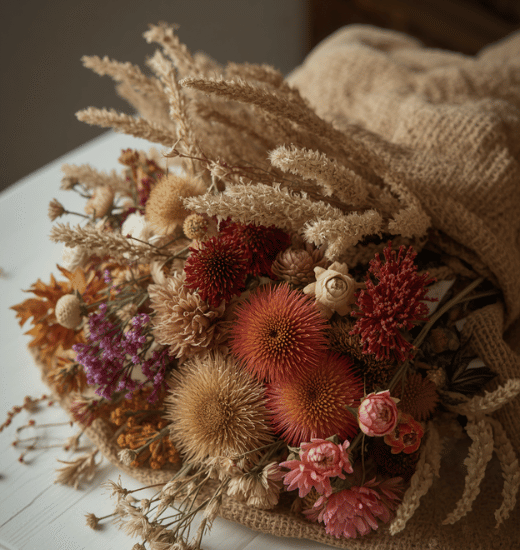
Fresh bouquets are beautiful, but they are temporary. After several days, petals begin to drop, stems weaken, and the arrangement goes into the compost or trash. Drying flowers offers another way to enjoy the garden.
The process is simple: harvest flowers at the right stage, remove excess foliage, dry the stems in a warm and well-ventilated place, and arrange them after they have completely lost their moisture.
Learning how to make a dried flower bouquet from garden flowers is less about complicated equipment and more about timing. Flowers picked too late may collapse during drying, while flowers harvested too early may never develop their best color or shape.
Which Flowers Dry Well?
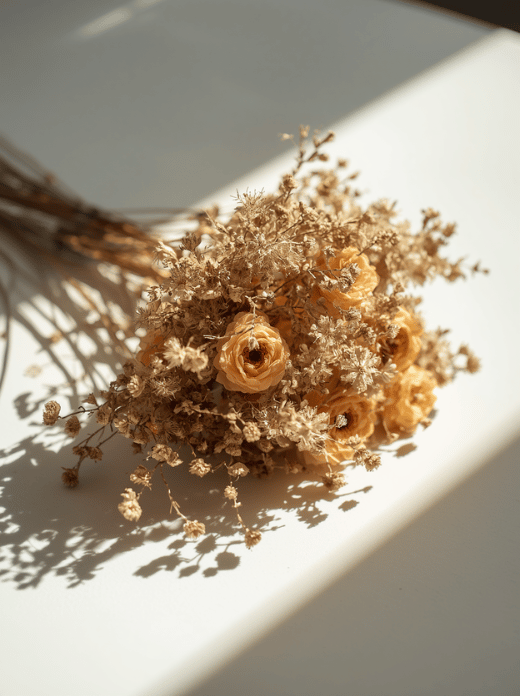
How to Make a Dried Flower Bouquet From Garden Flowers
Not every flower keeps its appearance after drying. The best candidates have firm stems, sturdy petals, attractive seed heads, or naturally papery textures.
Good choices include:
- Strawflower.
- Statice.
- Celosia.
- Globe amaranth.
- Yarrow.
- Lavender.
- Salvia.
- Gomphrena.
- Baby’s breath.
- Queen Anne’s lace.
- Feverfew.
- Hydrangea.
- Ornamental grasses.
- Seed pods.
- Poppy pods.
- Honesty or money plant seed pods.
Some flowers, such as zinnias and roses, can also be dried, although they may require more careful handling. Thick, water-filled blooms are more likely to develop mold if they are dried in a humid environment.
Harvest Flowers at the Right Time
Harvest on a dry day after morning dew has evaporated. Wet flowers take longer to dry and are more likely to develop mold.
For most flowers, choose blooms that are open but not beginning to fade. If you wait until petals are already browning or dropping, the dried result will look tired.
For flowers grown specifically for drying, harvest according to the plant:
- Harvest strawflowers when the outer petals are open but the center remains firm.
- Cut lavender when a portion of the flower spikes has opened.
- Cut celosia when the flower heads are fully formed.
- Harvest grasses before seed heads become too brittle.
- Cut hydrangeas after the blooms begin to feel slightly papery.
Use sharp, clean pruners. Make stems longer than you think you need because they can always be shortened later.
Prepare the Stems
Remove leaves from the lower half or lower two-thirds of each stem. Leaves hold moisture and can slow the drying process.
Do not strip every leaf from delicate plants if the foliage contributes to the design. Instead, remove damaged, crowded, or large leaves that would press against other stems.
Sort the flowers into small groups according to type and stem length. This makes the hanging process easier.
Avoid tying large, dense bunches. A bundle that is too thick may dry on the outside while remaining damp in the center.
The Best Air-Drying Method
Air-drying is the simplest method for most garden flowers.
- Gather five to ten stems into a loose bundle.
- Secure the stems with a rubber band or string.
- Hang the bundle upside down.
- Choose a dark, dry, well-ventilated room.
- Keep the flowers away from direct sunlight.
- Allow them to dry for one to three weeks.
- Check the stems before arranging.
A rubber band is useful because stems often shrink as they dry. String can loosen and allow the bundle to fall.
A closet, attic, unused room, or covered storage area may work well if air circulation is adequate. Avoid damp basements, steamy bathrooms, and areas directly above cooking appliances.
Using a Vase-Drying Method
Some sturdy flowers can be dried upright in an empty vase. This method works well for flowers with strong stems and naturally attractive shapes.
Place a small amount of water in the vase, then allow the water to evaporate gradually. As the flowers lose moisture, they dry in a more natural upright position.
This method may be useful for hydrangeas, grasses, eucalyptus, and certain branches. It is less reliable for soft-stemmed flowers that bend as they dry.
Pressing Is Better for Flat Projects
Pressing is not usually the best method for a three-dimensional bouquet, but it works well for leaves, small flowers, and flat seed heads.
Use pressed materials for:
- Framed botanical art.
- Greeting cards.
- Bookmarks.
- Gift tags.
- Decorative paper.
- Collages.
For a bouquet, air-drying preserves volume and allows the flowers to retain their natural shape.
How to Tell When Flowers Are Dry
Flowers are ready when the stems feel firm and the petals feel dry rather than cool or flexible.
Test one stem before taking down the entire bundle. If the stem bends easily, give the flowers more time.
Do not rush the process. A bouquet assembled while flowers still contain moisture may develop mold inside the arrangement.
Once the flowers are dry, handle them gently. Dried petals can be brittle, especially in warm rooms with low humidity.
Build the Bouquet in Layers
When learning how to make a dried flower bouquet from garden flowers, it helps to think in layers rather than trying to place every stem randomly.
Start with a few structural stems. These might include grasses, tall seed heads, lavender, or long-stemmed flowers.
Add the focal flowers next. These are the blooms that attract attention, such as hydrangeas, roses, celosia, or large strawflowers.
Fill spaces with smaller flowers and airy materials. Baby’s breath, yarrow, statice, and dried herbs can soften the arrangement.
Finish with movement. Curved grasses, trailing stems, and branches help the bouquet feel natural instead of tightly packed.
Five Dried Bouquet Styles
1. Soft Cottage Bouquet
Combine lavender, white yarrow, pale strawflowers, grasses, and small seed heads. Keep the stems loose and allow some pieces to extend beyond the main shape.
2. Warm Autumn Bouquet
Use rust-colored celosia, orange strawflowers, burgundy amaranth, golden grasses, and dried foliage. This style works well in a ceramic vase or an earthenware pitcher.
3. Neutral Minimalist Bouquet
Choose cream, beige, tan, and soft brown materials. Baby’s breath, wheat, pale grasses, dried hydrangea, and seed pods create a simple arrangement with strong texture.
4. Colorful Garden Bouquet
Combine several bright shades, but repeat at least two colors so the bouquet feels connected. Gomphrena, statice, strawflowers, and celosia work especially well.
5. Fragrant Herb Bouquet
Use lavender, rosemary, sage, oregano stems, and dried flowers. This arrangement suits kitchens, entryways, and informal spaces.
A Simple Proportion Guide
| Bouquet element | Approximate amount | Purpose |
|---|---|---|
| Structural stems | 5–8 | Create height and outline |
| Focal flowers | 5–10 | Provide visual emphasis |
| Filler flowers | 8–15 | Fill gaps and soften edges |
| Texture stems | 5–10 | Add movement and contrast |
| Decorative foliage | 3–8 | Support color and shape |
These numbers are flexible. A small bud vase may need only a handful of stems, while a large floor arrangement may require many more.
How to Tie the Bouquet
Hold the arrangement in one hand and add stems gradually with the other. Turn the bouquet as you work so all sides receive attention.
When the shape feels balanced, wrap the stems with floral wire, twine, or a narrow ribbon. Do not squeeze too tightly because dried stems can break.
Trim the bottoms evenly or leave them at varied lengths for a more relaxed look.
Place the bouquet in a completely dry vase. Water is not needed and can damage dried stems.
Preserving Color
Direct sunlight can fade dried flowers. Display the bouquet in a room with indirect light rather than in a bright window.
Some people use a very light spray of artist’s fixative or clear floral spray to reduce shedding. Test the product on one stem first because sprays can alter color or create a glossy finish.
Dust gently with a cool hair dryer set on low speed. Hold the dryer several inches away and work carefully from a distance.
Safety and Storage
Dried flowers are flammable, so keep them away from candles, fireplaces, stovetops, heaters, and exposed bulbs.
If storing a bouquet, wrap it loosely in tissue paper and place it in a dry box. Avoid plastic bags that trap moisture.
Check arrangements occasionally for insects, dust, or signs of dampness. Replace any material that develops mold.
The final step in learning how to make a dried flower bouquet from garden flowers is accepting that dried materials change over time. Colors may soften, petals may become more delicate, and seed heads may shed. That natural aging is part of their appeal.
With careful harvesting and patient drying, a garden bouquet can become seasonal décor that lasts far beyond the original flowering period.
Last modified: October 7, 2026
