

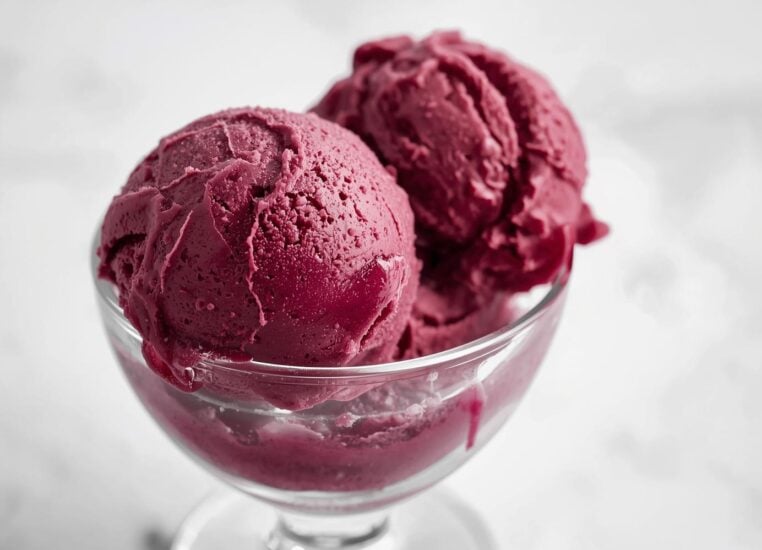
Homemade blackberry ice cream can taste brighter, fresher, and more balanced than many store-bought tubs, but only if a few details go right.
The berries need enough ripeness to bring color and juice. The base needs the right fat and sugar balance. The freezing method matters more than many people expect.
I wrote this to help you make better batches at home without wasting fruit, cream, or time.
You will find practical advice on picking blackberries, building a base, getting a smoother texture, choosing flavor pairings, and fixing common problems before they ruin a batch.
If you have ever ended up with icy ice cream, dull berry flavor, or too many seeds, this article will help you avoid that.
Why I Love Blackberry Ice Cream
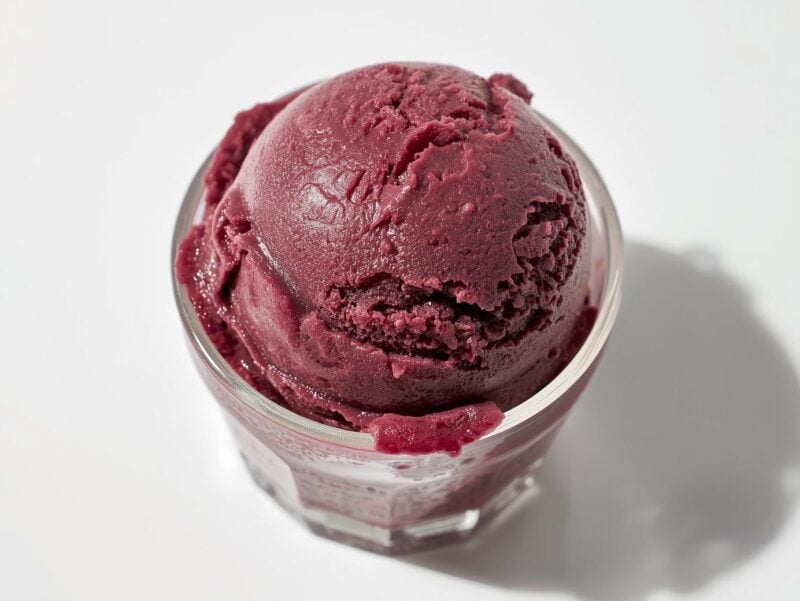
I keep coming back to blackberry ice cream because it gives me more contrast than many other fruit flavors. It tastes sweet, tart, floral, and slightly jammy at the same time.
That mix makes each spoonful feel fresh instead of heavy, especially in warm weather.
My other reason is simple: balance. Blackberries have enough acidity to cut through cream, so the final dessert does not taste flat. Strawberries can turn soft and mild, and blueberries often need extra help from lemon.
Blackberries usually bring their own structure, which means I can make a batch with fewer add-ins and still get a full fruit flavor.
I also like how easy they are to work with at home. Cook 12 to 16 ounces of berries with 1/3 to 1/2 cup sugar for about 8 minutes, mash them, then strain. That one step creates a concentrated puree with deeper flavor and fewer seeds.
If you only remember one habit from this article, make the berry puree first and taste it before it ever meets the dairy.
Ingredients
| Ingredients | Amount | Tools Needed |
|---|---|---|
| Fresh blackberries | 2 cups | Ice cream maker |
| Heavy cream | 2 cups | Medium saucepan |
| Whole milk | 1 cup | Fine mesh strainer |
| Granulated sugar | ¾ cup | Mixing bowls |
| Lemon juice | 1 tablespoon | Blender/food processor |
| Vanilla extract | 1 teaspoon | Storage container |
Picking Blackberries Before You Start
What I buy at the store
I check the bottom of the container first. If there is a little juice, that is fine. If there is a puddle, the berries are already breaking down. I also avoid cartons with fuzzy spots or crushed fruit packed into the corners, because one spoiled berry can affect the whole batch fast.
What I do with fresh-picked berries
If I pick my own, I sort them before washing. I remove stems, leaves, and pale berries, then rinse them quickly in cold water and dry them on a towel. Wet berries dilute the puree, so I never skip the drying step. Ten minutes on a tray makes a difference.
For the best ripeness, taste three or four berries before you start cooking. If they taste very tart, add an extra tablespoon of sugar to the fruit puree, not the whole ice cream base. That keeps the berry flavor strong without turning the dairy base too sweet
My Base Ingredients That Matter
A good blackberry ice cream base does not need many ingredients, but each one has a job. I use heavy cream for richness, whole milk to keep the texture scoopable, sugar for sweetness and softness, and eggs if I want a custard style. Vanilla, lemon zest, or a spoonful of honey can support the berries, although I keep those extras light because blackberry flavor can get buried fast.
My usual formula is 2 cups heavy cream, 1 cup whole milk, 3/4 cup sugar, and 4 egg yolks for a custard base. For a simpler egg-free version, I use 2 cups heavy cream, 1 1/4 cups whole milk, and 2/3 cup sugar. That mix freezes well and lets the fruit come forward. If you want a lighter batch, swap 1 cup of cream for half-and-half, but do not replace all the cream or the texture will turn harder.
Small details matter here. fat helps stop the ice cream from freezing into a solid block, and sugar lowers the freezing point so it stays smoother. If you cut sugar too much, the ice cream often tastes colder and less creamy, even if the flavor seems strong on the spoon before freezing.
- Best dairy choice: Heavy cream with whole milk gives the most reliable texture for home freezers.
- Egg-free shortcut: Use 3 tablespoons cornstarch cooked into the milk and sugar if you want body without yolks.
- Lighter option: Replace part of the cream, not all of it, and expect a slightly firmer scoop.
- Flavor support: Add 1 teaspoon vanilla or 1 teaspoon finely grated lemon zest, not both in large amounts.
I always chill the base at least 4 hours before churning. Overnight is better because the fat sets more fully, and the machine works faster the next day.
Best Methods For Smooth Texture
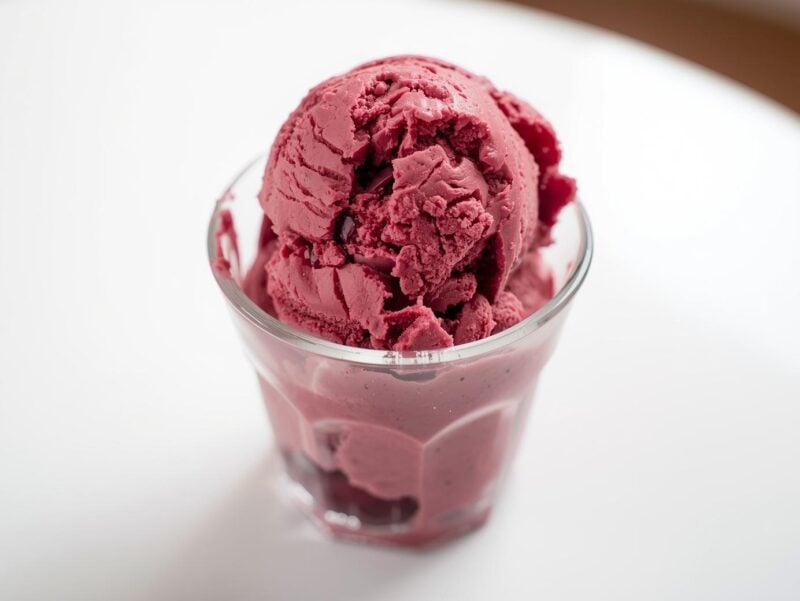
Texture is where many homemade batches go wrong. The fruit may taste good, yet the ice cream still turns grainy, icy, or too dense. I focus on two steps before I even think about method: I strain the berry puree through a fine-mesh sieve, and I chill the complete base until it is very cold. Those two moves improve texture more than most fancy tricks.
Churned style
This is the method I use most often. I stir the strained puree into the chilled base, pour it into an ice cream maker, and churn until it looks like soft serve, usually 20 to 25 minutes. Then I transfer it to a metal loaf pan, press parchment or plastic wrap on the surface, and freeze for 3 to 4 hours. A pre-frozen machine bowl must sit in the freezer for a full 24 hours, not just overnight if your freezer runs warm.
Custard style
Custard takes longer, although it rewards you with a denser and silkier result. I heat the milk and part of the cream, whisk the yolks with sugar, temper them slowly, and cook until the mixture reaches 170 to 175°F. After that, I cool it over an ice bath before adding the blackberry puree. If the base boils, the eggs can scramble, so I use a thermometer and stir constantly.
No-churn style
No-churn can work well for blackberry ice cream, especially if you want speed. I fold 1 cup of cooled blackberry puree into 2 cups whipped heavy cream and 1 can sweetened condensed milk. The result is softer and sweeter than churned ice cream, and it melts faster, but it is very forgiving for first-time makers.
My rule is simple: strain the seeds, cool the base to below 40°F, and freeze the finished ice cream in a shallow container. Deep containers freeze slowly, and slow freezing means bigger ice crystals.
Flavor Ideas Worth Trying
Blackberry can handle more than plain vanilla, but the best pairings support the fruit instead of taking over. I use add-ins in small amounts and taste after each one. That matters because blackberries already bring tartness, aroma, and a slight earthy note.
lemon zest is my most reliable pairing. One teaspoon finely grated zest per quart of base wakes up the berry flavor without making the ice cream taste like lemon. I add it to the dairy while heating, then strain it out if I want a cleaner finish. For vanilla, 1 teaspoon extract or half a scraped bean is enough.
Honey works best as a partial sweetener, not the only one. I replace 1 to 2 tablespoons of sugar with mild honey, such as clover, for a rounder finish. Basil can be excellent too, although I keep it subtle: 4 to 6 leaves steeped in warm milk for 15 minutes. Chocolate needs restraint. A heavy cocoa base can bury the fruit, so I prefer chopped dark chocolate folded in at the end or a thin chocolate shell on top when serving.
If you want a stronger berry note, roast the blackberries first. Spread 16 ounces on a lined tray, sprinkle with 2 tablespoons sugar, and roast at 400°F for 12 to 15 minutes. The juice concentrates, the color deepens, and the flavor tastes less watery after freezing.
Helpful Table For Easy Variations
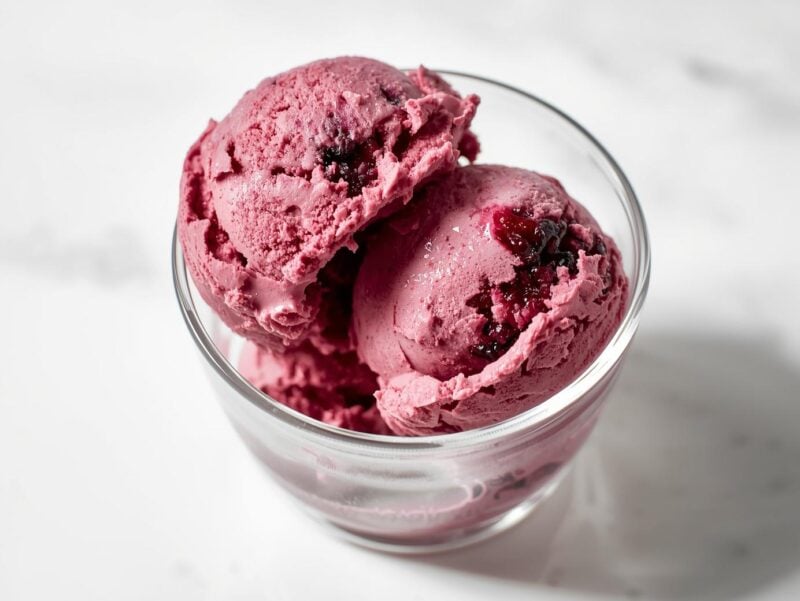
I use a simple planning chart before making a batch because it helps me match the fruit, sweetness, and method. This is especially useful if my berries taste more tart than usual or if I need a quicker option for the same day. The table below shows the combinations I return to most often.
| Variation | Flavor pairing | Sweetness level | Method choice | Best use |
|---|---|---|---|---|
| Classic berry | Vanilla | Medium, 3/4 cup sugar | Churned egg-free | Clean blackberry flavor |
| Bright and tart | Lemon zest | Medium-high, 3/4 cup sugar plus 1 tbsp in puree | Custard | Very ripe or sharp berries |
| Soft floral finish | Honey | Medium, reduce sugar by 2 tbsp and add 2 tbsp honey | Churned custard or egg-free | Dessert with shortbread or biscuits |
| Herb version | Basil | Medium | Churned | Summer dinner parties |
| Fast freezer batch | Vanilla or lemon | High, from condensed milk | No-churn | Quick prep, softer texture |
| Dessert-style scoop | Dark chocolate pieces | Medium-low | Custard | Richer after-dinner serving |
The most useful guide here is method choice. If I need the smoothest texture and strongest scoop shape, I go with churned or custard. If I need speed and low effort, no-churn works, although I reduce extra sweet toppings because that version already runs sweeter.
Common Questions I Hear Often
Most problems with homemade blackberry ice cream come from a few predictable places. The berries hold too much water, the base is too warm, or the sugar level is too low. These answers cover the fixes I use most often.
How do I stop it from turning icy?
Use a fully chilled base, cook the blackberry puree down a little, and do not cut the sugar too far. I aim for 1 to 1 1/4 cups puree per quart of base. More than that can add too much water.
Do I have to remove the seeds?
No, but I strongly prefer to. seed removal gives a much smoother result. Press the cooked berries through a fine-mesh sieve with a ladle or silicone spatula, and scrape the underside of the sieve to collect every bit of puree.
Why does the flavor seem weaker after freezing?
Cold dulls sweetness and aroma. I make the base taste slightly sweeter and fruitier than I think it should before churning. A pinch of salt, about 1/8 teaspoon per quart, also helps sharpen the flavor.
How long does it keep?
For the best texture, eat it within 7 days. It stays safe longer if stored well, but the texture declines. I press wrap directly on the surface and keep the container toward the back of the freezer, where the temperature stays steadier.
Can I use frozen blackberries?
Yes, and I often do outside peak season. Thaw them first, cook off some extra moisture, and taste for sweetness because frozen berries vary a lot. If they seem flat, add 1 teaspoon lemon juice to the puree.
My Final Serving And Summary
The way you serve blackberry ice cream can make the flavor feel sharper, richer, or more balanced. I like it with shortbread, crisp waffles, or plain pound cake because those sides add texture without taking over. Fresh blackberries on top look nice, although I usually macerate them first with 1 teaspoon sugar per cup so they taste softer and juicier.
Serving ideas I return to
- Best topping: A spoonful of quick blackberry sauce made from extra puree and a little sugar.
- For contrast: Crushed pistachios or toasted almonds for crunch.
- For a dinner dessert: One scoop with a thin shard of dark chocolate and a mint leaf.
- For children: Serve in small cups with vanilla wafers, because cones can get messy fast with softer homemade batches.
I let the container sit at room temperature for 5 minutes before scooping. That short wait gives cleaner scoops and fuller flavor, therefore the work you put into the berries and base actually shows up in the bowl.
Good blackberry ice cream starts before the freezing step. Pick ripe berries, cook and strain them, build a cold base with enough fat and sugar, and choose a method that fits the texture you want. Those habits solve most of the common problems people run into at home.
If I had to give one final tip, it would be this: keep notes. Write down the berry weight, sugar amount, puree volume, and method for each batch. After two or three rounds, you will know exactly how sweet your fruit tends to be and which version your freezer handles best. That is how a good homemade dessert turns into one you can make with confidence any time blackberries look too good to leave behind.
Last modified: April 22, 2026
