

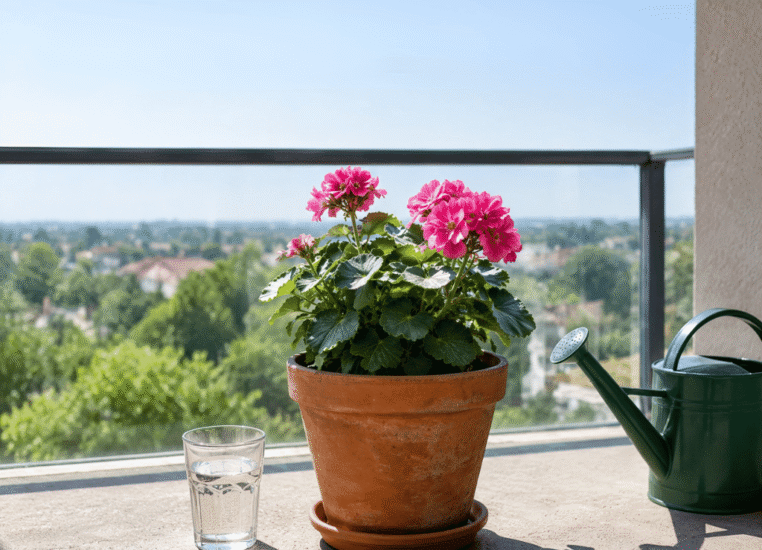
Container flowers often need more attention in summer than flowers planted in the ground. A pot has limited soil, exposed sides, and a small root zone. Sun, wind, terracotta, and dark-colored containers can make the growing medium dry quickly.
The right answer to how often to water potted flowers in hot weather is not always “every day.” Some containers need water once daily, while small hanging baskets may need attention twice a day during extreme heat. Other pots retain moisture longer and can suffer if watered automatically.
The safest approach is to check the plant and soil, then water thoroughly when needed.
Why Pots Dry Out Faster
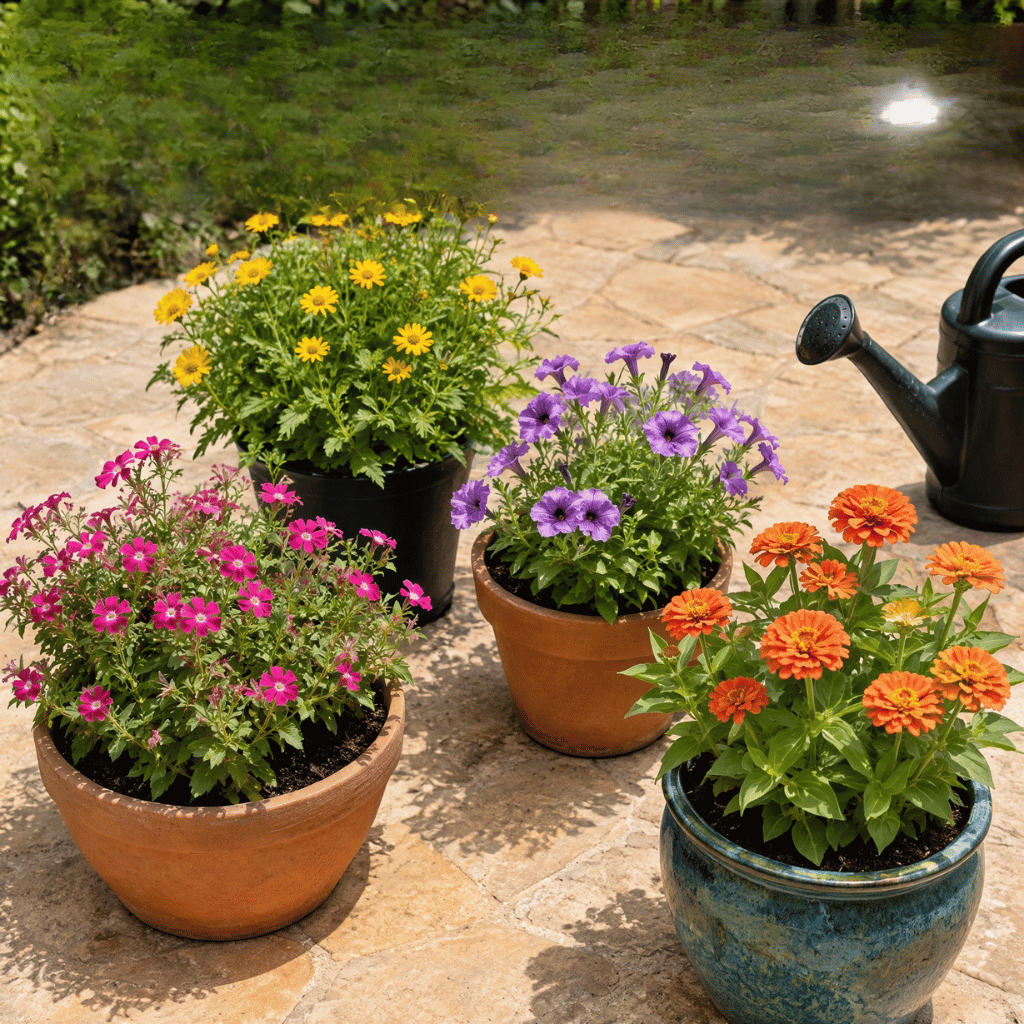
In-ground soil usually has a larger moisture reserve. Container soil has less volume, and the sides of the pot are exposed to warm air. Roots also fill much of the container, leaving less available soil to hold water.
Several conditions speed drying:
- Small containers
- Hanging baskets
- Terracotta pots
- Dark plastic pots in full sun
- Strong wind
- Crowded root systems
- Fast-draining potting mix
- Large, leafy plants
- South- or west-facing locations
- Concrete or stone surfaces that reflect heat
A pot that stayed moist for several days in spring may dry out within hours during a hot, windy spell.
How to Check Whether a Flower Pot Needs Water
Do not rely only on the calendar. Use several simple checks.
Check the top layer
Insert your finger about an inch into the growing medium. If the surface and the upper layer feel dry, the plant may need water. For larger containers, check more deeply because the surface can dry while the root zone remains moist.
Lift the container
A dry pot is often much lighter than a recently watered one. This method becomes easier after you compare the weight at different moisture levels.
Observe the plant
Wilting, drooping leaves, curled foliage, and flowers that collapse in the afternoon can signal water stress. However, temporary afternoon wilting does not always mean the soil is dry. Check the medium before watering.
Look at drainage
When you water, the excess should eventually drain from the bottom. If water runs straight down the sides and out immediately, the mix may have become hydrophobic or severely compacted.
How Often Should You Water?
During ordinary summer weather, many outdoor flower containers need checking daily. In hot, dry, or windy conditions, some may need water every day or even twice daily.
Use this as a starting guide:
| Container and conditions | Typical checking frequency |
|---|---|
| Large pot in partial shade | Once daily |
| Large pot in full sun | Once daily, sometimes more |
| Small pot in full sun | Morning and late afternoon checks |
| Hanging basket | Often twice daily during extreme heat |
| Terracotta pot | At least daily in hot weather |
| Self-watering container | Check reservoir and soil daily |
| Newly planted container | Check daily until roots establish |
These are not fixed rules. Plant species, container size, wind, potting mix, and humidity all change water needs.
The Correct Way to Water Potted Flowers
Water slowly
Pour water over the soil surface rather than blasting the plant with a hose. Apply it slowly enough that the growing medium can absorb it.
Cover the entire root zone
Water around the base of the plant and across the surface of the pot. Avoid wetting only one small area, because roots may be distributed throughout the container.
Continue until excess drains
A thorough watering should moisten the full root ball. Water until a small amount drains from the bottom, then allow the pot to finish draining.
Empty saucers
Do not leave flower pots sitting in standing water for extended periods. Constantly saturated roots can lose access to oxygen and become vulnerable to rot.
There are exceptions for certain self-watering systems, but ordinary pots with drainage holes should not remain submerged.
When Is the Best Time to Water?
Morning is generally the best time. It gives the plant access to moisture before the hottest part of the day and allows wet foliage to dry.
Late afternoon can be useful if a plant is severely dry, but avoid splashing water onto leaves and flowers when possible. Watering at night is not automatically harmful, though persistently wet foliage combined with poor airflow can increase disease risk.
During a heat wave, saving a wilted plant is more important than waiting for a perfect watering time.
How to Prevent Containers From Drying Too Fast
Use a larger pot when appropriate
Larger containers hold more growing medium and usually dry more slowly than tiny pots. The container still needs to match the plant; an oversized pot can stay wet around a small root system.
Add a surface mulch
A thin layer of organic mulch can reduce evaporation. Keep it slightly away from the stems to improve airflow and reduce the chance of rot.
Suitable materials may include fine bark, compost, or other clean garden mulch. Avoid creating a thick, waterlogged layer.
Group containers
Placing pots together can reduce exposure to wind and create a slightly more humid microclimate. Leave enough space for airflow and plant growth.
Move sensitive pots
During extreme heat, move containers away from reflected heat or afternoon sun if the plants tolerate temporary shade. This is especially helpful for flowers that prefer morning sun and afternoon protection.
Use shade cloth carefully
Temporary shade can protect flowers during severe heat. Do not place containers in deep shade for extended periods if they require full sun to flower well.
Check hanging baskets first
Hanging baskets have a high surface area and little soil volume. They often dry faster than floor-level pots and should be inspected early in the day.
Avoiding Overwatering During Hot Weather
Hot weather can make gardeners nervous, but watering more frequently does not mean watering constantly.
Signs of overwatering may include:
- Yellowing leaves
- Soft stems
- A sour smell from the pot
- Fungus gnats
- Leaves dropping despite wet soil
- Black or brown roots
- Growth that remains weak and pale
A wilted plant in wet soil is not necessarily thirsty. Heat, root damage, disease, or poor drainage may be preventing the roots from taking up water.
Check the root zone before adding more. If the soil is wet and the plant is declining, improve drainage and allow the container to dry slightly according to the plant’s needs.
Watering Different Types of Flower Containers
Annual bedding plants
Petunias, marigolds, zinnias, and similar annuals can use considerable water while actively flowering. Check daily in summer, especially in small containers.
Tropical flowering plants
Tropical plants may prefer consistently moist but well-drained soil. They can suffer quickly when allowed to dry completely, but they still need oxygen around their roots.
Drought-tolerant flowers
Lavender, portulaca, many sedums, and other drought-tolerant plants generally need less frequent watering. Allow the medium to dry more between waterings, while avoiding prolonged severe drought in small pots.
Bulbs in containers
Water needs change after flowering. Keep the foliage functioning while it is green, but avoid leaving dormant bulbs in constantly wet soil.
A Practical Heat-Wave Routine
Morning
- Check every container.
- Water dry pots slowly and thoroughly.
- Inspect hanging baskets first.
- Move heat-sensitive plants if necessary.
Midday
- Look for severe wilting.
- Do not automatically water every plant.
- Check the soil before adding more water.
Late afternoon
- Recheck small pots and exposed baskets.
- Water only those that have dried again.
- Avoid soaking flowers unnecessarily.
Evening
- Inspect for pests, scorched leaves, and broken stems.
- Empty saucers if they contain standing water.
- Note which containers dried fastest.
A Simple Rule to Remember
The answer to how often to water potted flowers in hot weather depends on the container and the plant, not the date on the calendar. Check soil moisture daily during hot conditions, water deeply when the root zone is dry, and improve the pot’s ability to hold moisture without creating soggy soil.
Good watering is a balance: enough moisture to support flowers through heat, but enough drainage and drying time to keep roots healthy.
Last modified: October 25, 2026
