

A first frost can arrive suddenly, especially in early October when warm afternoons are followed by unexpectedly cold nights. While plants growing in the ground receive some insulation from the surrounding soil, plants in containers are more exposed. Their roots are surrounded by a relatively small amount of potting mix, so the entire root ball can cool or freeze much faster.
The good news is that a little preparation can protect many patio plants, herbs, flowers, and tender vegetables. The most important step is knowing which plants need immediate protection and which can safely remain outdoors.
Which Potted Plants Need Frost Protection?
Tropical and warm-season plants are the most vulnerable. These include:
- Basil
- Coleus
- Begonias
- Impatiens
- Ferns
- Hibiscus
- Mandevilla
- Plumeria
- Citrus trees
- Bougainvillea
- Pepper and tomato plants
- Succulents that are not cold-hardy
Some herbs and perennials tolerate light frost, including parsley, mint, chives, thyme, oregano, and certain types of sage. However, cold tolerance varies by plant variety, container size, and local weather conditions.
Plants in small pots are generally at greater risk than plants in large containers. A large pot holds more soil, which cools more slowly and offers the roots better insulation.
Check the Forecast Before the Temperature Drops
How to Protect Potted Plants From the First Frost
Do not wait until frost is visible on the leaves. Check the overnight low and pay attention to frost advisories or freeze warnings.
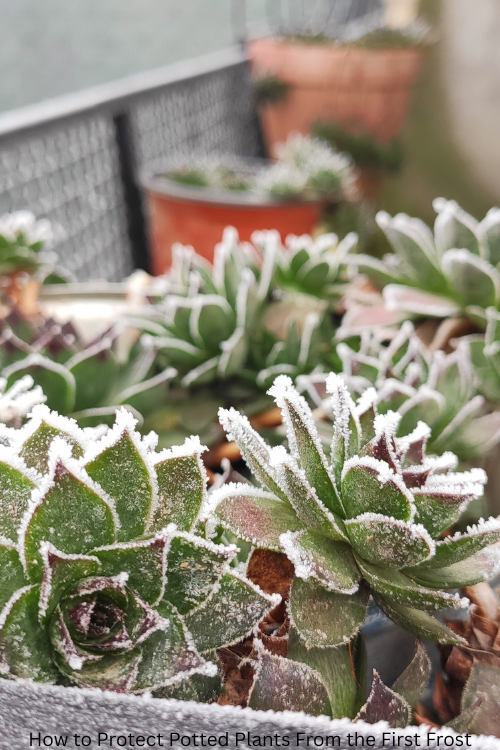
Frost can form when the air temperature is slightly above 32°F because plant surfaces may become colder than the surrounding air. A freeze is more serious because prolonged temperatures below 32°F can damage plant tissue and roots. Iowa State University Extension notes that tender annuals, tropical plants, and outdoor container plants may need to be moved or covered when temperatures approach the mid-30s. How to Protect Plants from Frost and Freeze | Yard and Garden
Prepare plants before sunset. Covers and containers are easier to move while the weather is still dry and mild.
Move Tender Containers to a Protected Location
The simplest protection is relocation. Move tender potted plants into one of these areas:
- An attached garage
- A basement
- A sunroom
- A greenhouse
- An enclosed porch
- A shed that remains above freezing
- A bright room inside the home
The location does not need to be warm enough for active growth. It only needs to stay above freezing for short-term protection.
Avoid placing plants directly beside a furnace, heater, or fireplace. Sudden heat and dry air can cause more stress than a cool indoor location. If plants remain indoors for more than a few days, place them near suitable light and keep them away from cold drafts.
Before bringing plants inside, inspect the leaves, stems, and soil surface for insects. Check beneath leaves for aphids, spider mites, whiteflies, and small insects hiding around leaf joints. Remove dead leaves and avoid bringing visibly infested plants indoors.
Group Pots Together
If moving every container is not practical, group pots close together against a building wall. The wall can absorb warmth during the day and release some of it overnight.
Place the most sensitive plants in the center of the group and larger, sturdier containers around the outside. This creates a small sheltered area and reduces exposure to wind.
Whenever possible, move containers beneath a covered porch, beneath an overhang, or next to the south-facing side of the house. Do not place pots where rainwater from the roof can collect in their containers.
Cover Plants With Breathable Material
For plants that must remain outside, use a frost cloth, row cover, sheet, light blanket, burlap, or similar breathable material.
A cover works by trapping some heat rising from the soil around the plant. It should reach the ground, but it should not rest heavily on the leaves. Use stakes, tomato cages, or an upside-down laundry basket to support the covering.
Avoid placing plastic directly against foliage. Plastic can transfer cold to leaves and may cause damage where it touches the plant. If plastic is the only available option, create a frame so it does not contact the leaves, and remove it promptly in the morning.
Use these steps:
- Water the plant if the potting mix is dry.
- Place the container in a sheltered position.
- Add stakes or a support frame.
- Drape the cover over the frame.
- Secure the bottom around the pot or ground.
- Remove the cover after temperatures rise above freezing.
Do not leave plants covered for several warm, sunny days. Plants need light and ventilation, and excess moisture under a cover can encourage fungal problems.
Insulate the Container, Not Just the Leaves
The roots of a container plant can be damaged even when the foliage looks healthy. Insulate the pot itself with:
- Straw
- Fallen leaves
- Burlap
- Blankets
- Cardboard
- Bubble wrap around the outside of the pot
- A larger empty container filled with leaves or straw
Keep insulating material around the sides of the container rather than directly on the soil surface. A thin layer of mulch can be placed on top of the potting mix, but leave a little space around the stem.
Never block the drainage holes. Water trapped in a frozen container can expand and crack clay or ceramic pots.
Set Pots on the Ground
Pots sitting on concrete, stone, or an elevated plant stand lose heat more quickly than containers placed directly on the ground. Set containers on soil or mulch when a frost is expected.
Group them near the foundation of the home, where they receive protection from wind. If the pots are too heavy to move, wrap the containers and cover the plants in place.
Water at the Right Time
Moist soil holds more heat than extremely dry soil, so watering can help before a light frost. Water earlier in the day, allowing excess moisture to drain before temperatures fall.
Do not soak already-waterlogged soil. Cold, wet potting mix can increase the risk of root damage. The goal is evenly moist soil, not a saturated container.
Avoid watering foliage in the evening. Wet leaves can freeze more easily, and prolonged moisture may encourage disease.
What to Do After Frost Damage
Do not prune damaged leaves immediately unless they are diseased or creating a safety problem. Brown or wilted foliage may look unattractive, but it can provide limited protection to lower parts of the plant during another cold night.
Move the plant to a protected location and wait several days before deciding whether it has survived. Check the stems by gently scratching a small area with a clean fingernail. Green tissue beneath the surface indicates living tissue; brown or gray tissue may be dead.
Once the danger of additional frost has passed:
- Remove collapsed leaves.
- Cut back dead stems to healthy tissue.
- Reduce watering while the plant recovers.
- Place it in bright, indirect light.
- Avoid fertilizing until new growth appears.
Do not assume a plant is dead based only on damaged leaves. Some tropical plants can regrow from healthy stems or roots after a light freeze, although recovery is less likely after prolonged freezing.
Plants That May Stay Outside
Cold-hardy plants often need little protection beyond shelter from harsh wind. Depending on your climate, these may include:
- Kale
- Spinach
- Pansies
- Violas
- Chives
- Parsley
- Thyme
- Hardy sedums
- Some ornamental grasses
- Certain evergreen shrubs
Even hardy plants may need extra protection when grown in small pots. Container roots are more exposed than roots growing in the ground, so a plant that survives winter in a garden bed may struggle in a shallow planter.
A Simple First-Frost Checklist
Before the first frost, walk around the patio and garden with this checklist:
- Identify tender plants.
- Check the overnight forecast.
- Move small pots indoors.
- Group large containers together.
- Place pots near a wall or under cover.
- Water dry plants during the day.
- Wrap exposed containers.
- Prepare frost cloth or sheets.
- Inspect plants for insects before bringing them inside.
- Remove covers after the cold weather passes.
Conclusion
Protecting potted plants from the first frost is mostly a matter of timing. Move tender plants indoors when possible, insulate containers that remain outside, and use breathable covers instead of plastic placed directly on foliage.
A few minutes of preparation can extend the life of patio plants and help valuable herbs, flowers, and tropical specimens survive the transition from autumn to winter.
Last modified: October 5, 2026
