

Long summer days feel better when your garden keeps giving color. You get weeks of blooms, less replanting, and a yard that looks alive from early heat to late August.
Picture soft purple petals, sunny yellow faces, bright red spikes, and clouds of blue and pink moving in the breeze. These flowers add shape, scent, and steady beauty to beds, borders, and front walks.
In this guide, you will find 10 smart picks that can bloom through summer with the right care. Some love dry heat. Some draw bees and butterflies. All of them help you build a garden that looks full, easy, and worth admiring every single day.
Why Summer-Long Perennials Matter
These long-blooming perennials bring steady color, lower upkeep, and a garden that stays attractive for months.
Short bloom times can leave flower beds looking tired by midsummer. Perennial flowers that bloom all summer help fix that problem. They give your garden a fuller look for longer, and many come back every year with less work than replanting annuals.
A smart mix of long-blooming perennials also gives your yard structure. You get repeating color, stronger shape, and fewer empty gaps in the border. That matters in front yards, patio beds, and any space you want to enjoy often.
If you want a garden with a long season of color, start with proven plants. Good choices include coneflower, black-eyed Susan, coreopsis, salvia, catmint, daylily, yarrow, garden phlox, blanket flower, and veronica. Together, these ten flowers cover many colors, heights, and growing conditions.
Why people love it
- Less replanting
You plant once, then enjoy flowers year after year. That saves time, money, and spring effort. - Longer color show
These plants keep beds bright through hot weeks when other flowers fade fast. Your garden feels finished, not patchy. - Better garden rhythm
Long bloomers help tie early and late flowers together. The whole yard looks more planned and calm.
When it’s a good idea
- ✓ You want a lower-care yard
Perennials cut down on constant buying and planting each season. - ✓ Your garden looks dull by July
Summer bloomers keep color going when spring flowers are done. - ✓ You want pollinators
Many of these flowers feed bees, butterflies, and other helpful insects for weeks.
One smart tip
Build around bloom overlap.
Choose flowers with slightly different bloom windows so one starts as another slows down. For example, pair catmint and salvia with coneflower and black-eyed Susan, then add garden phlox or veronica for extra late-summer color.
Weak image match · 5/10 Image shows colorful flowers, but the subtitle discusses the importance of summer-long perennials, not specific flowers.  Photo by Fiona Pröll on Pexels
How to Choose Lasting Bloomers
The best summer perennials match your climate, sun, soil, and watering habits.
A flower may look perfect in a photo and still fail in your yard. The best results come from choosing plants that fit your hardiness zone, light level, and soil type. A sunny, dry border needs very different plants than a rich bed that stays moist.
Bloom length matters too. Some perennials flower for a few big weeks, and others repeat for months if you deadhead and water well. Read plant tags closely. A strong start saves a lot of frustration later.
Quick comparison table
| Perennial flower | Best sun | Water need | Bloom color | Why it stands out |
|---|---|---|---|---|
| Coneflower | Full sun | Low to medium | Purple, pink, white | Heat-tough and great for pollinators |
| Black-eyed Susan | Full sun | Low to medium | Yellow, gold | Bold color and easy care |
| Coreopsis | Full sun | Low | Yellow, red | Long bloom season and airy look |
| Salvia | Full sun | Low | Blue, purple, red | Repeats well after cutting back |
| Catmint | Full sun | Low | Lavender-blue | Soft texture and long bloom |
| Daylily | Full sun to part sun | Medium | Many shades | Strong clumps and reliable summer flowers |
| Yarrow | Full sun | Low | Yellow, pink, white | Handles dry spots well |
| Garden phlox | Full sun to part sun | Medium | Pink, white, purple | Big scented clusters |
| Blanket flower | Full sun | Low | Red, orange, yellow | Hot color for dry beds |
| Veronica | Full sun | Medium | Blue, pink, white | Neat spikes and repeat blooms |
Why people love it
- Fewer plant losses
Matching flowers to your yard means better growth and fewer weak, stressed plants. - Easier care plan
You can group plants with similar water and sun needs. That makes garden care much simpler. - Stronger summer display
Well-chosen perennials bloom harder, stay neater, and fill space better through the season.
When it’s a good idea
- ✓ You are planting a new bed
Start with the right plants, and the bed will look better from year one. - ✓ Your yard has tough conditions
Dry soil, hot sun, or heavy clay all call for careful choices. - ✓ You want flowers that last
Bloom time, deadheading needs, and drought tolerance all affect summer performance.
One smart tip
Watch the sun for one full day.
Before you buy plants, check how many hours of direct light your garden gets. A spot that feels sunny may only get morning light, and that can change which perennial flowers will bloom all summer with real strength.
Weak image match · 5/10 Shows a gardener writing on a tag, but not specifically choosing lasting bloomers or reading a perennial tag. 
1. Coneflower for Heat and Pollinators
Coneflower is a hardy summer perennial with daisy-like blooms, strong stems, and excellent heat tolerance.
Coneflower, often called echinacea, earns its place in almost any sunny garden. It handles heat, dry spells, and average soil better than many showy flowers. The raised center also gives the bloom a strong shape, so even simple plantings look interesting.
The flowers come in purple, pink, white, orange, and more, though classic purple remains a favorite. Bees land on them all day. Butterflies do too. Later in the season, seed heads can feed birds if you leave a few standing.
For beginners, coneflower is one of the safest choices on this list. It does not ask for rich soil or constant watering. Once settled in, it keeps going through long hot weeks when softer plants begin to fade.
It also mixes well with other summer bloomers. Try it with salvia for cool purple-blue tones, or pair it with black-eyed Susan for a bright late-summer bed. The contrast looks lively and natural.
Why people love it
- Handles hot weather
Coneflower stays upright and colorful during summer heat. That makes it useful in exposed beds and sunny borders. - Draws pollinators
Its open flowers are easy for bees and butterflies to visit. A small group can turn a quiet bed into a busy one. - Easy for new gardeners
It forgives small mistakes with watering and soil. You still get a good show without constant fuss.
When it’s a good idea
- ✓ You have full sun
This plant performs best with plenty of direct light and open air. - ✓ You miss water now and then
Once rooted, it copes better with dry spells than many flowering perennials. - ✓ You want a wildlife-friendly garden
Pollinators visit the blooms, and birds may use the seed heads later.
One smart tip
Deadhead early, leave some late.
Cut off faded flowers in early and mid-summer to encourage more bloom. Near the end of the season, leave a few seed heads in place. They add texture and can attract birds, which gives the garden life even after peak bloom.
Excellent image match · 10/10 Image clearly shows coneflowers with a pollinator (bee), matching the subtitle perfectly.  Photo by Andrew Patrick Photo on Pexels
2. Black-Eyed Susan for Bold Color
Black-eyed Susan brings bright golden petals, easy growth, and reliable summer color in sunny gardens.
Black-eyed Susan is one of the happiest sights in late summer. The rich yellow petals and dark centers stand out from a distance, so even a small planting has impact. It suits cottage gardens, mixed borders, and simple front-yard beds.
This perennial grows with confidence. It handles heat well, flowers for weeks, and often keeps blooming when deadheaded. In a border, it acts like a visual anchor. The color is strong enough to wake up quiet green spaces and tie different plants together.
It also pairs easily with many of the other long-blooming perennials in this article. Plant it near coneflower for a prairie-style look, or soften it with catmint and garden phlox. If you want more warm tones, blanket flower and coreopsis make excellent partners.
My recommendation for most home gardens is simple: start with coneflower and black-eyed Susan, then add three supporting plants based on your space. For dry, sunny beds, choose yarrow, salvia, and blanket flower. For a softer border with a little more moisture, choose garden phlox, veronica, and daylily.
Why people love it
- Strong, cheerful color
The golden blooms light up summer beds and look good from far away. They photograph beautifully too. - Dependable growth
This plant establishes well and comes back with energy. It is a solid choice for gardeners who want results. - Easy to mix
Its shape and color work with many garden styles, from tidy borders to loose meadow-inspired planting.
When it’s a good idea
- ✓ You want a sunny border to pop
Few perennials give this much warm color with so little effort. - ✓ You like cottage garden style
It fits the loose, colorful look perfectly and blends well with classic companions. - ✓ You need a reliable starter plant
It is easy to grow and gives clear reward even for newer gardeners.
One smart tip
Excellent image match · 10/10 Image clearly shows multiple black-eyed Susan flowers, matching the subtitle’s description.  Photo by Patrick on Pexels
3. Coreopsis for Constant Yellow Blooms
A sunny, easy perennial that keeps pushing out daisy-like flowers for much of summer.
Coreopsis earns its place in any list of perennial flowers that bloom all summer because it flowers hard and asks for very little back. Most types love full sun and well-drained soil, and many bloom in bright yellow, gold, or warm bicolor shades that light up a bed fast.
It does especially well in lean soil, where fussy plants often struggle. Rich soil can make some varieties floppy, but coreopsis stays neater in average or even poor ground. That makes it a smart flower for simple, low-care gardens.
Why people love it
- Long bloom window
Coreopsis starts early and can keep going through summer with light care. A quick trim of spent flowers helps the next round show up faster. - Happy in tough spots
Hot sun does not scare this plant. It handles dry spells better than many classic border flowers once roots settle in. - Bright color without fuss
The yellow flowers read from a distance, so borders look full and cheerful. Even a small patch can wake up a dull corner.
When it’s a good idea
- ✓ You have poor or sandy soil
Coreopsis often grows better in lighter soil than in rich, heavy ground. - ✓ You want easy summer color
This is a strong pick for gardeners who do not want constant feeding and watering. - ✓ You need a front-border plant
Many varieties stay compact, so they fit neatly along paths and bed edges.
One smart tip
Shear, do not just pinch.
After the first heavy flush of flowers slows down, cut the plant back by about one-third instead of removing blooms one by one. This small haircut keeps the plant tidy and often brings a fresh wave of blooms before late summer. Water once after trimming to help it bounce back.
Excellent image match · 9/10 The image shows numerous yellow coreopsis flowers with green foliage, matching the subtitle.  Photo by Martina A. on Pexels
4. Salvia for Spikes All Season
A repeat-blooming perennial with upright flower spikes that bring strong color and structure.
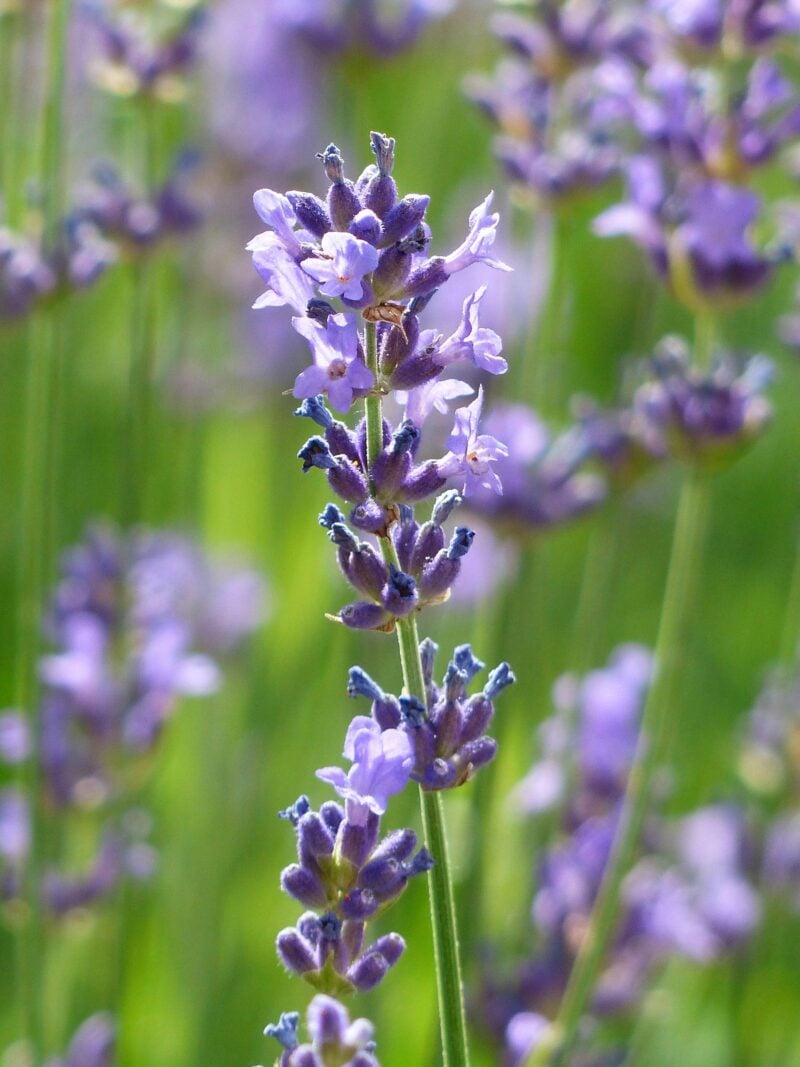
Salvia gives summer gardens a different shape from daisy-style flowers. Its tall spikes rise above the leaves in purple, blue, pink, or red, and that vertical look adds rhythm to mixed borders.
Many perennial salvias start blooming in late spring and keep going into summer. They usually pause after the first big flush, then bloom again if you trim them lightly. That simple habit makes them one of the most dependable long-blooming perennials for sunny gardens.
A bed with salvia always feels more alive. Bees visit the flowers often, and the gray-green leaves stay neat even in heat. If you like order in the garden, this plant helps hold the design together.
Why people love it
- Strong repeat flowering
Cutting back faded spikes tells the plant to set more buds. You get another round of color without much effort. - Heat-friendly growth
Salvia keeps its shape in hot weather better than many soft-stemmed perennials. The foliage rarely looks tired by midsummer. - Great contrast in borders
The spiky flowers pair well with round blooms like daisies and yarrow. That mix makes a planting look more finished.
When it’s a good idea
- ✓ You want pollinator activity
Salvia is a strong magnet for bees and other helpful insects in summer. - ✓ You need a tidy border plant
Its upright habit keeps beds from looking loose or messy. - ✓ You grow in hot full sun
This plant shines where the light is strong and the soil drains well.
One smart tip
Cut flower spikes to fresh leaves.
Do not wait for every spike to brown out. As soon as a stem looks spent, cut it down to a lower set of healthy leaves. This keeps the plant from wasting energy on old flowers and helps new stems rise faster.
Excellent image match · 9/10 Image shows a close-up of purple salvia flower spikes, matching the subtitle.
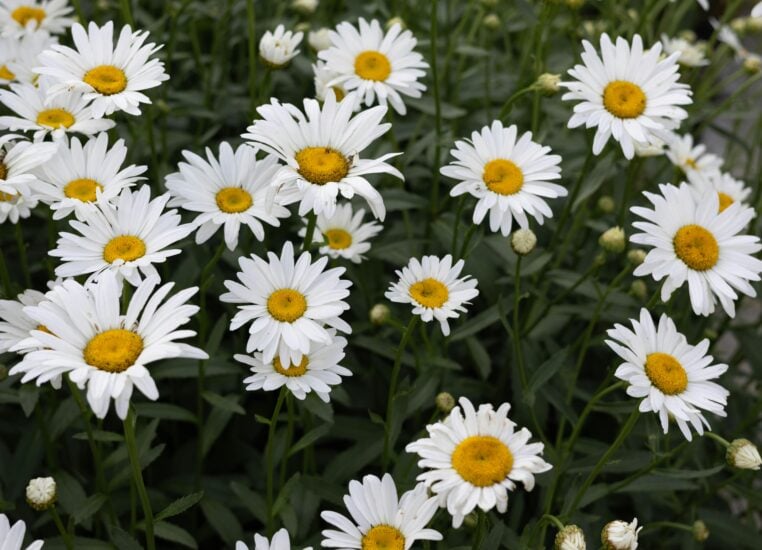
5. Shasta Daisy for Classic Borders
A clean, bright perennial with white petals and strong stems that fit almost any sunny garden style.
Shasta daisy has a look people never seem to tire of. The flowers are crisp and simple, with white petals around rich yellow centers, and they make summer borders feel fresh even during the hottest weeks.
This plant also brings order. The stems are sturdy, so the blooms sit upright instead of collapsing after every rain. In a mixed bed, that matters. You get a flower that reads clearly from across the yard and still looks good up close in a vase.
Shasta daisy is not the longest bloomer on its own, but it stretches much farther with regular deadheading. That one habit can keep new buds coming and the plant looking clean well into the season. For gardeners who enjoy a classic border, this flower still earns its spot year after year.
Why people love it
- Timeless flower shape
White daisies work with almost every garden color plan. They calm down bold reds, oranges, and hot pinks without fading into the background. - Excellent cut flowers
The firm stems and open blooms make them useful indoors. A few stems can brighten a kitchen table for days. - Neat summer presence
The plants hold a clean form in sunny borders. They look planned, not wild, which many gardeners want near paths and patios.
When it’s a good idea
- ✓ You want a cottage-garden look
Shasta daisy brings that easy, familiar charm without much drama. - ✓ You need flowers for cutting
Pick them often, and the border still keeps producing. - ✓ You have rich, well-drained soil
This plant performs best where roots stay moist but never soggy.
One smart tip
Deadhead to the side bud.
Instead of removing only the flower head, trace the stem down to the next strong side shoot and cut there. This keeps the plant looking natural and pushes energy into a fresh bloom stem, not a bare stick. The border looks fuller for longer.
Excellent image match · 9/10 The image clearly shows Shasta daisies, matching the specific flower mentioned in the subtitle.
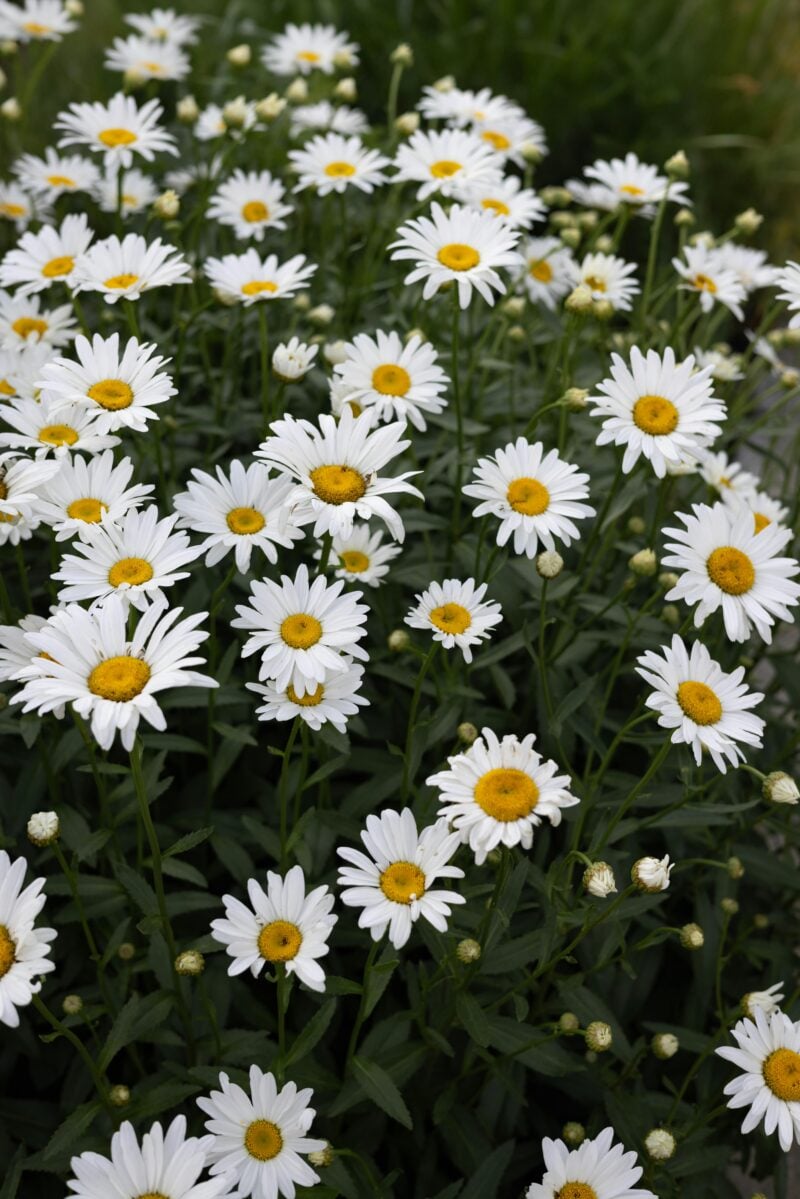
Photo by Tetyana Kovyrina on Pexels
6. Yarrow for Dry Sunny Beds
A drought-tolerant perennial with flat flower clusters that keeps color coming in hot, bright spaces.
Yarrow is one of the best answers for dry sunny beds where many perennials struggle by July. Its flower heads sit in broad, flat clusters above ferny leaves, and those blooms come in yellow, white, pink, red, and soft peach shades.
Heat does not bother it much. Poor soil does not either. In fact, yarrow often performs better when gardeners leave it alone instead of feeding it heavily. That tough nature makes it a smart choice for hard spots near driveways, sidewalks, and hot foundations.
There is also a design bonus. The flat blooms change the look of a planting. Set them beside spiky salvia or round coreopsis, and the whole bed feels more layered and interesting.
Why people love it
- Excellent drought tolerance
Once established, yarrow handles dry weeks with less stress than many summer flowers. It is useful in water-wise gardens and low-rain areas. - Flowers for a long stretch
The clusters open over time, so the plant stays colorful for weeks. A light trim after the first flush can lead to more bloom. - Strong garden texture
The fine leaves and flat flower tops give contrast that softer mounding plants cannot. This makes mixed borders feel richer and more balanced.
When it’s a good idea
- ✓ Your soil is dry and poor
Yarrow often thrives where richer-soil plants fail or flop. - ✓ You want a low-water border
It fits well in sunny beds that do not get constant irrigation. - ✓ You need heat-proof color
This plant keeps going through hot midsummer weather with less stress.
One smart tip
Excellent image match · 9/10 Image shows a field of yarrow flowers, matching the section’s description of yarrow for dry sunny beds.  Photo by Sunny Disposition Productions on Pexels
7. Catmint for Soft Lavender Waves
Catmint is a long-blooming perennial with lavender-blue flowers, soft gray-green leaves, and an easy habit that spills gently over edges.
Catmint is one of those plants that makes a border look relaxed and full without much work. It starts early, keeps sending up blooms through summer, and often flowers again after a light trim. The color pairs well with roses, daisies, and yellow flowers, so it fills gaps and softens sharper shapes in the garden.
This perennial also brings texture. The foliage stays neat, smells pleasant when brushed, and handles heat better than many soft-looking plants. Plant it near a walkway and you get color, scent, and movement in one spot.
Why people love it
- Long bloom window
Catmint flowers for weeks, then often blooms again after shearing. That gives you better summer color than many spring perennials. - Low work plant
It does well in average soil and does not ask for much water once settled in. That makes it a strong pick for busy gardeners. - Beautiful border shape
The mounded habit softens stone paths, bed edges, and front-of-border plantings. It looks full without feeling heavy.
When it’s a good idea
- ✓ Hot, sunny edges
Catmint thrives in full sun and handles reflected heat well, especially along paths and driveways. - ✓ Cottage-style beds
Its loose shape blends well with roses, salvia, and other summer bloomers. - ✓ Dryer gardens
Once established, it copes with short dry spells better than thirstier flowering perennials.
One smart tip
Shear after the first flush.
After the first big wave of flowers fades, cut the plant back by about one-third. This keeps it compact and often brings a fresh round of blooms later in summer. A simple trim can make the plant look newly planted again.
Excellent image match · 9/10 Image shows a field of soft lavender catmint flowers, matching the subtitle’s description.  Photo by Physical Pixel on Pexels
8. Daylily for Repeat Summer Color
Reblooming daylilies send up fresh waves of trumpet-shaped flowers through summer, even in tough growing spots.
Some gardeners think of daylilies as a short-show plant. That is true for older kinds, but modern reblooming types change the story. Varieties such as ‘Stella de Oro’, ‘Happy Returns’, and newer repeat bloomers can flower again and again with only basic care.
Daylily earns its place because it adapts so well. It grows in many climates, handles heavy soil better than many perennials, and comes in almost every warm shade you can think of, from buttery yellow to deep red. The strappy leaves also give structure when the flowers pause between bloom cycles.
There is another reason people keep planting them. They are forgiving. A border with strong sun, a mailbox bed, or a mixed island planting can all support daylilies if drainage is decent. That makes them useful when you need reliable color and do not want to fuss over every detail.
Why people love it
- Repeat flowers
Reblooming types keep producing buds after the first display fades. You get more than one short burst of color. - Wide color range
Daylilies fit many garden styles because they come in soft pastels, bold golds, oranges, reds, and bi-colors. - Tough growth
They manage heat, humidity, and cold winters better than many flowering perennials. That broad range makes them easy to recommend.
When it’s a good idea
- ✓ Mixed sunny borders
Daylilies blend well with coneflowers, catmint, and black-eyed Susan for long summer color. - ✓ Hard-to-please spots
They can handle average soil and variable weather, so they work well in starter gardens. - ✓ Large mass plantings
Clumps spread over time and fill space with leaves and blooms, which helps a bed look established faster.
One smart tip
Choose reblooming labels first.
If your goal is all-summer flowers, read plant tags closely and look for “reblooming” or “repeat blooming.” Deadhead spent flowers and remove old stalks after each flush. That small habit keeps the plant tidy and helps it focus on new buds.
Excellent image match · 9/10 The image clearly shows multiple orange daylilies, matching the section’s focus on daylilies.  Photo by Filiberto Giglio on Pexels
9/10. Three Summer Stars
Russian sage, veronica, and blanket flower each bring a different kind of summer color, so you can match the plant to your climate and style.
Some gardens need airy height. Some need neat spikes. Others need hot, bold color that holds through dry weather. This is why these three perennials work so well together in one section. They solve different garden problems, but all help extend the season.
Russian sage brings clouds of lavender-blue flowers on tall silver stems. It shines in dry, sunny spaces and gives the border a loose, glowing look in late summer. Veronica is more upright and tidy, with narrow flower spikes in purple, pink, blue, or white. It suits smaller beds and looks sharper near paths or formal edges. Blanket flower, also called gaillardia, adds warm reds, oranges, and yellows that feel bright even in strong sun. It blooms hard through heat and keeps going if you deadhead it.
This trio also helps you layer a bed. Russian sage creates height and softness. Veronica gives vertical lines in the middle. Blanket flower fills the front with warm, daisy-like color.
Why people love it
- Different looks, same season
You can mix airy, upright, and rounded flower forms in one sunny border. The bed feels richer and less flat. - Strong summer performance
All three handle heat well, though veronica likes a bit more moisture than the other two. They keep the garden active when spring flowers are done. - Pollinator appeal
Bees and butterflies visit all three, especially Russian sage and blanket flower. That adds movement and life to the garden.
When it’s a good idea
- ✓ Dry, sunny yards
Russian sage and blanket flower are strong picks where rain is uneven and summer days are hot. - ✓ Small structured beds
Veronica fits neatly into tighter spaces and gives a cleaner shape than looser perennials. - ✓ Color-layered borders
Use all three if you want cool purples in back and hot daisy colors near the front.
One smart tip
Match each plant to the right soil.
Russian sage and blanket flower need sharp drainage and full sun, or they can sulk. Veronica likes sun too, but it performs best in soil that stays evenly moist, not soggy. A simple soil match often matters more than extra fertilizer.
Bloom Comparison Table and Picks
A simple comparison table helps you choose the best all-summer perennial flowers for your color plan, climate, and care style.
Ten great plants can still feel like too many choices. A quick side-by-side view makes things easier. Use this table to narrow your options before you plant, then build your bed around bloom color, sun level, and how much work you want to do.
Here is a simple guide for the full list in this article.
| Perennial | Color | Best Conditions | Care Level |
|---|---|---|---|
| Coneflower | Pink, purple, white | Full sun, average soil | Low |
| Black-Eyed Susan | Golden yellow | Full sun, heat | Low |
| Coreopsis | Yellow, gold, red tones | Full sun, well-drained soil | Low |
| Salvia | Blue, purple, pink | Full sun, dry to average soil | Low |
| Shasta Daisy | White | Full sun, decent drainage | Medium |
| Yarrow | Yellow, pink, red, white | Hot sun, dry soil | Low |
| Catmint | Lavender-blue | Full sun, border edges | Low |
| Daylily | Many shades | Sun, adaptable soil | Low to medium |
| Russian Sage | Lavender-blue | Dry heat, full sun | Low |
| Veronica / Blanket Flower | Blue, pink / red, orange, yellow | Sun; moist-average / dry | Medium / Low |
Why people love it
- Easy planning
The table helps you compare bloom color and care needs fast. That saves time and cuts down on planting mistakes. - Better plant matching
You can choose flowers that fit your real yard conditions instead of picking by color alone. - Clear recommendations
For low care, pick catmint, salvia, yarrow, or Russian sage. For bold repeat color, choose reblooming daylilies and coneflowers.
When it’s a good idea
- ✓ New garden beds
A comparison table helps you build a balanced mix before you buy plants. - ✓ Hot summer climates
Russian sage, yarrow, blanket flower, and catmint usually handle dry heat best. - ✓ Low-maintenance yards
Choose the easiest bloomers first, then add one or two medium-care plants for variety.
One smart tip
Conclusion
A long-blooming garden feels generous. It gives color in June, July, and August without needing fresh plants every few weeks.
Use this list of 10 perennial flowers that bloom all summer as a simple planning tool. Start with two or three that fit your light, soil, and weather. Then repeat them in groups so the bed looks full and calm, not scattered. Save the comparison table, choose your favorites, and give this year’s garden a longer season of bloom.
Last modified: May 12, 2026
