

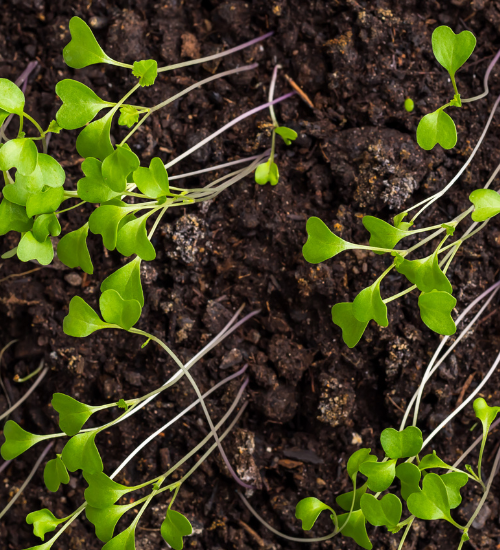
Starting flowers from seed is exciting until the seedlings become tall, thin, and unable to support themselves. Instead of developing short, sturdy stems, they stretch toward the nearest light source. This problem is called legginess, and it is one of the most common setbacks for beginners.
Understanding why flower seedlings get leggy makes the solution much easier. In most cases, the main cause is insufficient light. However, heat, overcrowding, excessive moisture, and delayed transplanting can also contribute to weak growth.
Leggy seedlings are not always beyond saving. Some can recover when moved into brighter light and given better spacing. Others may need to be replanted or replaced, especially if their stems are damaged or they have developed damping-off disease.
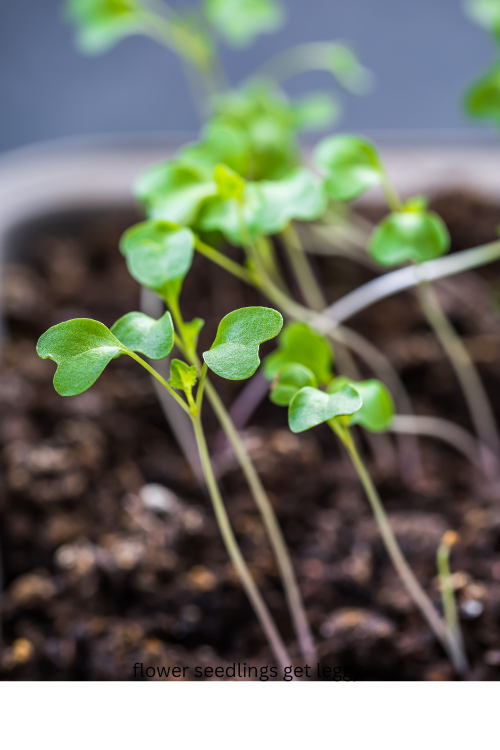
flower seedlings get leggy
What Leggy Seedlings Look Like
A leggy flower seedling usually has one or more of these characteristics:
- A long, thin stem
- Large spaces between leaves
- Pale green growth
- Leaning toward a window
- Weak stems that bend under their own weight
- Leaves concentrated near the top
- Seedlings collapsing after watering
Healthy seedlings should gradually develop a firm stem and compact growth. They do not need to be perfectly short, but they should be able to remain upright without leaning dramatically.
Penn State Extension notes that seedlings without enough light become leggy and fragile and may fail to reach their potential. Seed and Seedling Biology – Penn State Extension
Why Flower Seedlings Get Leggy
1. They are not receiving enough light
Light is the most common reason flower seedlings stretch. A bright-looking room may still provide less usable light than seedlings need. Window light can also come from one direction, causing plants to lean.
Seedlings placed too far from a window may grow upward quickly in search of stronger light. Cloudy weather, short winter days, dirty glass, and nearby buildings can make the problem worse.
2. The light is too far away
Grow lights can prevent legginess, but only when positioned correctly. A light hanging several feet above the tray may illuminate the room without giving the seedlings enough intensity.
Keep the light close to the seedlings while following the manufacturer’s instructions. As the plants grow, raise the light so it remains at a suitable distance without overheating or touching the leaves.
3. The room is too warm
Warm conditions can speed up stem growth, especially when light levels are weak. A warm room combined with insufficient light often produces thin, stretched seedlings.
Seedlings usually benefit from moderate temperatures rather than excessive heat. If the tray sits above a radiator, near a heat vent, or in strong afternoon sun behind glass, move it to a more stable location.
4. Seedlings are overcrowded
When many seedlings grow in the same cell, they compete for light and space. Taller plants may shade shorter ones, forcing them to stretch.
Thinning is not a sign of failure. It is a normal part of raising seedlings. Remove weaker seedlings with scissors rather than pulling them and disturbing the roots of the plants you want to keep.
5. Watering is inconsistent
Water stress can weaken seedlings, while constant saturation can limit healthy root development. Soil that remains waterlogged contains less air, which can damage roots and increase disease risk.
Keep the mix evenly moist but not soaked. Let excess water drain completely, and do not allow trays to sit in a full saucer.
6. Air movement is poor
Seedlings grown in still air may develop weaker stems. Gentle air movement encourages plants to respond by building sturdier tissues.
A small fan set on low can provide indirect circulation. It should not blast the seedlings or dry the growing mix rapidly.
How to Fix Leggy Flower Seedlings
Step 1: Improve the light immediately
Move the seedlings to a brighter location as soon as you notice stretching. If you are using a window, rotate the tray every day or two so the plants do not lean in one direction.
If natural light is weak, use a suitable grow light. Position it close enough to provide strong illumination, then adjust it as the plants grow.
Do not expect stretched stems to shrink. The existing stem will remain long, but new growth can become more compact.
Step 2: Thin crowded seedlings
Choose the strongest seedling in each cell or leave adequate spacing in a larger tray. Snip unwanted seedlings at the soil line.
Pulling seedlings can disturb neighboring roots. Cutting them is quicker and safer.
Step 3: Reduce excessive warmth
Move the tray away from heat vents and radiators. Avoid placing it directly against cold glass at night, but do not compensate for weak light by keeping seedlings excessively hot.
Stable conditions are more useful than dramatic changes.
Step 4: Add gentle air circulation
Run a small fan nearby for a few hours each day. The leaves should move slightly, not whip back and forth.
Air movement also helps the foliage dry after watering and may reduce problems associated with overly damp conditions.
Step 5: Water from below when practical
Place the seed tray in a shallow container of water and allow the mix to absorb moisture from underneath. Remove the tray once the surface feels moist.
Bottom watering can reduce disturbance to delicate stems, but do not leave the tray standing in water for long periods.
Should You Bury Leggy Seedlings?
The answer depends on the flower.
Some plants can be planted deeper because they can produce roots along buried stems. Other flowers are more sensitive and should not have their crown or growing point buried.
When transplanting a leggy flower seedling:
- Handle the root ball gently.
- Plant at the same depth unless the species tolerates deeper planting.
- Add support with potting mix rather than burying the crown.
- Water lightly after transplanting.
- Protect the plant from harsh sun for a short adjustment period.
How to Prevent Leggy Seedlings Next Time
Prevention begins before the seeds germinate.
Use the right light from the start
Place seedlings under bright light as soon as they emerge. Do not wait until they become tall.
Sow seeds thinly
Follow the spacing instructions on the packet. If you sow several seeds in one cell, thin them early.
Rotate containers
Turn window-grown seedlings regularly so they receive light more evenly.
Avoid overfertilizing
Young seedlings do not need heavy feeding. Excess fertilizer can create soft, uneven growth and may damage tender roots.
Provide airflow
A fan on low can help strengthen stems and reduce stagnant humidity.
Transplant promptly
Move seedlings into larger cells when their roots fill the original space or when they begin competing for light.
When Leggy Seedlings Cannot Be Saved
Some seedlings should be discarded rather than rescued. Replace plants when:
- The stem is pinched, black, or mushy at the soil line.
- The entire tray has collapsed.
- Roots smell rotten.
- White or gray mold spreads across the surface.
- The seedlings remain weak despite improved light and spacing.
Damping-off can affect many flowers and is favored by overly wet conditions. It may cause young stems to collapse near the soil line. How to prevent seedling damping off
Remove diseased seedlings, clean reusable containers, and start again with fresh or sterilized materials.
A Simple Troubleshooting Table
| Problem | Most likely cause | What to do |
|---|---|---|
| Tall and pale seedlings | Insufficient light | Move closer to bright light |
| Leaning seedlings | One-sided light | Rotate the tray regularly |
| Thin stems and wet soil | Overwatering | Improve drainage and reduce watering |
| Crowded, uneven growth | Too many seedlings | Thin or transplant |
| Collapse at soil line | Damping off | Remove affected plants and improve sanitation |
| Stretched seedlings near a heater | Excessive warmth | Move away from heat |
| Weak stems in still air | Poor circulation | Add gentle airflow |
Final Thoughts
The best way to remember why flower seedlings get leggy is to think about the relationship between light and growth. When light is weak, seedlings often stretch faster than they can build strong stems.
Give young plants bright light, moderate moisture, room to grow, and gentle air movement. Check them daily during the first few weeks, because small corrections are much easier than rescuing severely stretched seedlings.
Even if the existing stems remain long, stronger new growth can still produce healthy plants. With better light and timely thinning, your next batch of flower seedlings should be shorter, sturdier, and much easier to transplant.
Last modified: October 8, 2026
