

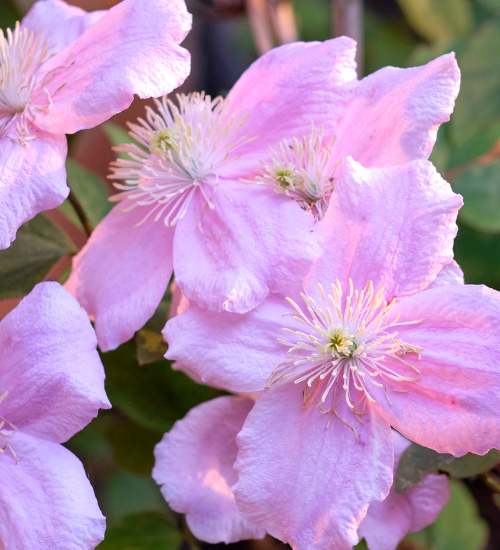
When flower leaves curl, twist, cup, or roll inward, the plant is usually reacting to stress. The challenge is that several unrelated problems can create similar symptoms. A curled leaf does not automatically mean the plant needs more water, and spraying a product before identifying the cause can make the damage worse.
If you are wondering, why are my flower leaves curling, begin by looking closely at the newest growth, the undersides of leaves, the soil, and the surrounding area. The pattern of the damage often gives you more information than the curl itself.
Start with the pattern
Before changing anything, inspect the plant carefully.
Ask yourself:
- Are only the newest leaves affected?
- Are old and young leaves curling?
- Are the leaves sticky?
- Do you see insects?
- Is the soil dry several inches below the surface?
- Are the leaves thick, brittle, yellow, or spotted?
- Are nearby plants showing the same problem?
- Did the curling begin after spraying weed killer?
- Has the plant recently been moved or transplanted?
A few curled leaves on an otherwise healthy plant may not be serious. Widespread curling, stunted growth, yellowing, or distorted new leaves deserves faster attention.
Aphids are a common cause
Aphids are small, soft-bodied insects that often gather on young stems, flower buds, and the undersides of leaves. They feed by sucking plant sap. Heavy feeding can cause leaves to curl, twist, yellow, or remain undersized. Aphids in home yards and gardens |
To check for aphids, look at:
- The undersides of young leaves
- New stem tips
- Flower buds
- Leaf joints
- Areas where leaves are tightly curled
Aphids may be green, black, yellow, brown, red, or gray. They are often easier to feel than see because the colonies hide in protected spots.
Sticky leaves can be another clue. Aphids excrete a sugary substance called honeydew, which can coat foliage and encourage dark sooty mold.
What to do about aphids
If the infestation is light, spray the plant with a firm stream of water, paying attention to the undersides of leaves. Repeat every few days if necessary.
Avoid automatically reaching for a broad-spectrum insecticide. Beneficial insects such as lady beetles, lacewings, and hoverfly larvae may already be helping control the population. Monitor the plant and treat only when damage is significant.
If you use insecticidal soap, follow the product label carefully. Spray when temperatures are moderate, test a small area first, and avoid applying it to drought-stressed plants.
Drought and irregular watering can curl leaves
When a flower plant loses water faster than its roots can replace it, leaves may curl upward or inward. This reduces the leaf surface exposed to sunlight and air movement.
Drought-related curling is more likely when:
- The soil is dry below the surface
- Leaves feel limp or papery
- The plant is growing in a small container
- Weather has been hot, windy, or unusually dry
- Curling improves after thorough watering
Do not solve drought stress by flooding the pot or garden bed every day. Water slowly and deeply until moisture reaches the root zone. For containers, water until a little drains from the bottom, then empty any saucer holding standing water.
Afterward, check the soil before watering again. The correct schedule depends on the plant, container size, soil, weather, and sunlight.
Mulch can help stabilize moisture around outdoor flowers. Keep mulch a short distance away from the stems to reduce the risk of rot and pest problems.
Why Are My Flower Leaves Curling
Too much water can create similar symptoms
Overwatering does not always produce soft, drooping leaves. It can also cause curling because saturated soil contains less air for roots. Damaged roots cannot absorb water efficiently, so the upper plant may look drought-stressed even though the soil is wet.
Check for:
- Permanently wet soil
- A sour smell
- Yellowing lower leaves
- Slow growth
- Mushy roots
- Water collecting in a saucer
- A container without drainage holes
If the plant is in soggy soil, allow the growing medium to dry to the level appropriate for that species. If the roots are damaged, repotting may be necessary.
Do not add more water simply because curled leaves look thirsty. Always check the root-zone moisture first.
Heat and intense light can cause leaf curl
Some flowers curl their leaves during hot afternoons as a temporary response to water loss. If the leaves flatten again in the evening and the plant otherwise looks healthy, the problem may be environmental rather than a disease.
Heat stress is more likely when:
- A plant recently moved from shade into strong sun
- A container sits against a hot wall or pavement
- Roots are restricted by a small pot
- The plant has been fertilized heavily during hot weather
- Wind increases moisture loss
Move container flowers where they receive suitable light but less reflected heat. Water early in the day, and avoid wetting leaves repeatedly during hot, humid weather.
Do not move every curled-leaf plant into deep shade. Insufficient light can lead to weak growth and fewer flowers. Make changes gradually when possible.
Herbicide drift can distort new growth
If leaves become twisted, cupped, narrow, or unusually distorted after a nearby lawn or garden treatment, herbicide exposure may be involved. Drift can affect plants even when the product was not sprayed directly on them.
Herbicide injury often appears on new growth first. Look for:
- Cupped or twisted leaves
- Thickened veins
- Bleached or browned tissue
- Damage concentrated on the side facing the application
- Several nearby plants showing similar symptoms
The University of Minnesota lists herbicide damage as one possible cause of curled, cupped, twisted, or distorted leaves. What’s wrong with my plant? : Garden : University of Minnesota Extension
Do not apply additional chemicals to “neutralize” the damage. Move the plant only if practical, water normally, and wait to see whether healthy new growth appears. Severely damaged plants may not recover, especially if the roots or growing points were affected.
Viruses can cause persistent distortion
Viruses may produce curled, mottled, streaked, or misshapen leaves. Plants may also become stunted and produce distorted flowers.
Possible warning signs include:
- Mosaic patterns of light and dark green
- Repeated distortion on new leaves
- Stunted growth
- Deformed flowers
- Several plants of the same type showing symptoms
- No obvious watering, heat, or insect explanation
There is no simple spray that cures a virus-infected plant. Remove severely affected plants and dispose of them according to local guidance. Do not add diseased material to home compost unless you are certain your compost reaches temperatures capable of reducing plant pathogens.
Wash hands and clean tools before working on healthy plants.
Check for thrips and mites
Aphids are not the only pests that distort flower foliage. Thrips can damage young leaves and flower buds, causing misshapen growth and silvery streaks. Spider mites may create stippled leaves, fine webbing, and stress during hot, dry weather. How to spot and stop late summer garden pests
Use a white sheet of paper under a branch and tap the foliage gently. Tiny insects that move across the paper may indicate a pest problem.
Inspect flowers as well as leaves. Thrips often hide inside petals and buds, where they are difficult to see.
Improve plant health first by correcting watering, removing badly damaged material, and reducing dusty or overcrowded conditions. Choose any pesticide carefully and follow its label.
A quick diagnosis table
| Symptom pattern | Possible cause | First step |
|---|---|---|
| Sticky leaves and curled new growth | Aphids | Inspect undersides and rinse pests away |
| Curling during hot afternoons | Heat or drought stress | Check soil moisture and provide consistent watering |
| Curling with constantly wet soil | Root stress | Improve drainage and reduce watering |
| Twisted growth after spraying nearby | Herbicide drift | Avoid more chemicals and monitor new growth |
| Curling with mosaic patterns | Possible virus | Isolate or remove severely affected plants |
| Curling with silvery streaks | Thrips | Inspect buds and undersides of leaves |
| Fine webbing and stippling | Spider mites | Rinse foliage and improve plant conditions |
What not to do
When asking why are my flower leaves curling, avoid these quick reactions:
- Do not water without checking the soil.
- Do not fertilize a stressed plant immediately.
- Do not spray multiple pesticides at once.
- Do not remove every curled leaf before identifying the cause.
- Do not assume all curled leaves indicate insects.
- Do not place a sun-loving plant in deep shade permanently.
- Do not compost plants that may have a serious disease.
The best solution comes from matching the treatment to the symptom pattern.
When to remove the plant
Consider removing a flower plant when:
- New growth remains severely distorted
- Symptoms continue despite correcting care
- A virus is strongly suspected
- The plant is declining rapidly
- The problem is spreading to nearby plants
- The roots are extensively rotted
If only a few older leaves are curled and new growth looks normal, the plant may recover without major intervention.
Understanding why are my flower leaves curling takes a little observation, but the process becomes easier with practice. Check pests first, then moisture, temperature, light exposure, and chemical history. Careful diagnosis is safer and more effective than treating every problem as overwatering or an insect infestation.
Last modified: October 26, 2026
