

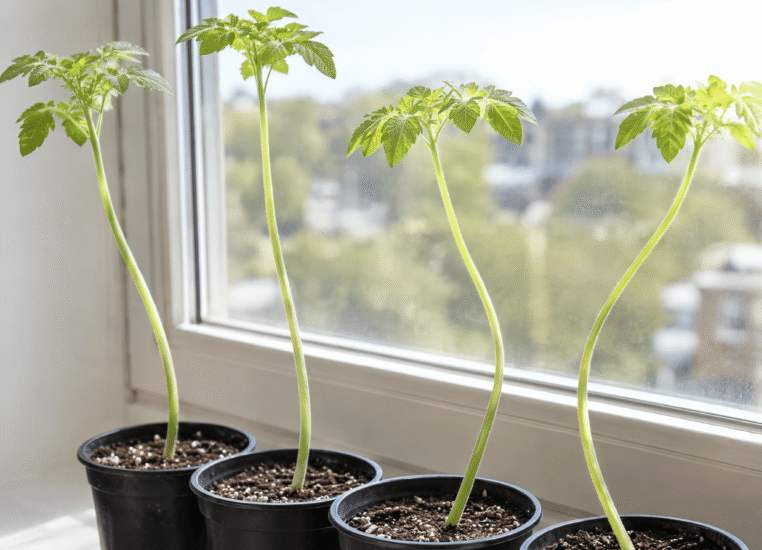
Starting flowers from seed is inexpensive and rewarding, but young plants can quickly become tall, thin, and weak. Instead of developing compact stems and healthy leaves, they stretch toward the nearest light source. Gardeners often describe this as “leggy” growth.
Understanding why flower seedlings get leggy indoors makes the problem easier to correct. In most cases, legginess is caused by a mismatch between light, temperature, watering, spacing, and timing. The seedling is trying to survive, not misbehaving.
The earlier you respond, the better the chance of producing sturdy plants that transplant successfully.
What Leggy Growth Looks Like
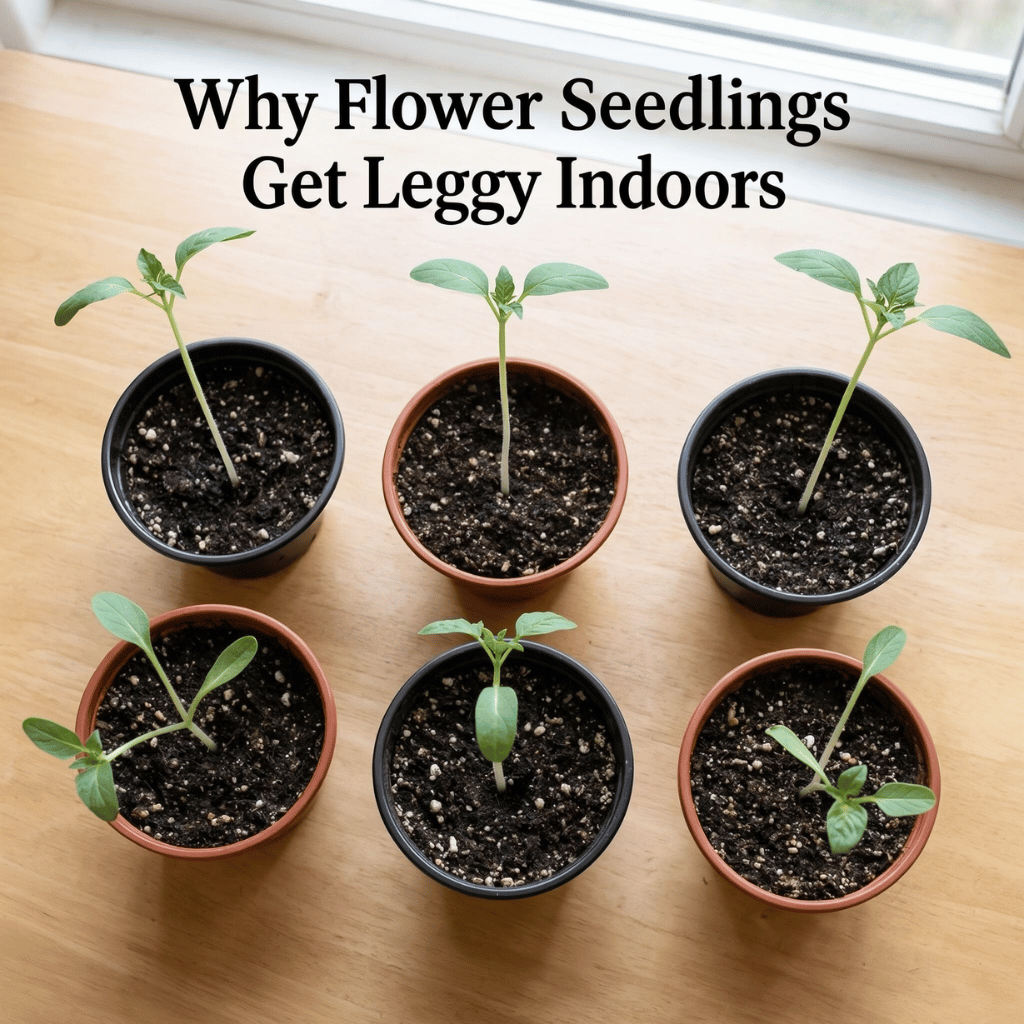
Leggy seedlings usually have one or more of these symptoms:
- Long, thin stems
- Large gaps between leaves
- Seedlings leaning toward a window
- Weak stems that cannot stand upright
- Small leaves compared with the stem length
- Pale green or yellowish growth
- Seedlings collapsing at the soil line
A little stretching may be corrected. Severe legginess combined with a pinched, dark stem at the soil surface may indicate damping-off disease, which is a separate and more serious problem.
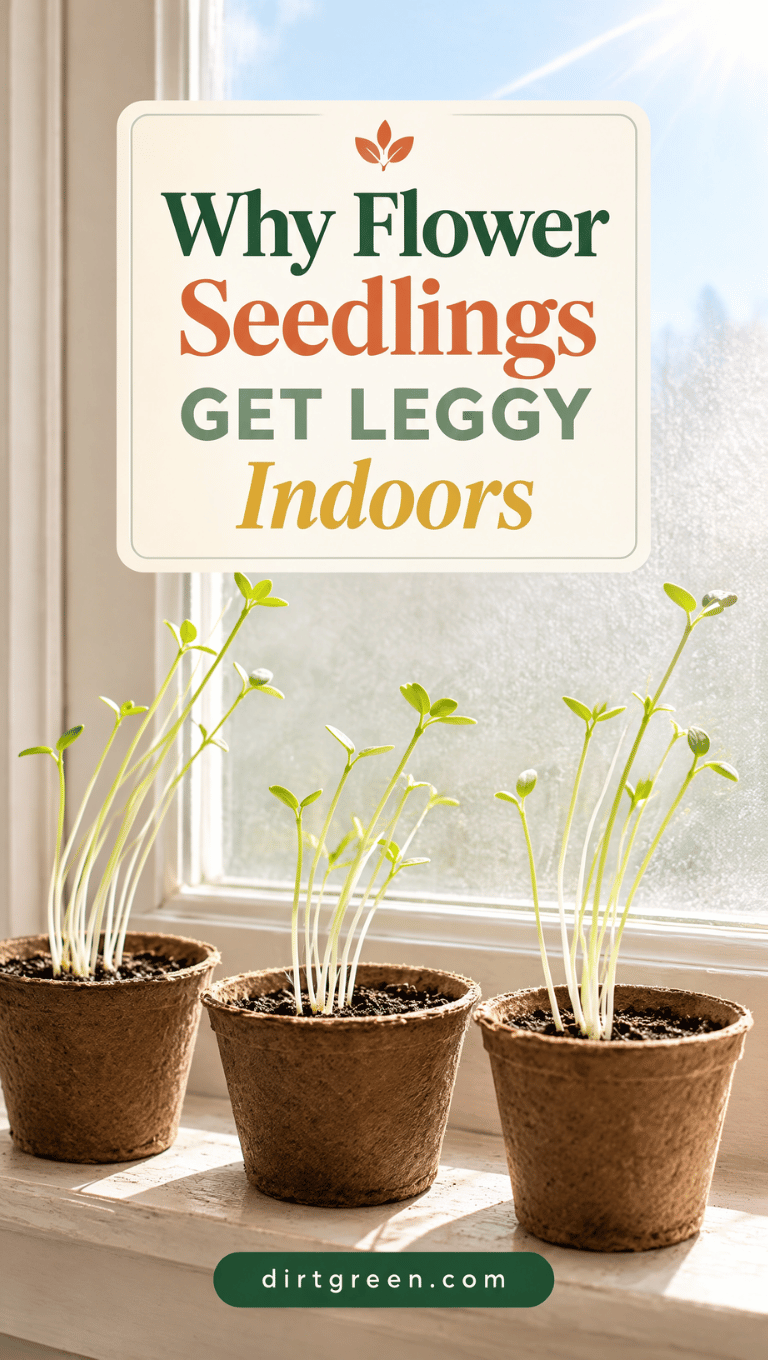
The Main Reason Flower Seedlings Become Leggy
Insufficient light
The most common reason flower seedlings get leggy indoors is inadequate light. A bright room may still be much darker than an outdoor growing area. Window glass filters some light, and the sun moves across the sky during the day.
Seedlings respond to weak light by stretching upward. This behavior helps them compete with nearby plants outdoors, but indoors it produces fragile stems.
A north-facing window, a window shaded by buildings, or a seed tray placed several feet from the glass may not provide enough intensity.
Light coming from one direction
Even when a window is bright enough, light from one side encourages seedlings to lean. Rotate trays regularly if you are relying on natural light.
Turning the tray does not solve weak light, but it can create more balanced growth while you improve the setup.
Excessive warmth
Warm conditions speed up growth. If seedlings are warm but receive weak light, they stretch rapidly before they can build strong stems.
This often happens when trays are placed directly above a heat source or on a warm appliance. Germination may benefit from warmth, but seedlings usually need a slightly cooler environment after they emerge.
Overwatering
Waterlogged growing media reduce oxygen around roots. The seedling may develop weak, soft growth and become more vulnerable to disease.
Overwatering does not always mean watering every day. It can also mean using a container without drainage holes, keeping the tray sitting in water, or using a dense medium that remains wet for too long.
Crowding
Seedlings compete with each other when they are sown too closely. Crowded plants shade one another, reducing airflow and encouraging upward growth.
Thinning feels difficult when every seedling looks valuable, but removing weaker seedlings often produces better plants overall.
Starting seeds too early
If seeds are sown weeks before outdoor conditions are suitable, seedlings may outgrow the available indoor space. They can become tall simply because they have been growing under less-than-ideal conditions for too long.
A realistic sowing date is often better than starting as early as possible.
How to Fix Leggy Flower Seedlings
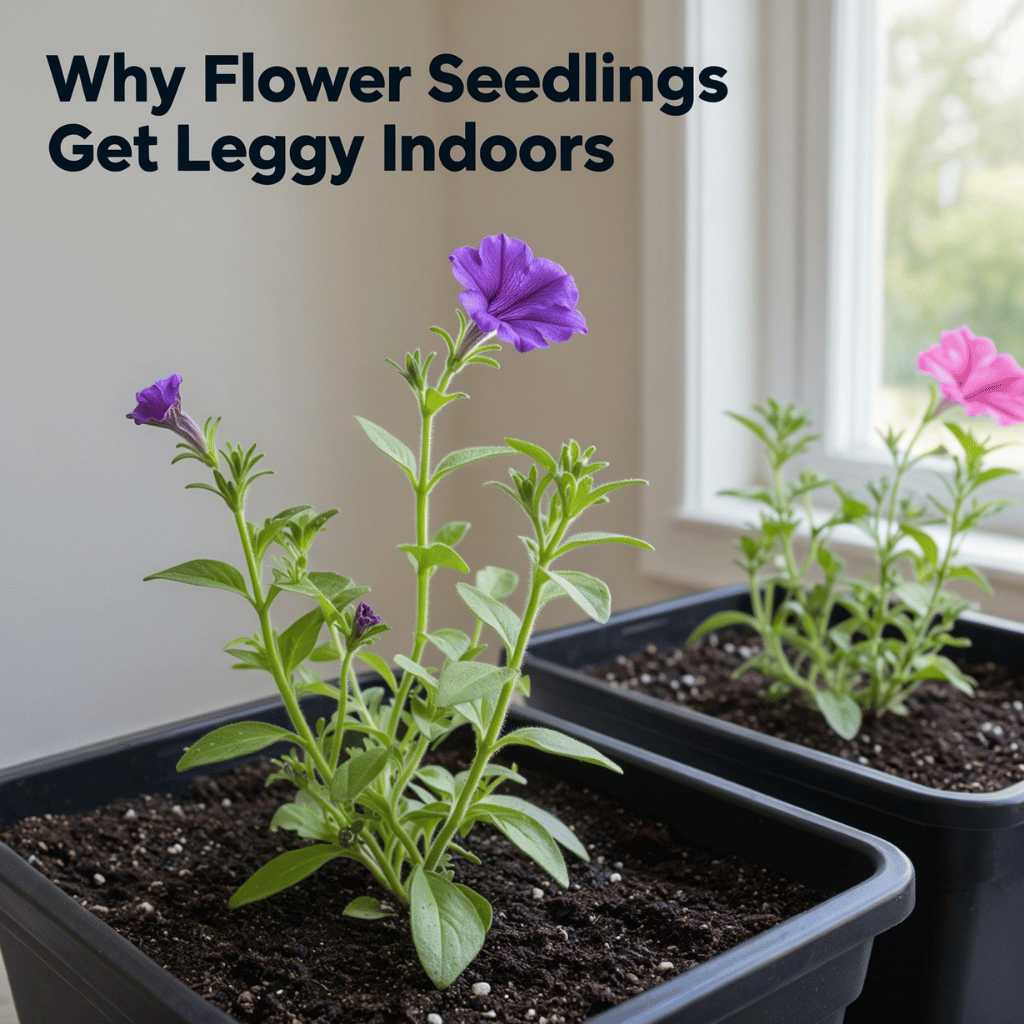
1. Improve the light immediately
Move seedlings closer to a bright window or place them under a suitable grow light. The goal is even, dependable illumination rather than a few hours of weak daylight.
Keep the light close enough to prevent stretching, but follow the manufacturer’s instructions for distance and operating time. If leaves bleach, curl, or develop dry patches, the light may be too intense or too close.
A timer can help provide a consistent schedule. Seedlings also need a dark period rather than continuous light.
2. Rotate trays near windows
Turn the tray a quarter turn every day or two. This encourages more even growth and reduces the tendency to lean.
If stems remain thin despite rotation, the issue is still insufficient light. Rotation is a balancing measure, not a substitute for stronger illumination.
3. Reduce excess heat
Move seedlings away from radiators, vents, fireplaces, and hot appliances. Keep them in a bright area with gentle air movement.
Do not place them in a cold draft or expose them to sudden temperature changes. The objective is moderate, stable conditions.
4. Thin crowded seedlings
Thin seedlings when they develop their first true leaves or according to the instructions for the flower variety. Use small scissors to cut unwanted seedlings at soil level rather than pulling them and disturbing nearby roots.
Leave the healthiest seedlings with enough space for their leaves to expand. Good spacing also improves air circulation.
5. Water according to soil moisture
Check the growing medium with your finger. Water when the surface begins to dry, then allow excess water to drain completely.
Bottom watering can help reduce disturbance, but do not leave trays sitting in water indefinitely. Empty the drainage tray after the medium has absorbed moisture.
Water in the morning when practical. This gives foliage and the soil surface time to dry before nighttime.
6. Add gentle airflow
A small fan set on low can help strengthen stems and reduce stagnant, humid air. Do not aim a powerful stream directly at delicate seedlings.
Air movement should make leaves tremble slightly, not flatten the plants. Start with short periods and observe how the seedlings respond.
Can Leggy Seedlings Be Saved?
Many can be saved, but the correct approach depends on the flower.
Potting up
Some seedlings can be transplanted into deeper containers, with part of the stem buried. Tomatoes are famous for producing roots along buried stems, but not every flower tolerates deep planting.
Before burying a long stem, check the growth habit of the flower. For many annuals, planting only at the original soil level is safer.
Pinching
Certain flowers benefit from pinching the growing tip after they have developed several sets of true leaves. This encourages branching and can create a bushier plant.
Do not pinch seedlings that are too young, weak, or not naturally suited to branching. The plant must have enough growth to recover.
Supporting temporarily
A small plant label or thin stake can support a seedling for a short period. Do not use support to hide an unresolved light problem. A staked seedling may remain weak if the environment is not corrected.
Starting again
If seedlings are extremely thin, pale, collapsing, or infected, restarting may be more efficient. Improve the lighting and spacing before sowing a second batch.
Flower Types and Their Tolerance for Correction
| Flower type | Can tolerate deeper planting? | Often benefits from pinching? |
|---|---|---|
| Marigold | Usually limited | Yes after established |
| Zinnia | Avoid burying deeply | Often yes |
| Cosmos | Usually avoid deep burial | Yes when young and healthy |
| Petunia | Limited | Yes |
| Snapdragon | Limited | Sometimes |
| Nasturtium | Avoid disturbing roots | Usually not early |
| Sunflower | Can sometimes be planted slightly deeper | Usually not necessary |
| Salvia | Limited | Often after several leaf sets |
These are general guidelines. Seed packets and reliable local growing information should take priority because varieties differ.
How to Prevent Leggy Seedlings Next Time
Plan the entire seed-starting setup before sowing:
- Place lights where they can be adjusted as plants grow.
- Start seeds close enough to the outdoor planting date.
- Use containers with drainage holes.
- Avoid sowing too thickly.
- Remove humidity covers after germination unless the instructions say otherwise.
- Provide strong light as soon as seedlings emerge.
- Keep seedlings moderately cool and well ventilated.
- Check moisture daily without watering automatically.
- Harden plants gradually before outdoor planting.
Hardening off is especially important. Even a strong indoor seedling can suffer when moved directly into wind, intense sunlight, or changing temperatures.
Common Mistakes to Avoid
Keeping the humidity dome on too long
Humidity covers are useful during germination, but they can trap excess moisture after emergence. Remove or vent them as seedlings develop.
Putting seedlings in a dim window
A windowsill may look bright to people while still being too weak for compact growth. Watch the plants, not just the room.
Feeding weak seedlings heavily
Fertilizer cannot replace light. Overfeeding young seedlings may damage roots or encourage soft growth. Use a dilute fertilizer only when the plants have enough light and true leaves.
Watering on a fixed schedule
Seedlings do not need the same amount of water every day. Check the medium and container weight instead.
Final Check
If you have wondered why flower seedlings get leggy indoors, begin with light. Then inspect temperature, moisture, spacing, airflow, and timing. Correcting several small problems at once usually produces a noticeable improvement.
Leggy seedlings are a warning that the growing environment needs adjustment. With stronger light, sensible watering, better spacing, and moderate temperatures, many young flowers can recover and develop into sturdy garden plants.
Last modified: October 25, 2026
