

A porch can look tired when summer flowers fade, but replacing the entire garden is unnecessary. A few well-planned containers can add seasonal color, texture, and warmth in an afternoon.
The best fall flower container combinations for a porch balance three elements: a strong focal plant, a contrasting companion, and something that spills or softens the edge. You do not need to use every autumn color at once. A limited palette often looks more polished and makes the porch feel connected to the surrounding landscape.
Choose the container before the plants
A container should be large enough to hold the plants’ root systems without drying out immediately. A shallow pot may work for pansies, but a mixed display with a mum, grass, and trailing plant needs more soil volume.
Choose containers with drainage holes. Decorative pots without drainage can collect water after rain and create root problems. If you use a cachepot, keep the planted container inside it and empty excess water after storms.
For a balanced porch display, consider:
- One large container beside the door
- Two matching pots framing the entrance
- A low grouping of three different-sized pots
- A narrow rectangular planter along a railing
- Small containers placed on a step or plant stand
1. Bronze mum, purple pansy, and trailing ivy
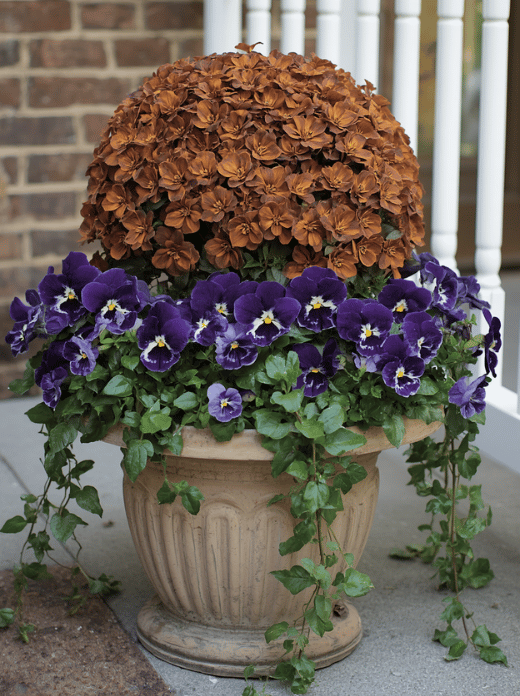
This combination creates a classic autumn display without becoming overly orange. Use a bronze or rust-colored chrysanthemum as the central plant, then tuck purple pansies around the front.
Ivy can spill over the edge and remain attractive after the flowers fade. If the porch receives limited light, place the container where it receives the brightest available indirect light.
This design works well in a medium or large round pot. Keep the mum slightly higher than the pansies so the flowers remain visible from the walkway.
2. White mum, silver foliage, and ornamental kale
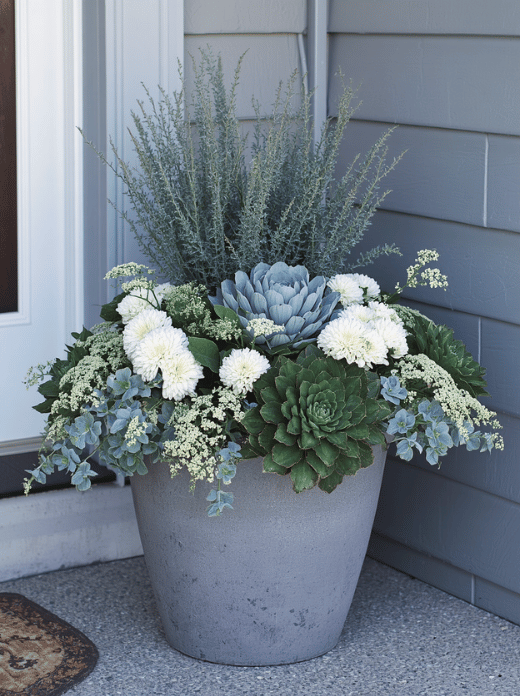
For a cooler autumn palette, combine white chrysanthemums with dusty miller and ornamental kale. The white flowers brighten a darker porch, while the silver foliage creates a soft transition between the blooms and the container.
Ornamental kale contributes a sculptural rosette rather than a traditional flower. It is particularly effective in modern, gray, black, or concrete-colored pots.
Place the tallest plant toward the back of the container if the display will be viewed from one direction. For a round pot viewed from all sides, arrange the plants in a gentle mound.
3. Burgundy mum, coral bells, and creeping Jenny
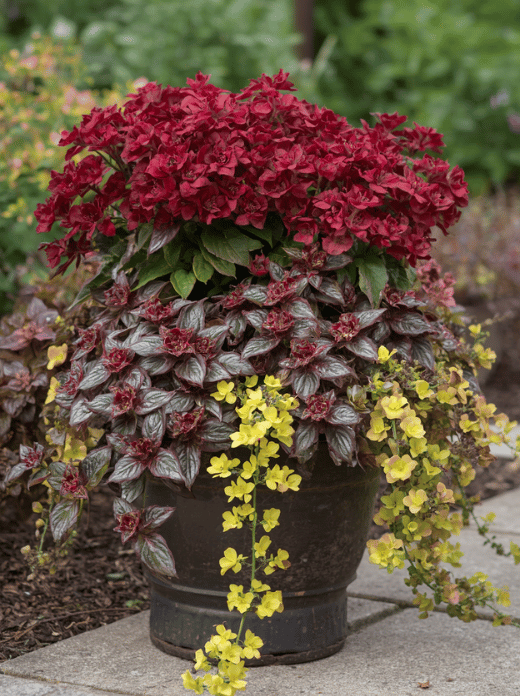
Burgundy mums create a dramatic focal point. Coral bells add colorful leaves, while creeping Jenny provides a bright green or yellow trailing accent.
This combination is attractive when flowers are not the only source of color. The foliage remains useful between flushes of bloom and can be moved into the garden later, depending on the plants and local climate.
Use a pot with a wide opening so the foliage has room to spread without hiding the mum.
4. Asters, violas, and ornamental grass
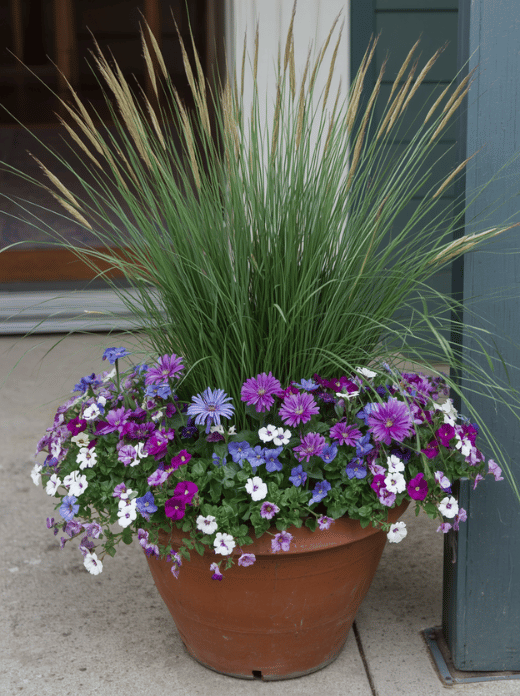
Asters provide daisy-like flowers in blue, purple, pink, or white. Violas fill the lower spaces with smaller blooms, and a compact ornamental grass adds movement.
This is one of the most natural-looking fall flower container combinations for a porch because it resembles a small meadow. It works especially well in a weathered planter, wooden box, or simple terracotta pot.
Remove spent viola flowers regularly to encourage a neater appearance. Allow some grass seed heads to remain if you prefer a relaxed fall look.
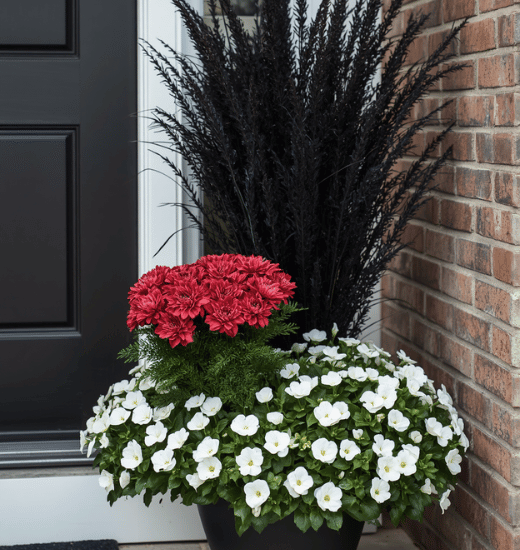
5. Red chrysanthemum, black mondo grass, and white pansies
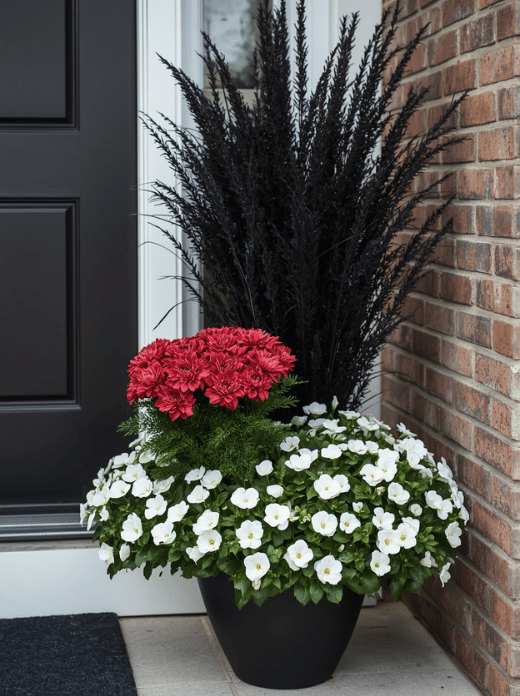
Fall Flower Container Combinations for a Porch
This high-contrast design suits a modern porch. The red mum brings warmth, black mondo grass provides a deep vertical accent, and white pansies soften the front edge.
Use a dark container for a coordinated display, or choose a pale pot to make the colors stand out. Keep the black mondo grass slightly behind the pansies so the arrangement does not appear too tall.
The combination is particularly effective around Halloween without relying on novelty decorations.
6. Pink mum, ornamental cabbage, and sweet alyssum
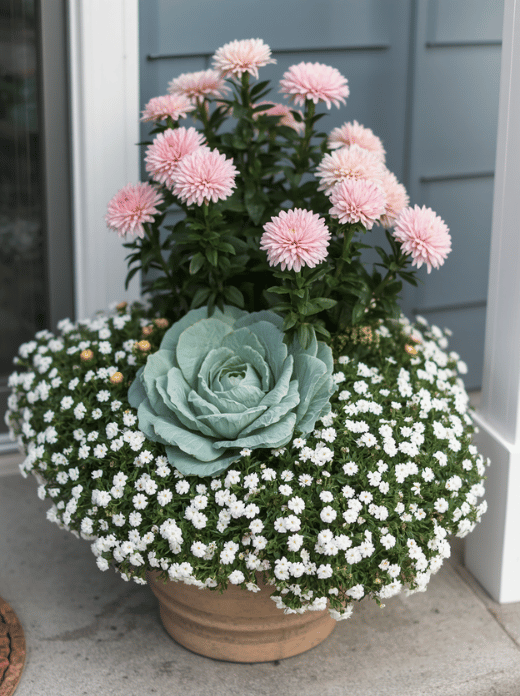
Pink chrysanthemums can make an autumn porch feel softer and less formal. Pair them with ornamental cabbage for structure and sweet alyssum for a low, gently trailing edge.
This design works well with pale blue, white, or natural stone containers. It can also transition smoothly from early fall into late autumn.
Alyssum prefers good air circulation and should not be buried beneath larger plants. Give each plant enough space for its mature spread.
7. Sunny marigold, purple fountain grass, and pansies
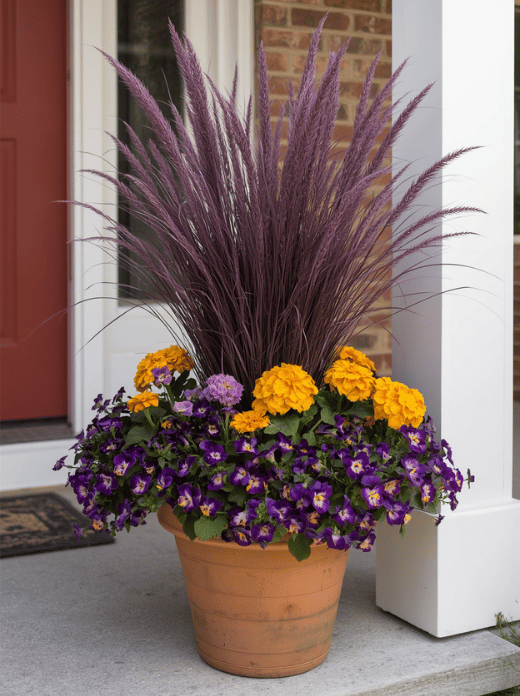
In warmer regions, marigolds may continue flowering into fall. Pair them with purple fountain grass and deep purple pansies for a lively, sun-loving display.
This combination needs a bright porch or sunny step. Rotate the container occasionally so the plants grow evenly toward the light.
Use a tall pot or elevate the container on a stand to show off the fountain grass. Keep the arrangement away from narrow walking areas where arching stems may brush against people.
8. Cyclamen, fern, and moss
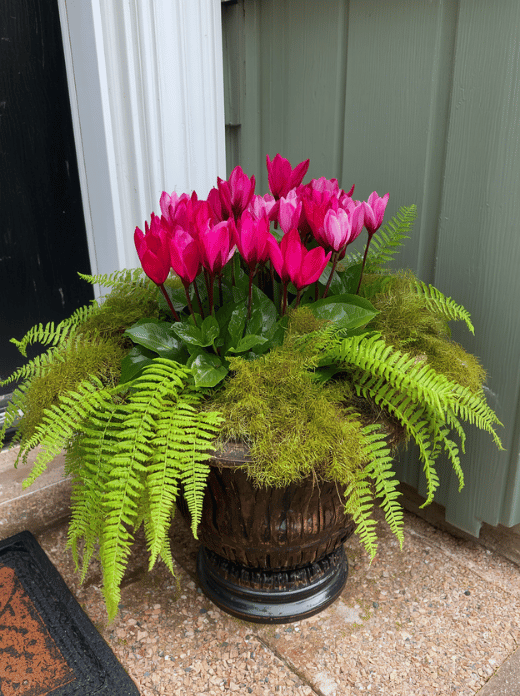
For a shaded porch, cyclamen can provide bright flowers in cooler conditions. Pair it with a fern and moss-colored foliage for a woodland effect.
This is a smaller-scale arrangement suited to a covered entrance, apartment balcony, or sheltered step. Avoid placing it in hot afternoon sun, which can shorten the display.
Water carefully. Cyclamen prefers moisture but should not remain waterlogged. Direct water toward the soil rather than soaking the crown and flowers.
9. Yellow mum, purple cabbage, and trailing thyme
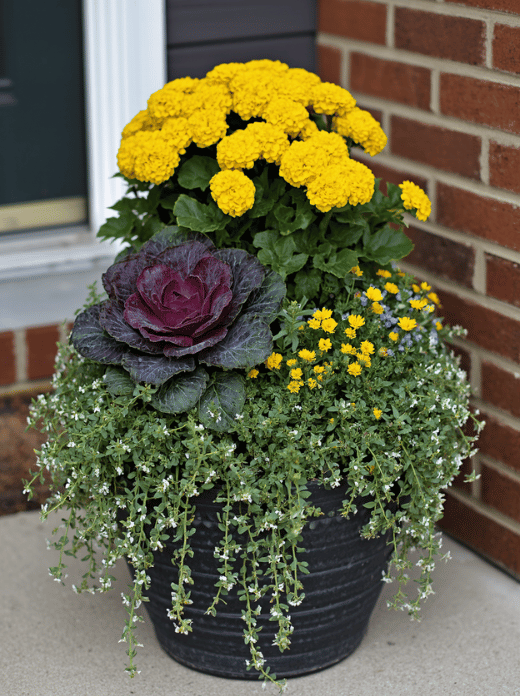
Yellow and purple create a strong complementary contrast. Use a yellow mum as the main flower, purple ornamental cabbage as the foliage anchor, and trailing thyme to soften the edge.
Thyme prefers well-drained soil and plenty of light. It works best in a container that does not stay wet after rain.
This combination feels cheerful and works well beside brick, dark siding, or natural wood.
10. Monochromatic copper display
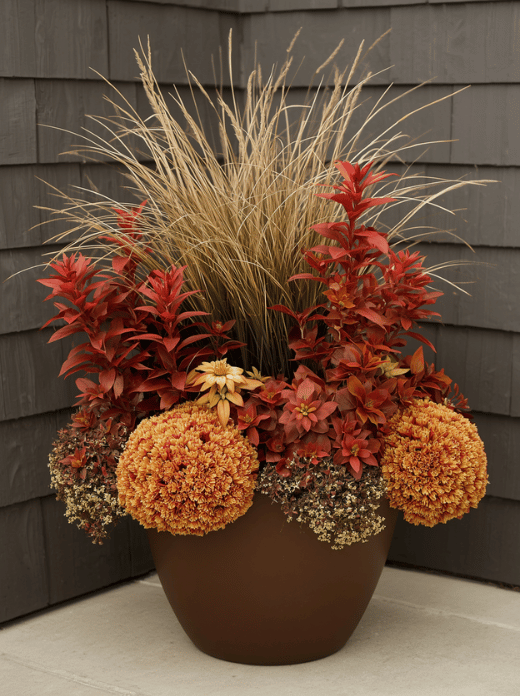
For a sophisticated autumn container, use several plants in a related color family. Combine copper-colored mums, bronze sedum, rust-toned foliage, and a neutral grass.
The result is warm without looking crowded. A simple terracotta or matte brown pot reinforces the palette.
Monochromatic designs benefit from varied texture. Choose one daisy-like flower, one broad-leaved plant, and one fine-textured companion.
11. Edible herb and flower pot
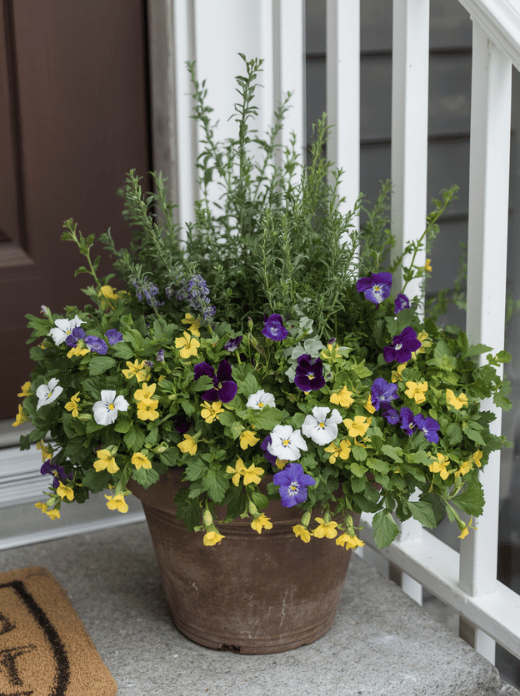
A fall porch container does not have to be purely decorative. Combine flowering violas with parsley, sage, thyme, or compact rosemary.
Use herbs with similar light and watering needs. A sunny porch is best for rosemary, thyme, and sage, while parsley and violas can tolerate somewhat cooler conditions.
Keep edible herbs separate from any plants treated with ornamental pesticides. Harvest lightly and trim the plants to keep the design balanced.
12. Simple three-pot arrangement
Instead of forcing many plants into one container, create a group of three pots:
- A tall pot with a grass or upright mum
- A medium pot with pansies or violas
- A low bowl with ornamental kale or trailing foliage
Repeat one color across all three containers. For example, use purple pansies in the middle pot and a purple-toned grass or cabbage in the other two.
Odd-numbered groupings often feel more natural than pairs, but two matching pots remain a dependable choice for framing a doorway.
Match plants by care needs
A mixed container can look attractive on planting day and struggle later if the plants need different conditions. Before combining flowers, compare:
- Sun exposure
- Water requirements
- Mature size
- Temperature tolerance
- Drainage preferences
- Expected flowering period
For example, a plant that prefers dry soil may decline when placed with a flower that needs frequent watering. When in doubt, use separate pots grouped together rather than combining incompatible plants.
Make the planting look full
Place the tallest plant toward the back or center, depending on how the container will be viewed. Add medium-height plants around it, then position trailers near the rim.
Do not bury the crowns deeper than they were growing in their nursery pots. Firm the soil gently and water thoroughly after planting.
Leave a small gap between the soil surface and the rim so water can soak in rather than running over the side.
Care through changing weather
Autumn weather can shift quickly. Check containers more often after windy days because foliage may dry faster than expected. During prolonged rain, move sheltered pots where they can drain.
Remove damaged leaves and faded flowers. Chrysanthemums often look better when old blooms are pinched out, while ornamental cabbage can remain attractive even after flowering plants decline.
As temperatures fall, protect containers from extreme cold if the plants are not hardy in your area. A container’s roots are more exposed than roots planted in the ground.
A simple color formula
If you are unsure how to combine plants, use this formula:
- One dominant color: orange, burgundy, yellow, pink, or white
- One supporting color: purple, green, silver, or bronze
- One texture: grass, kale, fern, sedum, or trailing foliage
This keeps the arrangement visually organized while still providing variety.
Final thoughts
The most successful porch displays are not necessarily the largest. They are the ones that suit the light, scale, and architecture of the home. Whether you prefer bold chrysanthemums, delicate violas, ornamental foliage, or a relaxed grass-filled planter, these fall flower container combinations for a porch can extend the color season with manageable effort.
Start with one container, observe how it performs, and repeat the combinations you enjoy most in future seasons.
Last modified: October 7, 2026
