

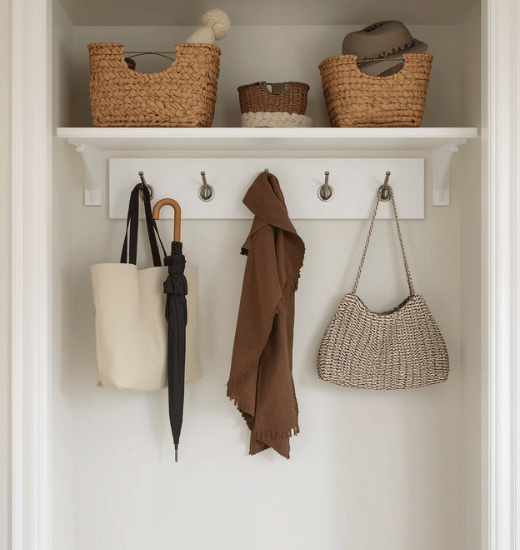
A full mudroom is useful, but it is not a requirement for an organized home. A wall near the front door, the end of a hallway, or even a small section beside the garage can handle the essentials if each item has a designated place.
The best small mudroom ideas for a narrow entryway focus on vertical storage, shallow furniture, and an easy drop zone for the things your household carries every day. With a few carefully measured pieces, an overlooked passage can become a practical landing area without making the entrance feel crowded.
Start by measuring the traffic lane
Before buying hooks or building a bench, measure the usable wall and the space in front of it. A storage solution that looks slim online can feel bulky once coats, shoes, and bags are hanging from it.
As a general planning guide:
- Keep the main walking path as open as possible.
- Mark the swing of nearby doors before installing anything.
- Use painter’s tape to outline the proposed bench, cabinet, or shelf.
- Check that drawers and baskets can open without blocking the hallway.
- Locate wall studs before planning a loaded shelf or coat rail.
If the entry is especially tight, prioritize hooks and shelves over deep cabinets. The goal is not to copy a full mudroom; it is to create a compact drop zone that supports the way your household actually enters the home.
1. Build a vertical mudroom wall
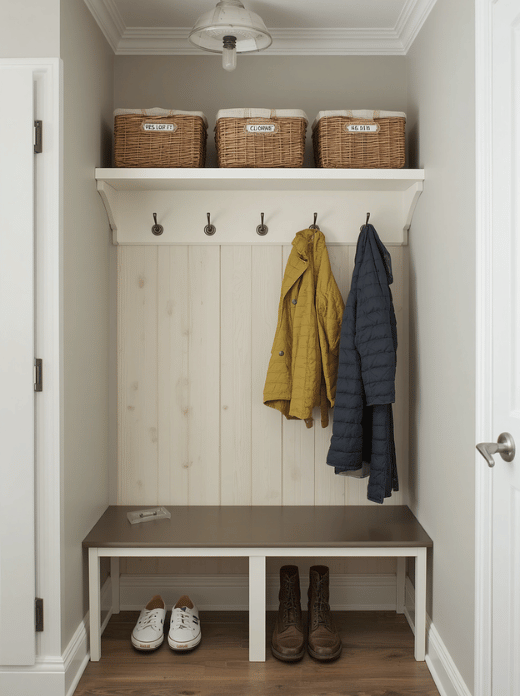
A vertical arrangement makes the most of a narrow entryway because it uses wall height rather than floor depth. A simple layout can include a row of hooks, a shelf above, and a narrow ledge or bench below.
Install the hooks at different heights if children use the space. Keep everyday coats within easy reach, then place less frequently used items on the upper shelf in labeled baskets. A wood or painted backing board can visually tie the arrangement together and gives you a solid surface for mounting hardware.
For a polished look, choose one finish for the hooks and repeat one material – such as natural wood, white oak, or painted paneling – across the shelf and bench.
2. Choose a shallow bench with hidden storage
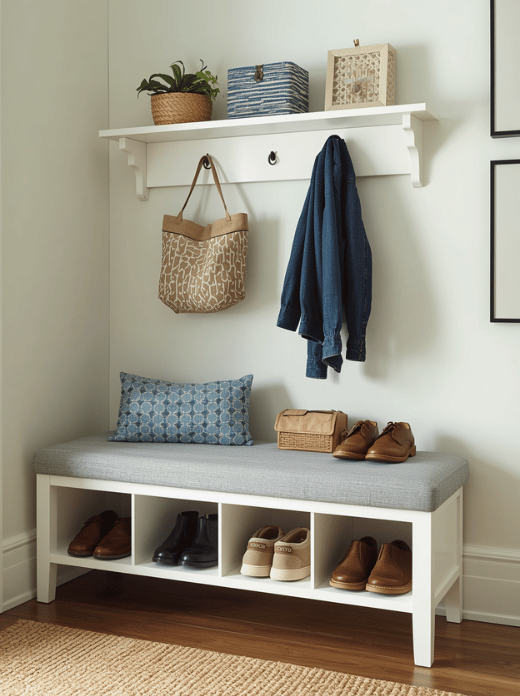
A bench makes putting on shoes easier, but it does not need to be deep. Look for a slim design with a lift-up seat, drawers, or cubbies sized for the shoes your family wears most often.
A useful small entryway bench with shoe storage should:
- Leave enough room to sit without pressing into the opposite wall.
- Have a durable, wipeable surface.
- Include ventilation if damp shoes will be stored inside.
- Keep the most-used footwear at the front of the storage area.
- Allow a few inches of clearance for baseboards and trim.
If a standard bench is too deep, mount a narrow shelf at seat height and add a cushion designed for the exact dimensions. This can provide a perch without taking over the hallway.
3. Add hooks instead of a bulky coat rack
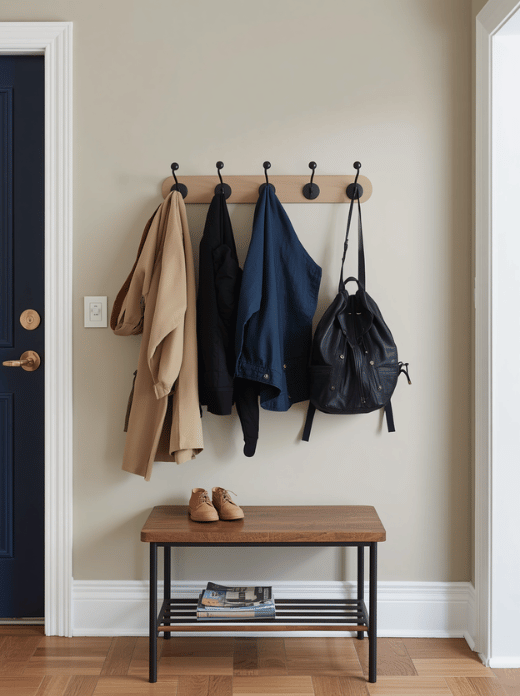
Freestanding coat racks take up valuable floor space and tend to become tangled with bags and jackets. Wall-mounted coat hooks are more efficient for a narrow entryway because they keep belongings close to the wall.
Use one hook for each regular household member, plus a couple of extras for guests. Double hooks can increase capacity, but leave enough separation for thick winter coats to hang without overlapping.
For a family, label hooks with simple name tags or small icons. This turns an attractive storage idea into a routine: each person knows where a coat, backpack, or leash belongs.
4. Use the space above the door
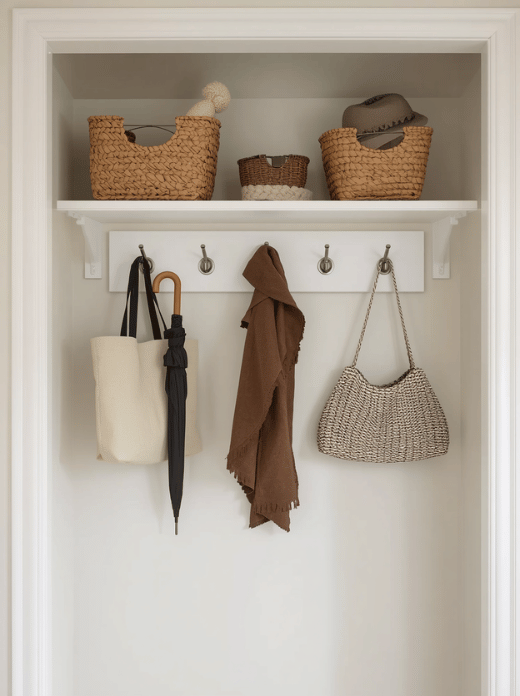
The wall area above an interior door is often wasted. A high shelf can store seasonal accessories, spare tote bags, or a small supply of umbrellas while keeping everyday items at eye level.
Use sturdy brackets and secure the shelf into studs whenever possible. Store lightweight items in matching baskets so the area looks intentional rather than crowded. Since this storage is harder to reach, reserve it for things you do not need every morning.
5. Make room for shoes without creating a pile
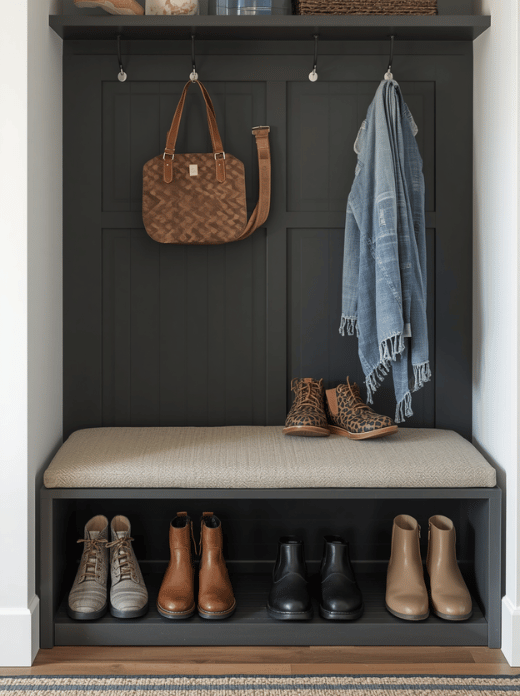
Shoes are usually what makes a small entrance look messy first. Instead of trying to store every pair near the door, create a rotating shoe zone.
Keep one or two frequently worn pairs per person in the entryway and move special-occasion or out-of-season shoes elsewhere. Narrow pull-out trays, tilted shelves, and low cubbies can all work well. A boot tray placed beneath the bench protects the floor during wet weather and gives muddy footwear a clear boundary.
If the floor is hard to clean, choose a removable tray with a raised edge. It is easier to rinse than a built-in cabinet base.
6. Add a landing shelf for small essentials
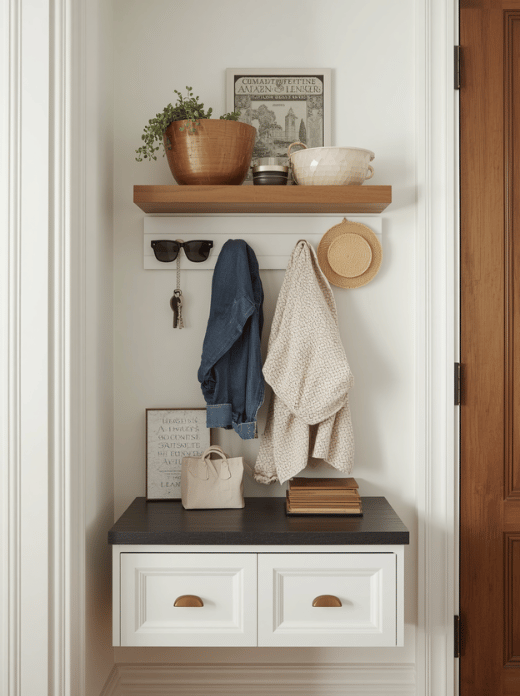
Keys, sunglasses, dog leads, and reusable bags need a home too. A slim shelf or small wall-mounted drawer near the door can stop these items from spreading across a console, kitchen counter, or dining table.
Keep the landing shelf shallow and limit it to daily essentials. A small bowl, a key hook, and one basket are often enough. Too many compartments can become another place to hide clutter rather than a system that prevents it.
7. Use baskets to soften open storage
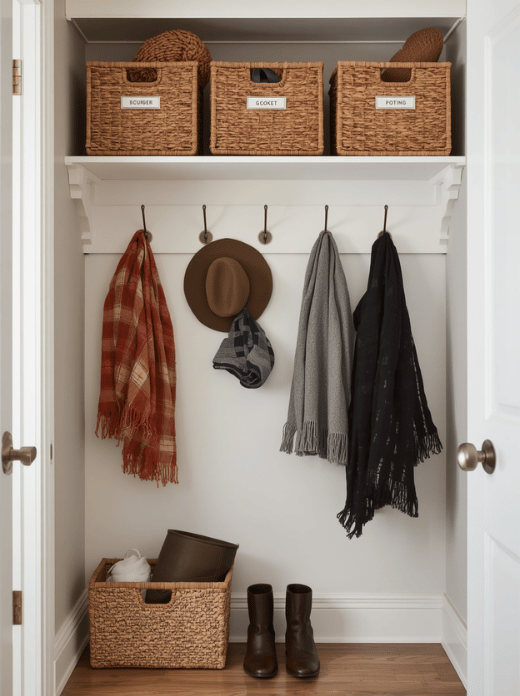
Open hooks and shelves are convenient, but they can make a small hallway look busy. Baskets hide gloves, hats, scarves, and small accessories while adding texture.
Choose baskets that fit the shelf with a little space around them so they can be pulled out easily. Assign one basket to each person or group items by use, such as winter accessories, pet supplies, or cycling gear.
For a calmer appearance, use matching baskets on the upper shelf and keep the labels short and readable.
8. Protect the wall behind the drop zone
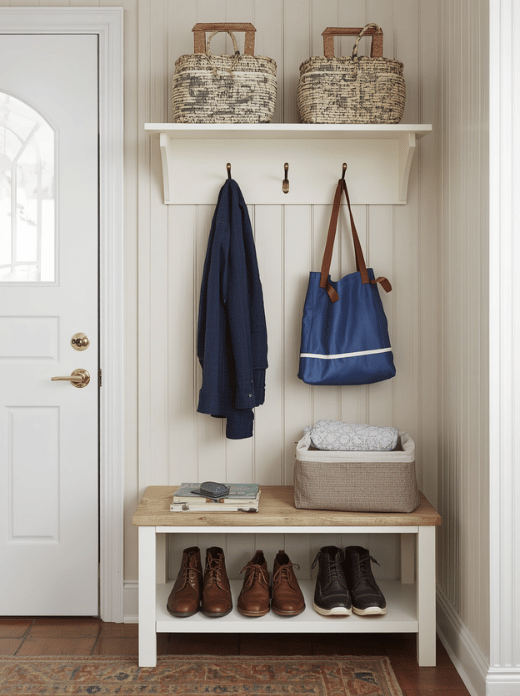
Entryways take more wear than most rooms. Shoes bump the wall, wet coats drip, and bags scrape painted surfaces. A washable paint in an eggshell or satin finish is easier to maintain than a flat finish.
For extra protection, consider:
- Beadboard or vertical wall paneling
- A painted plywood backing board
- Tile behind a shoe area
- A washable runner with a nonslip pad
- Removable hooks for renters
The protective layer should be practical first and decorative second. A hard-wearing surface saves time every week.
9. Add a mirror without crowding the space
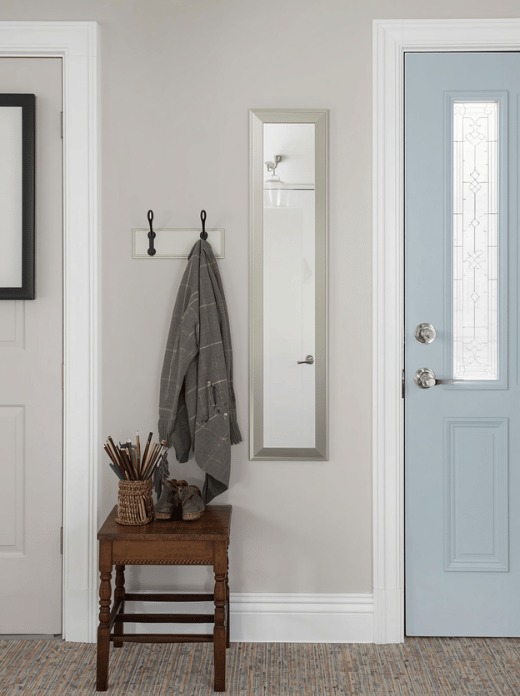
A narrow vertical mirror can make the entrance feel brighter and gives everyone a quick appearance check before leaving. Choose a slim framed mirror that fits between the hooks and a nearby door, or hang one above the bench.
Avoid placing a fragile mirror where backpacks or swinging doors can hit it. If the entry is dark, position the mirror where it can reflect natural or overhead light rather than a blank wall.
10. Make the system easy to reset
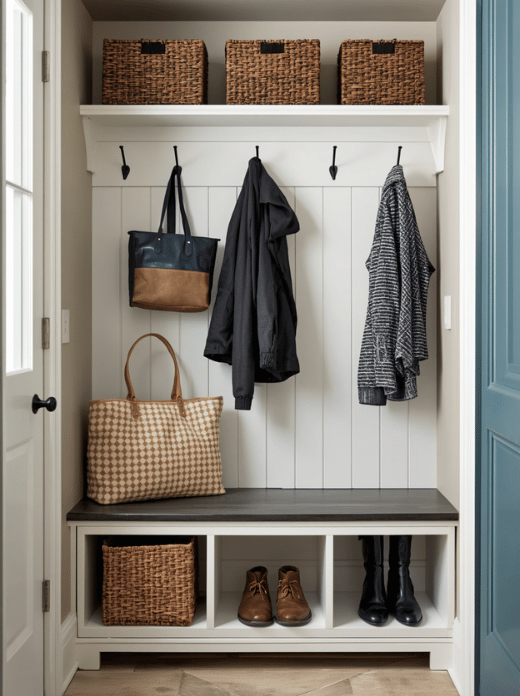
The most attractive narrow mudroom will fail if putting things away takes too many steps. Keep the daily routine simple:
- Hang the coat immediately.
- Place keys in the landing spot.
- Put shoes on the tray or in the assigned cubby.
- Move wet items to a drying area.
- Empty the basket or bench once a week.
Leave a little empty capacity. A system filled to the last hook has no room for an unexpected bag, guest coat, or rainy-day gear.
A simple layout for a very narrow entry
For a small section of wall, try this arrangement from top to bottom:
- One high shelf with two matching baskets
- A row of four or five hooks
- A narrow bench or floating shoe shelf
- A washable mat or boot tray on the floor
This layout keeps the wall useful at every height while preserving the center of the walkway. If even a bench is too large, replace it with a floating shelf and a small stool that can be moved when needed.
Final thoughts
The most effective small mudroom ideas for a narrow entryway do not depend on expensive cabinetry. They rely on good measurements, vertical storage, durable finishes, and a clear place for the items that otherwise collect by the door.
Start with hooks and a shoe solution, then add a shelf, baskets, or a bench as space allows. A compact entryway can be both attractive and genuinely useful when the storage matches your household’s daily habits.
Last modified: October 1, 2026
