
Want to enjoy your garden without feeling like the neighbors are watching? The right Outdoor Privacy Solutions can turn an exposed patio, balcony, or backyard into a comfortable space where you can relax, eat, work, and entertain.
Privacy does not always mean building a tall fence around the entire garden. Sometimes the best answer is a leafy screen, a pergola, a clever change in levels, or a well-placed planter. The goal is to block unwanted views while keeping the garden bright, welcoming, and useful.
These 17 Outdoor Privacy Solutions are practical, attractive, and easy to save for later on Pinterest. Each idea includes a star rating and a recommendation to help you decide which option fits your outdoor space.
1. Add a Slatted Timber Screen
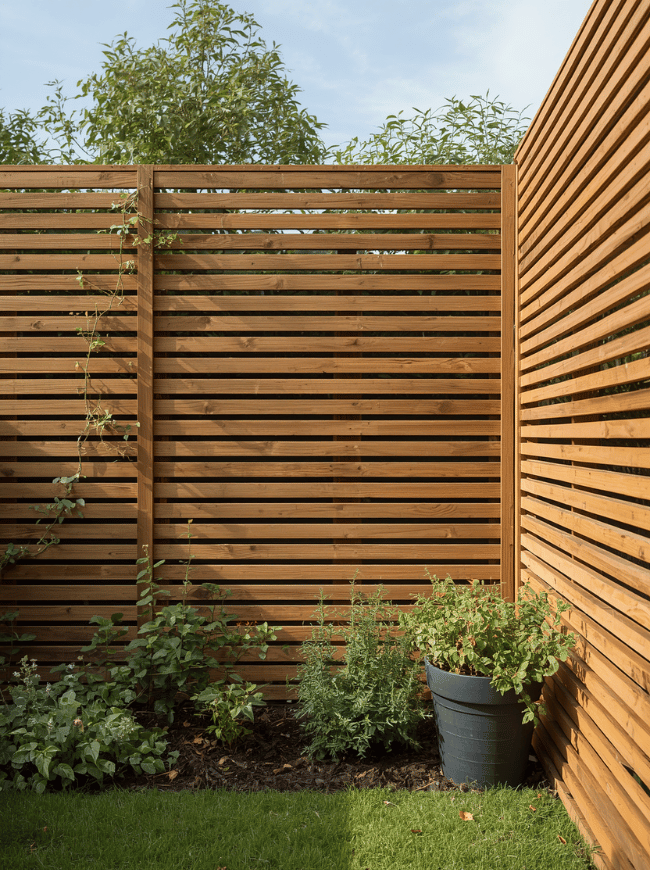
A slatted timber screen is one of the most versatile ways to create privacy outdoors. It blocks direct views while still allowing light and air to pass through, so the garden does not feel completely closed in.
Use vertical slats for a modern look or horizontal boards for a wider, more relaxed appearance. You can leave the wood natural, stain it warm brown, or paint it black, white, or deep green to match the rest of your garden.
A screen does not need to cover the entire boundary. It can sit behind a seating area, hide an outdoor dining space, or block the view from a nearby window.
Add climbing plants, wall lights, or built-in shelves for extra character. Make sure the screen is securely fixed, especially in exposed gardens where strong wind could put pressure on it.
Rating: ★★★★★
Recommendation: Choose this if you want a stylish, permanent privacy feature that gives you control over exactly which areas are screened.
2. Grow a Fast-Moving Hedge
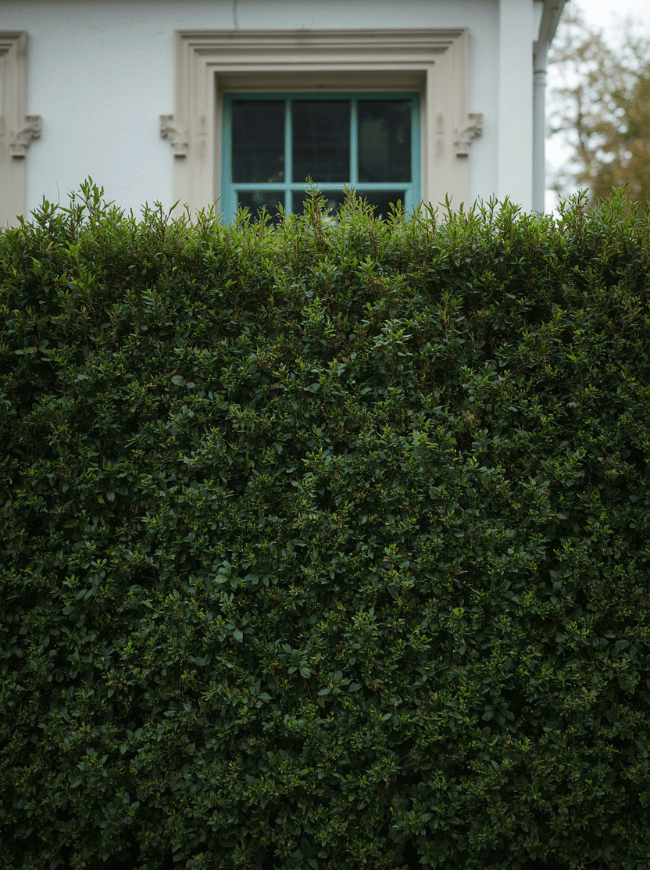
A hedge creates a softer boundary than a solid fence and can make the garden feel more natural. For quicker coverage, choose plants that grow densely and respond well to regular trimming.
Photinia, laurel, privet, hornbeam, and clumping bamboo can all work well in the right conditions. Before planting, check the mature height and width so the hedge does not become too large for the space.
Planting a hedge takes patience, but the result can be worth it. A green wall filters noise, supports wildlife, and looks attractive in every season when evergreen varieties are used.
Keep the hedge narrow with regular pruning. An overgrown hedge can steal valuable garden space and may create problems with light.
Rating: ★★★★☆
Recommendation: This is a strong long-term option if you want privacy that feels green and established rather than built.
3. Use Tall Planters as Moveable Screens
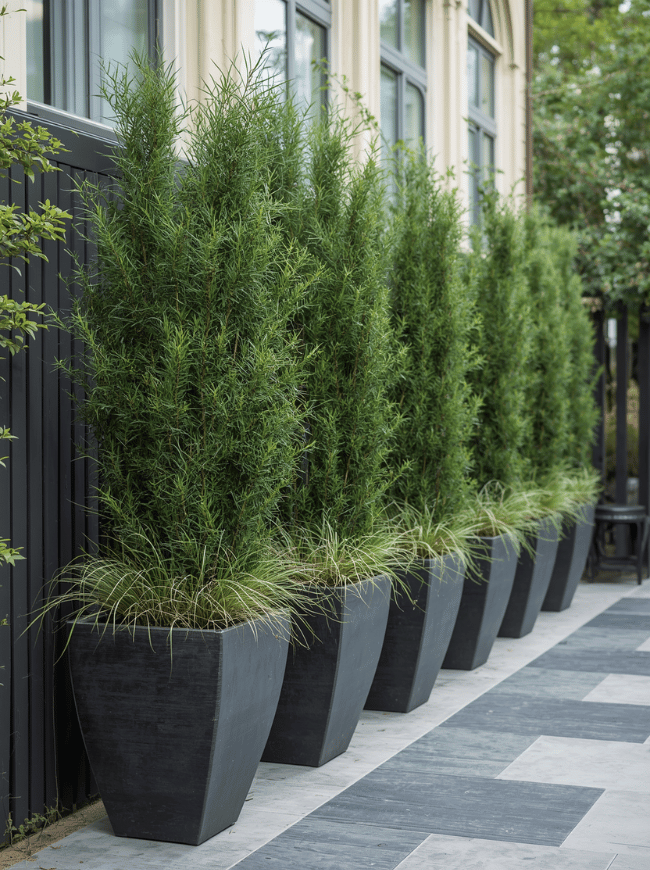
Large planters are a flexible solution for renters, small patios, and gardens where permanent construction is not practical. Place several tall containers in a row to create a screen around seating or dining areas.
Use plants with upright growth, such as ornamental grasses, clumping bamboo, photinia, cordylines, or slim evergreen shrubs. Choose containers that are heavy enough to stay stable in wind, or add weight to the base before planting.
The biggest advantage is flexibility. You can move the planters when you change the layout, bring certain plants into shelter during cold weather, or use them to divide one large patio into separate zones.
Match the containers for a neat look, or mix different sizes for a relaxed, layered display.
Rating: ★★★★★
Recommendation: Pick this idea if you want immediate privacy without committing to a permanent fence or wall.
4. Install a Pergola Over the Patio
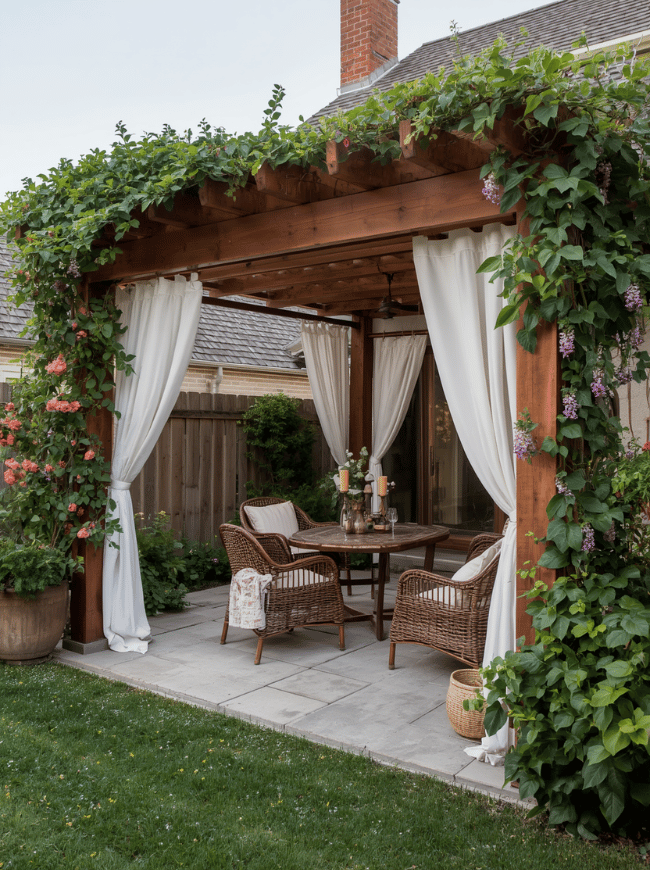
A pergola can provide privacy from above as well as from the sides. This makes it particularly useful for patios overlooked by upstairs windows, balconies, or neighboring homes.
A simple timber frame gives you plenty of options. Add a slatted roof, outdoor curtains, climbing plants, or a retractable shade cover depending on how much privacy you need.
Jasmine, climbing roses, clematis, grapevines, and wisteria can soften the structure over time. Choose the plant carefully, though. Some climbers become heavy and need a strong frame with regular maintenance.
A pergola also helps define the patio as an outdoor room. Add a dining table, lounge chairs, and warm lighting to make it useful throughout the day.
Rating: ★★★★☆
Recommendation: Use a pergola when your main privacy problem comes from above or when you want a dedicated outdoor living area.
5. Hang Outdoor Curtains
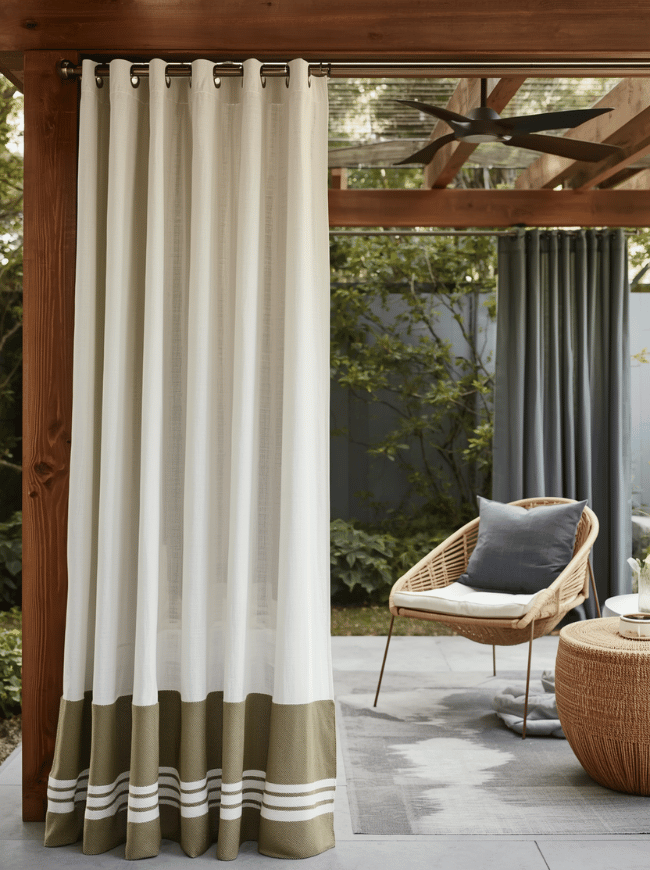
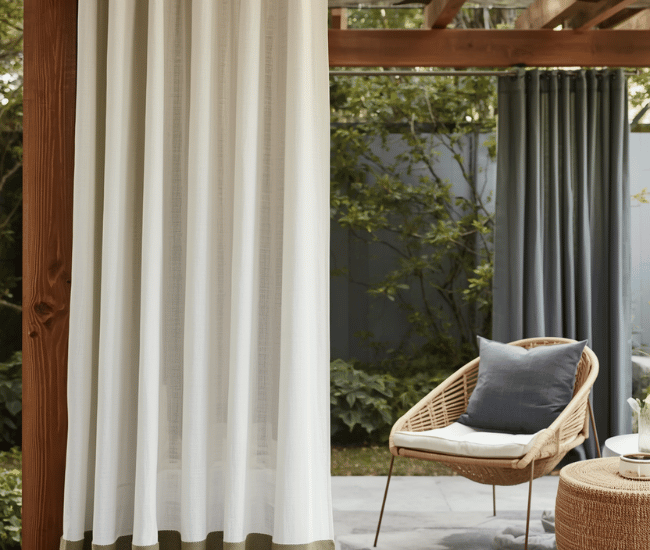
Outdoor curtains create an instant feeling of privacy and make a patio look more relaxed. Hang them from a pergola, covered porch, balcony, or sturdy frame.
Choose weather-resistant fabric in a color that complements your garden. White and cream curtains create a light, coastal look, while charcoal, olive, and terracotta feel richer and more modern.
Curtains are easy to open when you want more light or close when you need privacy. Tiebacks keep them tidy on breezy days, and weighted hems can stop them from blowing around too much.
Bring removable curtains indoors during severe weather to extend their life. They are best treated as a flexible outdoor accessory rather than a completely maintenance-free feature.
Rating: ★★★★☆
Recommendation: This is ideal for renters, balconies, and covered seating areas where you want a quick privacy upgrade with a soft finish.
6. Build a Living Wall
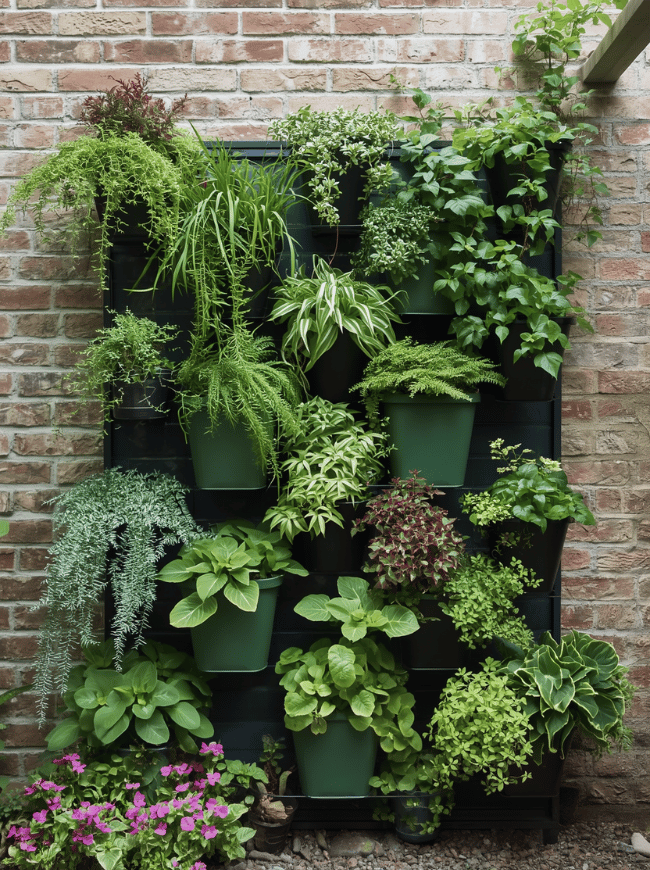
A living wall combines privacy with a strong visual feature. It can be created with wall-mounted planters, a modular planting system, or a series of shelves filled with foliage.
For a low-maintenance version, choose hardy evergreen plants with similar light and watering needs. Ferns, heucheras, ivy, grasses, and trailing plants can create a full display when positioned correctly.
Living walls need more care than ordinary screens because the containers can dry out quickly. Install the system where it is easy to water, and use an automatic irrigation system if the wall is large.
You can use a living wall to hide a utility area, screen a balcony railing, or create a green background behind an outdoor sofa.
Rating: ★★★★☆
Recommendation: Choose this if you want privacy to be the main feature of the garden rather than something that simply blends into the background.
7. Try a Trellis With Climbing Plants
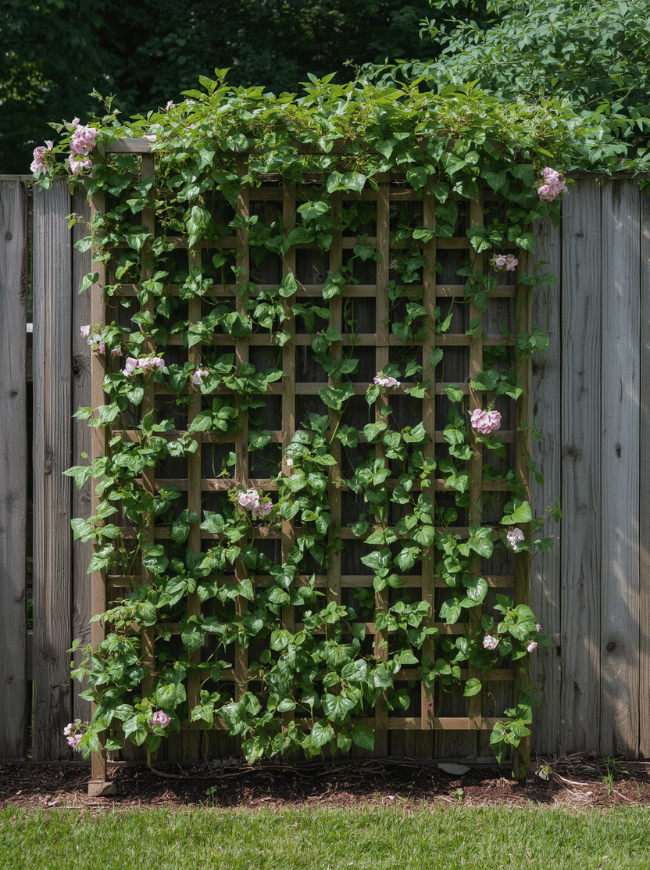
A trellis gives climbing plants something to grow on while creating a lighter alternative to a solid fence. It is a good solution when you want privacy but do not want to block every ray of sunlight.
Install one along a boundary, behind a bench, or beside a patio. Once the plants fill out, the trellis becomes a green screen that changes with the seasons.
Evergreen climbers provide year-round coverage, while flowering climbers bring color and scent. Star jasmine, evergreen clematis, climbing hydrangea, honeysuckle, and climbing roses are popular choices, although the best plant depends on your local climate and light conditions.
Train young stems in the direction you want them to grow, and prune the plant regularly so it does not become tangled or too heavy.
Rating: ★★★★★
Recommendation: This is one of the best Outdoor Privacy Solutions for a garden that needs privacy but should still feel open and airy.
8. Use Bamboo Carefully
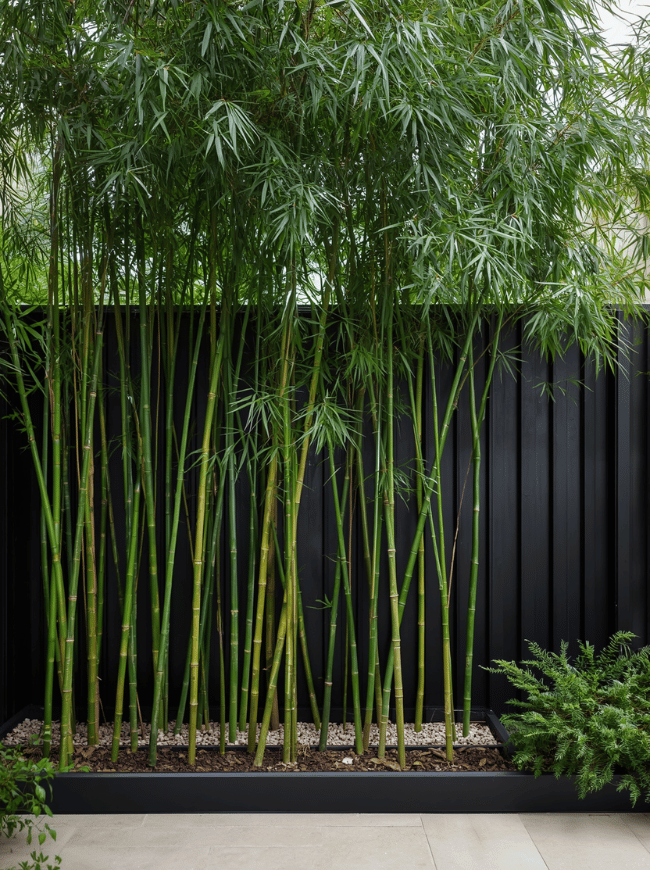
Bamboo creates a tall, leafy screen in a relatively small footprint. It moves in the breeze, grows quickly, and gives a garden a calm, modern feel.
Choose clumping bamboo rather than running bamboo unless you are prepared to install strong root barriers and control its spread. Growing bamboo in large containers is another way to keep it manageable.
Bamboo works well along patios, balconies, and narrow boundaries. Combine it with dark fencing, pale gravel, or smooth paving for a clean contemporary look.
Remove old canes and thin the plant when needed so the screen does not become too dense. Keep containers well watered during hot weather.
Rating: ★★★★☆
Recommendation: Use bamboo when you need height quickly, but choose the variety and planting method carefully before you buy.
9. Create a Raised Seating Area
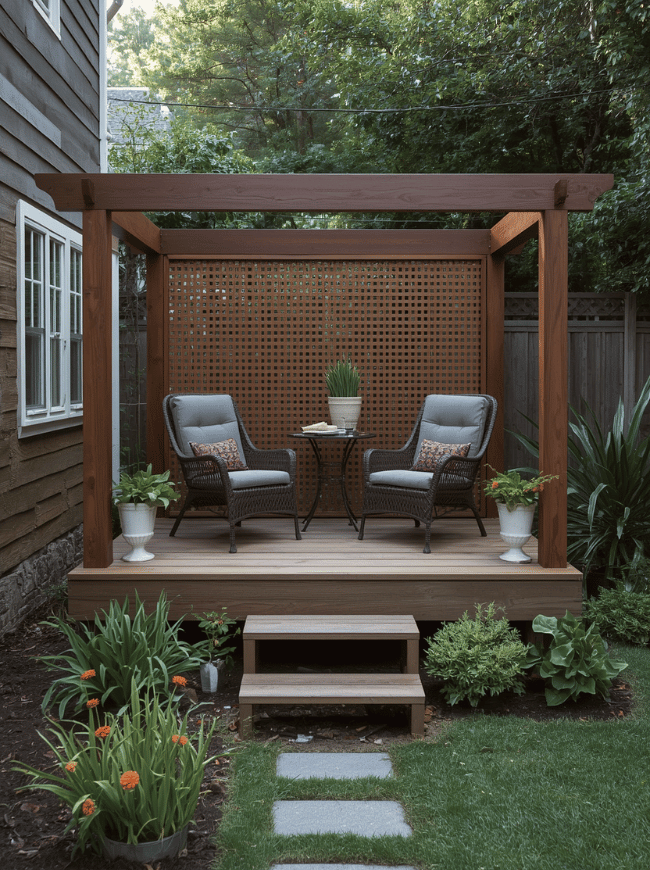
Sometimes privacy can be improved simply by changing the height of the seating area. A raised deck, platform, or slightly elevated patio can place you above low boundary fences and make the garden feel more separated from nearby spaces.
You do not need a large platform. Even a small raised area for two chairs can create a more comfortable viewpoint. Add planters, a screen, or a pergola around the seating zone for extra coverage.
Check local building rules and drainage conditions before constructing a raised structure. The finished area should also have safe steps, a stable surface, and good lighting after dark.
Rating: ★★★★☆
Recommendation: Consider this if low fences are the main issue and you want to improve privacy while creating a more useful seating zone.
10. Add a Decorative Garden Wall
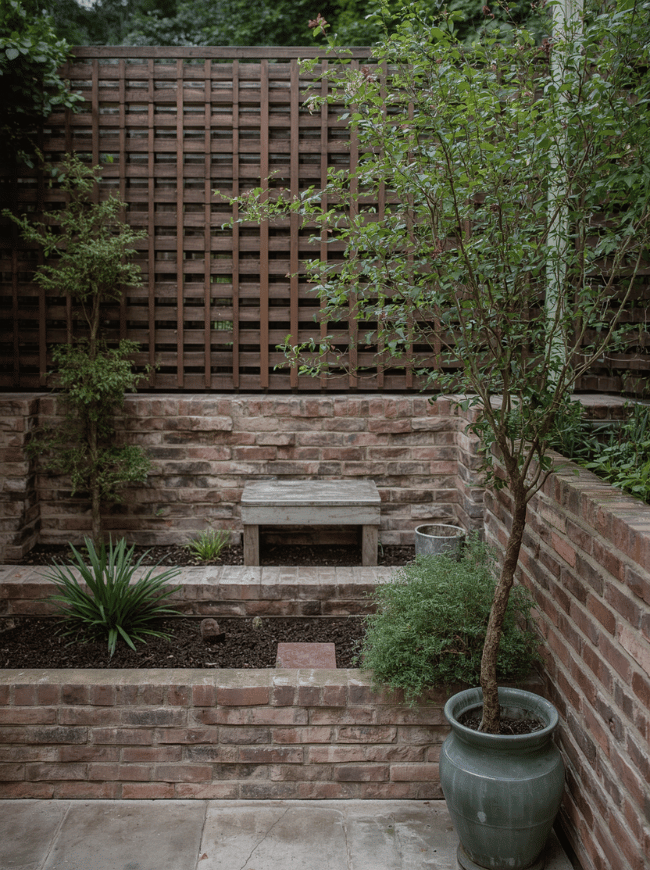
A low wall can define a patio, hide the lower part of a garden, and provide built-in seating or a shelf for pots. If you need more height, combine the wall with a trellis or screen above it.
Brick gives a traditional feel, while rendered blocks, stone, or painted concrete can suit a modern garden. Use the same material elsewhere, such as around raised beds or steps, so the wall looks intentional.
A wall takes more work than a planter screen, but it can last for many years with very little maintenance. Add a capstone or smooth top surface to protect it from rain and give it a finished appearance.
Rating: ★★★★☆
Recommendation: Choose a decorative wall if you want a durable boundary that also adds structure and seating.
11. Hang a Privacy Shade Sail
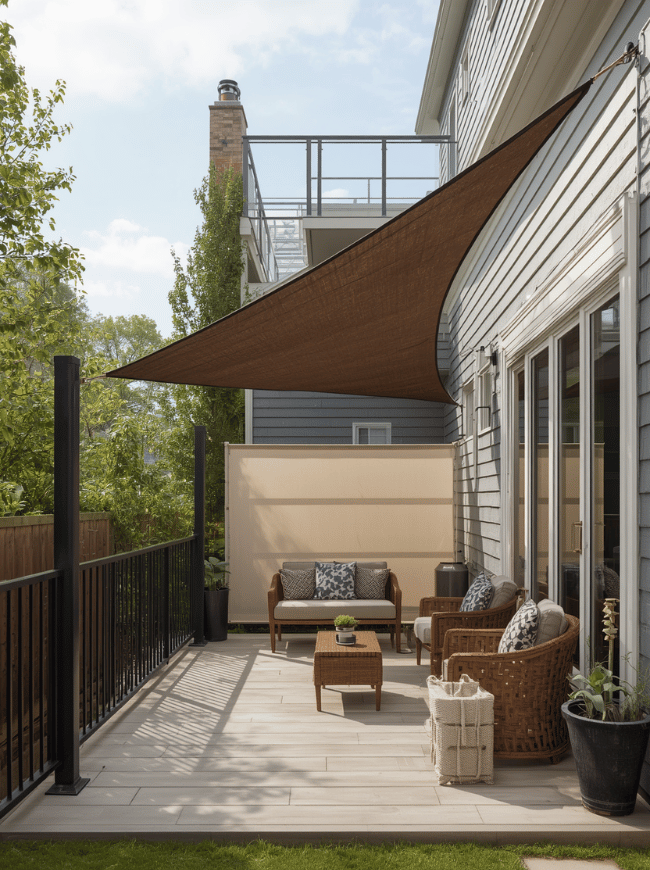
A shade sail can block views from above while protecting the seating area from strong sun. It is especially useful for patios overlooked by neighboring balconies or tall buildings.
Choose a triangular or rectangular sail and attach it to strong posts or secure fixing points. The fabric should be pulled tightly so it does not sag and collect rainwater.
Neutral colors blend into the garden, while darker shades create a more dramatic outdoor room. Take the sail down during severe weather if the fixing points are not designed for high winds.
Rating: ★★★★☆
Recommendation: This is a practical choice for sunny patios where overhead privacy and shade are both needed.
12. Use a Fence Extension
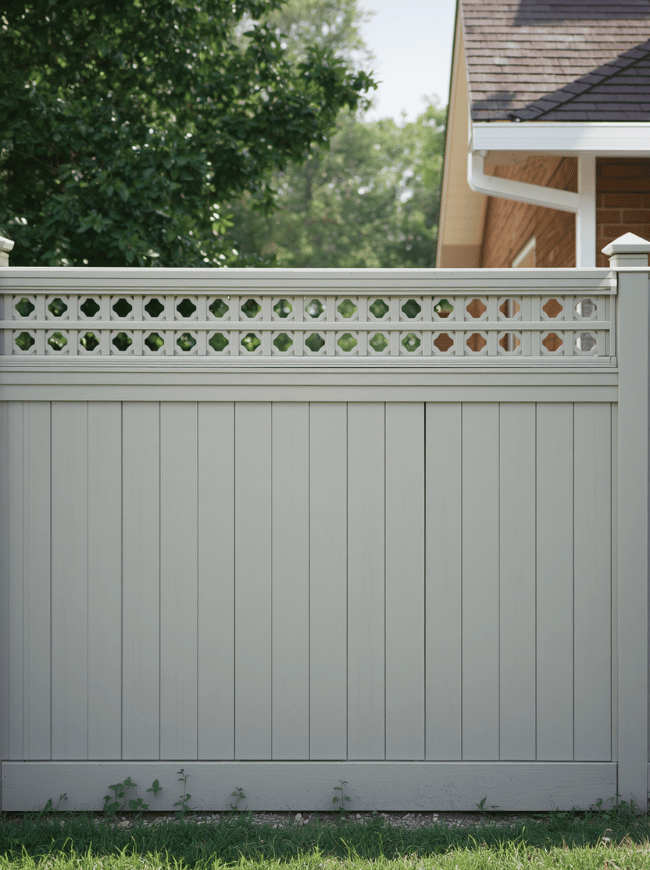
If the existing fence is almost high enough, a fence extension may solve the problem without replacing the entire boundary. Add trellis panels, decorative lattice, slatted sections, or a lightweight screen to the top.
The extra height can block a direct view from a nearby window while still letting light through. Paint the extension to match the fence, or use it as support for climbing plants.
Before installing one, check local regulations and any restrictions that apply to boundary height. Good relationships with neighbors matter too, especially when the fence is shared.
Rating: ★★★★☆
Recommendation: Try this first if you already have a sound fence and only need a little more coverage.
13. Plant a Small Tree in a Container
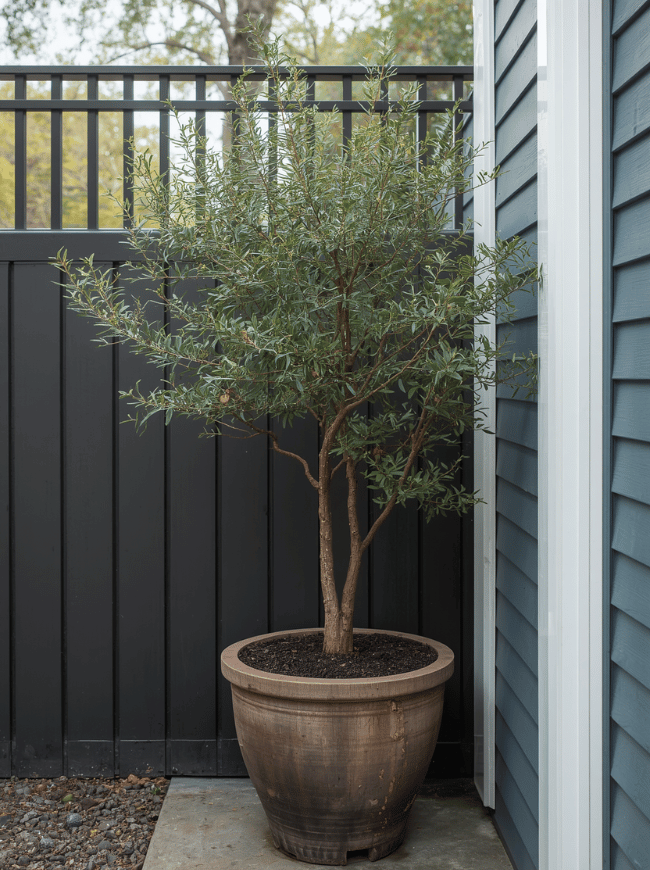
A small tree can provide privacy from above while bringing height and seasonal interest to a patio. Plant it in a large, sturdy container and place it where it blocks the most intrusive view.
Japanese maples, olive trees, ornamental pears, crab apples, and multi-stemmed birches can all become attractive focal points. Choose a variety that will remain suitable for the available space.
Container trees need regular watering and occasional feeding. They may also need pruning to maintain their shape and prevent branches from interfering with paths or neighboring areas.
Rating: ★★★★☆
Recommendation: Select this option if you want a natural privacy screen with year-round visual interest and a strong focal point.
14. Divide the Garden With a Screen
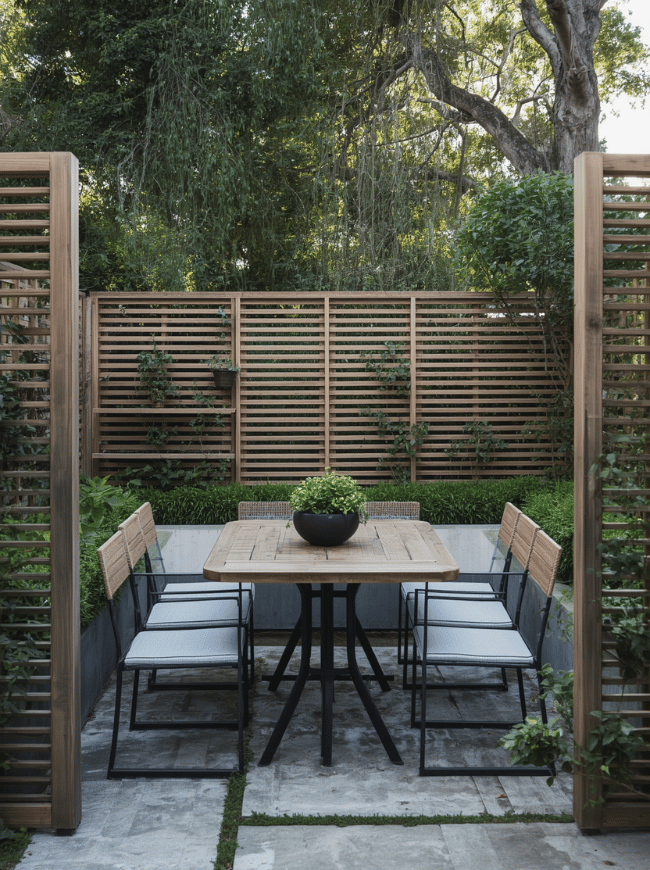
Privacy does not always mean screening the outside boundary. You can also divide the garden into separate zones so that the seating area feels more private.
Use a slatted screen, open shelving unit, trellis, or row of tall plants between the dining space and the rest of the garden. The screen does not need to be solid. A partial barrier is often enough to make a small area feel more secluded.
This approach works especially well in shared gardens, large patios, and family spaces where different activities happen at the same time.
Rating: ★★★★★
Recommendation: Use an internal screen when the garden is open but you want to make one particular area feel private.
15. Add a Water Feature for Sound Privacy
Visual screening is only part of the problem. If you can hear every conversation from nearby gardens or busy streets, moving water can help soften background noise.
A bubbling pot, wall fountain, or narrow cascade creates a steady layer of sound without needing much space. Place it near the seating area and surround it with plants to make it feel natural.
The water feature will not completely block loud traffic or nearby conversations, but it can make the garden feel calmer and less exposed.
Choose a self-contained model if you want simple installation and minimal plumbing work.
Rating: ★★★★☆
Recommendation: Add this to another privacy feature when unwanted noise is just as distracting as unwanted views.
16. Use Outdoor Shelving as a Privacy Feature
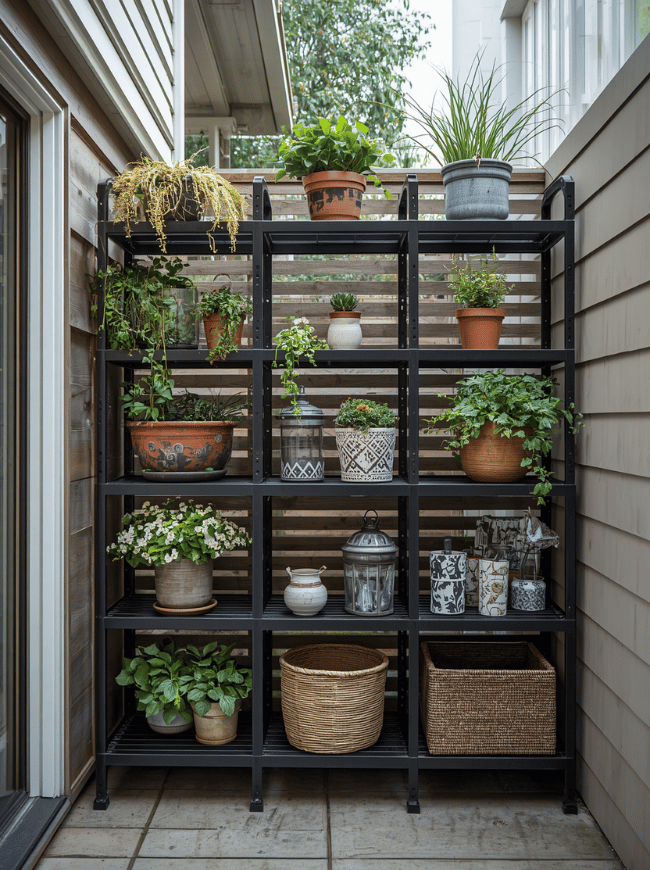
Tall outdoor shelving can act as a useful screen while giving you space for plants, lanterns, storage baskets, and garden accessories. Choose a weather-resistant unit with open shelves so light can pass through.
Place it beside a balcony, along a patio edge, or between two outdoor zones. Fill the shelves unevenly rather than covering every surface. A mix of plants and open space will look lighter and less cluttered.
For better privacy, use tall containers or trailing plants on the upper shelves. Secure the shelving so it cannot tip in strong wind.
Rating: ★★★★☆
Recommendation: This is a smart option when you need both privacy and extra storage in a small outdoor area.
17. Combine Two or Three Privacy Ideas
The most effective Outdoor Privacy Solutions often use more than one layer. For example, combine a low wall with tall planters, a trellis with evergreen climbers, or a pergola with outdoor curtains.
Layering gives you privacy at different heights without making the garden feel like a fortress. It also lets you use lighter materials. A screen may block the direct view while plants soften the edges and a pergola provides overhead coverage.
Keep the materials coordinated. If you use timber, repeat it in the bench or planters. If you choose black metal, echo it in the lighting or furniture.
Rating: ★★★★★
Recommendation: This is the best overall approach when your garden is overlooked from several directions.
How to Choose the Right Outdoor Privacy Solution
Before buying materials or plants, look at where the unwanted view is coming from. Is it a neighbor’s window, a balcony, a footpath, or a busy road? The answer will determine whether you need a side screen, overhead cover, planting, or a combination.
Also consider how much sunlight the garden receives. A solid screen can make a shady garden feel even darker, while a trellis, slatted panel, or leafy hedge may provide coverage without cutting off all the light.
Think about how quickly you need privacy. Curtains, screens, and tall planters give you an immediate result. Hedges and climbing plants take longer but usually feel more natural once established.
Finally, be realistic about maintenance. Fast-growing plants need trimming, containers need watering, and fabric screens need protection from harsh weather. The best privacy feature is one you can comfortably look after.
Final Recommendation
For most gardens, I would start with a slatted timber screen, a few large planters, and an evergreen climbing plant. This combination gives you instant coverage, softens the view over time, and can be adapted as your garden changes.
If you rent, choose tall moveable planters and outdoor curtains. If you own the property and want a permanent result, consider a pergola, trellis, hedge, or decorative wall. For balconies and compact patios, use vertical space instead of filling the floor with bulky furniture.
The best Outdoor Privacy Solutions do more than hide the garden. They make the space feel calmer, more comfortable, and more like your own. Start by screening the single most exposed area, then add planting, lighting, and seating around it. You do not need to change the entire garden to make a noticeable difference.
Which outdoor privacy idea would you try first?
Last modified: August 26, 2026
