

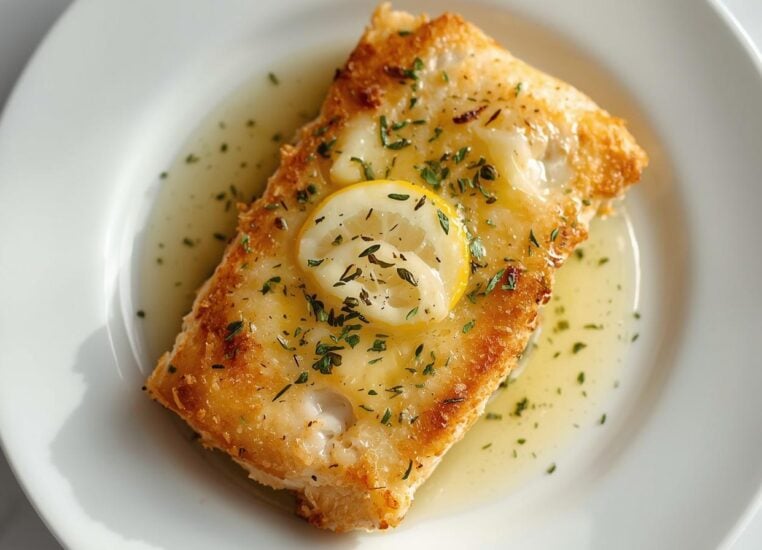
This baked cod comes together in under 30 minutes with six core ingredients.
The butter and lemon create a bright sauce that clings to the fish, while fresh garlic adds depth.
The result is tender, flaky fish with crispy edges on the pan and a pan sauce you’ll want to spoon over everything.
Why This Recipe is Easy to Make
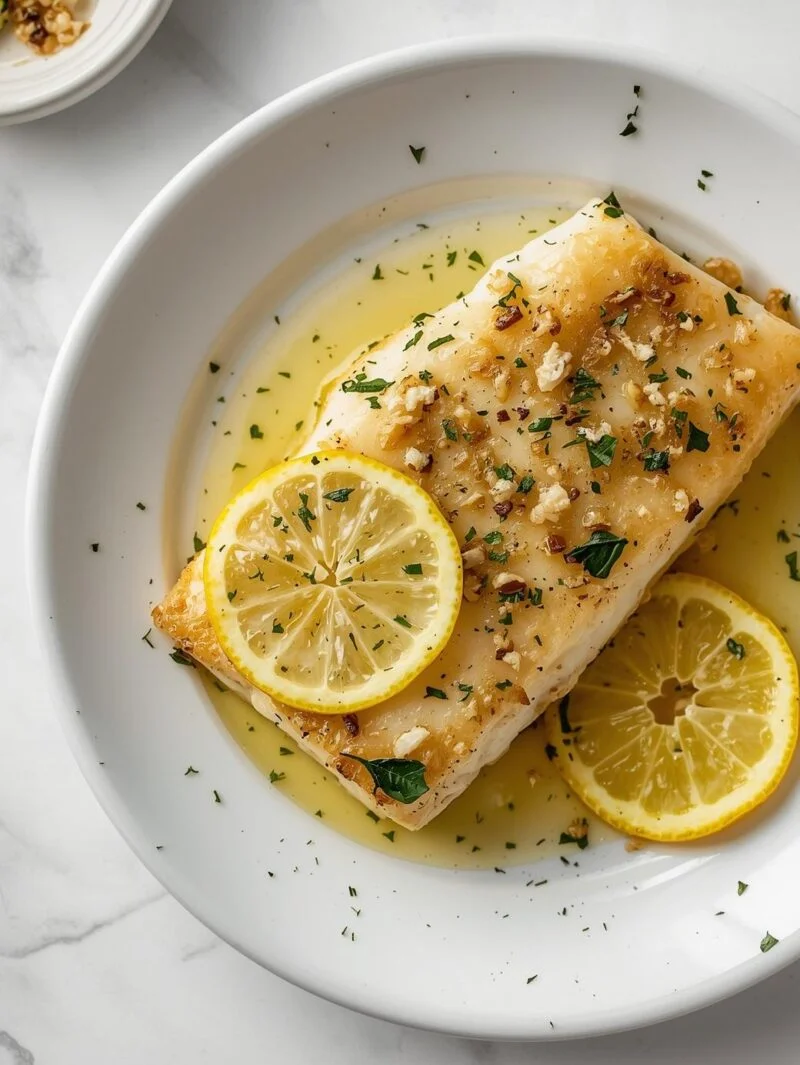
Buttery Lemon Garlic Baked Cod
Cod’s mild flavor pairs perfectly with butter and lemon because neither overpowers the fish. The high heat and short cooking time prevent the cod from drying out a common problem with baked white fish.
Fresh garlic blooms in the hot butter, releasing oils that flavor both the fish and the pan sauce. If you can’t find cod, this method works equally well with halibut, haddock, or pollock.
Download and Print this recipe PDF Here
Ingredients
| Item | Amount | Notes |
|---|---|---|
| Cod fillets | 4 (6 oz each) | 1.5 inches thick, skin removed |
| Butter | 6 tablespoons | Divided: 2 for pan, 4 for sauce |
| Garlic | 6 cloves | Minced fine |
| Fresh lemon | 2 whole | 1 for zest, 1 for juice |
| Kosher salt | 1.5 teaspoons | To taste, divided |
| Black pepper | 0.5 teaspoon | Freshly ground |
| Fresh parsley | 3 tablespoons | Chopped, for garnish |
| Crushed red pepper | Pinch | Optional; adds heat |
Optional additions: Fresh thyme sprigs, capers, diced shallots, or sliced almonds scattered over the fish before baking.
Equipment
- 9×13-inch ceramic or metal baking dish (glass works but heats faster)
- Instant-read thermometer
- Microplane zester or box grater
- Small saucepan
- Paper towels
Step-by-Step Instructions
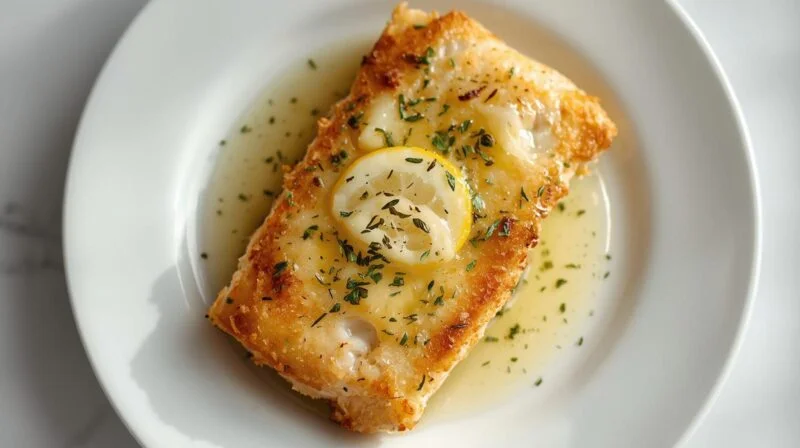
Buttery Lemon Garlic Baked Cod
Prep (5 minutes)
- Remove fish from cold storage 10 minutes before cooking. Room-temperature fish cooks evenly. Pat each fillet dry with paper towels moisture on the surface prevents browning.
- Zest the lemons. Use a microplane to remove the yellow outer layer only, avoiding the white pith underneath, which tastes bitter. You’ll get roughly 2 teaspoons of zest from both lemons.
- Juice the lemons. Cut one lemon in half and juice it into a small bowl you need about 3 tablespoons of fresh juice. Reserve the zest separately.
- Mince garlic finely. Aim for pieces no larger than a pinhead. Smaller garlic cooks faster and distributes evenly throughout the butter.
- Chop parsley. Use the tender leaves and thin stems. Thick stems stay tough even after cooking.
Cook (25 minutes)
- Heat your oven to 400°F. Place the baking dish inside while the oven preheats a hot pan accelerates browning on the bottom of the fish.
- Season the cod. Sprinkle both sides of each fillet with kosher salt and black pepper. Let it sit for 2 minutes so the salt can begin breaking down the proteins and improving texture.
- Add butter to the hot baking dish. Remove the dish carefully (it’s hot) and add 2 tablespoons butter. Tilt the dish so the butter coats the bottom evenly. It should sizzle immediately.
- Place cod in the pan. Lay each fillet skin-side up in the hot butter. You’ll hear a sizzle that’s browning happening on the bottom. The fish should feel slightly stuck; it will release naturally as it cooks.
- Make the garlic-butter topping. In a small saucepan over low heat, melt the remaining 4 tablespoons butter. Remove from heat. Stir in the minced garlic, lemon zest, lemon juice, and a pinch of salt. Let it sit for 1 minute – the residual heat opens up the garlic’s flavor.
- Pour the sauce over the fish. Distribute the garlic-butter mixture evenly across all four fillets, making sure each one gets garlic and a portion of the butter.
- Bake for 12-14 minutes. The fish is done when the thickest part flakes easily with a fork and an instant-read thermometer reads 145°F when inserted into the center of the thickest fillet. Avoid checking too early – every time you open the oven, you release heat and extend cooking time.
- Garnish and serve immediately. Transfer each fillet to a plate with a slotted spoon, ensuring some pan sauce comes along. Scatter fresh parsley over the top. Grind fresh black pepper over each plate.
Timing and Temperatures
| Stage | Temperature | Time | What You’re Looking For |
|---|---|---|---|
| Oven preheat | 400°F | 10 minutes | Baking dish is hot enough to sizzle butter |
| Browning in pan | 400°F | 1-2 minutes | Bottom of cod develops color before entering oven |
| Baking | 400°F | 12-14 minutes | Instant-read thermometer reaches 145°F |
| Carryover cooking | – | 2-3 minutes rest | Residual heat finishes cooking interior |
Serving
With vegetables: Roast asparagus, green beans, or broccoli alongside the cod. Start roasting vegetables 5 minutes before adding the cod to the oven so everything finishes together. Drizzle with the pan sauce.
With starch: Serve with orzo tossed with butter and parmesan, roasted potatoes, or long-grain rice. White rice or jasmine rice are especially good because they soak up the lemon-garlic sauce without competing.
As a light meal: Pair with a side salad of baby greens, shaved fennel, and a simple vinaigrette. The acidic greens complement the rich butter sauce.
For entertaining: Plate the cod on a bed of creamed spinach or cauliflower purée. This approach looks restaurant-quality but requires no additional technique.
Troubleshooting
Fish is dry inside: Cod was thicker than stated, or oven temperature was higher than 400°F. Check thickness with a ruler. Use an oven thermometer to verify your oven’s actual temperature – many run 25°F hot or cold.
Bottom of fish is not brown: The baking dish wasn’t hot enough when you added the fish, or the pan had too much liquid in it. Next time, let the empty baking dish preheat for the full 10 minutes and pat the fish completely dry.
Garlic tastes raw or sharp: Garlic was not minced fine enough, or the melted butter wasn’t hot enough. Mince until pieces are no larger than a pinhead. Keep the saucepan over low heat when melting butter – high heat burns garlic.
Sauce is greasy: You didn’t emulsify the butter with enough acid. Use fresh lemon juice, not bottled. The citric acid helps butter cling to the fish instead of pooling.
Storage and Reheating
Store leftovers in an airtight container in the refrigerator for up to 2 days. The fish is best eaten cold or at room temperature the next day reheating can dry it further. If you must reheat, place the fillet in a 300°F oven for 5 minutes with a spoon of water or broth in the bottom of the pan to add humidity.
Substitutions and Variations
Different fish: Halibut, haddock, and pollock use the same timing and temperature. Thicker cuts (1.5 inches) work best. Thinner fillets may cook in 10 minutes – check early.
Herb changes: Swap parsley for dill, tarragon, or cilantro. Use the same amount. Fresh thyme sprigs (2–3 per fillet) placed under the fish before baking add earthiness without changing the recipe structure.
Garlic intensity: Use 4 cloves for mild flavor or 8 for intense. Fresh garlic varies in strength depending on when it was harvested – taste as you go.
Caper version: Stir 2 tablespoons rinsed capers into the garlic butter before pouring it over the fish. Capers add brine and a briny punch that deepens complexity.
Almond topping: Toast 3 tablespoons sliced almonds in a dry pan over medium heat for 3 minutes, stirring often, until light brown and fragrant. Scatter over the fish after baking for textural contrast.
Why This Works Every Time
The combination of high heat, dry fish, and a properly prepared garlic-butter sauce creates the same result consistently. The butter emulsifies with lemon juice to coat the fish instead of sliding off. The high oven temperature browns the bottom of the fish quickly while the residual butter keeps it moist from below. Fresh garlic blooms in hot butter, releasing flavor compounds that infuse the sauce.
This approach relies on technique, not guesswork. You’ll know when the fish is done by touch and by thermometer, not by time alone. You’ll see browning on the bottom when you plate it. The sauce will taste bright and rich, not greasy.
Final
Buy cod from a fishmonger if possible, they will remove the skin and check for pin bones. Pre-packaged fish from the supermarket counter works but varies in quality and thickness.
If pieces are less than 1.5 inches thick, reduce baking time to 10 minutes and check for doneness with a fork rather than waiting for a thermometer.
This recipe scales easily: double the fish, double the sauce ingredients, and use a 9×13 pan (no size increase needed). Cooking time stays 12–14 minutes because the heat penetrates evenly.
Serve immediately while the butter is still warm and the fish is at its peak texture.
Last modified: July 22, 2026

I would love to try your recipe, but too much scrolling and my computer is not in the kitchen. It would help if you produced a list of ingredients and and instructions that could be printed out.
Sure, I have added a PDF copy of the recipe that you can download and print anytime. Check once more and thanks for your feedback!