

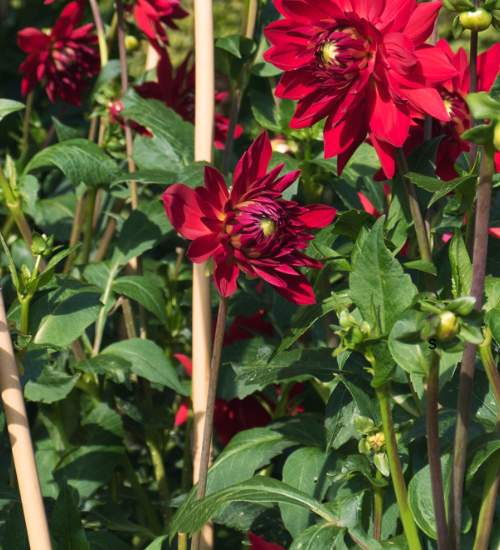
Tall flowers can turn a garden bed into a dramatic display, but long stems and heavy blooms are vulnerable to wind and rain. A plant may look upright in the morning and be lying across neighboring flowers by afternoon.
The solution is not always a taller stake tied tightly to the main stem. A rigid support placed too late can cause rubbing, breakage, or an awkward appearance. Learning how to stake tall flowers without damaging stems means choosing support early, allowing natural movement, and securing the plant gently.
Which flowers commonly need support?
How to Stake Tall Flowers Without Damaging Their Stems
Some plants naturally grow tall or develop heavy flower heads. Others become floppy because they receive too little light, are planted too closely, or receive excessive nitrogen fertilizer.
Flowers that may need support include:
- Dahlias
- Delphiniums
- Hollyhocks
- Peonies
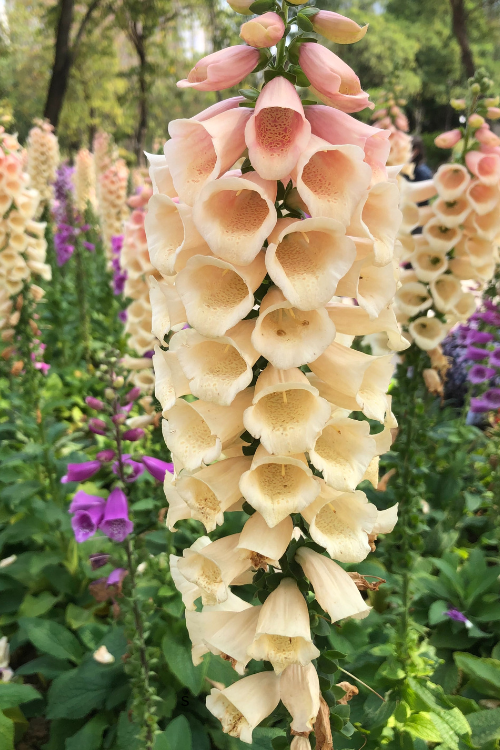
- Foxgloves
- Tall zinnias
- Cosmos
- Snapdragons
- Rudbeckia
- Tall lilies
- Gladiolus
- Joe-Pye weed
- Asters
- Sunflowers
Its important to note that plants with heavy flower heads or long, thin stems are especially likely to need support, particularly in areas exposed to wind or heavy rain.
Not every tall flower needs staking. Some varieties have naturally strong stems, while others are designed to form a loose, branching shape.
Stake before the plant flops
The ideal time to install support is before the plant needs it.
If a stem is already bent sharply, staking may not return it to a perfect upright position. A damaged stem may continue growing at an angle or develop a weak crease.
Install support when:
- The plant is about one-third to one-half of its mature height
- Stems are still flexible
- Flower buds are beginning to develop
- The garden is entering a windy or rainy period
- The plant has a history of falling over
Early support becomes less noticeable because foliage grows around it.
Choose the right support
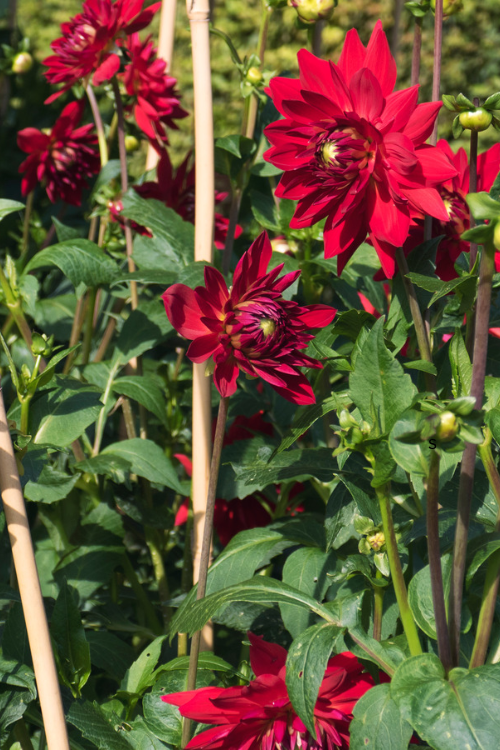
The support should be strong enough to hold the plant but not so large that it dominates the flower bed.
Common options include:
Single stakes
Use a bamboo cane, fiberglass rod, wooden stake, or slender metal support for individual stems or narrow plants.
Single stakes work well for:
- Delphiniums
- Gladiolus
- Tall lilies
- Individual dahlia stems
- Young sunflowers
Place the stake near the stem but not directly against it.
Ring supports
Ring supports are useful for plants that form a clump. The foliage grows through the ring while the support keeps stems from spreading outward.
They work well for:
- Peonies
- Rudbeckia
- Asters
- Tall perennials
- Bushy annuals
Choose a ring large enough to support the plant without trapping the stems tightly.
Grid or grow-through supports
A grid support allows multiple stems to grow through openings. As the plant grows, the foliage hides the structure.
This method is effective for dense clumps and is often less noticeable than tying every stem individually.
Stakes and twine
For large groups of flowers, place stakes around the outside of the planting and connect them with soft twine. Two or three horizontal levels may be needed as the plants grow.
Keep the twine loose enough for stems to move naturally.
Position the stake correctly
A common mistake is pushing the stake directly into the plant’s crown or root zone. This can damage roots and make the stem rub against the support.
Place the stake:
- A few inches away from the main stem
- On the side facing the prevailing wind
- Deep enough to remain stable
- Before the root system becomes densely developed
For a container plant, position the support near the inside edge of the pot but avoid scraping the root ball unnecessarily.
If the plant already has a heavy lean, place the stake on the side opposite the direction of the lean. Correct the plant gradually rather than pulling it upright in one motion.
Use soft ties, not wire
Rigid wire, thin string, fishing line, and plastic twist ties can cut into stems as the plant expands. They may also create pressure points where the stem rubs against the support.
Better choices include:
- Soft garden tape
- Stretchy plant ties
- Strips of old cotton fabric
- Soft jute
- Rubber-coated ties
- Velcro garden tape
Make a loose figure-eight tie. One loop goes around the stake, and the other goes around the plant. The crossing point keeps the stem from rubbing directly against the support.
The tie should support the plant without squeezing it. Leave enough space to slide a finger between the tie and the stem.
Check ties every week during rapid growth.
Use several ties instead of one tight tie
One tight tie near the top can create a hinge point and make the stem snap below it. Several loose ties distribute pressure more safely.
For a tall flower, use ties at:
- About one-third of the way up
- Around the middle
- Just below the flower head, if needed
Do not tie every branch. Allow the plant to move naturally so it develops stronger stems and a more natural shape.
Heavy-headed flowers may need extra support as blooms open. Add ties before the flower becomes fully heavy rather than waiting for the stem to bend.
Support clumps with a grid
For a group of tall flowers, surround the clump with three or four stakes. Run twine around the outside, then add another horizontal line higher up as the plants grow.
Keep the shape broad rather than pulling all stems into the center. Crowding stems tightly can reduce air movement and create a messy appearance.
For peonies, a ring or grid support installed while shoots are short is usually easier than trying to gather fully mature stems after a storm. Large, double-flowered peonies are especially likely to need support because the blooms become heavy when wet.
Avoid damaging stems during storms
Wind and rain often cause the most damage when flowers are already top-heavy. Before severe weather:
- Check whether supports are loose.
- Tighten stakes in the soil.
- Add a second tie if a plant is leaning.
- Remove broken branches with clean pruners.
- Avoid tying wet stems tightly.
- Move container plants to a sheltered location when practical.
Do not wrap the entire plant in a tight bundle. This can trap moisture, flatten the foliage, and increase the risk of broken stems inside the bundle.
Improve natural stem strength
Staking helps, but good growing conditions can reduce the need for support.
Provide:
- Adequate sunlight
- Proper spacing
- Moderate nitrogen
- Consistent watering
- Protection from strong wind
- Pruning or pinching when appropriate
Plants grown in low light may become thin and stretched. They often fall over even when they receive enough water. Space plants according to their mature width so air can move through the foliage.
Overfertilizing with high-nitrogen products can encourage soft leafy growth that is less able to support large flowers. Use fertilizer only when the plant needs it and follow the product label.
Pinching can create shorter, sturdier plants
Some annual flowers respond well to pinching early in the season. Removing the growing tip encourages branching and may produce a shorter, bushier plant with more flower stems.
This technique can work for certain varieties of:
- Zinnias
- Cosmos
- Snapdragons
- Chrysanthemums
- Marigolds
- Tall flowering annuals
Do not pinch every flower. Some plants bloom from a single central stem, and removing that tip can delay flowering or reduce the main display. Check the needs of the specific variety before pruning.
Quick staking guide
| Flower type | Useful support | Best timing |
|---|---|---|
| Peony | Ring or grow-through support | When shoots are short |
| Delphinium | Individual stake | Early in growth |
| Dahlia | Strong stake or cage | At planting |
| Tall zinnia | Ring, grid, or soft twine | Before buds open |
| Gladiolus | Individual stake | When stems begin elongating |
| Sunflower | Deep stake and soft tie | Before the head becomes heavy |
| Rudbeckia | Ring or clump support | Before flowering |
| Hollyhock | Individual stake or fence support | Before tall flowering |
Remove supports at the right time
Do not leave metal stakes, ties, or twine in the garden indefinitely. At the end of the season, remove supports, clean reusable materials, and inspect them for damage.
For perennial flowers, supports may be left in place if they are positioned so they will not interfere with new growth. However, check them in spring before shoots emerge.
The key to how to stake tall flowers without damaging stems is gentle, early support. Install the structure before the plant falls, use flexible ties, avoid tightening them, and check for rubbing as the stems grow.
A well-staked flower should still look like a flower, not a plant trapped inside a cage. The best supports disappear into the foliage while quietly protecting stems from wind, rain, and heavy blooms.
Last modified: October 27, 2026
