

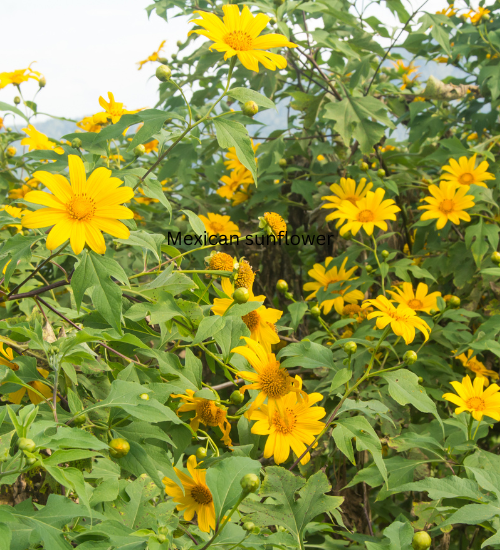
A garden does not have to lose its value when summer fades. In fact, autumn can be one of the most important seasons for pollinators. Bees, butterflies, hoverflies, and other beneficial insects still need nectar, pollen, shelter, and water as temperatures begin to drop.
Choosing the right fall pollinator garden flowers helps extend the flowering season while adding rich color to borders, containers, and small backyard beds. Many late-blooming plants are also easy to grow because they are already adapted to shorter days and cooler nights.
The best fall pollinator garden combines several flower shapes, colors, and heights. It should include plants that bloom at different times rather than relying on one large flush of color. Before planting, check which varieties perform well in your USDA hardiness zone and whether your garden receives full sun or partial shade.
What makes a flower useful in an autumn pollinator garden?
A good fall pollinator plant usually offers one or more of these qualities:
- Blooms from late summer into fall
- Produces accessible nectar or pollen
- Provides several weeks of color
- Handles cooler nights and shorter days
- Grows without excessive pesticide use
- Offers seeds or shelter after flowering
Native plants are often an excellent starting point because local insects may already be adapted to them. However, well-behaved, noninvasive ornamental plants can also contribute useful nectar when selected carefully.
1. Goldenrod
Goldenrod is one of the most valuable late-season flowers for pollinators. Its yellow flower clusters create a bright display when many summer plants are finishing. Goldenrod is often blamed for seasonal allergies, but ragweed is usually the more significant source of airborne pollen because goldenrod pollen is heavier and less likely to travel far on the wind.
Plant goldenrod in full sun where it has room to spread. It works well at the back of a border, along a naturalized edge, or in a meadow-style planting. Look for compact garden varieties if you have limited space.
2. Asters
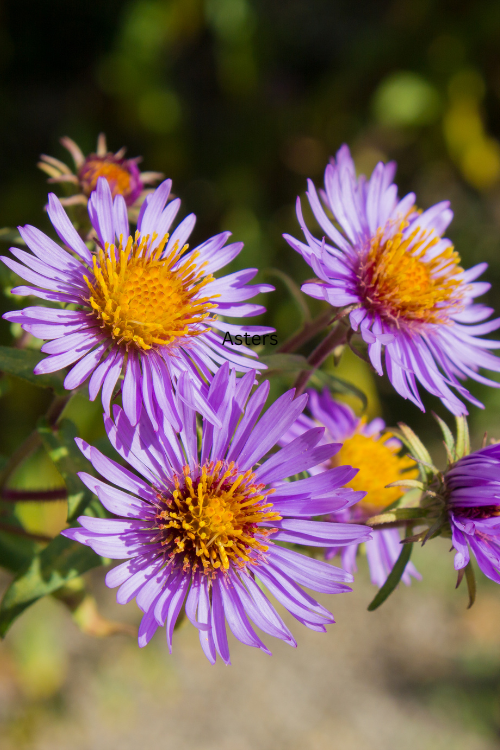
Asters provide purple, blue, pink, or white flowers in late summer and fall. Their daisy-like blooms are easy for many small pollinators to access. Native asters are especially useful because they can support a wide range of insects.
Plant asters in full sun with reasonably well-drained soil. Cut them back lightly in early summer if they become floppy. This encourages a shorter, bushier plant with more flowers.
3. Sedum
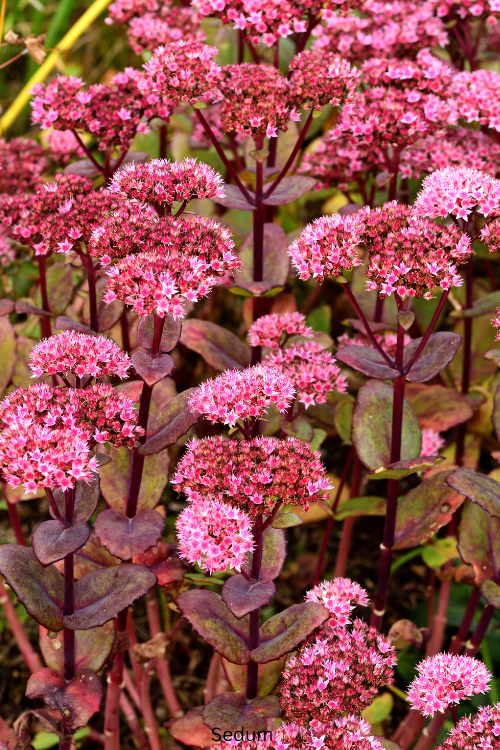
Tall sedums, sometimes called stonecrop, are dependable plants for sunny beds and containers. Their flat flower heads begin in pink or white and often deepen in color as the season progresses.
Sedum is especially useful in dry gardens because its thick leaves store water. Avoid keeping the soil constantly wet. Place it near other drought-tolerant plants such as ornamental grasses, yarrow, and lavender.
4. Mexican sunflower
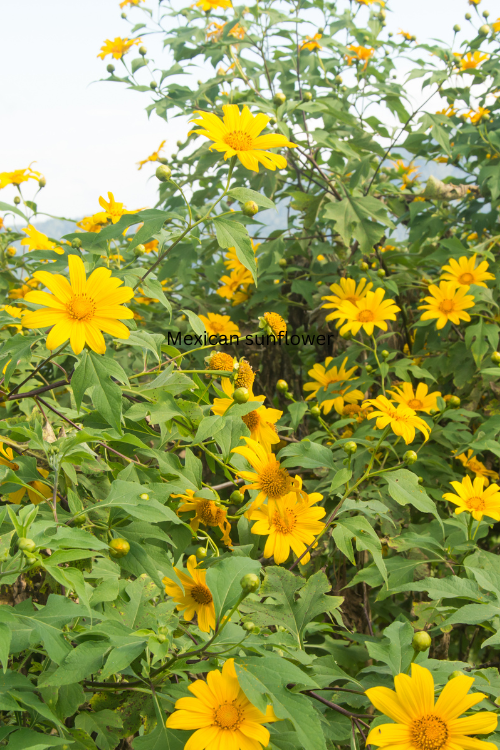
Mexican sunflower, or Tithonia, produces cheerful orange flowers on tall stems. It is an annual in many climates but grows quickly from seed in warm weather.
Because it can become tall, place it where it will not shade shorter plants. It is ideal for the back of a pollinator border or a temporary summer-to-fall screen. Deadheading encourages continued flowering, although leaving a few seed heads can provide food for birds.
5. Coneflower
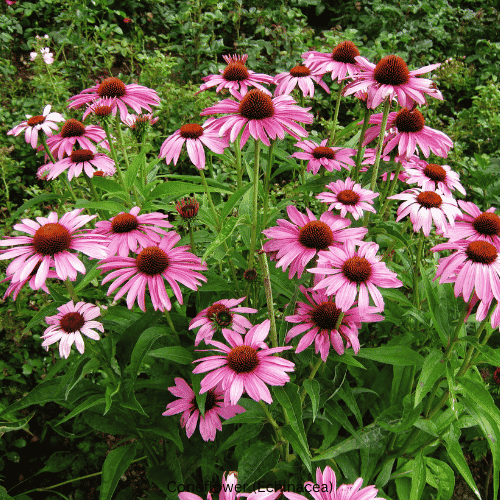
Coneflowers are familiar garden perennials with strong stems and long-lasting blooms. Purple coneflower is a classic choice, but modern varieties are also available in white, yellow, orange, and pink.
Choose simple, open-centered flowers when possible. Highly doubled forms may be less accessible to some insects. Coneflowers tolerate heat once established and often remain attractive after flowering, especially when their seed heads are left in place.
6. Salvia
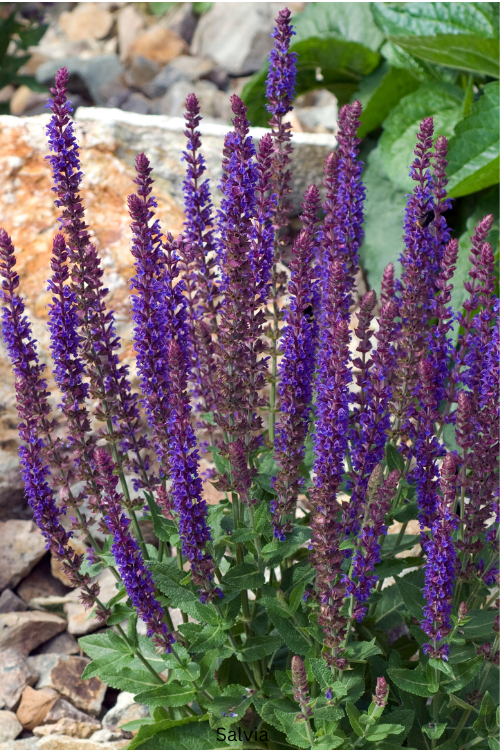
Some salvias continue blooming well into fall, particularly when spent flower spikes are removed. Their tubular flowers are attractive to bees and hummingbirds.
Salvia prefers sunshine and good drainage. In humid regions, avoid crowding plants together. Good air circulation reduces the chance of leaf and stem problems.
7. Anise hyssop
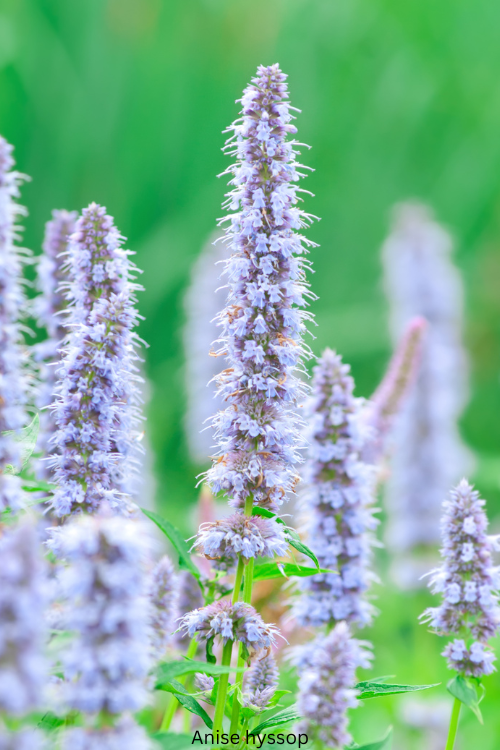
Anise hyssop produces upright spikes of purple, lavender, pink, or white flowers. It has aromatic foliage and a long blooming period, making it a useful middle-height plant.
It performs best in full sun and soil that drains well. Cut back the stems after flowering if you want a tidier appearance, or leave some seed heads for birds.
8. Bee balm
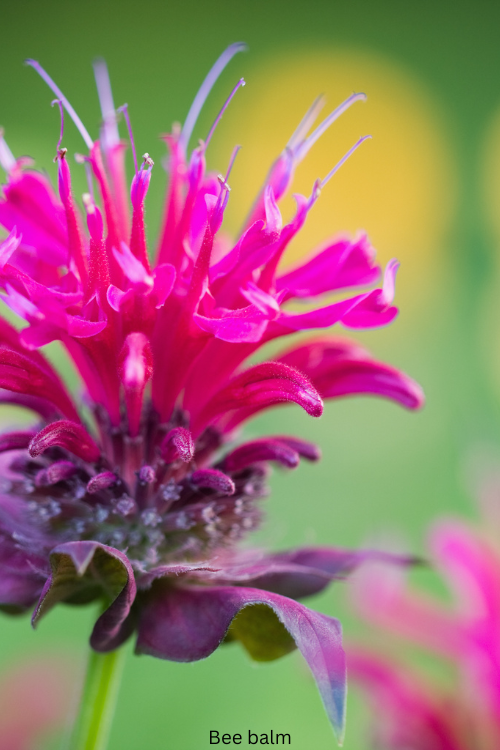
Bee balm offers bright flowers in red, pink, purple, or white. Its tubular blooms are especially attractive to hummingbirds, while bees often visit the flower clusters.
Give bee balm room to breathe because crowded conditions can encourage powdery mildew. Water at the soil line rather than wetting the foliage. Dividing crowded clumps every few years keeps them vigorous.
9. Black-eyed Susan
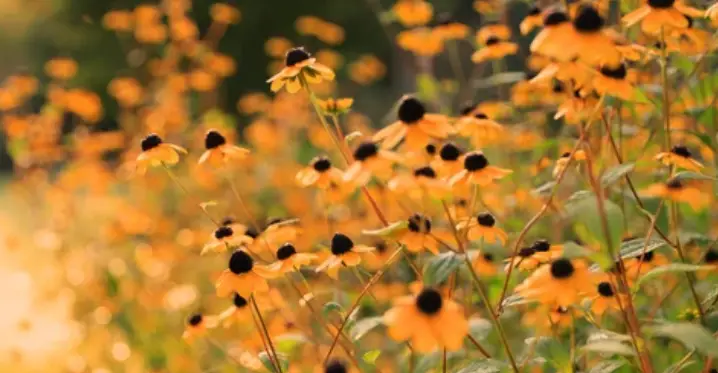
Planting Black-Eyed Susans
Black-eyed Susans bring golden color to the late-season garden. Their dark centers add contrast and provide landing platforms for insects.
They are excellent for sunny borders, cottage gardens, and naturalized areas. Many varieties tolerate average soil, but flowering is usually stronger with consistent moisture during establishment.
10. 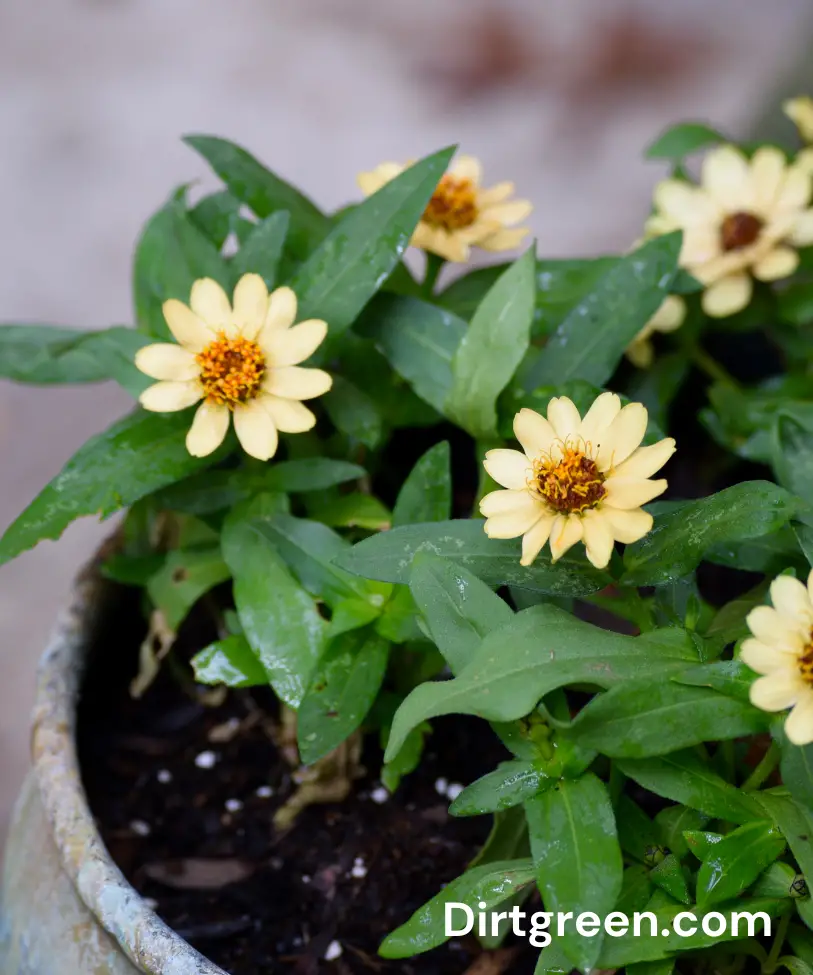
Zinnias are annuals, but they can keep producing flowers until the first hard frost. They are especially useful when you want quick color in a new pollinator bed.
Choose single or semi-double varieties with visible centers. Plant them in full sun and avoid overhead watering. Cutting flowers for the house also encourages more stems.
11. Cosmos
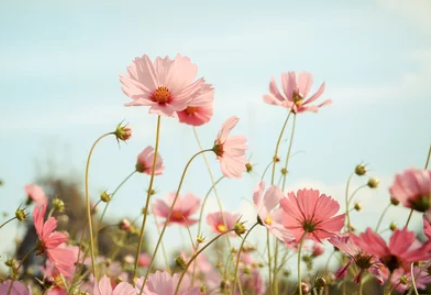
Cosmos has airy foliage and daisy-like flowers in shades of white, pink, and burgundy. It grows readily from seed and can fill gaps between slower-growing perennials.
Cosmos prefers full sun and soil that is not overly rich. Too much fertilizer may produce tall foliage with fewer flowers. Stake tall varieties if your garden is exposed to wind.
12. Japanese anemone
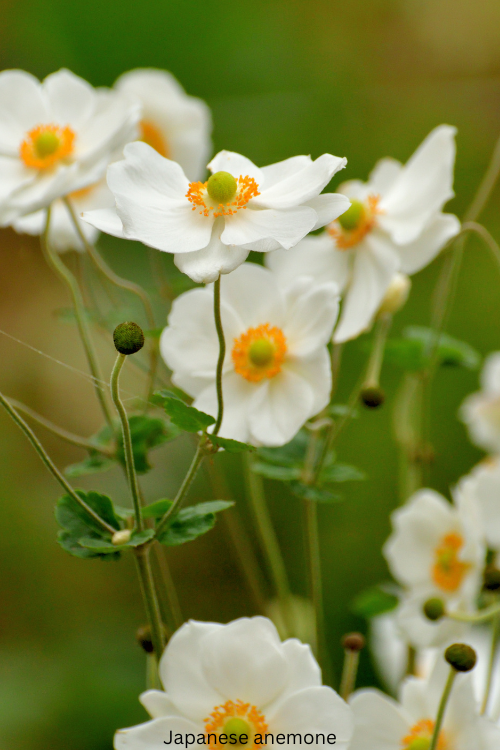
Japanese anemone provides elegant flowers in late summer and fall, often when the rest of a shady border is quiet. It prefers evenly moist soil and protection from intense afternoon heat.
Although it is not native everywhere, it can be a useful ornamental plant when grown responsibly. Give it space because established clumps may expand gradually.
A simple fall pollinator planting plan
Use this basic arrangement for a sunny bed measuring approximately 6 by 10 feet:
| Garden position | Plants | Purpose |
|---|---|---|
| Back row | Goldenrod, Mexican sunflower, cosmos | Height and late color |
| Middle row | Asters, anise hyssop, bee balm | Main nectar display |
| Front row | Sedum, black-eyed Susan, salvia | Lower structure and repeat bloom |
| Open gaps | Zinnia, calendula, native annuals | Quick seasonal color |
Plant in groups of three or five rather than scattering single plants throughout the bed. Repeated groups create a stronger visual design and make it easier for pollinators to find concentrated food sources.
How to design for a longer flowering season
Do not choose every plant because it blooms at the same time. Instead, combine early, middle, and late fall bloomers.
For example:
- Late summer: salvia, bee balm, coneflower
- Early fall: zinnia, Mexican sunflower, black-eyed Susan
- Mid-to-late fall: asters, goldenrod, sedum
- After flowering: coneflower and ornamental grasses provide seed and structure
This approach gives the garden a gradual transition instead of a sudden end.
Water, mulch, and maintenance
Water new plants deeply during their first growing season. Once established, many perennials need less irrigation, but they still perform better during extended drought.
Apply a thin layer of mulch around plants, keeping it away from the crowns and stems. Avoid broad-spectrum insecticides whenever possible. If a pest problem develops, identify the insect before treating the entire bed.
Leave some stems standing over winter. Hollow stems can provide nesting places for insects, and seed heads may feed birds. Cut everything back in late winter or early spring when temperatures begin to rise.
Final thoughts
The best fall pollinator garden flowers are not always the showiest plants at the garden center. They are the varieties that provide reliable late-season blooms, match your growing conditions, and fit naturally into a diverse planting plan.
Start with three or four dependable plants, repeat them through the bed, and add a few annuals for extra color. With the right combination, your garden can remain lively, useful, and full of movement long after midsummer has passed.
Last modified: October 15, 2026
