

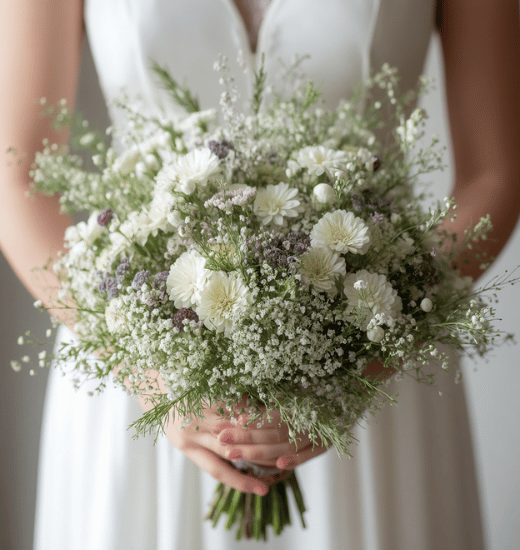
A meadow-style bouquet should look gathered rather than manufactured. It combines flowers of different heights, textures, and shapes so the finished arrangement feels loose, natural, and slightly unpredictable.
This style is ideal for gardeners because it does not require every stem to be identical. A few crooked branches, small side buds, airy grasses, and foliage can make the bouquet more believable. The goal is not perfect symmetry. It is balance, movement, and the feeling that the flowers came from a living garden.
Learning how to make a meadow-style bouquet also helps you use flowers that might not fit a formal arrangement. Small daisies, herbs, seed heads, flowering branches, and grasses can become important supporting elements instead of being discarded.
What Makes a Bouquet Look Meadow-Style?
A meadow-style bouquet usually includes:
- Flowers at several heights
- A mixture of large and small blooms
- Airy fillers rather than dense packing
- Foliage or grasses that extend beyond the main shape
- A natural, asymmetrical outline
- A limited but harmonious color palette
- Visible stems and varied textures
The arrangement should have breathing room. If every gap is filled, the bouquet may look more like a compact traditional centerpiece.
A meadow-style design can be romantic, colorful, modern, rustic, or minimalist depending on the flowers and container.
Choose Flowers in Four Roles
You do not need dozens of flower varieties. Select stems according to their role.
1. Focal Flowers
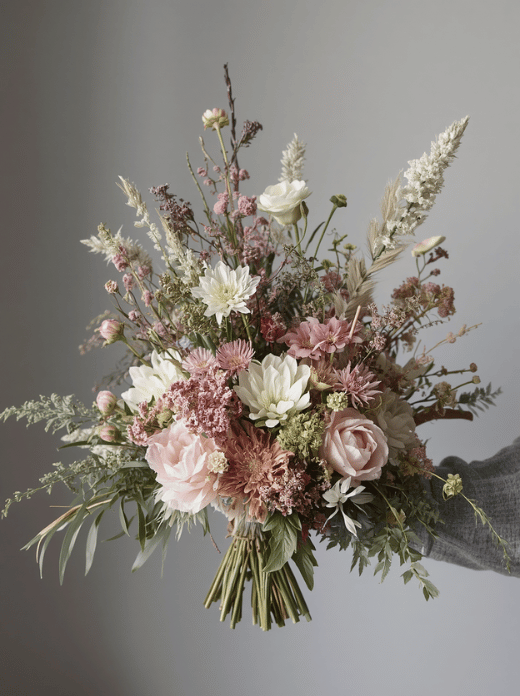
These are the largest or most visually commanding blooms. Examples include:
- Dahlias
- Sunflowers
- Roses
- Zinnias
- Peonies
- Large chrysanthemums
Use a small number of focal flowers rather than filling the bouquet with them. Three to five large blooms are often enough for a medium arrangement.
2. Supporting Flowers
How to Make a Meadow-Style Bouquet With Garden Flowers
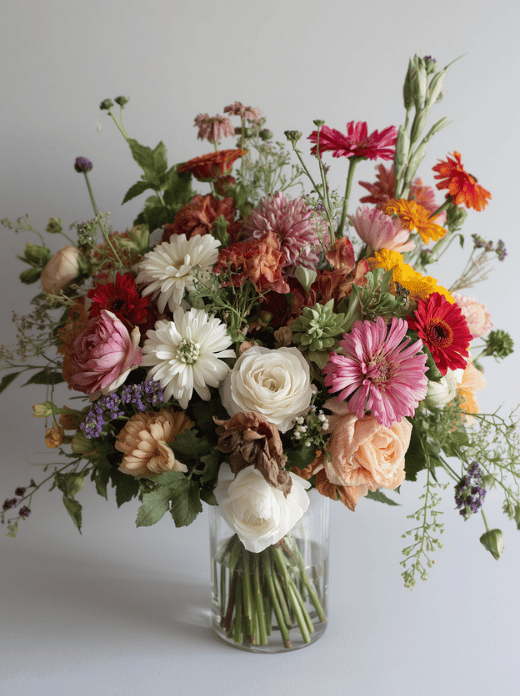
Supporting flowers add color and volume without dominating the arrangement. Examples include:
- Cosmos
- Lisianthus
- Snapdragons
- Scabiosa
- Small zinnias
- Calendula
- Marigolds
These flowers help connect the focal blooms to the smaller details.
3. Airy Fillers
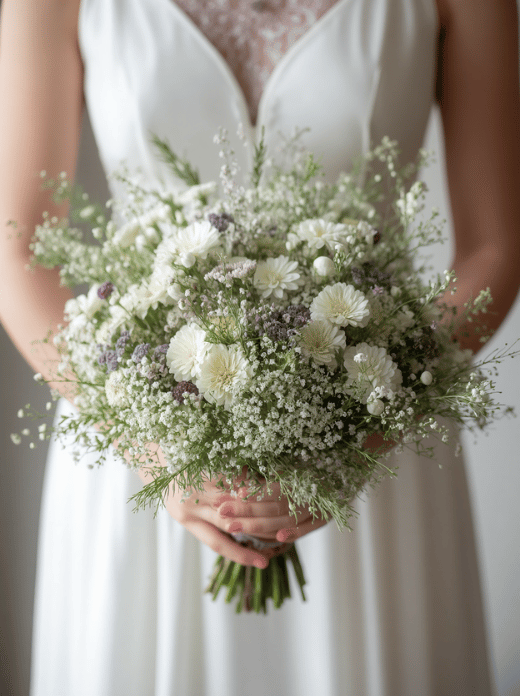
Fillers create movement and open space. Try:
- Queen Anne’s lace
- Ammi
- Feverfew
- Baby’s breath
- Dill flowers
- Lace flowers
- Small asters
Use fillers sparingly. Their purpose is to soften the outline, not create a solid wall of white or green.
4. Texture and Movement
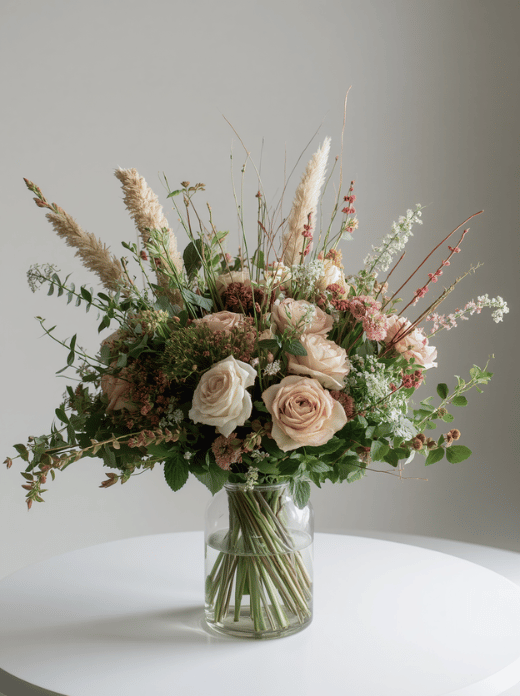
Texture comes from foliage, grasses, seed heads, and unusual shapes. Good choices include:
- Mint stems
- Rosemary
- Eucalyptus
- Ferns
- Ornamental grasses
- Flowering oregano
- Seed pods
- Curly willow
- Basil flowers
Check that any plant material used indoors is safe for your household and pets. Avoid flowers or foliage known to be toxic if children or animals may chew them.
Cut Flowers at the Right Time
The best time to cut garden flowers is generally early morning, when stems are hydrated and temperatures are cooler. If morning is not possible, cut during the evening after the heat of the day has passed.
Use clean, sharp pruners. Make a long, angled cut so the stem can absorb water efficiently. Remove leaves that would sit below the waterline.
Different flowers are ready at different stages. Many daisy-shaped flowers should be cut when the outer petals have opened, while roses are often harvested when the bud has begun to loosen. Test a few stems from your garden and observe how they open indoors.
Place cut stems into clean water immediately. Delaying hydration can shorten vase life, especially on warm days.
Gather Your Supplies
You will need:
- Clean vase or jar
- Sharp pruners
- Fresh water
- Flower preservative, if desired
- Clean cloth
- Optional floral tape
- Optional chicken wire or a reusable flower frog
A wide-mouth vase is often easiest for a meadow-style bouquet because it allows stems to spread naturally. A narrow vase can work for a smaller arrangement, but it may force the flowers into a dense column.
If the container is very wide, create support by loosely folding chicken wire over the opening or using a flower frog. This allows stems to hold their positions without requiring floral foam.
Prepare the Stems
Strip leaves from the lower part of each stem. Any foliage underwater can decay and encourage unpleasant odors.
Re-cut stems at an angle immediately before arranging. Avoid crushing the ends with dull scissors.
Sort stems into groups:
- Longest and most flexible stems
- Medium supporting flowers
- Shorter focal flowers
- Fillers and foliage
Sorting first makes the arranging process faster and helps you notice whether the color and texture are balanced.
Build the Bouquet Step by Step
Step 1: Create the Outer Shape
Begin with a few long, airy stems. Hold them loosely above the vase and allow them to extend slightly beyond the eventual flower mass.
Do not make the outline perfectly round. One side can be higher, wider, or more open than the other. This unevenness creates the natural meadow effect.
Step 2: Add Supporting Flowers
Place medium stems around the outside and through the center. Turn the vase as you work so the arrangement develops evenly.
Avoid placing every flower at the same height. Some should sit near the focal blooms, while others can rise above them or lean outward.
Step 3: Add Focal Flowers
Insert the largest blooms at different depths. One focal flower may sit slightly higher, another closer to the rim, and a third toward one side.
Do not line them up in a triangle or place them at equal intervals. Uneven spacing looks more natural.
Step 4: Add Texture
Use grasses, seed heads, herbs, or unusual foliage to create movement. Let some stems extend beyond the flowers.
Texture should be visible from several angles. Turn the bouquet as you work and check whether one side has become too heavy.
Step 5: Fill Carefully
Add airy fillers only where the design needs connection or softness. Leave a few open spaces so the individual shapes remain visible.
If the arrangement begins to look crowded, remove stems instead of continuing to add more. Meadow-style bouquets often improve when simplified.
A Simple Color Formula
Color can make a natural bouquet feel intentional. Use one dominant color, one supporting color, and one neutral.
For example:
- Dominant: apricot
- Supporting: soft pink
- Neutral: white and green
Other combinations include:
- Purple, blue, and white
- Yellow, cream, and green
- Coral, burgundy, and blush
- Orange, rust, and pale yellow
- Pink, lavender, and silver
Use foliage to connect colors that might otherwise feel unrelated. Gray-green leaves can soften bright flowers, while deep green foliage can anchor pale blooms.
Three Meadow-Style Bouquet Recipes
Summer Garden Bouquet
- Three zinnias
- Five cosmos
- Three snapdragons
- Two stems of dill flower
- Several grass stems
- Foliage from basil or mint
This arrangement feels bright, airy, and informal.
Soft Cottage Bouquet
- Three roses
- Four scabiosa
- Five feverfew stems
- Three stems of lavender
- Lady’s mantle or soft green foliage
Keep the colors muted and allow the feverfew to extend beyond the main flowers.
Autumn Meadow Bouquet
- Three dahlias
- Five chrysanthemums
- Three goldenrod stems
- Seed heads
- Ornamental grasses
- Dark foliage or burgundy leaves
Warm colors and dried textures make this arrangement suitable for a dining table or entryway.
Use a Vase That Supports the Style
Clear glass emphasizes the stems and makes the bouquet feel casual. Ceramic containers create a more grounded, rustic appearance. A vintage jar can work well for a small arrangement, while a tall, narrow vase suits a vertical meadow design.
Choose the container according to the flowers’ natural shape. Tall, branching stems need room above the rim. Low, sprawling stems look better in a wide bowl.
Do not hide every stem. A meadow-style bouquet often looks more authentic when the lower structure remains visible.
Make the Bouquet Last Longer
Change the water every one to two days, or sooner if it becomes cloudy. Re-cut the stems slightly each time you refresh the vase.
Keep the bouquet away from direct sunlight, heating vents, strong drafts, and bowls of ripening fruit. Warm temperatures accelerate fading and can shorten vase life.
Remove flowers as they wilt so they do not affect the remaining stems. Some flowers will last longer than others, and replacing individual stems can keep the arrangement attractive for several more days.
For mixed bouquets, avoid relying on a home remedy as a substitute for clean water and proper stem preparation. Basic hygiene usually makes the greatest difference.
Drying Meadow-Style Flowers
Some meadow flowers can be dried after they begin to fade. Remove leaves, tie small groups loosely, and hang them upside down in a dry, dark, well-ventilated space.
Large, water-rich flowers may not dry successfully, while grasses, seed heads, lavender, statice, strawflowers, and certain herbs often perform better.
Do not overcrowd bundles. Air circulation helps reduce mold and preserves the shape of the stems.
Common Mistakes to Avoid
The first mistake is cutting every stem at the same length. Varied heights are essential to the style.
The second is using too many focal flowers. A bouquet made entirely of large blooms can look heavy and formal.
The third is adding filler until every gap disappears. Open space gives the arrangement its meadow character.
Another mistake is ignoring stem strength. Delicate cosmos may bend under the weight of heavy dahlias, so use stronger stems or place delicate flowers around the outer edges.
Finally, do not arrange only from the front. Turn the vase as you work and check the bouquet from all sides.
Final Thoughts
Learning how to make a meadow-style bouquet is less about strict floristry rules and more about observing how flowers grow. Let stems lean, allow grasses to move, and combine large blooms with small details.
Start with a simple color palette, use flowers in several roles, and remove anything that makes the arrangement feel crowded. With a clean vase, fresh water, and a little patience, ordinary garden flowers can become a loose, expressive bouquet that feels personal and alive.
Last modified: October 12, 2026
