
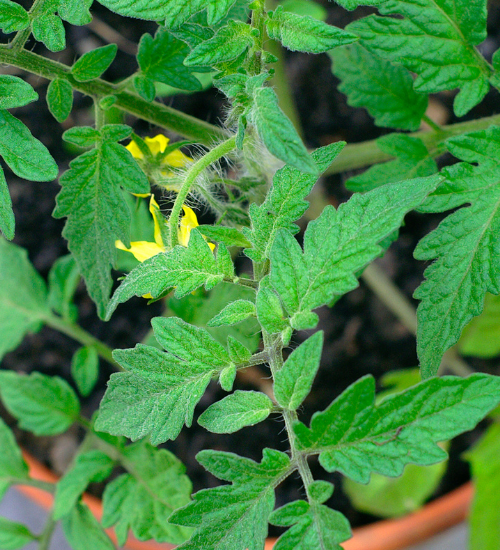
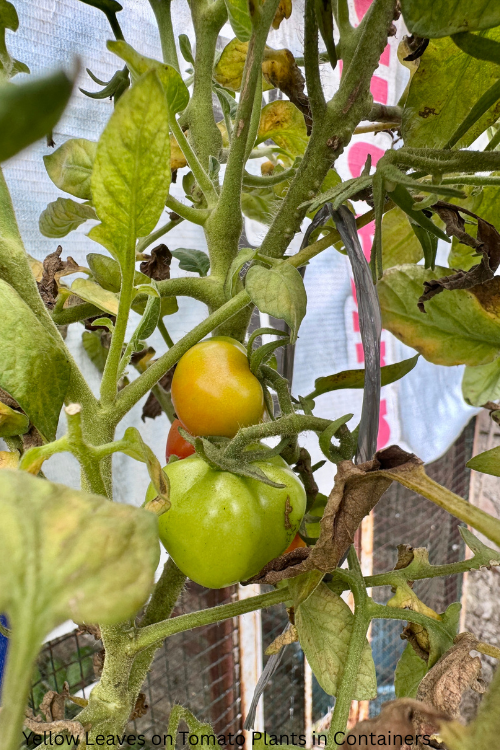
Yellow leaves on tomato plants in containers are a common warning sign, but the color alone does not identify the problem. Yellowing can result from overwatering, dry soil, poor nutrition, pests, disease, cold temperatures, or the natural aging of older leaves.
Container tomatoes need closer attention than tomatoes growing in the ground. A pot has limited soil, dries faster, loses nutrients more quickly, and can become waterlogged if drainage is poor. The good news is that most problems can be diagnosed by looking at where the yellowing begins and what the leaves look like.
Start With the Pattern of Yellowing
Before adding fertilizer or changing your watering routine, examine the plant carefully.
Ask yourself:
- Are only the oldest lower leaves yellow?
- Are the newest leaves pale?
- Are the leaves yellow between green veins?
- Are there brown spots or holes?
- Is the entire plant wilting?
- Is the soil wet, dry, or compacted?
- Are insects visible beneath the leaves?
The location and pattern provide useful clues. University of Minnesota plant diagnostics identifies several different causes of discolored tomato leaves, including disease, cold injury, and nutrient-related or environmental stress. Tomato > Leaves > Discolored leaves
1. Overwatering
Overwatering is one of the most common causes of yellow leaves on container tomatoes. When soil remains saturated, roots receive less oxygen and may begin to deteriorate. Damaged roots cannot absorb water and nutrients properly, even when the pot is full of moisture.
Signs of overwatering include:
- Yellowing lower leaves
- Soft or drooping foliage
- Soil that remains wet for several days
- A musty smell from the pot
- Slow growth
- Dark, damaged roots
To correct the problem, stop watering until the upper portion of the soil has begun to dry. Check that the drainage holes are open and that the container is not sitting in a full saucer.
If the soil is compacted or the roots are severely damaged, move the tomato into fresh, well-drained potting mix. Do not place gravel in the bottom of the container as a substitute for drainage. A pot with proper holes and an airy growing mix is more effective.
2. Underwatering
Tomato plants also develop yellow leaves when they are repeatedly allowed to become too dry. Containers can lose moisture quickly during hot, windy weather, especially when the pot is small or the plant is large.
Underwatered tomatoes may show:
- Dry, curling leaves
- Wilting during the hottest part of the day
- Cracked soil
- Yellow or brown leaf edges
- Blossom drop
- Small fruit or reduced production
Water slowly until the entire root ball is moist and excess water drains from the bottom. If very dry soil repels water, apply water in two or three passes rather than flooding the pot all at once.
For better consistency, add a layer of organic mulch to the soil surface. Straw, shredded leaves, or untreated grass clippings can reduce evaporation while keeping the mulch a few inches away from the stem.
3. Nutrient Deficiency
Container plants use up available nutrients faster than plants growing in garden soil. A tomato with a nutrient deficiency may produce pale growth even when watering is correct.
Nitrogen deficiency commonly causes older leaves to become uniformly pale or yellow, while the plant may remain small and produce weak growth. Magnesium deficiency can create yellow areas between the veins of older leaves. Iron-related chlorosis is more likely to affect newer leaves while the veins remain greener.
Do not assume every yellow leaf means the plant needs fertilizer. Excess fertilizer can damage roots and create additional symptoms.
Before feeding:
- Check soil moisture.
- Inspect the roots if the problem is severe.
- Look for pests and leaf spots.
- Consider whether the plant has been fertilized recently.
- Use a balanced tomato fertilizer only as directed.
A slow-release fertilizer or diluted liquid feed may be appropriate during active growth. Avoid repeatedly adding fertilizer without identifying the problem.
4. Poor Drainage or a Small Container
A container can cause yellow leaves even when your watering habits are reasonable. Small pots dry out rapidly, while containers without drainage holes hold water around the roots.
Tomatoes generally perform best in a roomy container filled with quality potting mix. The exact size depends on the variety, but large indeterminate tomatoes need substantially more root space than compact patio types.
Check the following:
- The pot has several drainage holes.
- The container is not blocked by a saucer or hard surface.
- The soil does not collapse into a dense, muddy mass.
- The plant is not severely root-bound.
- The container is heavy enough to remain stable.
If roots are circling tightly around the inside of the pot, transplant the tomato into a larger container. Handle the root ball gently and water it thoroughly after repotting.
5. Natural Aging of Lower Leaves
A few yellow lower leaves do not always mean the plant is seriously ill. As tomato plants grow taller, older leaves receive less light and eventually age.
Natural aging is more likely when:
- Only a few lower leaves are affected.
- New growth remains green.
- The stems are firm.
- The plant is flowering or producing fruit.
- There are no spreading spots or pest colonies.
Remove leaves that are fully yellow or touching the soil. Use clean scissors and avoid stripping large sections of healthy foliage. Tomatoes still need enough leaves to produce energy for fruit development.
6. Pests
Aphids, whiteflies, spider mites, and other sap-feeding insects can cause yellowing by removing plant fluids. Look underneath leaves, along stems, and around growing tips.
Pest damage may appear as:
- Fine pale speckling
- Sticky residue
- Curled leaves
- Distorted new growth
- Fine webbing
- Small insects clustered beneath foliage
Rinse the plant with a firm but gentle stream of water. Repeat every few days if necessary. Insecticidal soap can help with many soft-bodied pests, but it must contact the insects directly and should be applied according to the label.
Avoid spraying stressed plants during intense heat. Test any treatment on a small area before covering the entire plant.
7. Fungal and Bacterial Diseases
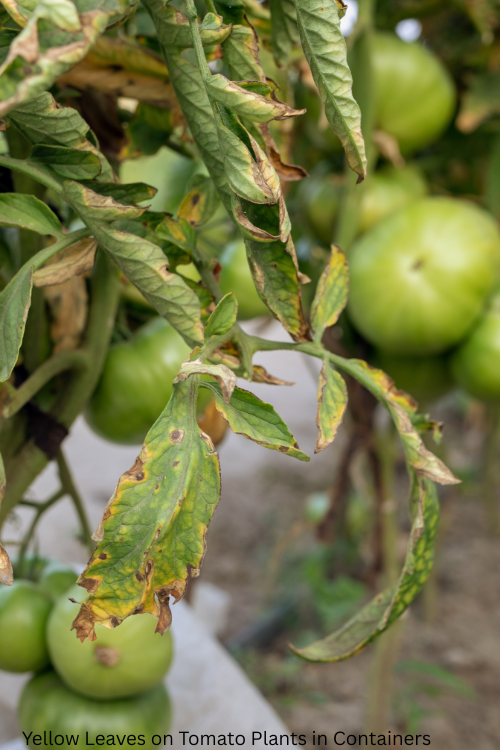
Yellow leaves accompanied by spots, wilting, or rapid decline may indicate disease. Bacterial spot, for example, can produce small brown spots surrounded by yellow halos. Spotty tomato leaves – what is it and what to do
Other warning signs include:
- Brown or black spots spreading across leaves
- Yellowing that begins on one side of the plant
- Sudden wilting despite moist soil
- Dark lesions on stems
- Mold or fuzzy growth beneath leaves
- Multiple plants developing similar symptoms
Remove badly affected leaves and dispose of them rather than adding them to compost. Keep foliage as dry as possible when watering, improve air circulation, and avoid crowding containers.
If the entire plant is declining or has dark stem lesions, remove it promptly. Some diseases cannot be corrected with fertilizer or additional watering.
8. Cold or Environmental Stress
Tomatoes are warm-season plants. Cold nights can cause leaves to become pale, limp, or damaged. University of Minnesota diagnostics notes that cold injury can occur when temperatures fall below approximately 50°F, with leaves becoming water-soaked or darkened. Tomato > Leaves > Discolored leaves
Move container tomatoes to a sheltered location when cold weather arrives. Avoid placing them directly against a cold wall or in an exposed, windy position.
Heat can also create stress. On very hot days, container roots may overheat and the soil may dry rapidly. Morning watering, afternoon shade during extreme heat, and a larger container can help stabilize conditions.
Should You Remove Yellow Tomato Leaves?
Remove leaves that are completely yellow, diseased, or touching the soil. Do not remove every leaf that shows a small pale area.
Use clean pruners and cut the leaf stem close to the main branch. Disinfect tools after working on a plant with suspected disease. Removing damaged foliage improves airflow, but excessive pruning can expose fruit to sunscald and reduce the plant’s ability to produce energy.
A Simple Recovery Plan
If you are unsure what caused the yellow leaves, use this sequence:
- Check the soil moisture with your finger.
- Confirm that the pot drains freely.
- Inspect the undersides of leaves for pests.
- Look for spots, mold, or stem lesions.
- Remove only severely damaged leaves.
- Move the plant away from harsh wind or cold.
- Wait several days before adding fertilizer.
- Monitor new growth rather than expecting old leaves to turn green again.
Old yellow leaves usually do not recover. The best sign of improvement is healthy new growth, stronger stems, and continued flowering.
Preventing Yellow Leaves in Future Crops
Start with a container large enough for the tomato variety and use fresh, well-drained potting mix. Water deeply when the top layer begins to dry rather than giving frequent shallow sprinkles.
Feed plants during active growth with a tomato fertilizer used according to the label. Inspect foliage weekly, especially during warm weather. Keep leaves off the soil, provide adequate spacing, and rotate containers away from areas where diseased tomatoes grew previously.
Choose varieties suited to container growing when space is limited. Compact determinate tomatoes are often easier to manage in pots than vigorous indeterminate varieties.
Conclusion
Yellow leaves on tomato plants in containers are usually a symptom of stress rather than a problem with one simple cause. Start by checking water and drainage, then inspect the plant for nutrient issues, pests, disease, and temperature damage.
Avoid guessing with fertilizer. Careful observation will usually reveal whether the plant is too wet, too dry, underfed, attacked by insects, or affected by disease. Once the underlying problem is corrected, healthy new growth is the clearest sign that your container tomato is recovering.
Last modified: October 8, 2026
