

A home office does not need a construction project to become noticeably quieter. In many rooms, sound enters through a few predictable weak points: the gap beneath the door, cracks around the frame, hard reflective surfaces, windows, and lightweight furniture.
Knowing how to soundproof a home office without remodeling starts with an important distinction. Soundproofing aims to reduce noise passing into or out of the room, while acoustic treatment reduces echo inside the room. The best no-remodel approach combines both.
Find the biggest sound leaks first
Spend a few minutes listening from inside the closed office while someone makes normal household noise outside. Notice whether sound is strongest at the door, window, shared wall, ceiling, or floor.
You can also make a quick checklist:
- Can you see light beneath the door?
- Does the door rattle when another door closes?
- Do voices become louder near a shared wall?
- Does the room sound hollow when you clap once?
- Are there large bare windows or hard floors?
- Does noise travel through a vent or open doorway nearby?
Treat the most obvious weakness first. Sealing a door gap usually helps more than covering an entire wall with decorative foam.
1. Seal the office door
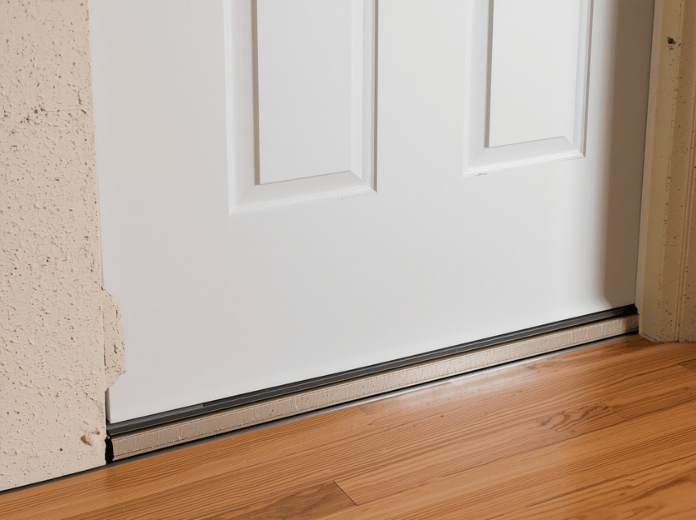
The door is often the easiest place for sound to travel because even a small air gap can carry voices and television noise. Install adhesive weatherstripping around the frame so the closed door compresses against the seal.
For the bottom edge, use a door sweep or a removable draft stopper. Choose a sweep that fits the door without dragging heavily across the floor. If the door has a threshold, check that the sweep does not prevent it from closing fully.
These changes are especially useful for reducing noise in a home office cheaply because they are quick, reversible, and do not require cutting into the wall.
Check the seal after installation
Close the door and look for visible gaps. Run your hand around the frame to feel for air movement, but avoid pressing so firmly that the door bends the seal out of position. If the door becomes difficult to latch, use a thinner weatherstrip or adjust the strike plate rather than forcing it.
2. Add mass to a hollow-core door
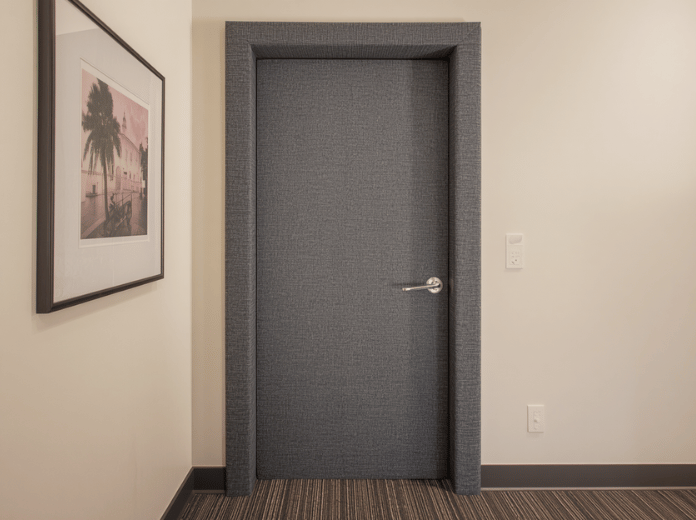
A lightweight hollow-core door transmits more sound than a heavier door. Replacing it is a larger project, but you can improve the existing door with a dense curtain or a purpose-made acoustic door covering mounted on the office side.
Hang the material so it covers the door completely and extends slightly beyond the edges. It will not turn the room into a recording booth, but it can reduce some reflected sound and soften the amount that passes through the door.
Avoid blocking hinges, handles, or ventilation. Keep the door easy to open in an emergency.
3. Control echo with acoustic panels
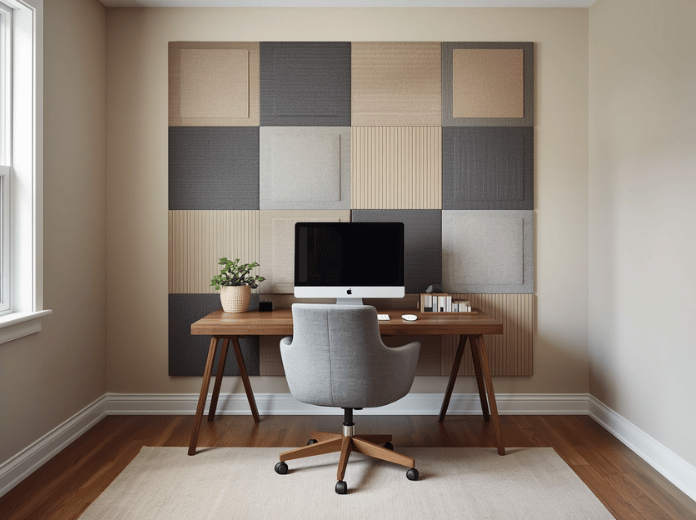
If your office sounds sharp or hollow during calls, acoustic panels can improve speech clarity. They absorb reflections inside the room rather than fully blocking outside noise.
Place panels at the first reflection points: the wall beside your desk, the wall behind your monitor, and sometimes the ceiling above the work area. You do not need to cover every surface. A few strategically placed panels are more useful than covering the room randomly.
Fabric-wrapped panels, felt tiles, and thick cork products can fit a home office without making it look industrial. For a Pinterest-friendly wall, arrange several panels in a balanced grid or use different tones from the room’s existing palette.
4. Add soft furnishings strategically
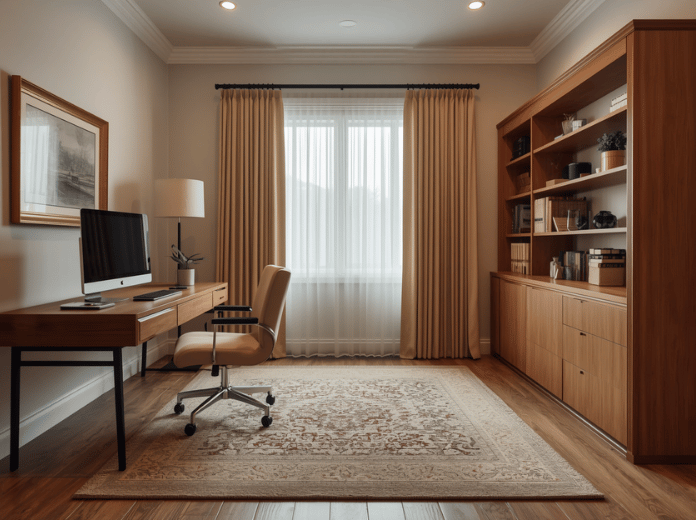
Rugs, curtains, upholstered chairs, and full bookcases help reduce reflections. They do not replace door seals, but they make the room sound less lively and can reduce the impression of background noise on video calls.
Try these low-effort improvements:
- Place a dense rug under the desk and chair.
- Hang lined curtains over a hard window surface.
- Add a fabric desk mat beneath the keyboard.
- Use a full bookcase on a shared wall.
- Choose an upholstered chair instead of a bare wood or plastic chair.
A bookcase works best when it is filled with books and baskets of different sizes. The uneven surfaces scatter sound better than a completely empty shelf.
5. Treat the window
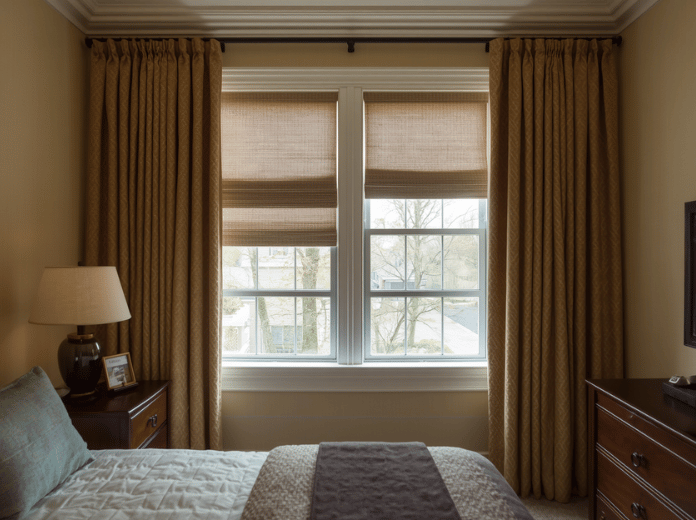
Windows can be a major weak point, especially when the office faces a street or a busy living area. Start with heavy, lined curtains that overlap the window on all sides when closed.
For more flexibility, use a curtain track that allows the fabric to sit close to the wall. Cellular shades can add another layer, while removable interior window inserts may help when the main issue is outside traffic.
Make sure curtains do not cover heaters, radiators, or required ventilation. The aim is to reduce noise safely, not to create a fire or moisture risk.
6. Reduce vibration through the floor and desk
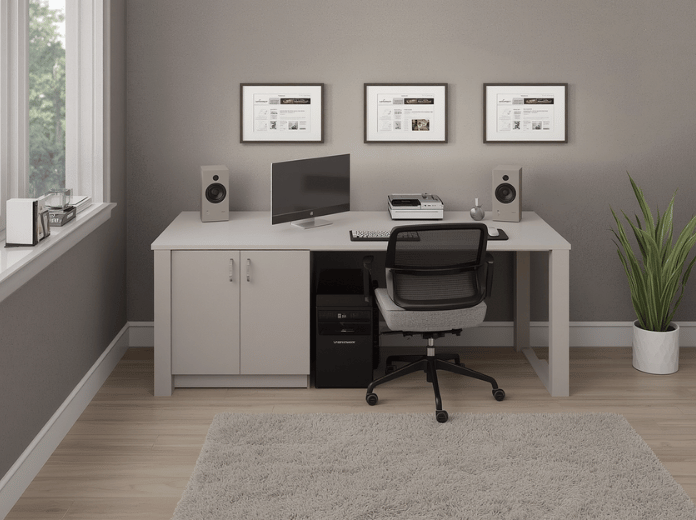
Some office noise is not airborne; it travels as vibration. A desk can amplify the hum of a computer, foot traffic, or a washing machine on the other side of a wall.
Place vibration-damping pads under the computer tower, speakers, and other equipment that touches the desk. A thick rug pad beneath the office rug can also reduce small movements and chair noise.
If the desk touches a shared wall, move it a few inches away. This creates a small buffer and prevents the furniture from transferring vibration directly into the wall.
7. Rearrange the office for quieter calls
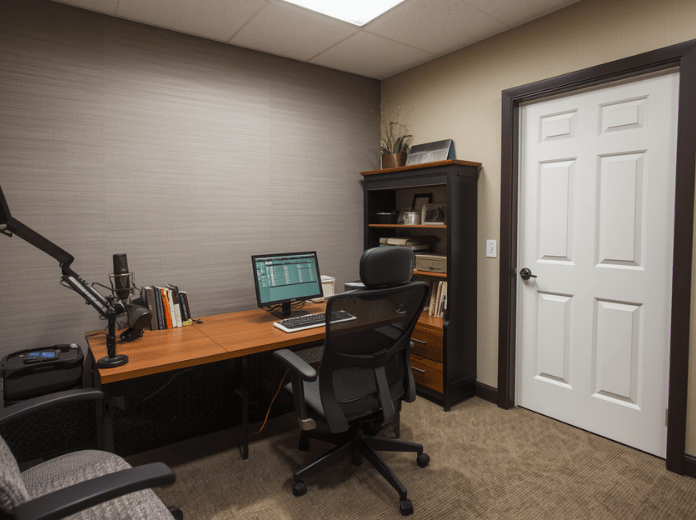
The position of your desk affects both the sound entering the room and the sound your microphone captures. Place the desk away from the door and, when possible, away from the wall shared with the busiest room.
A bookcase, wardrobe, or filled storage cabinet can act as a useful buffer on the noisy side. Put the microphone closer to your mouth and lower its input gain if you are picking up too much room sound. Software noise suppression can help with steady background noise, but it works best after the room itself has been improved.
8. Deal with vents and open pathways carefully

Noise can travel through open doorways, return-air paths, and vents. Do not block a required heating or cooling vent with furniture, fabric, or improvised materials. Instead, reduce noise at the source when possible: close a nearby interior door, add a soft door sweep, or move the office farther from the main traffic route.
If the room shares a large open passage with the rest of the house, a properly fitted interior door may make a bigger difference than adding more wall decoration. Any permanent ventilation or electrical change should be handled according to local building requirements.
9. Use a layered plan instead of one expensive fix
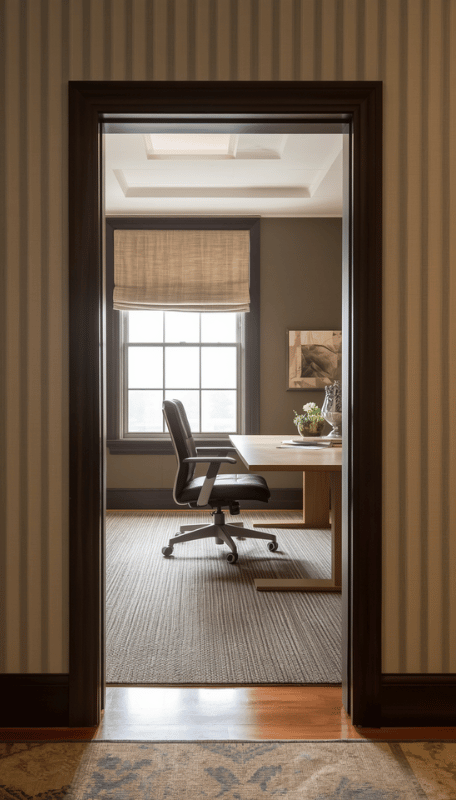
The most practical no-remodel setup usually combines several moderate improvements:
- Seal the office door around the frame and beneath it.
- Add a rug and lined window covering.
- Place acoustic panels near the desk and first reflection points.
- Move the desk away from shared walls and doors.
- Add a full bookcase or soft furniture to the noisiest side.
- Use a close microphone position for calls.
Make one change at a time and test the room after each step. This helps you identify what actually works instead of spending money on products that address the wrong problem.
Common mistakes to avoid
Covering the wall with thin foam alone
Thin decorative foam can reduce a little echo, but it has limited effect on voices coming through a wall or door. Fix the air gaps first.
Ignoring the door bottom
A small opening under the door can undermine an otherwise good seal. Check the bottom edge before investing in extensive acoustic treatment.
Making the room too reflective
Bare floors, empty shelves, glass surfaces, and uncovered windows all reflect sound. Add texture and fabric where practical.
Blocking heat or ventilation
Never use curtains, panels, or furniture to obstruct equipment that needs airflow. A quieter room is not worth creating a safety problem.
Final thoughts
Learning how to soundproof a home office without remodeling is mostly a matter of finding the room’s weakest points and improving them in the right order. Start with the door, then control reflections with a rug, curtains, furniture, and a few well-placed acoustic panels.
You may not eliminate every household sound, but a sealed, softened, better-positioned office can make video calls clearer and focused work much more comfortable – without opening the walls or committing to a major renovation.
Last modified: September 30, 2026
