
Rocks can add structure, texture, and color to a backyard without the watering, mowing, or pruning required by many plants. They work well around patios, garden beds, trees, paths, and slopes. With the right placement, even a small amount of stone can make a yard look more organized and easier to maintain.
These backyard landscaping ideas with rocks include simple projects for beginners, low-maintenance garden features, and practical ways to use different types of stone. Before buying materials, measure the area, check drainage, and choose rocks that suit the color and style of your home.
1. Create a Rock Garden
A rock garden combines stones with drought-tolerant plants such as sedum, thyme, ornamental grasses, and succulents. Place the largest rocks first, then fill the spaces with smaller stones and plants. Choose species that match the amount of sunlight in the area.
Rating: ★★★★★ – A rock garden has strong visual impact and works well in dry, sunny spaces.
2. Add a Gravel Patio

Gravel is an affordable alternative to poured concrete or a large paver patio. Mark the area, remove weeds and loose soil, install edging, and add a compacted base before spreading the gravel. Use landscape fabric underneath to reduce weed growth.
Rating: ★★★★☆ – Attractive and budget-friendly, but gravel may need occasional leveling.
3. Line a Garden Bed With Stones
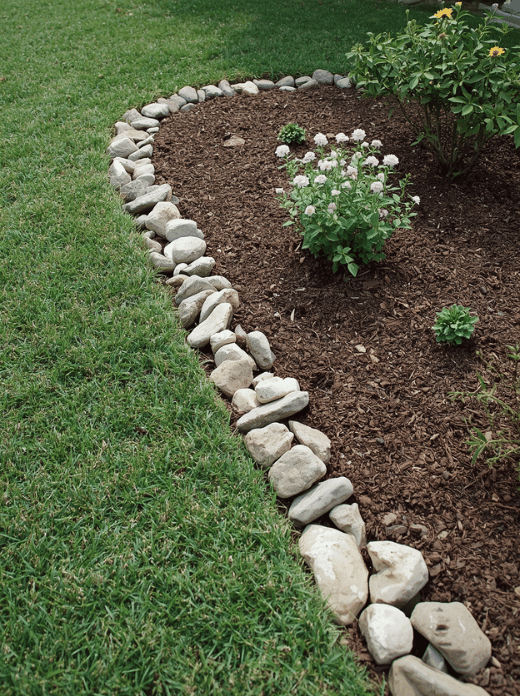
Use medium-sized stones to create a border around flowers, shrubs, or vegetables. The border separates the planting area from the lawn and keeps mulch or soil from spreading onto nearby paths.
Set the stones close together on level ground. Avoid placing them so high that they block mowing or create a tripping hazard.
Rating: ★★★★★ – One of the easiest ways to make a garden look finished.
4. Build a Dry Creek Bed
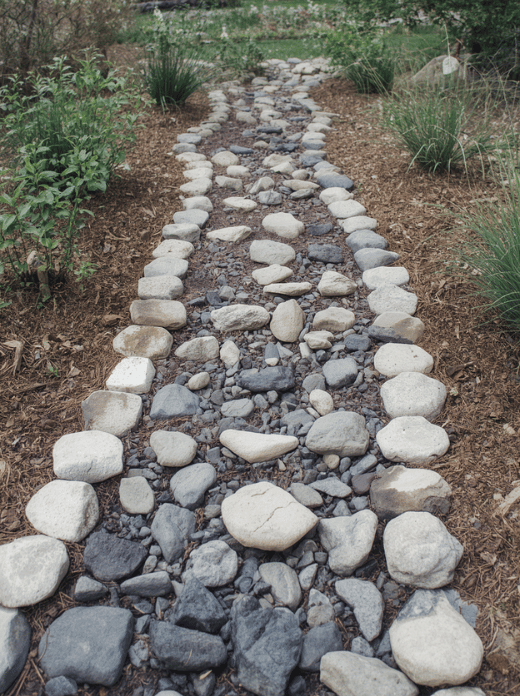
A dry creek bed can guide rainwater through a low section of the yard while adding natural texture. Use larger stones along the sides, smaller rocks in the center, and a few plants to soften the edges.
Check how water moves through your yard before digging. A dry creek bed should direct water safely rather than toward a foundation, walkway, or neighboring property.
Rating: ★★★★☆ – Useful for drainage, but proper planning matters.
5. Make a Stepping-Stone Path
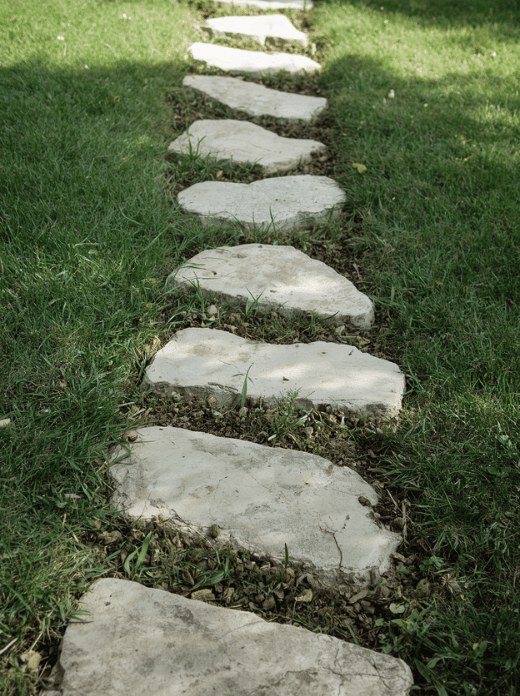
Flat rocks can create a simple path across grass, gravel, or mulch. Choose stones that are wide enough for a comfortable step and set them firmly so they do not wobble.
For a natural appearance, vary the spacing slightly. For a more formal look, keep the stones evenly aligned.
Rating: ★★★★★ – Simple, useful, and suitable for many backyard styles.
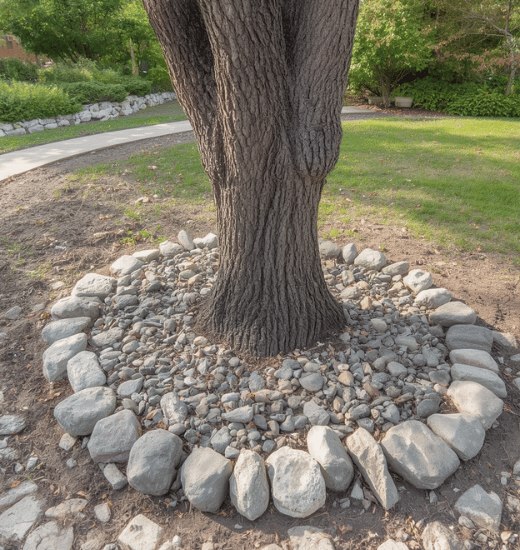
6. Use River Rocks Around a Tree
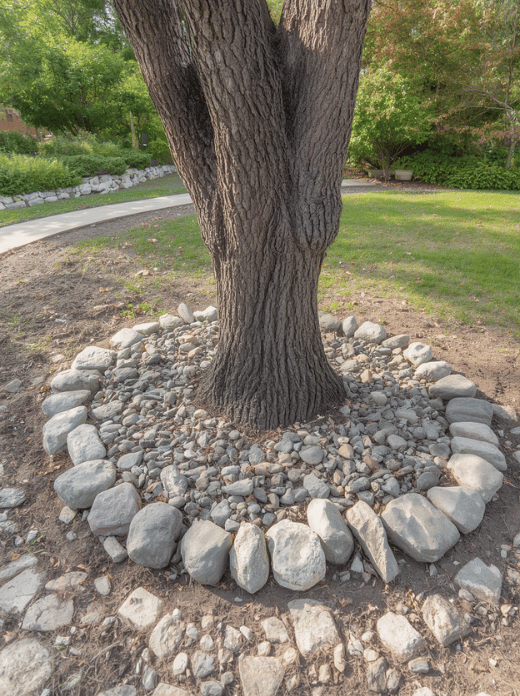
River rocks can create a clean circle or irregular bed around a mature tree. Remove grass first, then cover the soil with a thin layer of landscape fabric before adding stones.
Do not pile rocks against the trunk or cover the tree’s root flare. Leave room for air and water to reach the soil.
Rating: ★★★★☆ – Neat and low-maintenance when installed carefully.
7. Cover a Small Slope With Rock
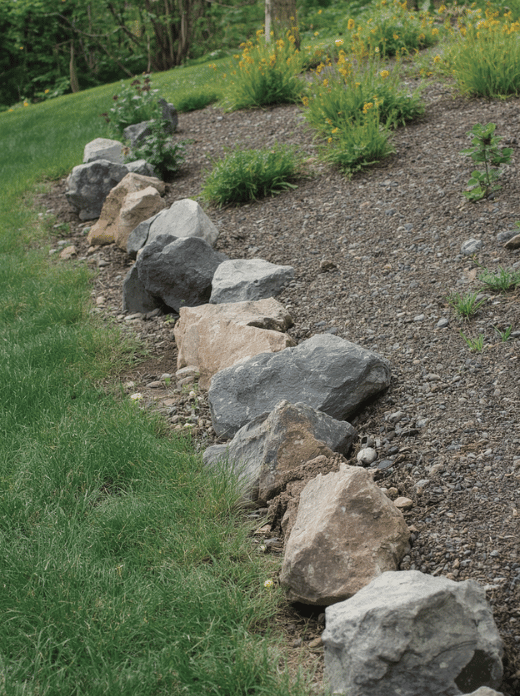
Rock can help reduce erosion on a gentle slope, especially when combined with ground-cover plants. Use larger stones to create stable planting pockets and smaller gravel to fill open areas.
For steep slopes or serious erosion, use a professional design rather than relying on loose rock alone.
Rating: ★★★★☆ – Practical for small slopes but not a complete fix for major erosion.
8. Create a Rock Mulch Bed
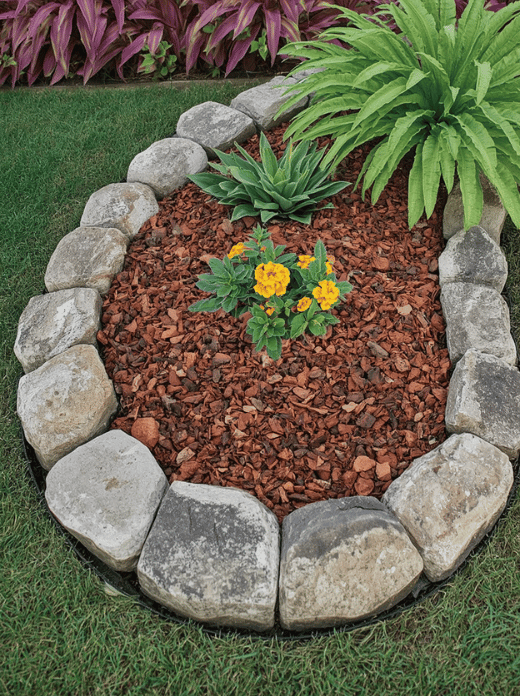
Replace some traditional mulch with gravel, lava rock, river rock, or crushed stone. Rock mulch does not break down quickly and can keep planting beds looking tidy for longer.
Use it around plants that tolerate warmer, drier soil. Dark rocks can increase heat around plants, so avoid them beside delicate species.
Rating: ★★★★☆ – Long-lasting, but not ideal for every plant or climate.
9. Add a Rock Border Along the Fence
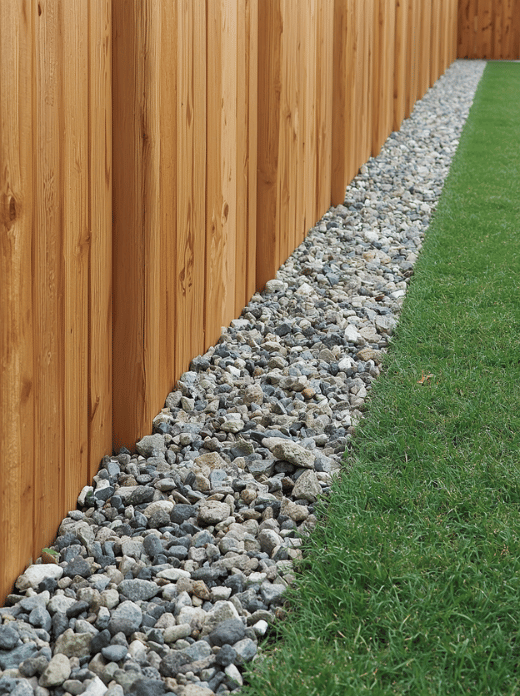
A narrow strip of gravel or river rock along a fence can reduce muddy areas and make the boundary easier to maintain. Add edging to keep the stones from spreading into the lawn.
This is especially useful below fence lines where grass is difficult to mow.
Rating: ★★★★★ – A small project with a noticeable maintenance benefit.
10. Build a Simple Fire Pit Area
Use heat-resistant materials to create a safe surface around an approved fire pit. Gravel, pavers, and larger stones can define the seating area and help separate it from grass.
Check local fire regulations, keep the pit away from structures and overhanging branches, and never use decorative rocks that can crack or explode when heated.
Rating: ★★★★☆ – Great for entertaining when safety rules are followed.
11. Make a Rock Water Feature
A small recirculating fountain can become a focal point without taking up much space. Arrange flat stones around the basin to hide its edges and create a more natural appearance.
Choose a location near an outdoor power source if the pump requires electricity, and clean the feature regularly to prevent buildup.
Rating: ★★★★☆ – Adds sound and movement but requires more upkeep than a dry feature.
12. Create a Zen-Inspired Corner
Use fine gravel, a few carefully placed stones, and one or two simple plants to create a quiet corner. Keep the design restrained instead of filling the space with many decorations.
Rake the gravel into lines if you want a traditional look, or use larger stones for a more casual garden.
Rating: ★★★★☆ – Attractive in a small space and easy to customize.
13. Add Rocks Around a Mailbox
A small rock bed around a mailbox can improve the front or side yard without requiring a large planting project. Add a few durable plants and keep the area clear for access.
Choose stones that will not spill onto the road or sidewalk.
Rating: ★★★★★ – An easy curb-appeal project with limited maintenance.
14. Use Large Boulders as Focal Points
One or two large boulders can anchor a wide garden bed or empty corner. Place them partly into the soil so they look settled rather than simply dropped on top of the ground.
Consider mature plants and viewing angles before positioning heavy stones. Moving them later may be difficult.
Rating: ★★★★☆ – Strong visual impact, but installation requires planning.
15. Edge a Gravel Walkway With Brick or Stone
Keep a gravel path neat by adding a solid edge on both sides. Brick, natural stone, metal edging, or treated landscape timbers can prevent the gravel from spreading into nearby beds.
A firm edge also makes sweeping and raking the path easier.
Rating: ★★★★★ – Improves both appearance and long-term maintenance.
16. Make a Small Rock Seating Area
Place a bench or two outdoor chairs on a compacted gravel surface. Add larger flat stones as informal side tables or use a planter to soften the area.
Choose a stable base and check that chairs do not rock on the finished surface.
Rating: ★★★★☆ – Turns an unused corner into a practical destination.
17. Combine Rocks With Ornamental Grasses
The contrast between hard stone and soft, moving grass creates an attractive planting design. Use gravel around the grasses and leave enough space for their mature width.
Select varieties that suit your climate and trim them at the appropriate time of year.
Rating: ★★★★★ – Low-maintenance texture with year-round interest in many climates.
18. Create a Succulent Rock Bed
Succulents often work well in sunny, well-drained rock beds. Use a fast-draining soil mix and place stones around, rather than directly on top of, the plants.
In cold or wet regions, choose varieties that can tolerate local conditions or grow them in movable containers.
Rating: ★★★★☆ – Attractive and water-conscious where conditions are suitable.
19. Build a Raised Rock Border
Stack flat stones carefully to create a low border around a planting bed. Keep the wall short unless you understand how to build a stable retaining structure.
Use heavier stones at the bottom and stagger the joints for better stability.
Rating: ★★★★☆ – Useful for definition, but taller walls need proper construction.
20. Fill a Drainage Strip With Stone
A narrow strip of washed gravel can help keep water away from a walkway or reduce mud beside a shed. Confirm that the slope directs water to a safe outlet.
Do not cover drainage openings or direct water toward a building foundation.
Rating: ★★★★☆ – Practical when the drainage plan is correct.
21. Use Contrasting Rock Colors
Combine light gravel with dark boulders, or use warm-toned stone beside green plants. Limit the palette to two or three colors so the design does not look cluttered.
Bring home a small sample before ordering in bulk because stone colors can look different in sunlight than in photographs.
Rating: ★★★★☆ – An inexpensive design improvement with a polished result.
22. Add a Rock Border to a Vegetable Garden
Stone edging can define a vegetable garden and keep paths separate from planting beds. Choose low stones that will not shade small crops or make wheelbarrow access difficult.
Leave enough room to walk and work around the plants.
Rating: ★★★★☆ – Useful for organization and simple garden maintenance.
23. Create a Natural-Looking Rock Border
Instead of lining stones in a perfect row, group them in uneven clusters with plants growing between them. Use a mix of sizes, but repeat the same stone type for consistency.
This approach works well beside a lawn, woodland garden, or informal path.
Rating: ★★★★★ – Easy to achieve and more natural than a rigid border.
24. Decorate Large Containers With Rocks
Place a few smooth stones on the soil surface of large outdoor containers. They can reduce soil splash, add contrast, and give simple pots a more finished appearance.
Do not cover the entire soil surface with a thick rock layer because it can make watering and checking moisture more difficult.
Rating: ★★★★☆ – Quick, affordable, and suitable for patios or balconies.
25. Combine Pavers, Gravel, and Plants
Use large pavers for walking, gravel to fill gaps, and low-growing plants along the edges. This combination creates a structured backyard surface without covering the entire area in concrete.
Keep walking surfaces level and leave enough space for plants to spread without blocking the path.
Rating: ★★★★★ – A flexible design that works in both small and large yards.
Tips for Choosing Landscaping Rocks
Choose rock size according to the job. Fine gravel works well for paths and patios, medium stones suit borders and drainage strips, and large boulders create focal points. Consider color, local availability, drainage, and how the rock will look when wet or dry.
Before installation, remove weeds, level the area, and use edging wherever stones could spread. Landscape fabric can reduce weeds beneath decorative rock, but it should not replace proper soil preparation or regular maintenance.
Avoid placing loose stones where they can roll onto sidewalks, driveways, or roads. Keep rocks away from tree trunks and make sure paths are stable before using them.
Final Thoughts
Rocks are one of the most versatile materials for backyard landscaping. They can define garden beds, improve drainage, create paths, support drought-tolerant plants, and turn unused corners into useful outdoor spaces.
Start with one small project, such as a stone border, gravel sitting area, or stepping-stone path. Once you understand how the material works in your yard, you can add larger features with more confidence.
Save these backyard landscaping ideas with rocks for your next outdoor project, and share them with anyone planning a simple, low-maintenance garden makeover.