

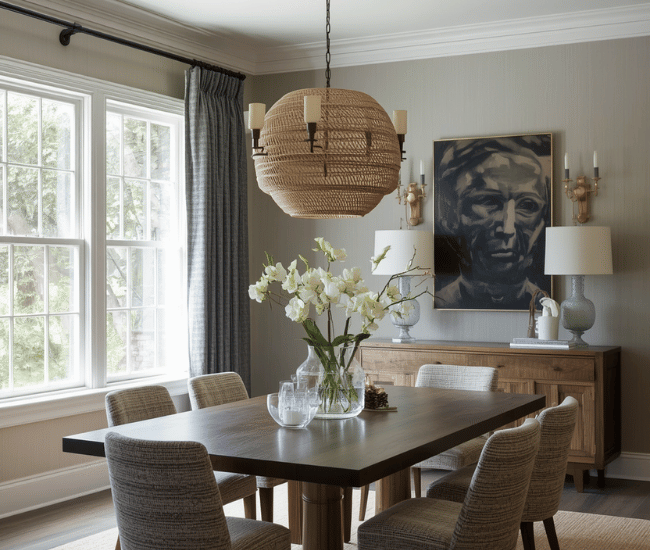
The dining room is more than a place to eat. It is where family meals last a little longer, friends gather around the table, and ordinary evenings become memorable. Even a simple dining area can feel polished and inviting with a few thoughtful updates.
You do not need to replace every piece of furniture or complete an expensive renovation to refresh the space. The right lighting, a well-sized rug, attractive wall decor, and a few natural details can make a noticeable difference. These dining room decor ideas work for formal dining rooms, open-plan homes, breakfast corners, and smaller spaces.
1. Choose a Statement Dining Table
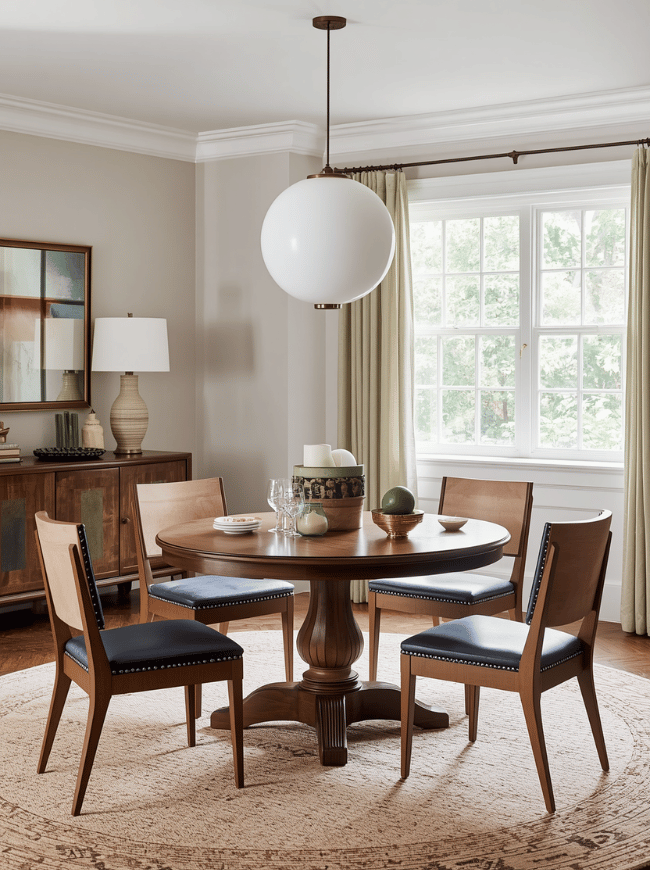
The dining table usually becomes the main visual feature of the room, so choose one that suits both the space and the way you live. A solid wood table adds warmth and works well with traditional, farmhouse, rustic, and modern interiors. A glass table can make a compact room feel more open, while a round table encourages conversation and makes it easier to move around the room.
If you often host family or friends, consider an extendable table. It can stay compact during everyday meals and provide extra seating when needed. Before buying, measure the entire dining area and leave enough room for chairs to pull out comfortably. A beautiful table will not work well if it makes the room difficult to walk through.
2. Define the Space With an Area Rug
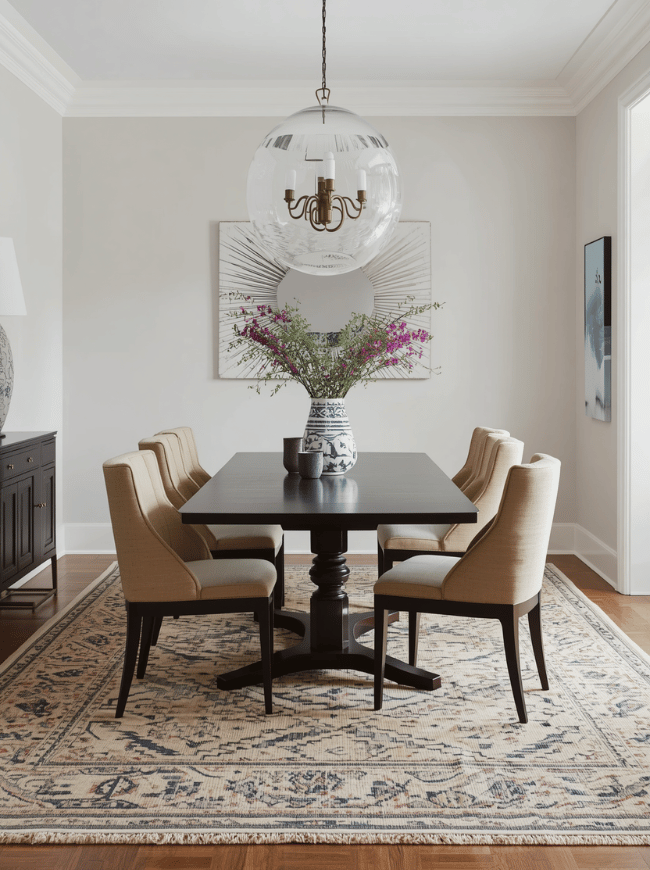
An area rug can make a dining room feel warmer while visually separating it from the rest of an open-plan living space. It also adds color, texture, and pattern beneath the table.
Choose a rug large enough for the table and chairs. Ideally, the chairs should remain on the rug even when they are pulled out. A rug that is too small can look disconnected and may cause chair legs to catch on the edge.
Flat-weave and low-pile rugs are usually practical choices for dining areas because they are easier to clean and allow chairs to move smoothly. If the room has plain walls and simple furniture, a patterned rug can add personality. For a busier room, choose a subtle texture or a simple neutral design.
3. Install an Eye-Catching Light Fixture
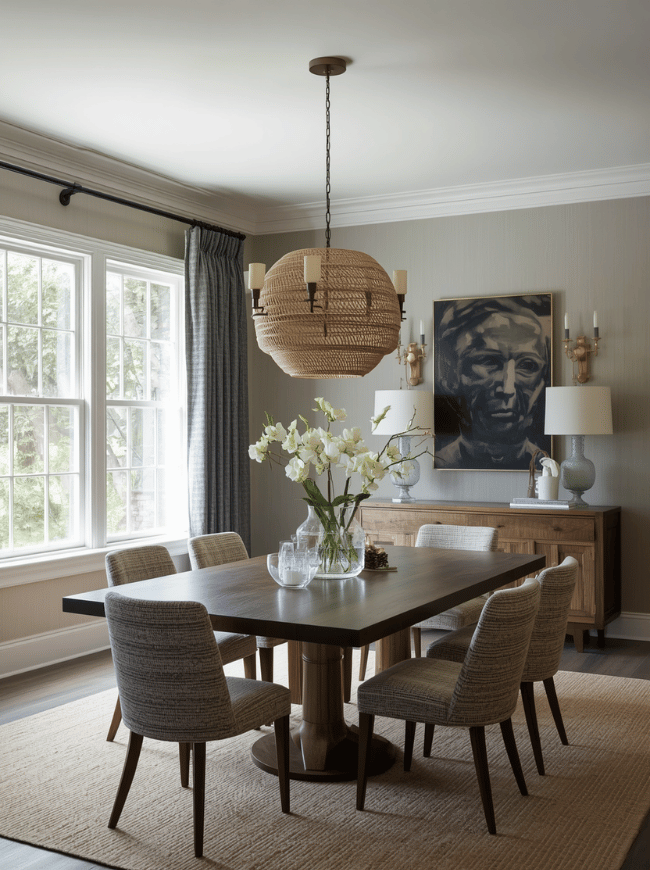
Good lighting can change the entire mood of a dining room. A striking pendant light or chandelier gives the table a clear focal point and makes the room feel more finished.
For a traditional space, try a classic chandelier with several arms. Woven pendants work well in relaxed, natural interiors, while a linear fixture suits a long rectangular table. In a small dining area, a single pendant can provide enough style without overwhelming the room.
The fixture should be centered over the table rather than simply placed in the middle of the ceiling. It should also hang low enough to feel connected to the table but high enough that diners can see one another clearly. Installing a dimmer switch makes the lighting more flexible, allowing you to use brighter light for everyday meals and a softer glow when entertaining.
4. Create a Dining Room Accent Wall
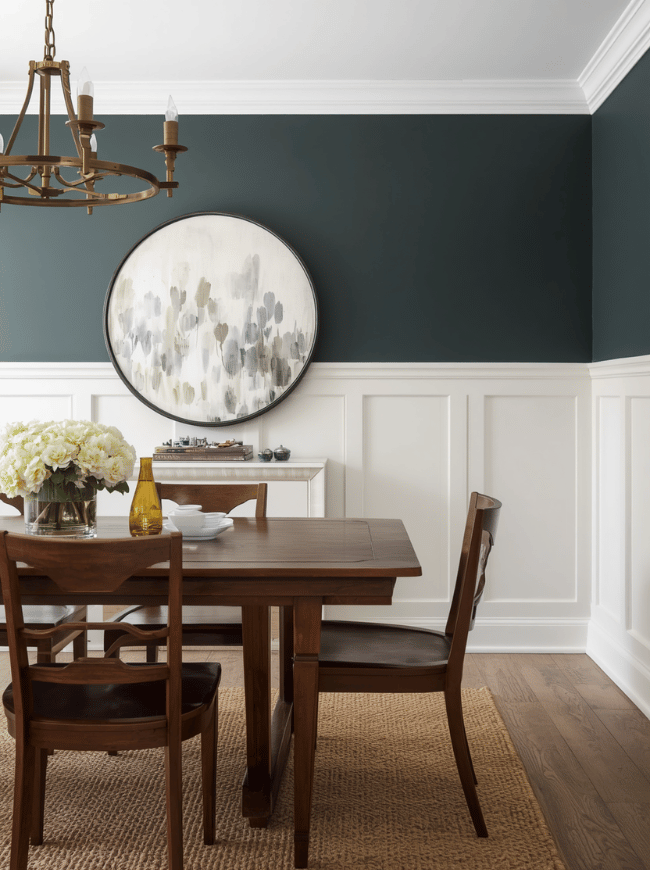
An accent wall is one of the easiest ways to add character without redecorating the whole room. Paint, wallpaper, decorative paneling, wood slats, and textured finishes can all create a strong backdrop for the dining table.
A deep green, navy, charcoal, or warm brown can make a large dining room feel more intimate. In a narrow or poorly lit room, a soft cream, pale green, or warm beige may help the space feel brighter. Wallpaper with a botanical, geometric, or subtle textured pattern can also bring interest to an otherwise plain room.
Choose one main wall, such as the wall behind a sideboard or the wall facing the entrance. Keeping the remaining walls simpler prevents the room from feeling crowded and allows the accent wall to stand out.
5. Add a Bench for Flexible Seating
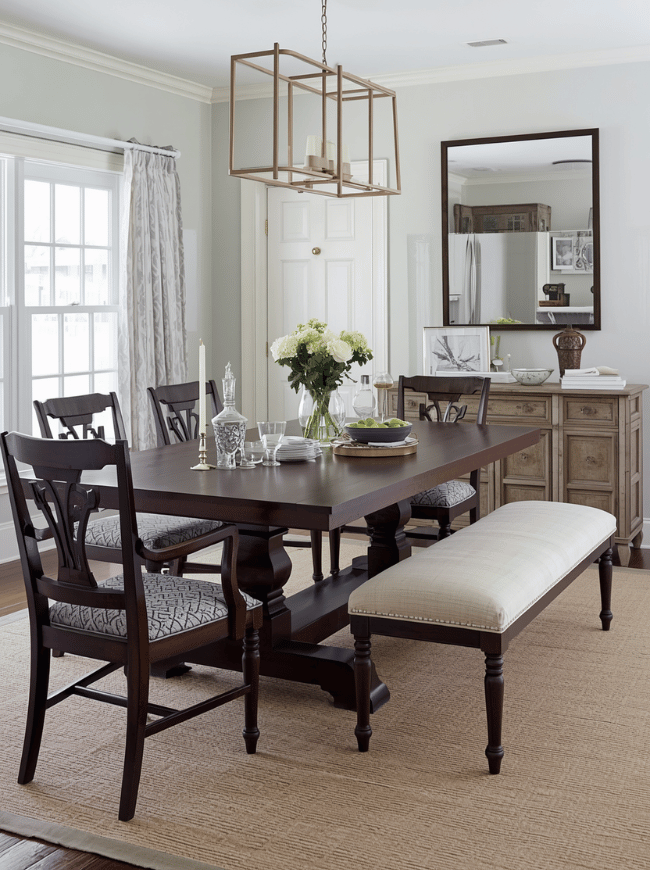
A bench is a useful alternative to individual dining chairs, particularly in a small dining room or family kitchen. It can often slide completely beneath the table when it is not being used, which keeps the room easier to move through.
Benches also provide flexible seating for children and extra guests. You can use one bench on a single side of the table and place individual chairs at the ends and opposite side. This arrangement feels more relaxed than a matching set of chairs and can give the room a custom look.
For greater comfort, add a long seat cushion in a durable, washable fabric. If the dining area is near an entryway or kitchen, choose a material that can handle regular use and occasional spills.
6. Style a Simple Table Centerpiece
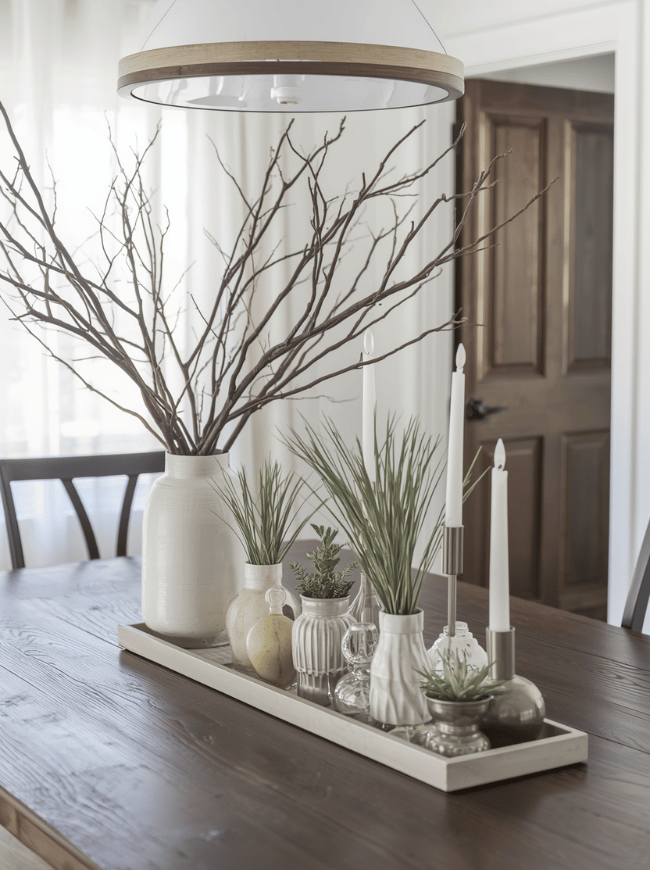
A dining table does not need a complicated arrangement to look attractive. In fact, a simple centerpiece is often more practical because it leaves room for serving dishes and does not block conversation.
Try placing a low vase filled with branches, a bowl of seasonal fruit, or a narrow tray with candles and greenery in the center of the table. A group of small ceramic vases can create a collected look without taking up much space. Potted herbs are another useful option, especially in a dining area connected to the kitchen.
Keep the height of the centerpiece in mind. Tall arrangements can look beautiful for special occasions, but everyday decor should generally stay low enough for people to see across the table. Choose one main arrangement and leave some empty space around it so the table does not look cluttered.
7. Hang Oversized Artwork
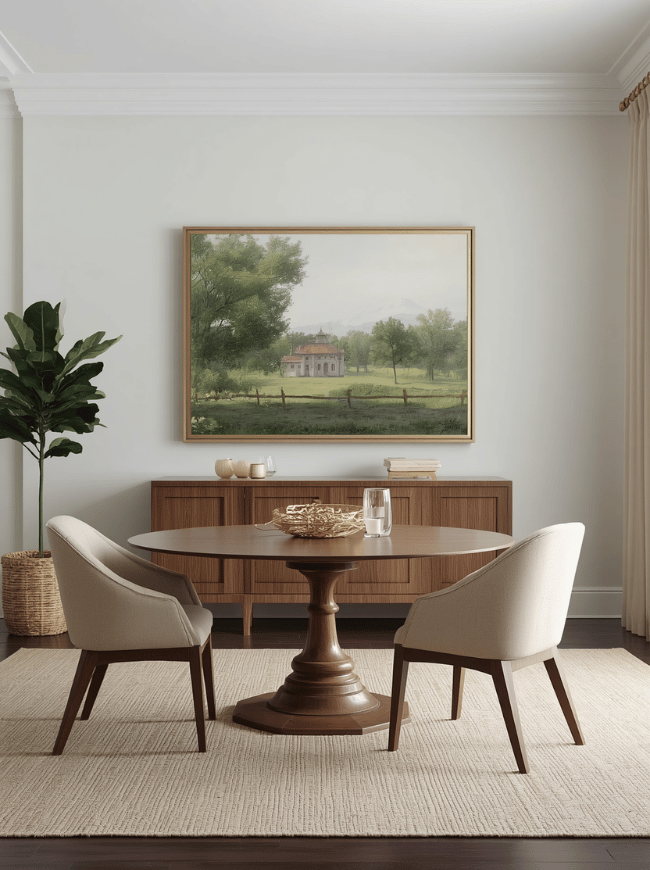
One large piece of artwork can give a dining room a polished appearance without requiring a full gallery wall. It also creates a clear focal point on a blank wall.
Choose artwork that reflects the mood you want in the room. Botanical prints and landscape paintings bring a natural feeling, while abstract artwork can make the space feel more modern. Vintage posters, framed textiles, and simple black-and-white prints are also attractive choices.
The artwork does not need to match the furniture exactly. Instead, look for one or two colors that connect with the rug, curtains, chairs, or table accessories. Hang the piece at a comfortable viewing height and make sure its scale suits the wall. A small print can disappear above a large sideboard, while oversized art can overwhelm a narrow wall.
8. Add a Sideboard or Buffet
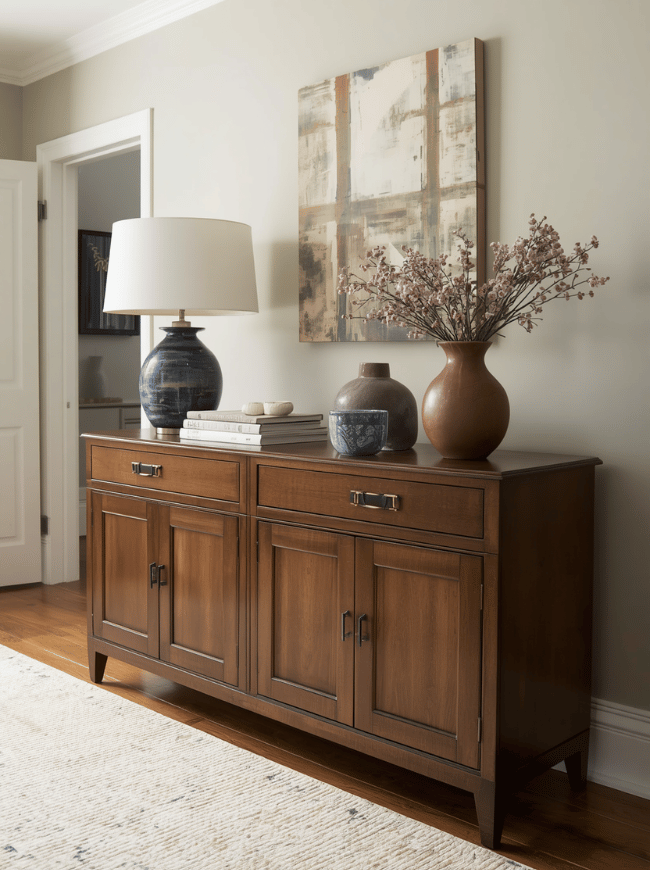
A sideboard provides useful storage and gives you another surface to decorate. It can hold serving dishes, table linens, glassware, and other items that you want close to the dining area but out of sight.
Use the top of the sideboard for a lamp, a large vase, artwork, or a small collection of decorative objects. Avoid filling every inch of the surface. Leaving some open space makes the arrangement look more deliberate.
If a full buffet is too large for the room, use a narrow console table instead. In a small dining room, a wall-mounted cabinet or slim storage unit can provide similar function without taking up as much floor space. Choose furniture with doors or drawers if you want to keep the room looking calm and uncluttered.
9. Mix Dining Chairs for More Character
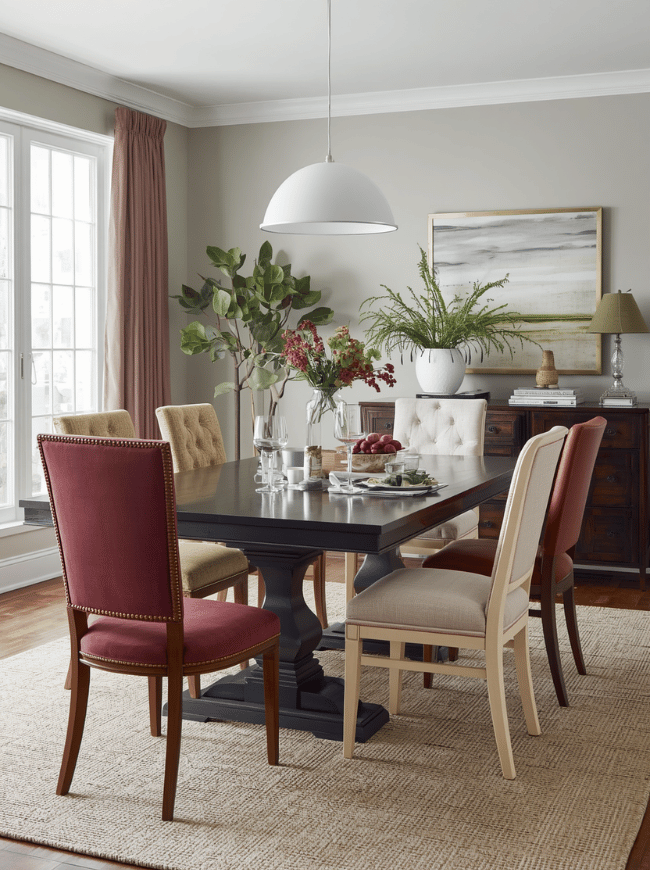
Matching dining chairs create a tidy appearance, but mixing different chairs can give the room more personality. The key is to create a connection between the pieces so the result looks intentional.
You could use matching chairs along the long sides of the table and different chairs at each end. Upholstered end chairs can add comfort and distinction, while simple wood chairs keep the room practical. You can also combine chairs in two related colors or use different styles made from the same material.
To make mixed seating work, repeat at least one element throughout the room. This might be a shared color, similar wood tone, matching chair height, or a common shape. The table, rug, and lighting should also help tie the different pieces together.
10. Dress the Windows
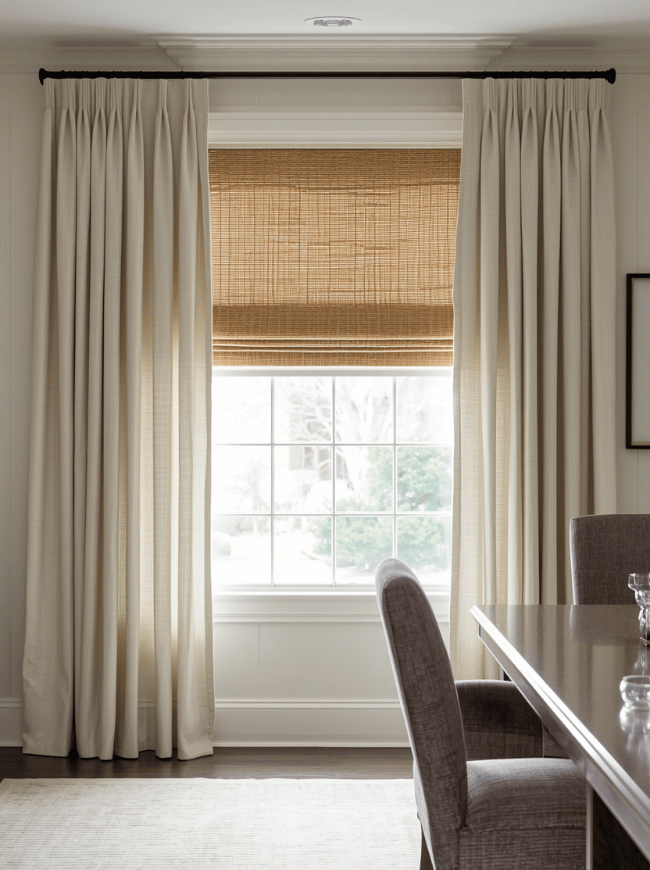
Window treatments soften the hard surfaces found in many dining rooms and help control natural light. Curtains, woven shades, shutters, and Roman blinds can all work well, depending on the style of the home.
Light linen curtains create a relaxed appearance and allow some daylight to pass through. Woven shades add texture and suit natural, coastal, rustic, and casual interiors. For a more tailored look, choose Roman blinds or simple fabric panels in a solid color.
To make the window appear larger, hang curtain rods slightly above the frame and extend them beyond both sides of the window. This allows the curtains to frame the glass instead of covering it completely. Choose a fabric that is easy to clean, especially if the dining room is close to the kitchen.
11. Bring in Natural Materials and Greenery
Natural elements make a dining room feel more comfortable and connected to the outdoors. They also work well with a wide range of decorating styles.
Add a potted tree in an empty corner, fresh branches in a tall vase, or a small arrangement of dried flowers on a sideboard. Wooden serving boards, rattan baskets, stoneware, woven shades, and ceramic pieces can bring texture to a room filled with smooth surfaces.
You do not need to use every natural material at once. Start with two or three details that suit the room. For example, a wooden table, a woven pendant, and a leafy plant may provide enough warmth without making the space feel overly themed.
12. Design a Cozy Dining Nook
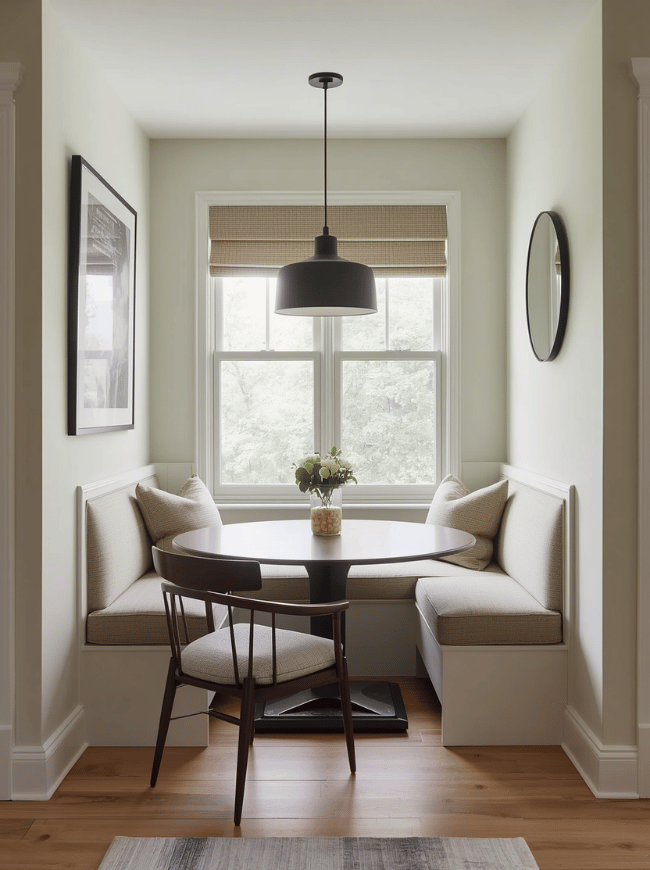
A dining room does not have to be a separate, formal space. An unused kitchen corner, bay window, or section of an open-plan room can become a comfortable dining nook with the right arrangement.
A round table is often a good choice for a compact space because it has no sharp corners and makes movement easier. A built-in bench or banquette can provide seating without taking up the space required by several chairs. Add a small table, one or two chairs, and a pendant light to create a defined area in an open kitchen.
For extra comfort, use cushions, a washable seat cover, and a small piece of artwork nearby. Even a narrow dining area can feel intentional when the lighting, seating, and wall decor work together.
How to Pull the Dining Room Together
When updating a dining room, begin with the furniture that is hardest to replace, such as the table and chairs. Then build the rest of the room around them.
- Choose the table and seating arrangement.
- Add a light fixture that suits the table’s size and shape.
- Use an area rug to define the dining zone.
- Select one wall feature, such as paint, wallpaper, paneling, or artwork.
- Finish with greenery, window treatments, storage, and a simple centerpiece.
Repeating two or three colors throughout the room will make the decor feel cohesive. You can also repeat materials, such as wood, metal, woven fibers, or ceramic, to create a more connected look. The goal is not to make every item match. It is to make the room feel balanced, useful, and comfortable.
Final Thoughts
The best dining room decor ideas combine style with everyday function. A statement light, attractive table, practical rug, and a few well-chosen accessories can make the room feel welcoming without requiring a complete makeover.
Start with the change that will have the biggest effect in your space. That might be replacing an outdated light fixture, adding a rug, painting one wall, or creating a better centerpiece. Once that feature is in place, the rest of the room will be easier to style.
Which of these dining room decor ideas would you try first? Save this guide for your next home update and share it with someone planning a dining room makeover.