

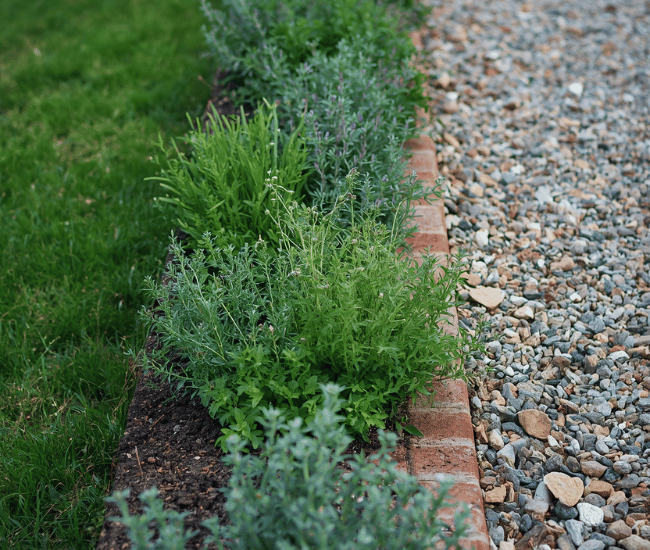
Growing herbs is one of the easiest ways to make a garden more useful. You do not need a large backyard, perfect soil, or years of gardening experience. A sunny windowsill, balcony, patio, or narrow outdoor border can provide plenty of basil, mint, parsley, thyme, rosemary, and chives.
These Herb Garden Ideas are designed for real homes and busy gardeners. Some take only a few pots, while others create a full feature for the backyard. Each idea includes a colored star rating and a recommendation so you can quickly find the best option for your space.
1. Classic Kitchen Herb Pots
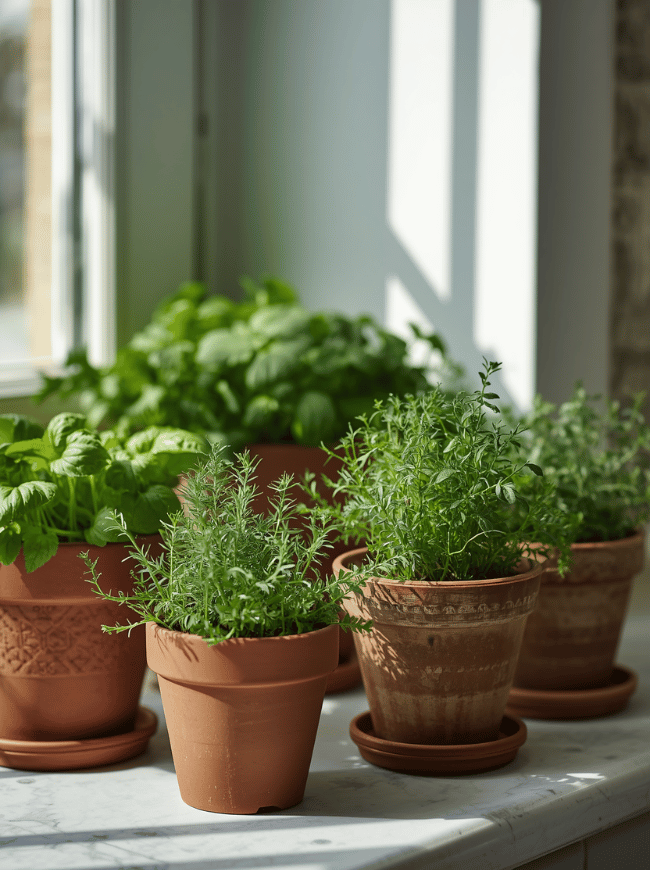
Start with the simplest option: a collection of individual pots placed near the kitchen door. This makes it easy to snip what you need while cooking and lets you give each herb the growing conditions it prefers.
Use terracotta pots for a warm, traditional look, or choose matching ceramic containers for a cleaner style. Basil, parsley, chives, thyme, and oregano are good starter herbs. Keep mint in its own pot because it spreads quickly and can take over shared planters.
Place the pots somewhere that receives at least several hours of sunlight. Turn them occasionally so the plants grow evenly, and make sure excess water can drain away.
Rating: 🟩 ⭐⭐⭐⭐⭐
Recommendation: The best starting point for beginners who want fresh herbs close to the kitchen with very little setup.
2. A Vertical Pallet Herb Garden
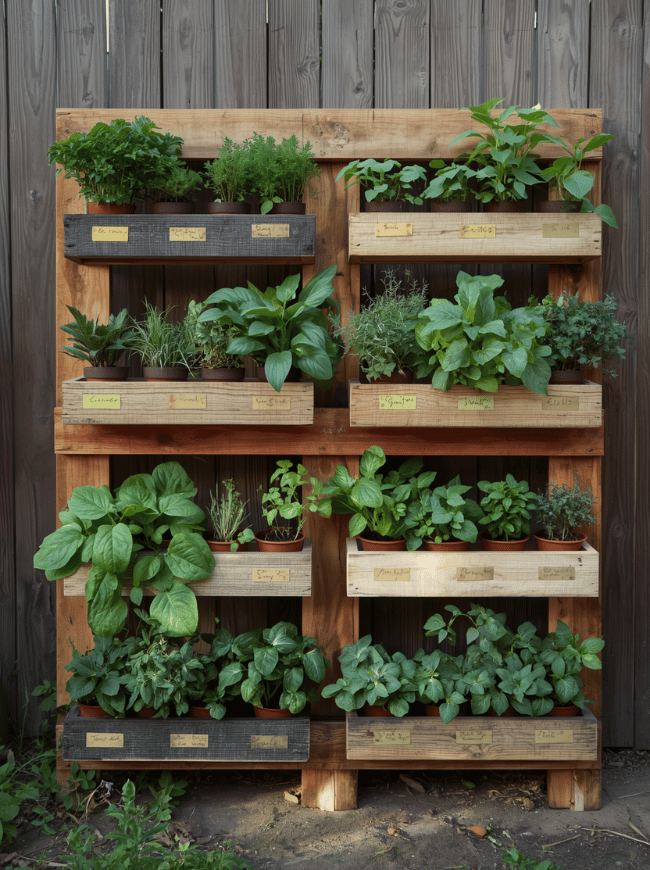
A wooden pallet can become a useful vertical herb garden when floor space is limited. Stand it securely against a wall or fence, then attach small pots, planting pockets, or narrow boxes to the front.
Label each herb clearly so you can identify it at a glance. You can paint the pallet, leave it weathered, or stain it to match your outdoor furniture.
Before using reclaimed wood, check that it has not been treated with chemicals that could leach into the soil. Add drainage holes to containers and avoid placing the pallet where water could damage a wall.
Vertical planting dries out faster than ground-level beds, so check the soil regularly during warm weather.
Rating: 🟨 ⭐⭐⭐⭐☆
Recommendation: Choose this idea for a balcony, small patio, or narrow garden where every bit of wall space matters.
3. A Tiered Herb Planter
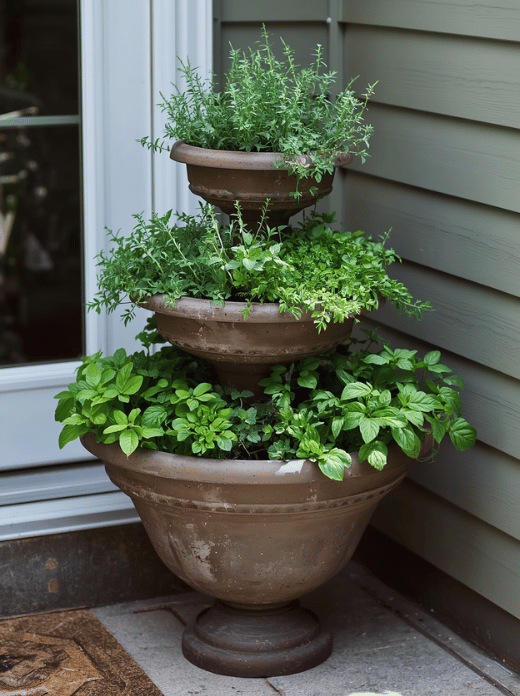
Tiered planters give you several planting levels without taking up much room. They work particularly well on patios, steps, balconies, and small decks.
Plant herbs with similar water and sunlight needs together. Put trailing thyme or oregano near the edges, upright rosemary and sage on the upper levels, and softer herbs such as parsley or cilantro where they are easy to reach.
A tiered planter can become crowded if every level is filled with large plants. Leave enough space around each herb for air circulation and harvesting.
Choose a stable design with a wide base, especially if the planter will be exposed to wind.
Rating: 🟩 ⭐⭐⭐⭐☆
Recommendation: A practical choice when you want several herbs in one compact, attractive display.
4. A Window Box Herb Garden
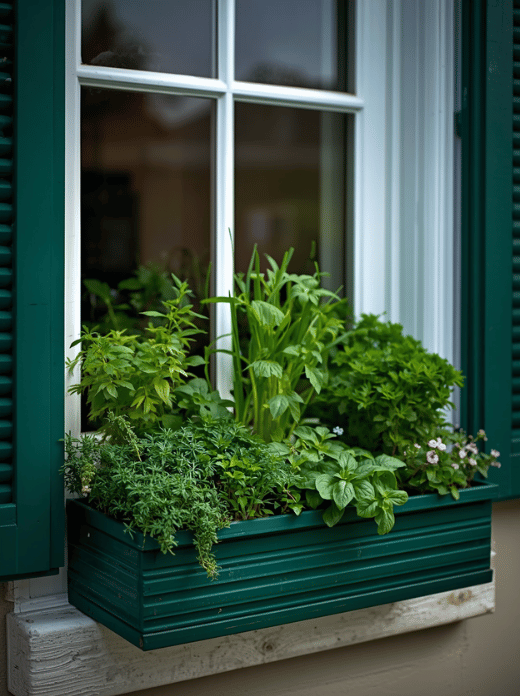
A Window Box Herb Garden
A window box turns an ordinary window into a mini growing space. It keeps herbs close at hand and adds color to the outside of the home.
Basil, chives, parsley, thyme, and small varieties of oregano can all work well in window boxes. Avoid overcrowding the container, as herbs need room for roots and air to move between the leaves.
Use a box with drainage holes and secure it properly before filling it with soil. A full planter can be surprisingly heavy, especially after watering.
For a longer harvest, plant a mixture of fast-growing herbs and hardy perennial herbs. Trim regularly rather than waiting until the plants become tall and woody.
Rating: 🟨 ⭐⭐⭐⭐⭐
Recommendation: One of the easiest Herb Garden Ideas for homes without a backyard.
5. A Raised Herb Bed Near the Patio
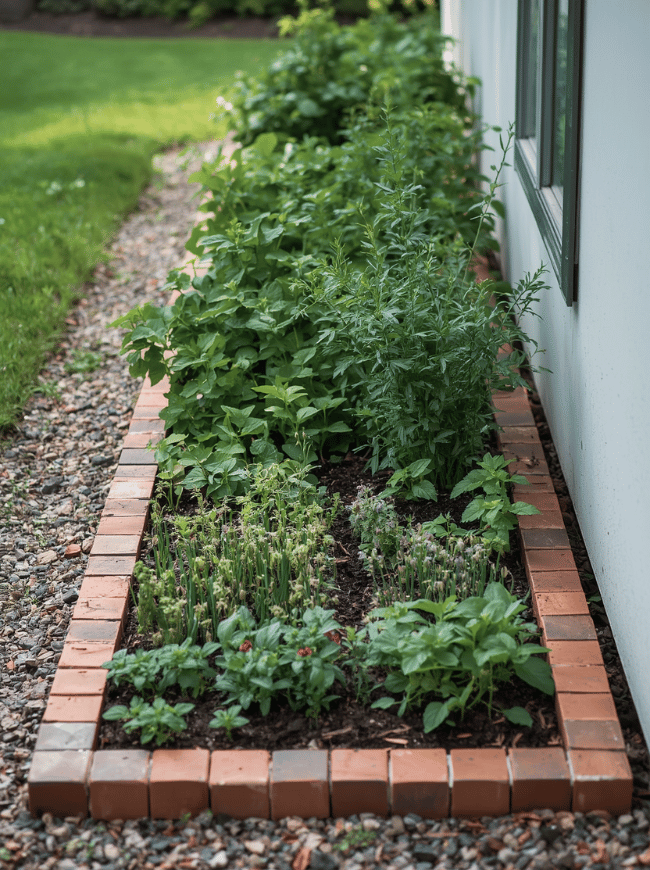
If you have room for a small outdoor project, build a raised bed near the patio or kitchen entrance. Raised beds improve drainage, warm up earlier in spring, and make harvesting more comfortable.
Keep the bed narrow enough that you can reach the center from either side. Use a mix of perennial herbs, such as rosemary, sage, thyme, and chives, along with annual herbs like basil and cilantro.
Add a simple gravel or brick edge to keep soil from spilling onto the path. Repeating a few herbs throughout the bed will create a more polished look than planting one of everything.
Raised beds also make it easier to control the soil quality, which is useful if your existing ground is heavy or poor.
Rating: 🟩 ⭐⭐⭐⭐⭐
Recommendation: Pick this if you want a productive herb garden that feels permanent and is easy to maintain year after year.
6. A Hanging Herb Garden
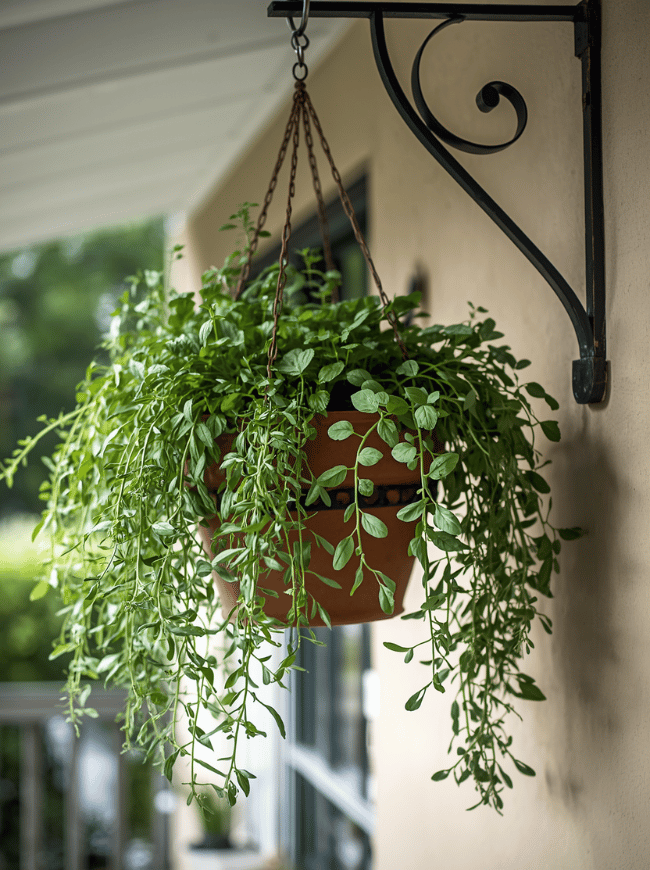
Hanging planters are a clever way to grow herbs when the floor is already full. Hang baskets from a covered porch, balcony rail, pergola, or sturdy wall bracket.
Trailing herbs such as thyme, oregano, and mint look especially good in hanging containers. You can mix in upright herbs, but make sure they are positioned where you can reach them without stretching or climbing.
Hanging baskets dry out quickly, so they need more frequent watering than pots on the ground. Choose lightweight containers and check that the fixing points can support their weight.
Group several baskets at different heights for a layered display, but leave enough space between them for air circulation.
Rating: 🟨 ⭐⭐⭐⭐☆
Recommendation: Best for small patios and balconies where vertical space is available but floor space is not.
7. A Rustic Wheelbarrow Herb Garden
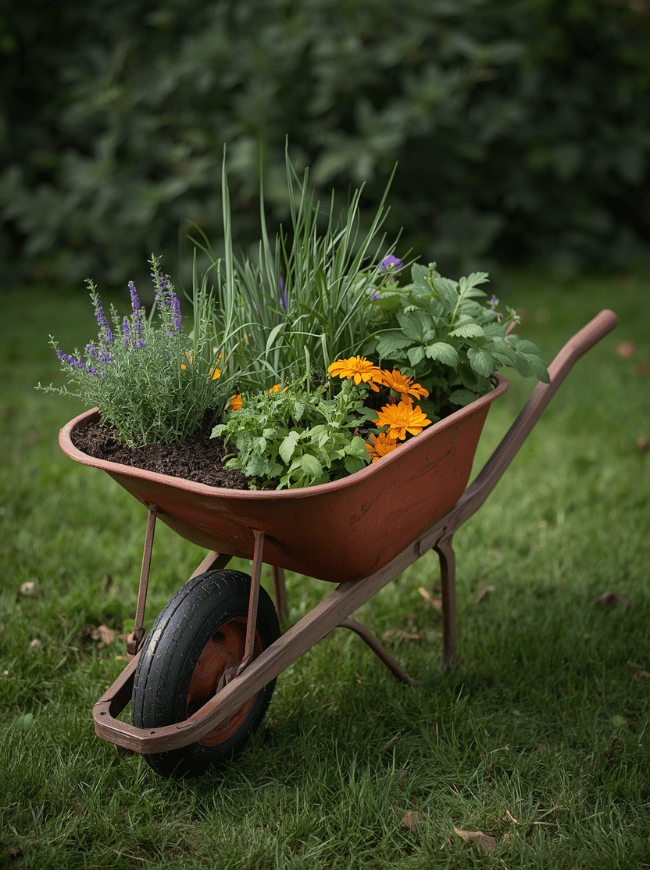
An old wheelbarrow can become a charming mobile herb planter. Drill drainage holes in the base, fill it with a good container mix, and plant a selection of compact herbs.
The wheelbarrow can be moved into the sun, closer to the kitchen, or under cover during heavy rain. It also works as a temporary display for seasonal herbs.
Use rosemary, thyme, sage, chives, and parsley for a classic combination. Add flowers such as calendula or nasturtiums for extra color, provided the plants have similar growing needs.
Avoid leaving a wooden wheelbarrow sitting directly on wet ground for long periods. Raise it slightly or move it occasionally to help preserve the wood.
Rating: 🟧 ⭐⭐⭐⭐☆
Recommendation: A great choice for cottage-style gardens and anyone who likes useful garden features with a bit of character.
8. A Mason Jar Indoor Herb Garden
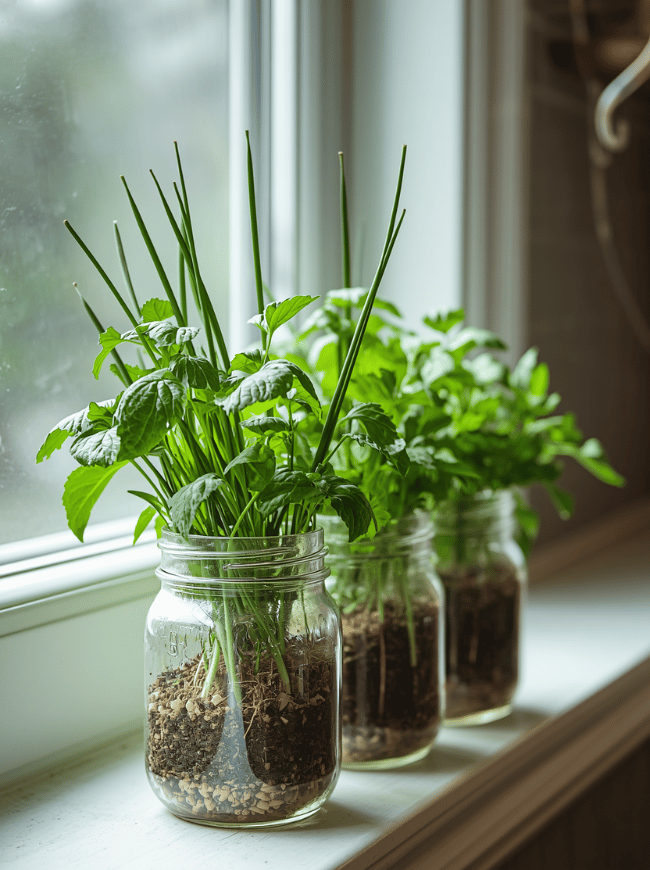
A sunny kitchen windowsill can support a small indoor herb collection all year. Use jars, tins, or small pots for basil, chives, parsley, cilantro, and thyme.
If you use jars without drainage holes, add a layer of pebbles and be careful not to overwater. Pots with drainage holes are safer for the plants, while jars can be used as decorative outer containers.
Place the herbs in the brightest available window. If the plants become tall and pale, they probably need more light. Harvest the growing tips regularly to encourage bushier growth.
Indoor herbs are convenient, but they still need fresh potting mix, good airflow, and occasional feeding.
Rating: 🟩 ⭐⭐⭐⭐☆
Recommendation: Ideal for apartment kitchens, colder climates, and cooks who want herbs within arm’s reach.
9. A Herb Spiral
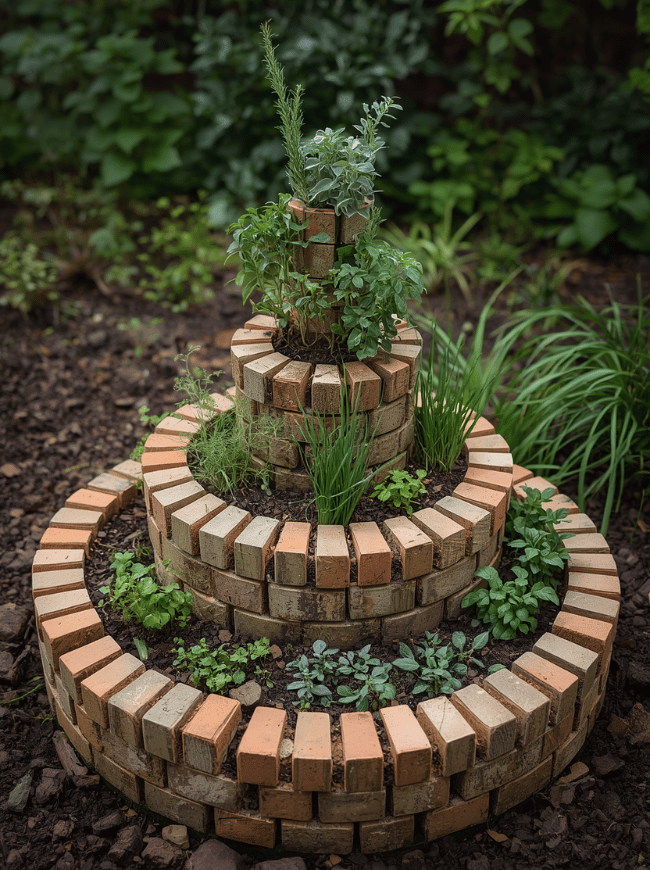
A herb spiral is a compact raised bed shaped like a spiral, with the highest point in the center. It creates several mini growing zones in one feature because the top is usually drier and warmer while the lower section holds more moisture.
Plant Mediterranean herbs such as rosemary, thyme, and sage near the top. Place parsley, chives, and coriander lower down where the soil stays slightly cooler and moister.
Build the spiral with stone, brick, or reclaimed materials that are safe for garden use. Keep the paths and planting pockets wide enough to reach comfortably.
This design is both practical and decorative, making it a strong focal point for a small garden.
Rating: 🟩 ⭐⭐⭐⭐⭐
Recommendation: Choose a herb spiral if you want one feature that combines useful planting, texture, and visual interest.
10. A Repurposed Tin Can Herb Wall
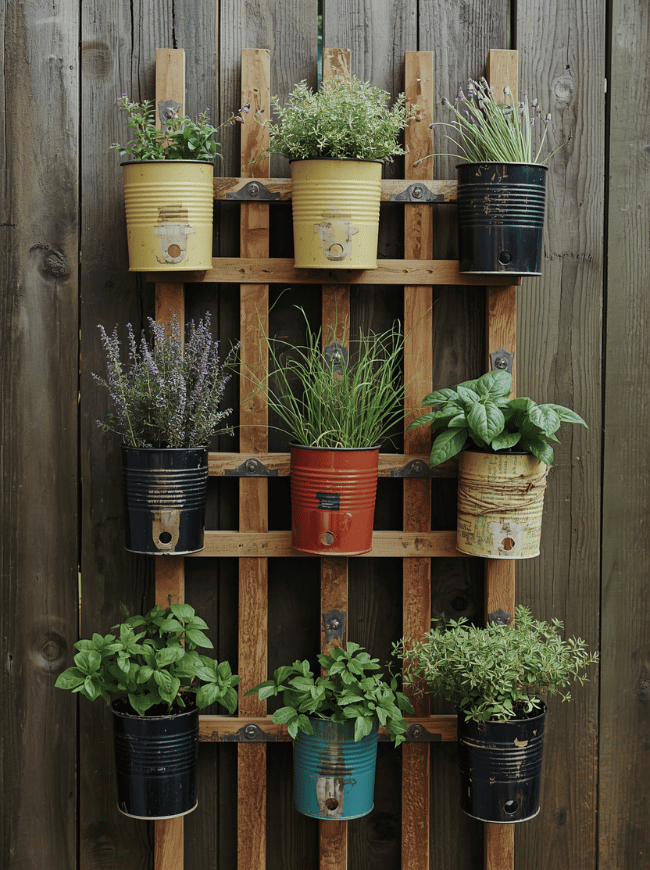
Clean food tins can become small wall planters for herbs. Paint them, wrap them in waterproof paper, or leave them plain for an industrial look.
Punch drainage holes in the bottom and attach the tins securely to a wooden board or fence. Use them for shallow-rooted herbs such as thyme, chives, oregano, and small basil plants.
Because the containers are small, they can dry out quickly. Check them often and replace the soil when it becomes compacted.
Arrange the tins in a grid for a neat display or stagger them for a more relaxed pattern. Add handwritten labels for a personal touch.
Rating: 🟧 ⭐⭐⭐⭐☆
Recommendation: A budget-friendly project for a small wall, though it works best when the herbs are checked and watered regularly.
11. A Dedicated Tea Herb Garden
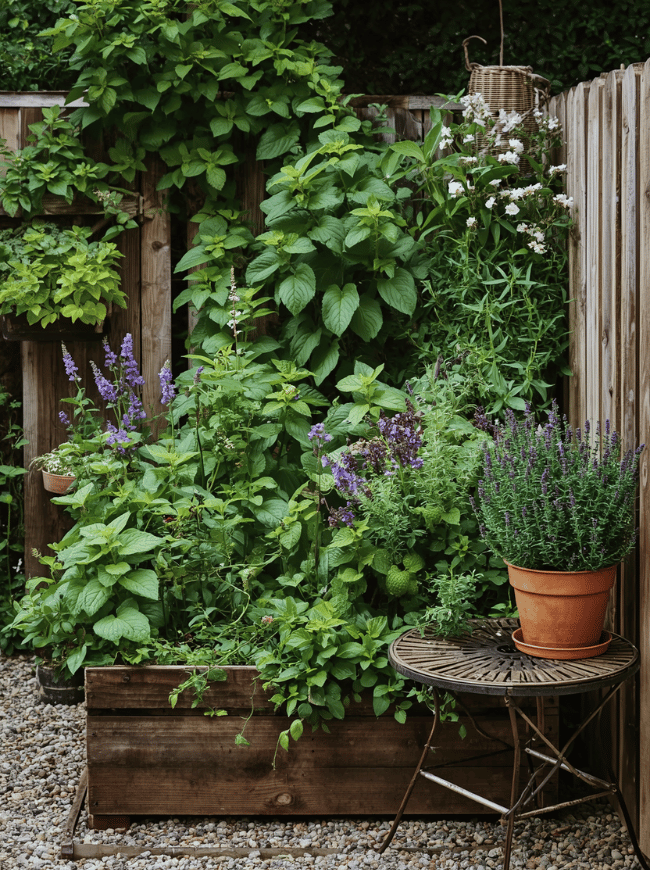
Create a garden focused on herbs for homemade teas and refreshing drinks. Lemon balm, mint, chamomile, lemon verbena, lavender, and fresh thyme are useful choices.
Grow mint in a container to keep it from spreading into the rest of the garden. Add a small bench or outdoor table nearby so the space feels like a place to pause, not just a planting area.
Use a few flowering plants to attract bees and add color. Chamomile and lavender look attractive even when you are not harvesting them.
Always identify herbs correctly before consuming them, especially if children or pets have access to the garden.
Rating: 🟩 ⭐⭐⭐⭐☆
Recommendation: Perfect for anyone who enjoys relaxing rituals, iced drinks, herbal teas, or scented planting.
12. A Pizza Herb Garden
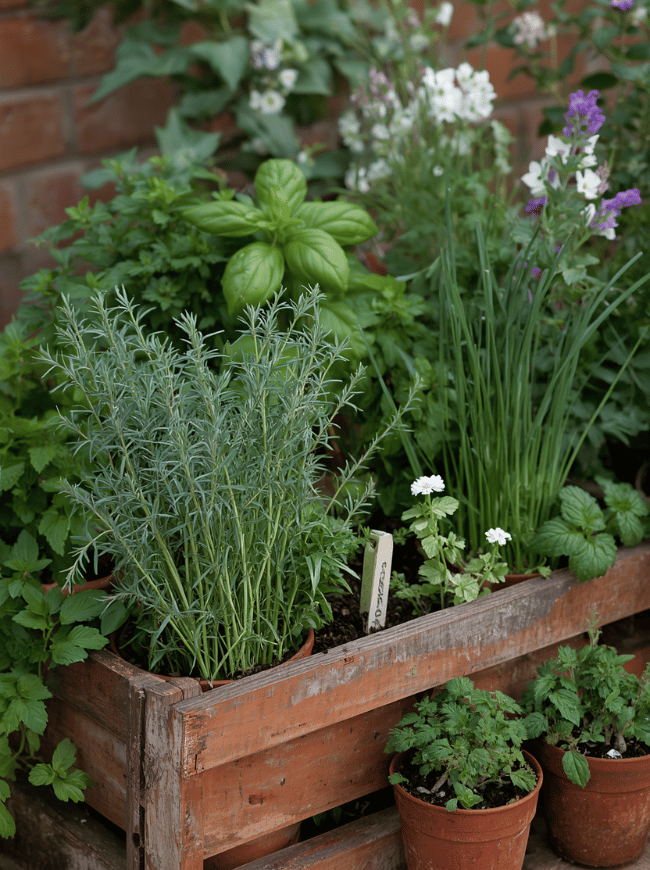
Plant a small collection of herbs that pair well with homemade pizza and Italian-style cooking. Basil, oregano, rosemary, parsley, and garlic chives make a useful group.
Place the garden near an outdoor kitchen, barbecue, or back door. Use terracotta pots, a brick edging, or a reclaimed wooden crate to create a warm Mediterranean feel.
Basil prefers warmth and regular harvesting, while rosemary and oregano prefer good drainage and should not sit in wet soil. Group plants according to their needs rather than forcing everything into one container.
A small chalkboard sign or painted label can make the display more inviting.
Rating: 🟨 ⭐⭐⭐⭐⭐
Recommendation: A fun and practical option for families and anyone who cooks outdoors during warmer months.
13. A Narrow Herb Border Along a Path
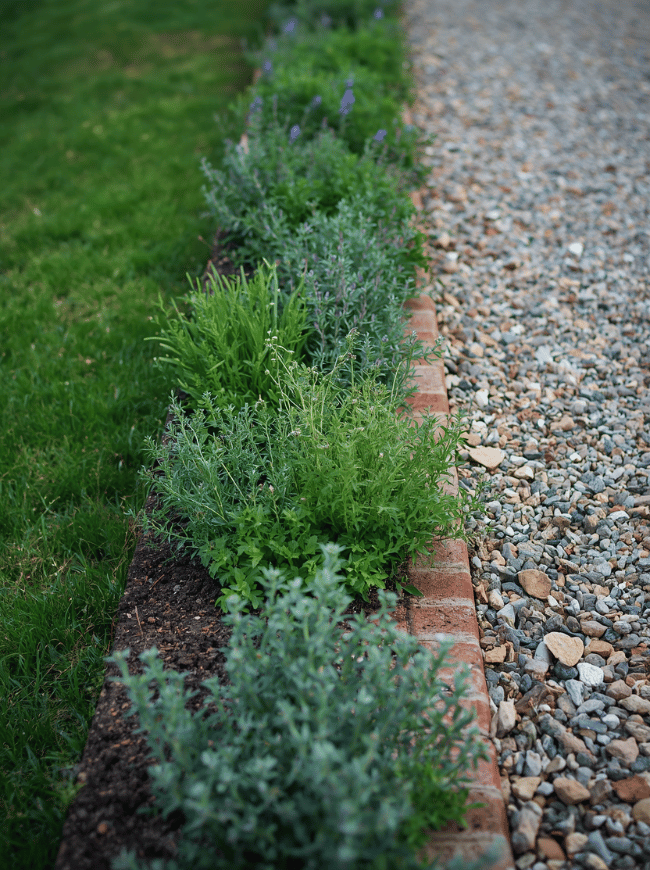
A path-side herb border makes use of an often-overlooked strip of soil. Plant low herbs along the edge so they do not spill into the walking route.
Thyme, chives, marjoram, parsley, and compact sage can provide color and fragrance as you walk past. Leave rosemary and larger shrubs farther back where they have room to spread.
Use a clear edge between the soil and path. Brick, stone, metal edging, or a strip of gravel will keep the layout tidy and make maintenance easier.
Choose herbs you will actually use. A beautiful border is even better when you can step outside and harvest dinner ingredients.
Rating: 🟩 ⭐⭐⭐⭐☆
Recommendation: This is one of the best Herb Garden Ideas for making a narrow side yard or walkway more productive.
14. A Portable Herb Cart
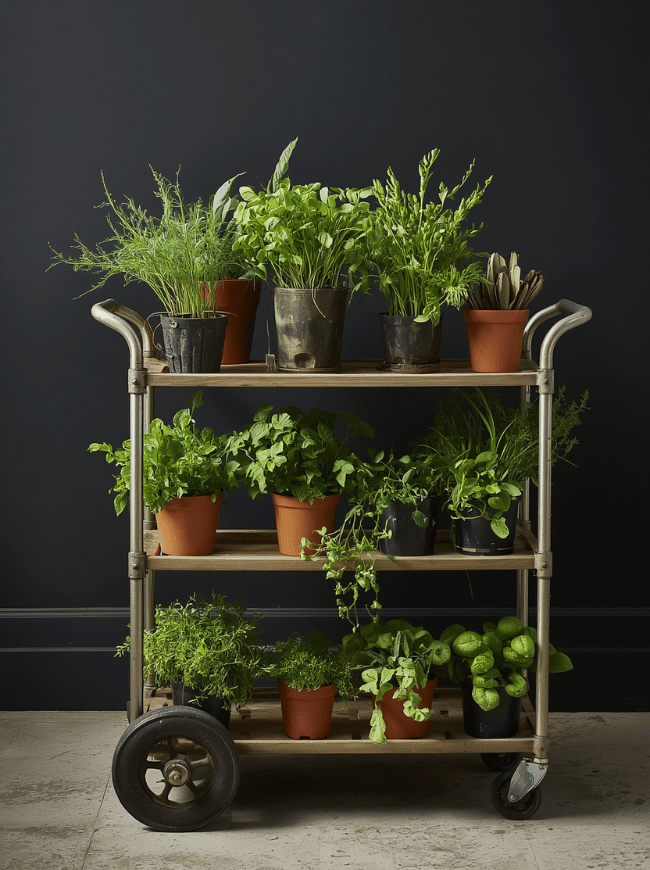
A rolling garden cart lets you move herbs wherever they receive the best light. It can sit near the kitchen during the day, move to the patio for entertaining, or be brought under shelter during storms.
Use a sturdy plant trolley, wooden cart, or repurposed shelving unit with lockable wheels. Keep the herbs in individual containers so you can replace or rearrange them easily.
This setup is especially useful for tender herbs that need protection in cooler weather. It also makes watering and pruning simpler because the whole collection can be brought to one convenient spot.
Do not overload the cart. Wet soil is heavy, and a crowded cart may be difficult to move safely.
Rating: 🟨 ⭐⭐⭐⭐☆
Recommendation: Great for renters, gardeners with mobility concerns, or anyone who needs a flexible growing setup.
15. A Formal Herb Garden With Symmetrical Beds

For a more polished look, arrange herbs in symmetrical beds around a central path or focal point. Low box hedges, brick edging, or gravel paths can give the garden a traditional formal style.
Use repeated plants on both sides to create balance. Lavender, sage, rosemary, thyme, and parsley work well in a structured layout, provided they receive suitable light and drainage.
Keep the design simple. Symmetry makes clutter more noticeable, so avoid adding too many unrelated pots or decorations.
A central birdbath, sundial, or small tree can complete the arrangement without taking up much room.
Rating: 🟧 ⭐⭐⭐⭐☆
Recommendation: Choose this design if you prefer tidy lines, repeated planting, and a garden that looks organized from the house.
16. A Children’s Herb Garden
Give children their own small herb area with easy-to-identify plants, bright labels, and containers they can reach safely. Mint, lemon balm, basil, chives, parsley, and nasturtiums are engaging choices because they have noticeable scents, textures, or colors.
Use lightweight pots and avoid placing them on unstable shelves. A low raised bed or a row of containers on the ground is easier for young gardeners to manage.
Let children decorate plant labels or paint the pots. The garden does not need to be perfect. The main goal is to make growing and harvesting enjoyable.
Teach children to ask before tasting any unfamiliar plant and supervise them around garden tools.
Rating: 🟩 ⭐⭐⭐⭐☆
Recommendation: A lovely way to make gardening hands-on and give children a reason to spend time outdoors.
17. A Pollinator-Friendly Herb Garden
Many herbs produce flowers that attract bees and other pollinators when you allow them to bloom. Thyme, oregano, sage, lavender, rosemary, chives, and mint can all provide useful nectar.
Set aside a few plants for flowering rather than harvesting every stem. Add shallow water, avoid spraying chemicals, and provide a sunny sheltered spot if possible.
A pollinator-friendly herb garden can still be productive. Harvest some plants regularly while allowing others to flower. You will get fresh ingredients and a livelier outdoor space.
Use a mix of flower shapes and blooming periods so the garden offers something for insects across several months.
Rating: 🟩 ⭐⭐⭐⭐⭐
Recommendation: The best choice if you want your herb garden to support wildlife as well as your cooking.
How to Keep an Herb Garden Healthy
Most herbs are easier to grow when you avoid overwatering. Let the top layer of soil dry slightly before watering again, especially for rosemary, thyme, sage, and oregano.
Use containers with drainage holes and choose a potting mix that does not hold too much water. Place sun-loving Mediterranean herbs in the brightest position, while parsley, cilantro, and mint can cope with a little more shade.
Harvest often, but do not remove more than one-third of a plant at a time. Cutting the growing tips encourages many herbs to become fuller and more productive.
Replace annual herbs when they finish flowering or lose their vigor. Perennial herbs can remain productive for several years when they are pruned at the right time and protected from extreme weather.
Final Recommendation
If you are new to growing herbs, begin with classic kitchen pots, a window box, or a small raised bed. These options make harvesting easy and let you learn which herbs thrive in your conditions.
For small spaces, my top picks are the vertical pallet garden, tiered planter, and hanging herb garden. For families, the pizza herb garden and children’s herb garden add a fun reason to grow. If you want a feature that looks as good as it tastes, choose a herb spiral or a formal symmetrical layout.
The most useful Herb Garden Ideas are the ones that fit naturally into your routine. Put the plants near the kitchen, choose herbs you already enjoy eating, and make watering easy. A few well-used pots are better than a large garden full of plants you forget to harvest.
Start small, label everything, and add more herbs as you gain confidence. Before long, you will have fresh flavor ready whenever you need it.
Which Herb Garden Ideas would you save for your own home?
Last modified: August 27, 2026
