

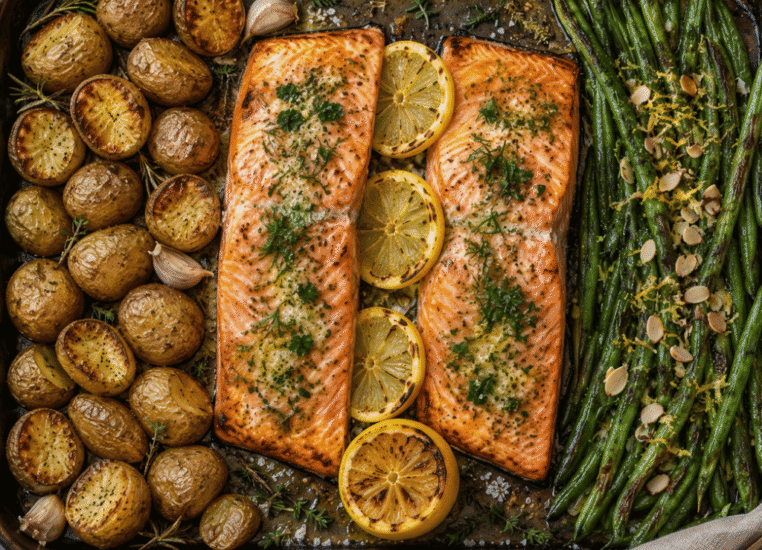
A weeknight salmon dinner that does not feel ordinary.
There are nights when dinner needs to be reliable rather than impressive. You want something with a real balance of protein, vegetables, and carbohydrates, but you do not want three pans on the stove or a sink full of mixing bowls. That is exactly where this one-pan lemon herb salmon earns its place.
The potatoes go into the oven first because they need the longest head start. Once their edges begin to brown, green beans and salmon join the pan. The fish cooks quickly, the beans pick up a little roasted flavor, and a simple lemon-herb mixture ties everything together. The result is bright and savory without a heavy sauce.
This is also the kind of recipe that works when the refrigerator is not perfectly stocked. Yukon Gold potatoes can be swapped for baby potatoes, green beans can become asparagus, and salmon fillets can be thick or thin as long as you begin checking them early. The important part is the timing: give the potatoes room, add the fast-cooking ingredients later, and avoid crowding the pan.
Why this method works
Roasting salmon and vegetables together sounds simple, but the ingredients do not all cook at the same speed. Potatoes need time for the center to soften. Green beans need enough heat to blister slightly while staying fresh. Salmon needs a shorter, gentler window so it stays moist.
Starting the potatoes alone solves most of that problem. Tossing them with oil before roasting helps the cut sides brown. Adding the beans later keeps them from becoming limp, and placing the salmon skin-side down, if it has skin, protects the fillet from the hottest metal surface.
The lemon is used in two ways. Lemon zest goes into the herb oil before roasting, where it perfumes the fish and vegetables without making them watery. Fresh lemon juice is added at the end, when its sharp flavor will stay lively.
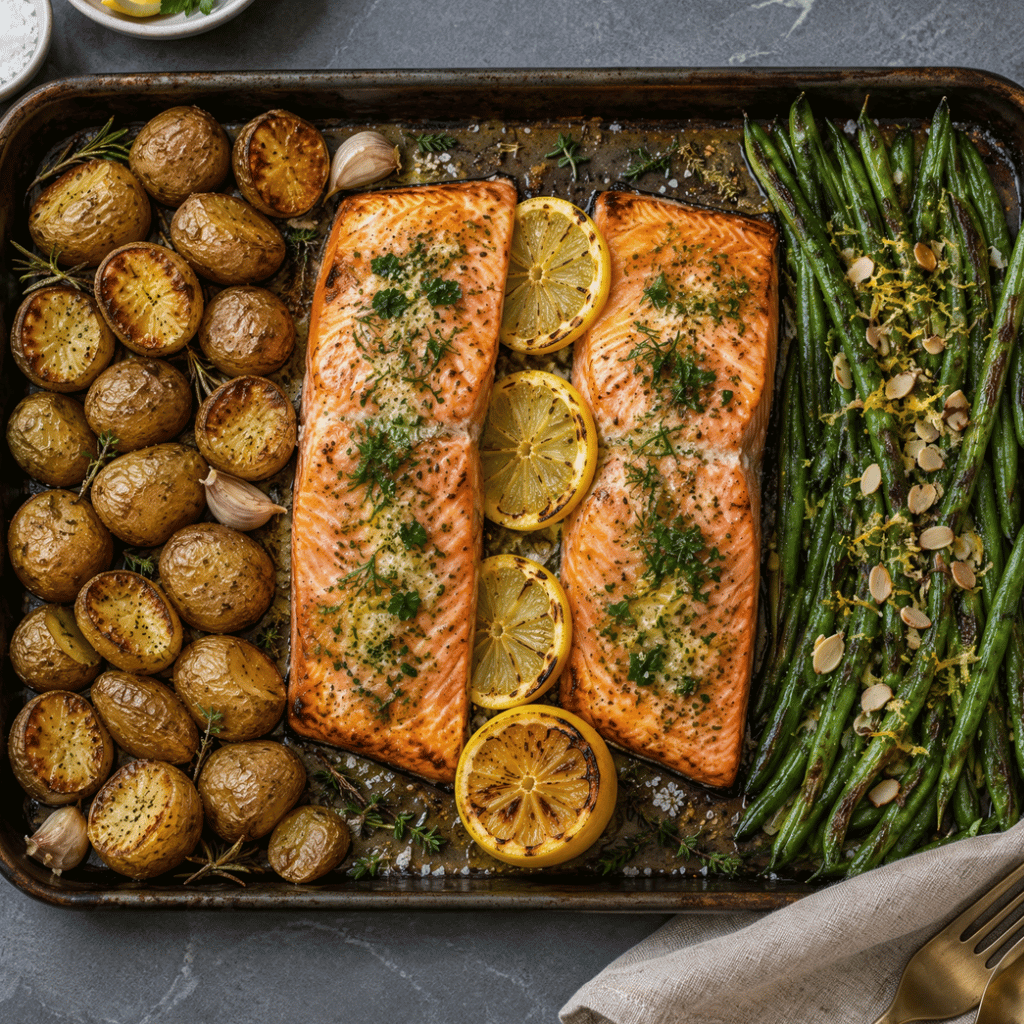
one-pan lemon herb salmon
Ingredients
For the pan
- 1 1/2 pounds baby Yukon Gold potatoes, halved
- 2 tablespoons extra-virgin olive oil, divided
- 1 teaspoon kosher salt, divided
- 1/2 teaspoon black pepper, divided
- 1 teaspoon garlic powder
- 12 ounces trimmed green beans
- 4 salmon fillets, 5 to 6 ounces each
- 1 lemon
For the lemon herb oil
- 2 tablespoons olive oil
- 2 garlic cloves, finely grated or minced
- 1 tablespoon chopped fresh parsley
- 1 tablespoon chopped fresh dill
- 1 teaspoon lemon zest
- 1/2 teaspoon Dijon mustard
- 1/4 teaspoon smoked paprika
- 1/4 teaspoon kosher salt
Optional finishing touches
- Extra lemon wedges
- A spoonful of plain Greek yogurt
- Flaky sea salt
- Chopped parsley or dill
Equipment
Use a large rimmed sheet pan, ideally at least 13 by 18 inches, so the food can spread into one layer. If the pan is small, divide the ingredients between two pans. Crowded food steams instead of roasting, and that is especially noticeable with potatoes.
Parchment makes cleanup easier, but it can reduce browning slightly. For the crispest potatoes, use a bare metal pan with a thin film of oil. A fish spatula is helpful for serving, though an ordinary thin spatula works too.
Prep the ingredients before turning on the oven
Heat the oven to 425°F. If you have time, place the sheet pan in the oven while it preheats. A hot pan gives the potatoes an immediate start, although it is fine to use a room-temperature pan if that feels safer or more convenient.
Halve the potatoes so the cut sides are broad and flat. Very large baby potatoes should be quartered. Dry them well with a clean towel. Moisture on the surface is one of the easiest ways to lose browning.
Pat the salmon dry. This does not change the flavor dramatically, but it helps the herb mixture cling and encourages a better surface texture. Check the fillets for pin bones by running your fingers gently over the center. Pull out any bones with clean tweezers.
Whisk the lemon herb oil in a small bowl. Keep the lemon juice for later. If it goes into the mixture too early, it can make the salmon surface wet and the herbs less fragrant.
How to make one-pan lemon herb salmon
1. Roast the potatoes first
Place the potatoes on the sheet pan. Add 1 tablespoon of olive oil, half of the salt, half of the pepper, and the garlic powder. Toss well, then arrange the potatoes cut-side down with a little space between pieces.
Roast for 20 minutes. If the pan was preheated, begin checking at 17 minutes. The potatoes should be starting to brown but may not be tender all the way through. If a fork slides in with strong resistance, they need more time, which is normal.
2. Add the green beans
Remove the pan carefully. Toss the green beans with the remaining tablespoon of olive oil and a small pinch of salt. Add them around the potatoes. Turn the potatoes if their bottoms are already deeply browned.
Roast for 5 minutes. This short head start gives the beans a chance to soften before the salmon arrives.
3. Season the salmon
Brush the tops of the salmon fillets with the lemon herb oil. If the fillets have skin, place them skin-side down. If they are skinless, put the smoother side down and brush the upper surface generously.
Make a small open space on the pan for each fillet. Do not place salmon directly on top of the potatoes, or the potatoes beneath it will soften from trapped steam. Tuck lemon slices around the pan rather than on top of the fish; slices on top can prevent even browning.
4. Finish roasting
Return the pan to the oven and roast for 10 to 14 minutes, depending on the thickness of the fillets. Start checking at 10 minutes. Salmon is ready when the center flakes easily with a fork and the thickest part reaches 145°F. For a softer, more medium texture, many cooks remove it a little earlier, but use your own food-safety comfort level and a thermometer when in doubt.
The potatoes should be tender, the green beans should bend easily but still have some bite, and the salmon should look opaque around the edges with a slightly translucent center that continues cooking during the rest.
5. Finish with lemon
Squeeze fresh lemon juice over the salmon and vegetables just before serving. Taste one potato and add flaky salt or another squeeze of lemon if needed. Scatter the herbs over the pan for color.
Let the salmon rest for 3 to 5 minutes. That brief pause gives the juices time to settle and makes the fillets less likely to break when you lift them.
Timing at a glance
- Prep: 15 minutes
- Potato roasting: 20 minutes
- Green bean head start: 5 minutes
- Salmon roasting: 10 to 14 minutes
- Resting: 3 to 5 minutes
- Total: about 45 to 50 minutes
The exact time depends mostly on potato size and salmon thickness. Thin fillets may finish before thick center-cut pieces, so do not rely on the clock alone.
Practical tips for better results
Dry the potatoes. A quick towel-dry is more useful than adding extra oil. Wet potatoes steam, while dry potatoes brown.
Do not pour lemon juice over everything before roasting. Acid can make vegetables lose their fresh flavor and can interfere with browning. Add juice at the end.
Use a thermometer for thick salmon. The visual test is helpful, but thickness varies. Insert the thermometer into the thickest part from the side.
Give the fillets space. If they touch, the sides stay pale and the cooking becomes less even.
Watch the garlic. Fresh minced garlic can burn on a hot sheet pan. Grated garlic mixed with oil is less exposed, but if your oven runs hot, use garlic powder on the potatoes and save fresh garlic for the finishing sauce.
Choose vegetables with similar timing. Asparagus, broccolini, zucchini half-moons, and sliced bell peppers can work. Hard carrots need a longer first roast, while delicate spinach should be stirred in after cooking.
Easy variations
For a Mediterranean version, add a handful of pitted Kalamata olives and a sprinkle of dried oregano during the final five minutes. Serve with a spoonful of tzatziki.
For a honey mustard finish, whisk 1 tablespoon honey into the lemon herb oil. Brush it over the salmon only after the potatoes have had their first roast, because honey can darken quickly.
For a spicy version, add 1/2 teaspoon red pepper flakes or a pinch of cayenne to the herb oil. A little smoked paprika on the potatoes makes the entire pan taste deeper.
For a lighter vegetable-heavy plate, use 1 pound of potatoes and add an extra 8 ounces of green beans. Keep the salmon amount the same, but spread everything widely so the added vegetables roast rather than steam.
What to serve with it
This pan is a complete meal on its own, but a cool sauce is welcome. Stir together 1/2 cup Greek yogurt, 1 tablespoon lemon juice, 1 tablespoon chopped dill, a pinch of salt, and a splash of water. The sauce takes two minutes and balances the warm roasted ingredients.
A simple cucumber salad also works well. Toss sliced cucumber with rice vinegar, sesame seeds, and a little salt. If you are serving guests, bring the sheet pan directly to the table and finish it with lemon wedges so everyone can adjust the acidity.
Storage and reheating
Refrigerate leftovers in a shallow airtight container for up to 3 days. Keep the salmon separate from the potatoes if you can, since the fish is more delicate and the potatoes reheat better on their own.
Warm the potatoes and green beans in a 400°F oven or toaster oven for 8 to 12 minutes. Add the salmon for the final 4 to 6 minutes, just until warmed. Microwaving is convenient, but it can make salmon dry and the potatoes soft. If you use the microwave, cover the salmon loosely and heat it in short intervals.
Cold leftover salmon is also good flaked over greens with the potatoes sliced into the salad. Add lemon yogurt dressing and a few toasted seeds for a quick next-day lunch.
The final word
The best weeknight recipes are not necessarily the fastest ones. They are the ones that make the timing easy to understand and leave you with very little cleanup. This one-pan lemon herb salmon does exactly that. Start the potatoes, add the beans, slide in the salmon, and finish with lemon. Once you make it once, the rhythm becomes second nature, and the recipe is flexible enough to fit whatever vegetables are waiting in your kitchen.
Last modified: November 2, 2026
