

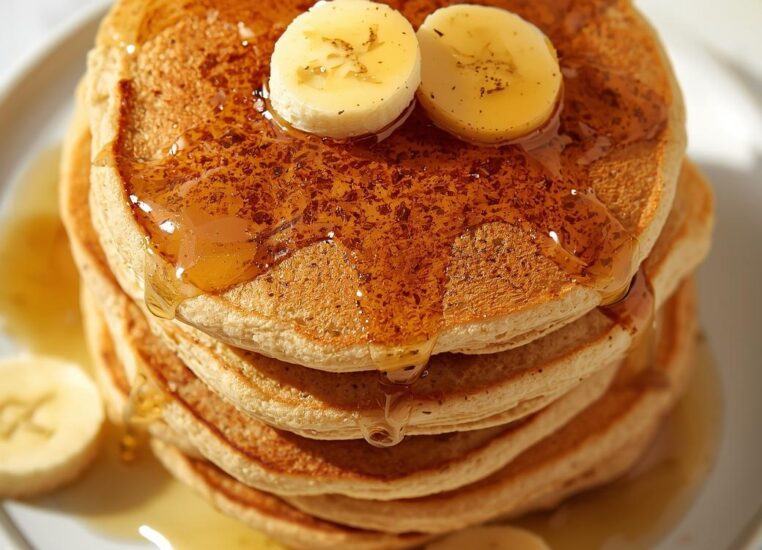
Banana pancakes sound simple, yet small choices can decide whether you get tall, tender stacks or flat rounds that feel heavy.
The good news is that you do not need special ingredients or chef-level skills to get them right. You need the right batter texture, a steady pan temperature, and a few timing cues that are easy to miss.
This guide gives you a practical recipe you can use right away.
You will see the exact ingredients, cook time, tools, mixing method, and cooking steps, plus the mistakes that most often ruin pancake texture.
If you want a breakfast that tastes sweet from ripe bananas and still cooks up light, you are in the right place.
Why These Banana Pancakes Work
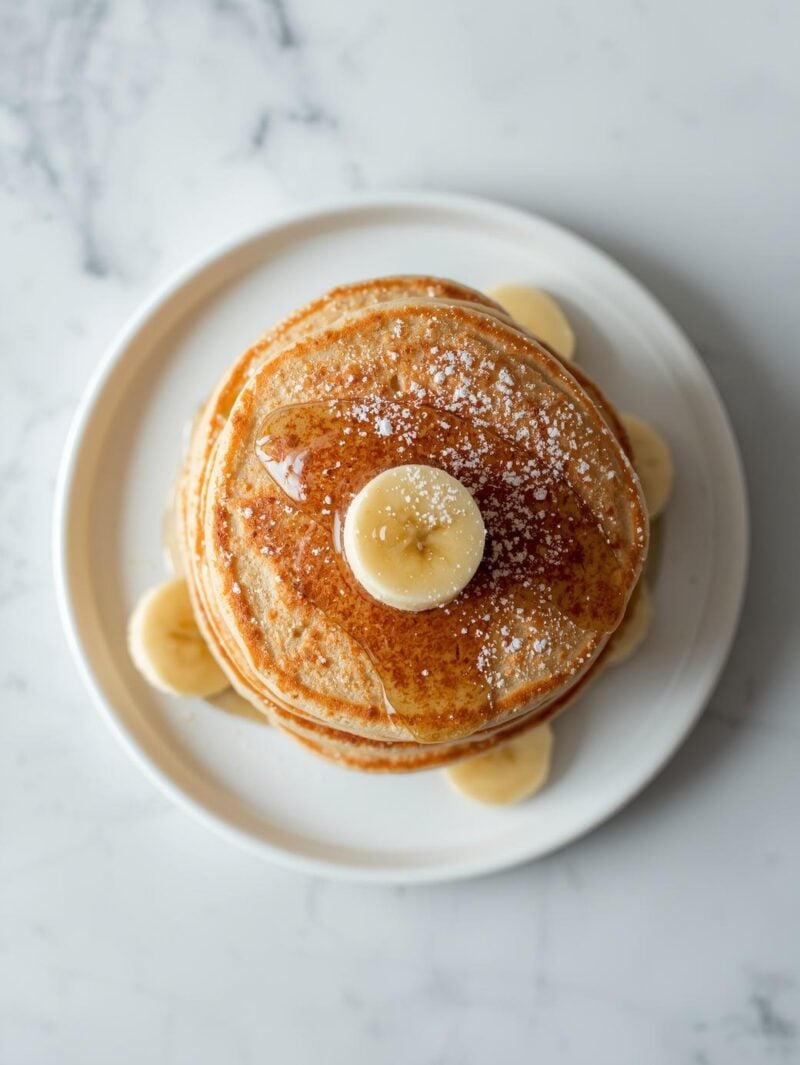
These pancakes rise well because the batter balances moisture and lift. Mashed ripe banana adds sweetness and softness, but too much can weigh the batter down.
This version keeps the banana at about 1 cup, or 2 medium ripe bananas, for 1 cup of flour. That ratio gives flavor without turning the pancakes gummy.
Baking powder does the lifting, and eggs help the pancakes hold their shape as they cook. Melted butter adds richness and a softer bite. The result is a breakfast recipe that tastes like banana bread in pancake form, but cooks fast enough for a weekday morning.
Why does this matter? If you have ever made banana pancakes that spread too much in the pan, the batter was likely too wet or overmixed. Keep the batter slightly thick, with a few small lumps, and the pancakes stay puffy.
Cook Time and Yield
Before you start, check the timing so you can prep the pan and serve the pancakes hot.
- Prep time: 10 minutes
- Cook time: 12 to 15 minutes
- Total time: 22 to 25 minutes
- Yield: 8 pancakes
- Servings: 3 to 4 people
If you use a large griddle and cook 3 pancakes at once, the batch finishes closer to 12 minutes. In a smaller skillet, plan for 15 minutes. Keep cooked pancakes on a baking sheet in a 200°F oven so the first batch stays warm without getting soggy.
Recipe Snapshot Table
This quick table gives you the overview at a glance, which helps if you are cooking from your phone or planning breakfast in a hurry.
| Detail | Recipe Info |
|---|---|
| Prep time | 10 minutes |
| Cook time | 12 to 15 minutes |
| Total time | 22 to 25 minutes |
| Servings | 3 to 4 |
| Difficulty | Easy |
| Bananas | 2 medium, very ripe |
| Batter texture | Thick but pourable, not runny |
| Best pan heat | Medium |
If your batter pours like milk, add 1 tablespoon of flour at a time until it falls slowly from the spoon. That one adjustment often fixes flat pancakes.
Ingredients You Will Need
The ingredient list is short, but each item has a job. Measure carefully, especially the flour and baking powder, because pancake texture changes fast with small errors.
Main ingredients
For one batch, use 2 medium ripe bananas, 1 cup all-purpose flour, 2 teaspoons baking powder, 1 tablespoon sugar, 1 large egg, 3/4 cup milk, 2 tablespoons melted butter, 1 teaspoon vanilla extract, and 1/4 teaspoon salt. If your bananas are very large, stop at 1 cup mashed banana.
What each one does
The bananas sweeten the batter and add moisture. Flour gives structure. Baking powder creates the rise. Egg helps bind everything, and milk loosens the batter just enough to spread in the pan. Butter improves flavor and keeps the crumb soft.
If you want a stronger banana flavor, do not add more banana first. Use bananas with dark brown spots. They mash more easily and taste sweeter, which improves flavor without thinning the batter.
Recommended Tools for Cooking
You do not need much equipment, though the right skillet makes cooking easier. A nonstick skillet or flat griddle gives the most even browning and lowers the chance of torn pancakes during flipping.
Use one medium bowl for wet ingredients and one for dry. A whisk works best for the egg, milk, butter, and mashed banana. For the dry mix, a fork is enough. A heatproof spatula with a thin edge slides under pancakes more cleanly than a thick silicone spoon.
Keep measuring cups and spoons nearby so you do not guess. A 1/4-cup measure is useful for portioning the batter and making pancakes the same size. Equal size matters more than people think, because it helps every pancake cook at the same rate.
Mixing the Pancake Batter
The mixing stage decides whether your pancakes stay light or turn dense. Start with the wet bowl. Mash the bananas until mostly smooth, then whisk in the egg, milk, melted butter, and vanilla. In the second bowl, stir together the flour, baking powder, sugar, and salt.
Pour the dry mixture into the wet mixture and stir with a spoon or spatula just until you no longer see dry flour. Stop there. Small lumps are fine. If you keep stirring until the batter looks perfectly smooth, the flour develops too much gluten and the pancakes lose their soft texture.
Let the batter rest for 5 minutes before cooking. That short rest gives the flour time to absorb liquid and helps the baking powder start working. The batter should look thick enough to mound slightly when dropped from a spoon.
Step-by-Step Cooking Instructions
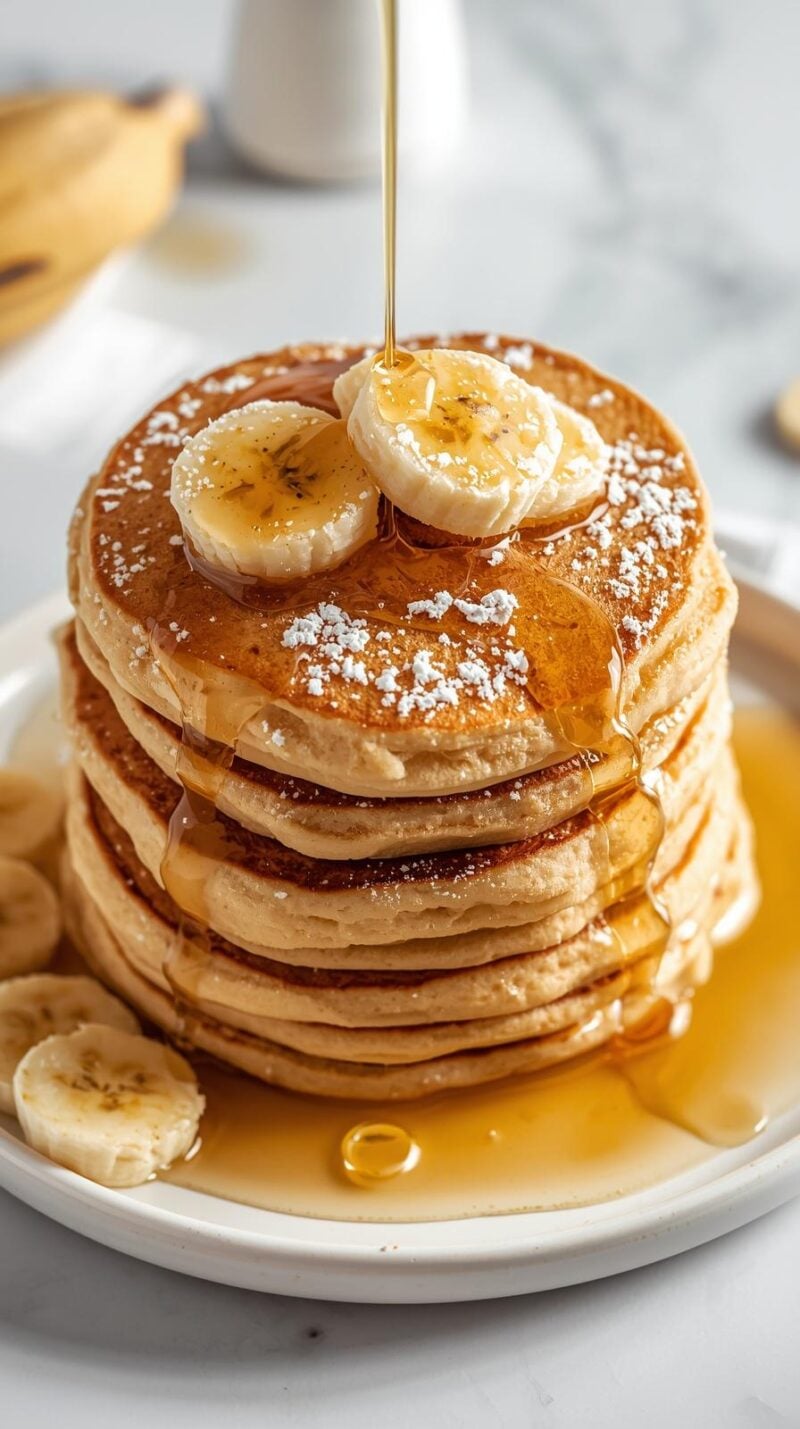
Good pancake texture depends on heat control as much as the recipe itself. Follow these steps in order so the centers cook through before the outsides darken.
- Heat a nonstick skillet or griddle over medium heat for 2 to 3 minutes.
- Lightly grease the surface with 1 teaspoon butter or a thin coat of oil, then wipe away excess with a paper towel.
- Scoop 1/4 cup batter per pancake onto the pan. Leave space between pancakes.
- Cook for 2 to 3 minutes, until bubbles appear on top and the edges look set.
- Flip once with a thin spatula.
- Cook the second side for 1 to 2 minutes, until golden brown and the center springs back lightly when tapped.
- Move cooked pancakes to a warm oven at 200°F if making multiple batches.
If the first pancake browns in under 1 minute, turn the heat down. A slower cook gives the fluffiest center.
Tips for Extra Fluffy Results
Small habits create a taller stack. The most useful one is giving the batter a short rest. Five minutes is enough for better thickness, and 10 minutes is even better if your kitchen is cool.
Watch the pan heat
Medium heat works better than high heat. A pan that is too hot sets the outside before the inside has time to rise. Test with a tiny drop of batter first. It should sizzle softly, not hiss hard or smoke.
Leave the pancakes alone
Do not press pancakes with the spatula after flipping. Pressing pushes out steam, and steam is part of what keeps the interior airy. Flip once, then let the second side finish.
For an extra lift, separate the egg and beat the white for 30 seconds until foamy, then fold it in at the end. This adds one more bowl to wash, though it can make the pancakes noticeably thicker.
Common Pancake Mistakes to Avoid
Most banana pancake problems come from three things: batter that is too thin, a pan that is too hot, and too much stirring. The fix is usually simple once you know what to check.
- Flat pancakes: The batter is likely too loose. Stir in 1 tablespoon flour, wait 1 minute, and test again.
- Dark outside, raw middle: Lower the heat from medium-high to medium or medium-low and cook longer.
- Tough texture: Mix only until combined. Lumps are better than overworked batter.
- Weak banana flavor: Use bananas with many brown spots, not firm yellow ones.
If pancakes stick even in a nonstick pan, the surface may be too cool or too dry. Reheat for 1 minute and brush on a small amount of butter before the next batch.
Quick Final Recipe Notes
A few last details can save the whole batch. Start with bananas that mash easily and smell sweet. That level of ripeness gives the best flavor and keeps you from adding extra sugar.
Fast checks before cooking
- Batter look: Thick and spoonable, not watery
- Pan signal: Warm enough to sizzle softly, never smoke
- Flip cue: Bubbles on top, edges set, underside golden
If you need to adjust mid-batch, do it early. Add a spoon of milk if the batter becomes too thick as it rests, or a spoon of flour if the pancakes spread too much. Those small corrections make the second half of the batch better than the first.
Good banana pancakes come from a simple pattern: ripe bananas, a thick batter, medium heat, and patience during the flip. Follow the ingredient amounts closely the first time, then pay attention to the visual cues. Bubbles on top, set edges, and a gentle sizzle tell you more than the clock alone.
One practical habit makes this recipe easier to repeat: cook one test pancake first. Use it to judge sweetness, batter thickness, and pan temperature, then adjust before cooking the rest. That quick check turns a decent batch into a reliable breakfast recipe you can make with confidence any day of the week.
Last modified: May 23, 2026
