

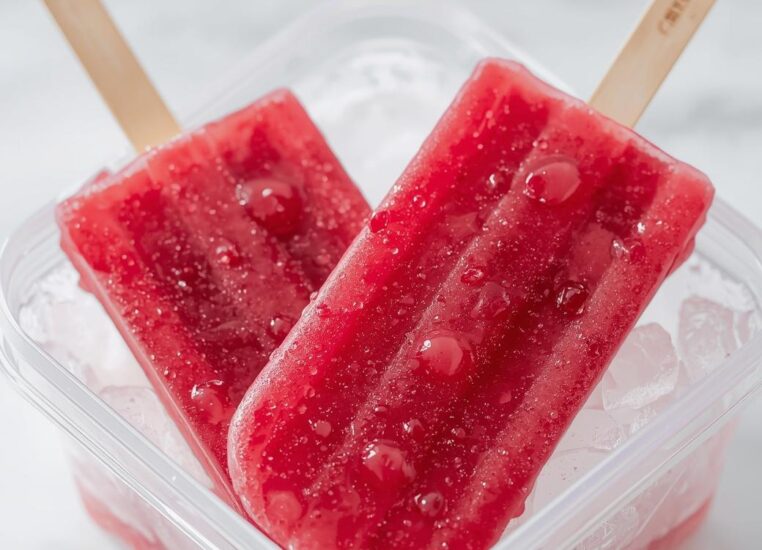
Homemade cherry popsicles take 15 minutes to prepare and freeze solid in 6 hours. Fresh cherries, a touch of honey, and lime juice create a popsicle with bright flavor and natural sweetness. Unlike store-bought versions, these contain no artificial colors, no stabilizers, and no mystery ingredients. You control every element, sweetness level, tartness, texture, and whether to add cream.
Why Make Popsicles at Home
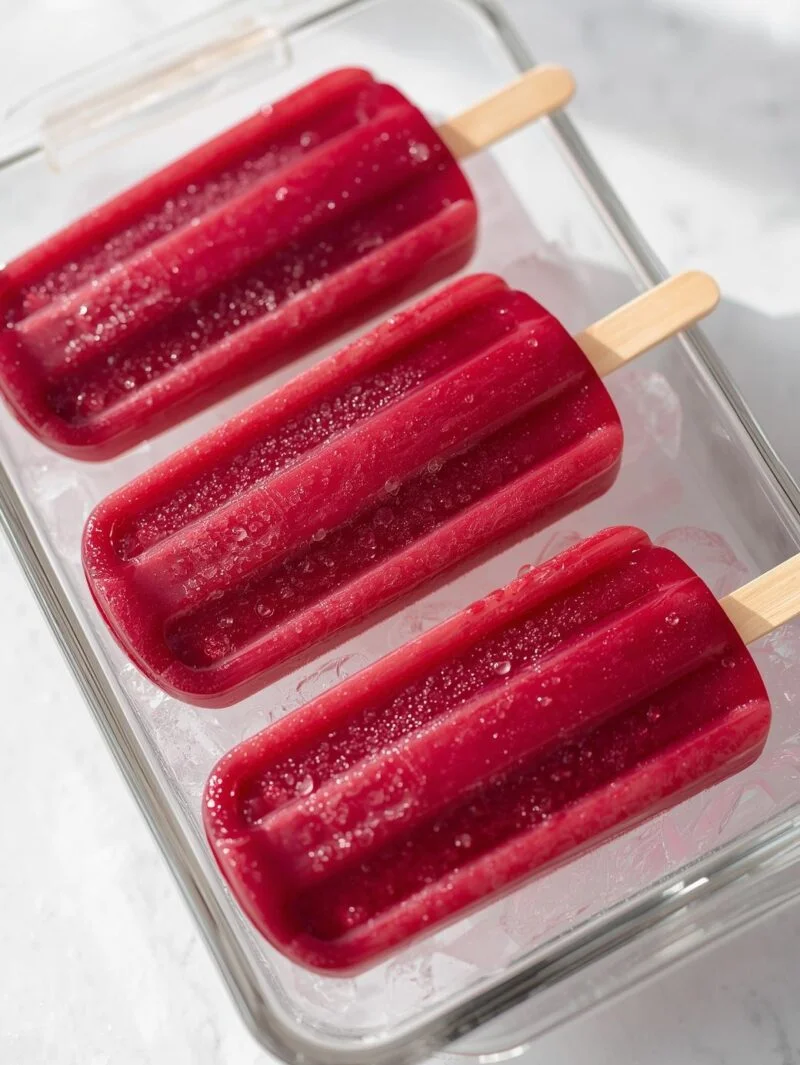
Commercial popsicles rely on corn syrup, artificial flavoring, and gums to achieve consistency and shelf stability. Homemade popsicles deliver real fruit flavor that changes slightly with each batch because fruit itself varies. Fresh cherries have higher pectin content than frozen ones, which affects texture. The natural tartness of cherry skin balances sweetness without requiring acid adjustment in every recipe.
Making popsicles at home costs about 60 cents per popsicle instead of $1.50 at the store. A single batch of 8 popsicles uses 1.5 pounds of fresh cherries, which cost $4 to $6 depending on season and location. You’ll reuse the molds for years, spreading that initial investment across dozens of batches.
When to Make Them
Cherry season runs June through August in most of North America. Buy cherries at their peak ripeness, deep red to dark burgundy in color, with a slight give when squeezed gently. Underripe cherries (pale red, hard) lack flavor and tartness. Overripe cherries (dark, almost black, soft) ferment faster and create a sour popsicle.
You can also make this recipe with frozen cherries year-round. Thaw them completely and drain off excess liquid before processing. Frozen cherries lose some tartness during freezing, so add an extra squeeze of lime juice (0.5 tablespoon) to compensate.
Ingredients
| Item | Amount | Notes |
|---|---|---|
| Fresh Bing cherries | 1.5 pounds | Pitted, roughly 3 cups |
| Raw honey | 3 tablespoons | Skip if using sweetened cherry juice |
| Freshly squeezed lime juice | 2 tablespoons | Not bottled, tartness matters |
| Filtered water | 0.25 cup | Adjusts consistency; optional |
| Sea salt | Pinch | Enhances cherry flavor |
| Vanilla extract | 0.5 teaspoon | Optional; adds depth |
Optional for creamier texture: Heavy cream (2 tablespoons) or full-fat coconut milk (3 tablespoons) stirred into finished mixture before pouring.
Optional for intensity: Fresh basil leaves (3-4), crushed and strained out before freezing, or almond extract (0.25 teaspoon) instead of vanilla.
Equipment
- Popsicle molds (8-cavity or 10-cavity)
- Popsicle sticks (wooden or bamboo)
- Food processor or blender
- Fine-mesh strainer
- Measuring cups and spoons
- Small bowl for mixing
Mold types: Plastic molds with built-in sticks are cheapest and most durable. Silicone molds release popsicles more easily but cost more. Stainless-steel molds last longest but conduct cold too fast and freeze popsicles on the sides before the center sets.
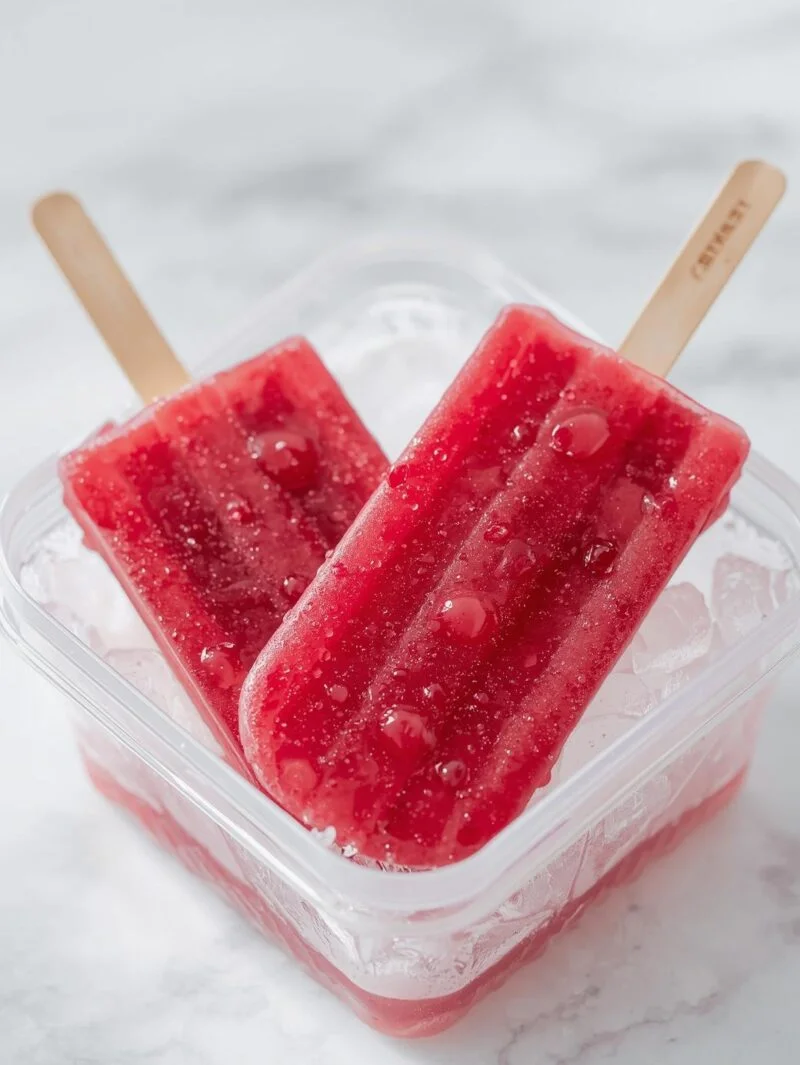
Cherry Popsicles Recipe
Step-by-Step Instructions
Prep (10 minutes)
-
Pit the cherries. If you have a cherry pitter, use it, it removes the pit cleanly while leaving flesh intact. If not, cut each cherry in half with a small sharp knife and remove the pit with your fingertip or a paring knife tip. Work over a bowl to catch juice. You need 1.5 pounds pitted cherries, which is roughly 3 cups. Discard any pit fragments or stems.
-
Measure out honey and lime juice. Raw honey blends more smoothly than pasteurized. Squeeze limes fresh, bottled lime juice loses volatile aromatics that give the popsicle brightness. One lime yields roughly 1.5 tablespoons juice.
-
Have your molds and sticks ready. If molds are new or haven’t been used in months, wash them in hot soapy water and dry completely. Water spots won’t affect taste but make the finished popsicles look cloudy.
Processing (5 minutes)
-
Add cherries to food processor. Pulse until broken down into a thick slurry. Don’t overprocess, you want small chunks and juice, not a completely smooth purée. Stop when you see mostly liquid with quarter-inch pieces of fruit suspended throughout. This texture creates a better mouthfeel than pure purée.
-
Add honey, lime juice, and salt. Pulse 3-4 times to combine. The salt doesn’t taste salty, it amplifies cherry flavor and suppresses any vegetal notes from the pit dust that sometimes gets mixed in during processing.
-
Taste and adjust. The mixture should taste slightly sweeter and more tart than you’d want to drink, because freezing dulls both sweetness and acid perception. If it tastes sharp and sour, add 0.5 tablespoon more honey. If it tastes flat, add another squeeze of lime (about 0.5 tablespoon). Adjust in small increments, you can always add more, but you can’t remove it.
-
Strain through fine-mesh sieve. Pour the processed cherries into a fine-mesh strainer held over a bowl. Press gently with the back of a spoon to extract all juice. This step takes 3-5 minutes. Leave some pulp, strain only until juice flows freely. If you over-strain, you lose texture and cherry flavor.
-
Return strained mixture to a bowl. Discard the dry pulp left in the strainer. At this point, you have cherry liquid with suspended solids, which is exactly what you want. If you want a creamier texture, stir in 2-3 tablespoons of heavy cream or coconut milk now. The cream dilutes tartness slightly, so taste again and add another squeeze of lime if needed.
Freezing (6 hours, mostly hands-off)
-
Pour mixture into popsicle molds. Fill each cavity three-quarters full. Leave room at the top, as the mixture freezes, it expands slightly, and you need space for the sticks.
-
Insert sticks. If your molds have built-in sticks, skip this step. If using separate sticks, insert them into the center of each cavity. They should stand upright without support. If a stick falls over, the popsicle will freeze at an angle, not a disaster, but awkward to hold.
-
Freeze for 2 hours. At this point, the surface has frozen but the center is still liquid. This is the ideal time to reposition sticks if they’ve tilted, or to insert sticks if you forgot. The frozen surface provides something for the stick to grip.
-
Freeze for an additional 4 hours. The popsicles are fully solid when you can’t puncture the surface with a fingernail. Total freeze time is usually 6-7 hours. Overnight freezing works too and is often easier to manage.
Removing from Molds
-
Run warm water over the outside of the molds for 10-15 seconds. Warm water loosens the ice from the plastic or silicone without melting the popsicle interior. Do not dunk the entire mold in warm water, this melts them too fast and creates a slick, sticky outer layer.
-
Gently wiggle and pull the sticks. The popsicles should slide out cleanly. If one resists, run more warm water over that cavity. If a stick separates from the popsicle, the mixture was too loose when frozen, add less water next time, or increase honey slightly for a slightly denser texture.
-
Transfer to a freezer-safe container. Stack popsicles in a freezer bag or airtight container with parchment between layers so they don’t stick together. Frozen popsicles stored this way last 2-3 months without degradation.
Flavor Chemistry and Texture
Cherry flavor comes from volatile compounds called esters. These compounds are most concentrated in ripe cherry skin. Processing the whole cherry, skin, flesh, and the area around the pit, captures all flavor components. This is why homemade popsicles taste more “cherry-forward” than commercial versions, which often use cherry juice concentrate.
Freezing suppresses taste perception by 15-20%. A mixture that tastes perfectly sweet when liquid will taste flat once frozen. This is why the tasting step in the recipe is critical, you must taste before freezing and adjust accordingly.
Lime juice adds tartness and brightens cherry flavor, making it taste fresher. The citric acid also functions as a natural preservative, extending shelf life without added chemicals.
Troubleshooting
| Problem | Cause | Solution |
|---|---|---|
| Popsicles don’t freeze solid after 8 hours | Freezer not cold enough (above -4°F) | Check freezer temperature with a thermometer. Most home freezers run at 0°F or colder. Wait longer, some mixtures need 12 hours. |
| Popsicles are rock-hard and difficult to eat | Freeze time too long (14+ hours) or freezer too cold | Reduce freeze time to 6-7 hours. Let popsicles sit at room temperature for 1 minute before eating to soften slightly. |
| Popsicle is icy and grainy instead of smooth | Too much water added to mixture, or mixture frozen too fast | Reduce water to 2 tablespoons next time. Place molds on a shelf away from the freezer’s coldest area (usually the back wall). |
| Stick falls out when removing popsicle | Mixture too thin when frozen, or stick inserted incorrectly | Reduce water by 2 tablespoons. Insert sticks deeper into the cavity so more stick length is embedded in the popsicle. |
| Popsicles taste sour or too tart | Too much lime juice, or using underripe cherries | Reduce lime to 1 tablespoon. Add 1 more tablespoon honey. Buy darker red cherries that are slightly soft to the touch. |
| Popsicles taste flat or one-dimensional | Freezer temperatures suppress flavor, or not enough salt | Increase honey by 0.5 tablespoon and lime by 0.5 tablespoon before freezing. Ensure you added a pinch of sea salt. |
Storage and Shelf Life
Frozen popsicles in an airtight container last 2-3 months in a home freezer at 0°F. Label the container with the date, popsicles gradually lose flavor and become icy over time, though they remain safe to eat.
If popsicles develop ice crystals on the surface, they’ve been stored too long or the container wasn’t airtight. The ice crystals don’t indicate spoilage; they’re a sign of freezer burn, which affects texture but not safety.
Variations and Additions
Darker, more intense: Use black cherries instead of Bing. Reduce honey by 0.5 tablespoon and increase lime by 0.5 tablespoon.
With cream: Stir 2 tablespoons heavy cream or full-fat coconut milk into the finished mixture. This creates a cherry-cream popsicle similar to a cherry cola float. Add 0.5 tablespoon extra lime juice to compensate for the cream’s richness.
With herbs: Crush 3-4 fresh basil leaves into the mixture, let sit 30 minutes, then strain before pouring into molds. Basil adds a subtle peppery note that complements tartness.
With alcohol: For adult popsicles, replace water with 0.25 cup cherry liqueur or vodka. The alcohol lowers the freezing point, so these take 2-3 hours longer to freeze.
Layered popsicles: Freeze the cherry mixture halfway, then pour a second layer of coconut cream (1/4 cup coconut milk mixed with 0.5 tablespoon honey) on top. Insert sticks when adding the second layer.
Notes on Ingredients
Cherries: Bing cherries are the standard for sweetness and tartness balance. Rainier cherries are sweeter but less tart, reduce honey by 0.5 tablespoon if using them. Sour pie cherries are intensely tart, use them only if you enjoy very sour popsicles, and reduce them to 1 pound while keeping honey at 3 tablespoons.
Honey: Raw honey contains enzymes and minerals that affect taste. Pasteurized honey works but tastes blander. Agave nectar or maple syrup substitute 1:1 for honey if you prefer.
Lime: Persian (standard green) limes yield more juice than key limes but have similar tartness. Lemon juice works but tastes less bright, use 1.5 tablespoons if substituting.
Water: Filtered water prevents chlorine taste from affecting the popsicles. If your tap water is heavily chlorinated, use filtered or bottled water.
Final Notes
This recipe makes 8 standard popsicles. If your molds have different cavity counts, divide the total liquid by the number of cavities and freeze the excess for the next batch, cherry mixture keeps refrigerated for 48 hours.
The popsicles are ready to eat the moment they freeze solid, but many people find them easier to eat if left at room temperature for 1-2 minutes first. This softens the surface slightly and prevents the stick from feeling fragile when pulled from the mold.
Last modified: July 24, 2026
