

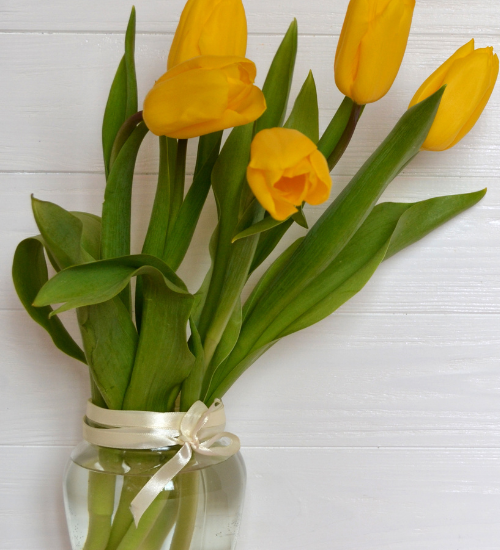
Tulips have a natural looseness that makes them lovely in a vase, but that same movement can make an arrangement look lopsided if the stems are simply dropped in. A short vase is a good choice for a table centerpiece, desk, or sideboard because it keeps the flowers close together and easy to see.
If you are learning how to arrange tulips in a short vase, focus on three things: a clean vessel, a manageable stem length, and a shape that looks balanced from more than one angle. You do not need floral foam or complicated mechanics. A few simple adjustments can turn a supermarket bunch into a relaxed arrangement that looks considered rather than crowded.
Pick the right short vase
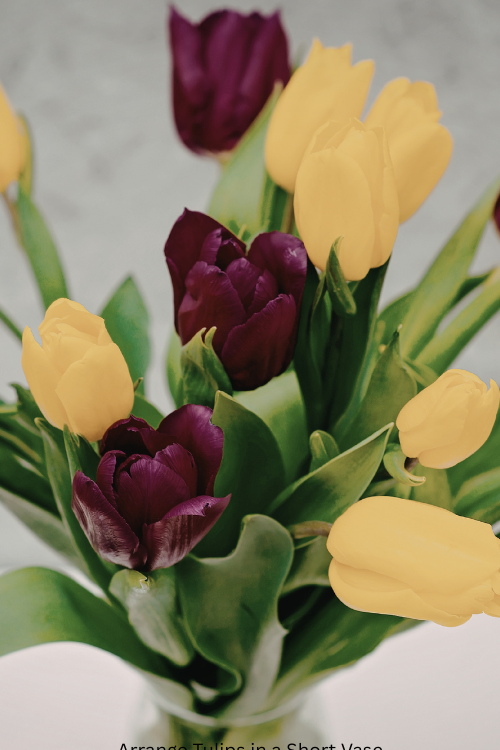
A short vase does not need to be squat or wide. Choose one with a stable base and an opening that supports the stems without squeezing them together. A vase that is too wide may let tulips lean outward until they fall over the rim; one with an extremely narrow neck may crush stems and make it difficult to arrange them naturally.
As a starting point, look for a vessel that holds the stems in a loose cluster while leaving enough room to add water and remove individual flowers. The tulips should stand securely, but they do not need to form a tight bundle. If the vase is very wide, use fewer flowers or place a loose grid of clear floral tape across the opening to create gentle support.
Consider where the arrangement will sit. A low centerpiece should not block conversation across a table. For a dining table, test the arrangement from a seated position before you finish. A shorter, broader shape often works well for this setting, while a slightly taller cluster may suit a side table or console.
Prepare the tulips first
Start with a clean vase. Wash it with hot, soapy water and rinse it well; a clean vessel helps avoid leftover debris in the water.
Remove any leaves that would sit below the waterline. Leaves left underwater can break down and dirty the water more quickly. Hold each stem gently, since tulip stems can bend or bruise if handled roughly.
Trim the bottom of each stem with a sharp, clean knife or flower snips. Make a fresh cut so the stem ends are open to water. There is no need to cut every stem to the same length at first; leave them a little longer and make a second adjustment as you place them. Add clean water and commercial flower food according to the packet directions if you have it. Avoid guessing at homemade mixtures, since an incorrect concentration can do more harm than good.
Decide on color and mood
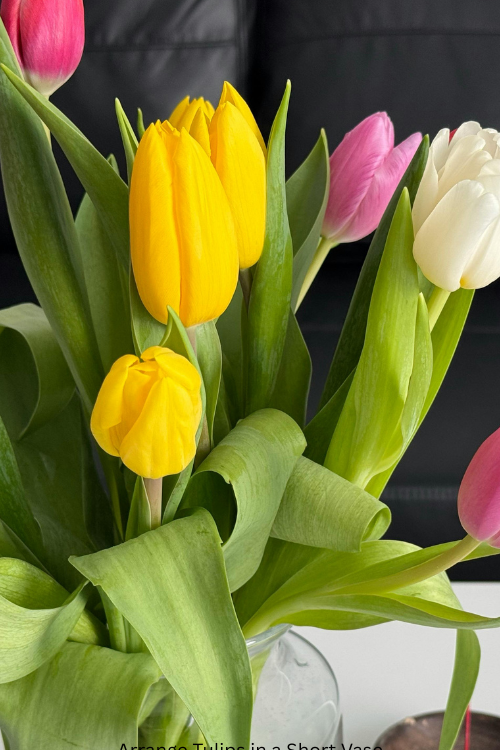
How to Arrange Tulips in a Short Vase
Tulips can make an arrangement feel crisp, playful, romantic, or dramatic depending on color and shape. Before arranging, spread the flowers out and decide on a simple palette.
- One-color bunch: Clean and graphic, especially in white, red, or saturated pink.
- Two-color pairing: Use neighboring colors, such as pale pink and deeper rose, for a gentle transition.
- Contrasting colors: Pair warm yellow with purple or orange with pink for a more energetic look.
- Mixed spring palette: Combine several colors, but repeat each shade enough that the arrangement feels intentional.
If your tulips have different bloom sizes or opening stages, use that variety as part of the design. Tighter buds add structure, while more open blooms create a softer, fuller look. Rotate the bunch as you work so one color does not end up hidden at the back.
Build the arrangement in your hand
For the easiest placement, hold a small group of stems in one hand as if your hand were the vase. Add tulips one at a time, turning the bunch slightly after each stem. Let some flowers sit a little higher and others lower. This gives the arrangement a rounded outline instead of a flat top.
Begin with the tulips you want near the center, then add stems around them. Keep the flower heads at varied heights, but avoid placing every tallest stem on one side. If one flower is much shorter than the rest, place it near the front or toward the center so its bloom remains visible.
Once you like the shape, hold the bunch beside the vase and mark the point where the stems should be trimmed. Leave enough stem length for the flowers to rise above the rim while remaining supported. Cut the stems, set the bunch in the vase, and step back. Adjust one stem at a time rather than pulling out the whole arrangement.
Shape tulips for a short vase
A short vase makes stem length especially important. If the stems are too long, the flowers may droop far over the rim or become top-heavy. If they are cut too short, the blooms can look crowded at the opening. Trim gradually: remove a small amount, place the flowers in the vase, and assess the shape before cutting again.
Aim for a loose dome or gentle fan. Allow a few tulips to lean slightly outward, but keep enough stems inside the vase to support the group. If the flowers lean heavily to one side, rotate the vase or redistribute stems instead of cutting them all shorter.
Tulips continue to respond to their surroundings after they are cut, so do not expect every stem to hold exactly the same position. Check the arrangement later in the day and make small corrections if the flowers shift. If a stem bends too far, recut it slightly shorter and place it where the vase gives it more support.
Add greenery, or keep it simple
A tulip-only arrangement is often the best choice when you want to show off the clean lines of the flowers. If you do add greenery, choose just a few stems that do not overwhelm the tulip heads. Foliage should support the shape, not turn the display into a dense mound.
Good fillers are not required. If you have greenery from a safe, clean source, remove any leaves that would rest in the water and use it sparingly. Avoid adding garden plants unless you can identify them and know they are suitable for indoor display. Keep the arrangement away from food-preparation surfaces if you are unsure about plant residues or treatments.
Care for the arrangement
Place the vase away from direct heat, strong sunlight, and drafts. Check the water daily and top it up or replace it when it looks cloudy. Remove leaves or petals that fall into the water. If you change the water, rinse the vase and make a fresh stem cut if the ends look soft or discolored.
Tulips are not rigid flowers, so a little movement is part of their appeal. They may bend toward light or change position as they open. Rotate the vase periodically for a more even display, and trim a stem only if it has become too tall or disrupts the overall shape.
Troubleshooting a droopy or crowded look
The flowers fall outward: The vase opening may be too wide, or the stems may be too long. Tighten support with a clear tape grid or trim a little and regroup the stems.
The blooms look packed together: Remove a few stems or spread the flowers more evenly around the vase. A short arrangement does not need every tulip in the bunch.
The arrangement looks uneven: Rotate it and move the tallest blooms toward the center. Avoid forcing all the heads to face the same direction.
The water gets cloudy: Replace it, wash the vase, and remove submerged foliage. Clean water is more useful than adding extra flower food.
The flowers appear tired: Check water level, recut the stems, and move the vase away from heat. Individual flowers age at different rates, so remove spent blooms to keep the remaining ones looking fresh.
A small finishing routine
To recap how to arrange tulips in a short vase, clean the vase, remove leaves below the waterline, trim stems gradually, and build a loose shape before placing the flowers. A calm color palette and a little space between blooms will usually look more polished than an overfilled vase.
Take one final look from the angle where the arrangement will be seen most often. Make sure the vase is stable, the flowers are not blocking a view, and the water is clean. Then let the tulips do what they do best: bring color and movement to the room without requiring a complicated design.
Last modified: October 18, 2026
