

I’ve always believed that the best way to experience a country’s culture is through its food.
And when it comes to Italian cuisine, my goodness, there’s something very magical about how a few simple ingredients can transform into extraordinary dishes.
After spending three summers in Tuscany with my grandmother, I am excited to share these 10 authentic Italian recipes that have become staples in my kitchen.
These aren’t just recipes; they’re stories, traditions, and little pieces of Italy that I’ve carried with me over the years.
Jump to Your Favorite Recipe
Click on any recipe below to skip directly to it:
1. Classic Margherita Pizza – The Heart of Italian Cuisine
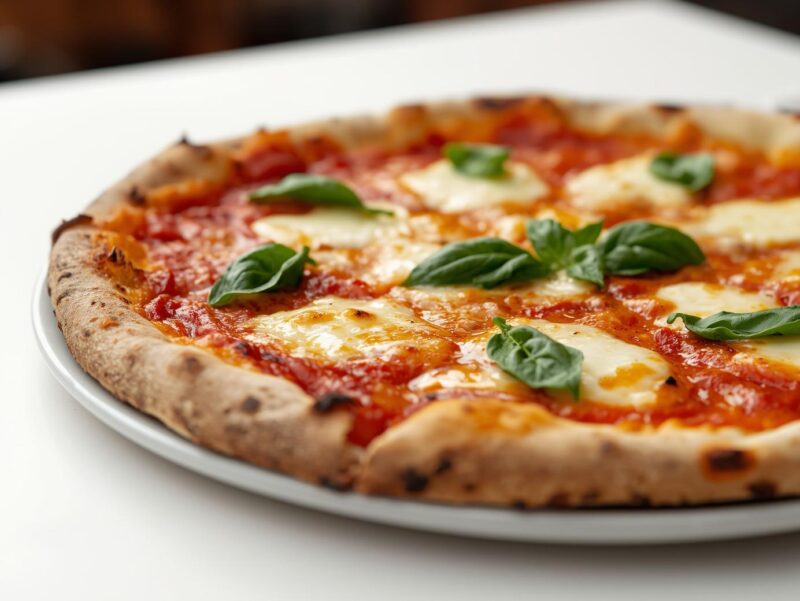
There’s nothing that represents Italian cuisine better than a perfectly executed Margherita pizza.
I am always amazed by how this seemingly simple combination of ingredients creates such a profound flavor experience.
The key to an authentic Margherita, however, lies in the quality of ingredients and the technique.
After numerous attempts and failures, I’ve finally mastered the art of creating that perfect thin, chewy crust with a slightly charred edge.
| Ingredients | Quantity | Notes |
| 00 Flour | 500g | Italian flour for best results |
| Water | 325ml | Lukewarm |
| Salt | 10g | Fine sea salt |
| Active dry yeast | 3g | About 1 tsp |
| San Marzano tomatoes | 400g can | Crushed by hand |
| Fresh mozzarella | 200g | Torn into pieces |
| Fresh basil leaves | 10-12 leaves | Add after baking |
| Extra virgin olive oil | 2 tbsp | High quality |
Step-by-Step Instructions:
- Mix flour and salt in a large bowl. In a separate bowl, dissolve yeast in lukewarm water and let sit for 5 minutes.
- Make a well in the flour and pour in the yeast mixture. Gradually incorporate the flour until a dough forms.
- Knead the dough on a floured surface for 10 minutes until smooth and elastic.
- Place in an oiled bowl, cover, and let rise for 2 hours or until doubled in size.
- Preheat your oven to its highest setting (ideally 500°F/260°C) with a pizza stone if you have one.
- Divide dough into 2-3 balls. Roll or stretch each into a thin circle.
- Top with crushed tomatoes, a drizzle of olive oil, and torn mozzarella.
- Bake for 5-7 minutes until the crust is golden and the cheese is bubbling.
- Remove from oven, add fresh basil leaves, another drizzle of olive oil, and serve immediately.
2. Authentic Carbonara – No Cream, All Flavor
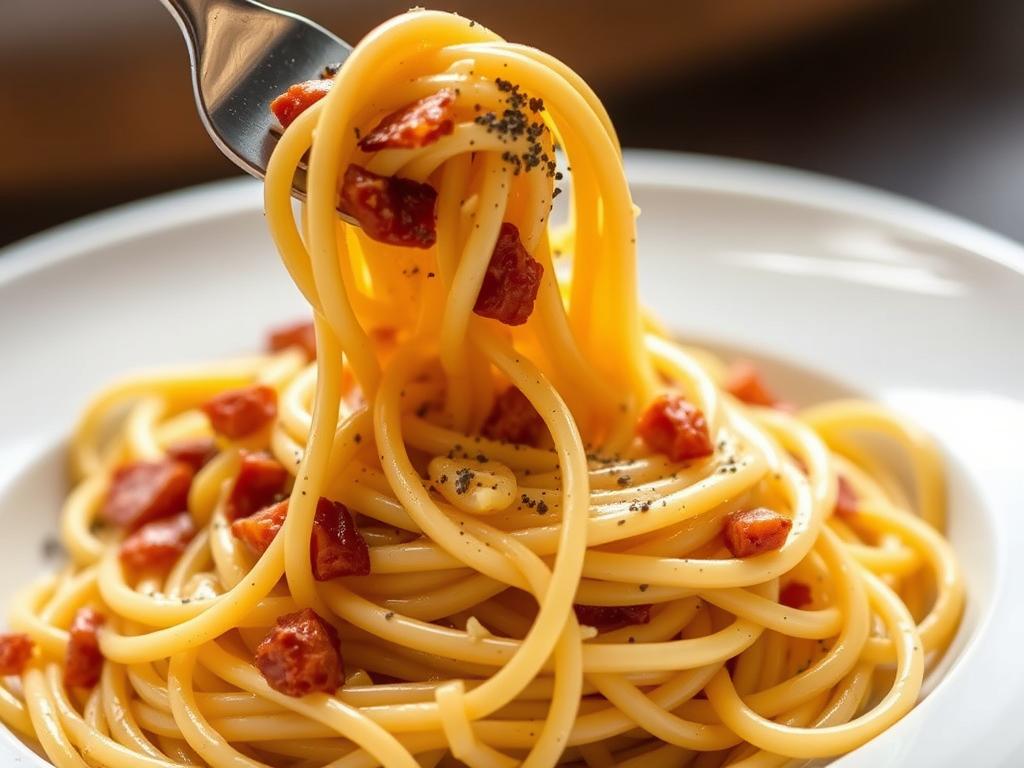
Let me tell you a secret: real Italian carbonara contains no cream!
I discovered this during my first trip to Rome, and I was shocked because I had always made it with cream.
The authentic version relies on eggs and cheese to create that silky, rich sauce that coats every strand of pasta.
It’s one of those dishes that’s deceptively simple but requires technique to get right.
Nonetheless, once you master it, this carbonara will become your go-to comfort food on busy weeknights because it comes together in just 15 minutes.
| Ingredients | Quantity | Notes |
| Spaghetti | 400g | High-quality dried pasta |
| Guanciale (or pancetta) | 150g | Diced |
| Eggs | 3 whole + 2 yolks | Room temperature |
| Pecorino Romano | 100g | Freshly grated |
| Black pepper | 2 tsp | Freshly ground |
| Salt | For pasta water | Be generous |
Step-by-Step Instructions:
- Bring a large pot of generously salted water to a boil and cook spaghetti until al dente.
- While pasta cooks, sauté the guanciale in a dry pan over medium heat until crispy and the fat has rendered, about 5-7 minutes.
- In a bowl, whisk together eggs, egg yolks, grated Pecorino Romano, and plenty of freshly ground black pepper.
- Reserve 1 cup of pasta water, then drain the pasta.
- Working quickly, add the hot pasta to the pan with guanciale and toss to coat in the fat.
- Remove pan from heat, add a splash of pasta water, then quickly pour in the egg mixture, stirring constantly.
- The residual heat will cook the eggs into a creamy sauce. If too thick, add more pasta water.
- Serve immediately with extra Pecorino Romano and black pepper.
The secret to perfect carbonara is timing. You want the pasta hot enough to cook the eggs, but not so hot that they scramble. I always remove the pan from heat before adding the egg mixture.
3. Lasagna Bolognese – Sunday Dinner Perfection
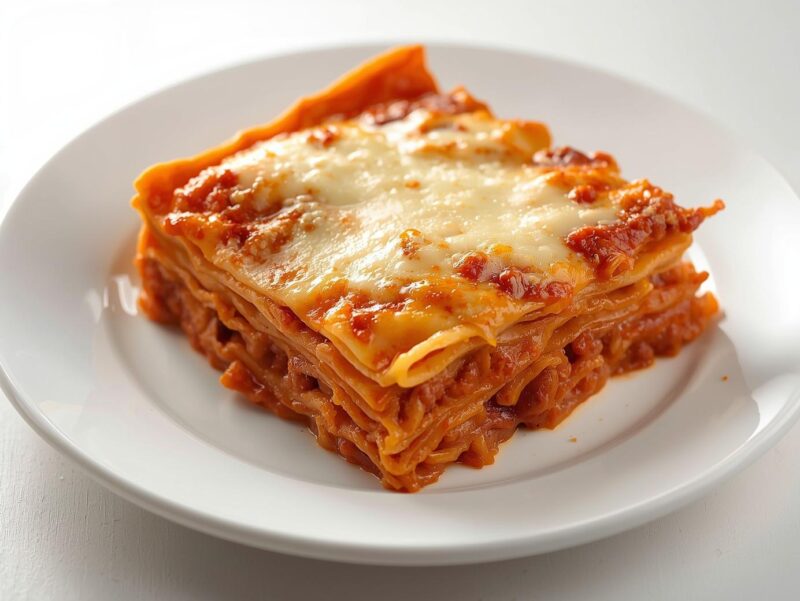
There’s something truly special about a properly made lasagna bolognese.
It’s the dish I always prepare when I want to impress guests or comfort my family on a Sunday afternoon.
Unlike American-style lasagna, authentic Italian lasagna uses béchamel sauce instead of ricotta, creating silky layers that melt in your mouth.
The bolognese sauce is the star here, and I am not exaggerating when I say it needs to simmer for hours.
Trust me, though the rich, complex flavor is absolutely worth the wait.
| Ingredients | Quantity | Notes |
| Lasagna sheets | 12-15 sheets | Fresh or dried (no-boil) |
| Ground beef | 500g | 80/20 lean-to-fat ratio |
| Ground pork | 250g | For richness |
| Pancetta | 100g | Finely diced |
| Onion | 1 large | Finely diced |
| Carrot | 2 medium | Finely diced |
| Celery | 2 stalks | Finely diced |
| Tomato paste | 2 tbsp | Concentrated |
| Crushed tomatoes | 800g | San Marzano if possible |
| Red wine | 1 cup | Dry, like Chianti |
| Milk | 1 cup | Whole milk |
| Butter | 50g | For béchamel |
| All-purpose flour | 50g | For béchamel |
| Milk | 750ml | For béchamel |
| Nutmeg | 1/4 tsp | Freshly grated |
| Parmigiano-Reggiano | 200g | Freshly grated |
Step-by-Step Instructions:
For the Bolognese:
- Heat olive oil in a large pot over medium heat. Add pancetta and cook until fat renders.
- Add onion, carrot, and celery (soffritto) and sauté until softened, about 5-7 minutes.
- Add ground beef and pork, breaking it up with a spoon. Cook until no longer pink.
- Add tomato paste and cook for 2 minutes until darkened.
- Pour in red wine and simmer until reduced by half.
- Add crushed tomatoes, a bay leaf, and season with salt and pepper.
- Reduce heat to low and simmer, partially covered, for at least 3 hours. Stir occasionally.
- In the last 30 minutes, stir in milk and continue to simmer.
For the Béchamel:
- Melt butter in a saucepan over medium heat.
- Add flour and whisk continuously for 2 minutes to make a roux.
- Gradually whisk in warm milk to prevent lumps.
- Cook, stirring constantly, until thickened enough to coat the back of a spoon.
- Season with salt, pepper, and freshly grated nutmeg.
Assembly:
- Preheat oven to 375°F (190°C).
- Spread a thin layer of béchamel on the bottom of a 9×13 inch baking dish.
- Add a layer of lasagna sheets, then bolognese, béchamel, and a sprinkle of Parmigiano-Reggiano.
- Repeat layers until all ingredients are used, finishing with béchamel and a generous layer of cheese.
- Bake for 40-45 minutes until golden and bubbling.
- Let rest for 15 minutes before serving to set the layers.
4. Risotto alla Milanese – Liquid Gold in a Bowl

Risotto alla Milanese was the first risotto I ever learned to make, and it remains my favorite because of its elegant simplicity.
The saffron gives it a gorgeous golden color and subtle floral aroma that pairs beautifully with the rich, creamy rice.
I am always amazed by how a handful of ingredients can create something so luxurious.
The key to perfect risotto, however, is patience you cannot rush the process of slowly adding broth and stirring.
This meditative cooking process is part of what makes Italian cuisine so special to me.
| Ingredients | Quantity | Notes |
| Arborio or Carnaroli rice | 300g | High-starch rice varieties |
| Chicken or vegetable broth | 1.5 liters | Kept warm on stove |
| Saffron threads | 1 generous pinch | Soaked in 2 tbsp warm broth |
| Shallot | 1 medium | Finely diced |
| White wine | 120ml | Dry |
| Butter | 50g + 25g | Divided (for cooking and finishing) |
| Parmigiano-Reggiano | 75g | Freshly grated |
| Olive oil | 2 tbsp | Extra virgin |
| Salt and pepper | To taste | Be careful with salt as the cheese and broth add saltiness |
Step-by-Step Instructions:
- In a small bowl, steep saffron threads in 2 tablespoons of warm broth for 10 minutes.
- In a heavy-bottomed pot or Dutch oven, heat olive oil and 50g butter over medium heat.
- Add shallot and sauté until translucent, about 2-3 minutes.
- Add rice and toast for 2-3 minutes, stirring constantly, until the edges become translucent.
- Pour in wine and stir until completely absorbed.
- Begin adding warm broth one ladle at a time, stirring frequently and waiting until each addition is almost fully absorbed before adding more.
- After about 15 minutes of adding broth, stir in the saffron with its soaking liquid.
- Continue adding broth and stirring until rice is al dente but creamy, about 18-20 minutes total.
- Remove from heat and vigorously stir in remaining 25g butter and Parmigiano-Reggiano.
- Cover and let rest for 2 minutes.
- Serve immediately, garnished with more cheese if desired.
Pro Tip: The perfect risotto should slowly spread on the plate when served—not stand up like a mountain (too dry) or run like soup (too wet). Italians call this consistency “all’onda” or “like a wave.”
5. Osso Buco – Melt-in-Your-Mouth Veal Shanks
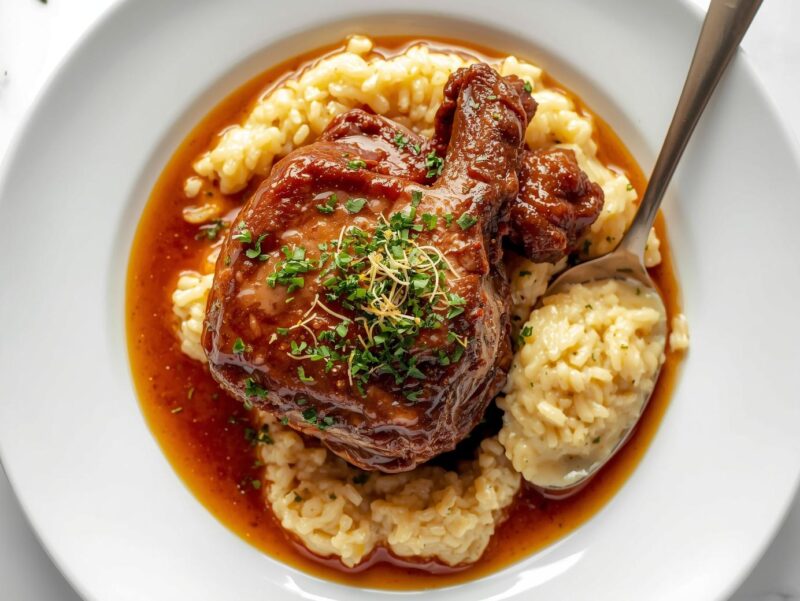
Osso Buco is the ultimate Italian comfort food that always impresses guests.
The name means “bone with a hole,” referring to the marrow-filled bone in the center of the veal shank.
I first attempted this dish after watching my uncle prepare it during a family gathering in Milan.
The slow-braising process transforms the tough veal shanks into melt-in-your-mouth meat, while the marrow adds incredible richness to the sauce.
It’s not a weeknight meal because of the long cooking time, but for special occasions, nothing beats this showstopper.
| Ingredients | Quantity | Notes |
| Veal shanks | 4 pieces (about 350g each) | Cut 2-inches thick |
| All-purpose flour | 1/2 cup | For dredging |
| Olive oil | 3 tbsp | Extra virgin |
| Onion | 1 large | Finely diced |
| Carrot | 2 medium | Finely diced |
| Celery | 2 stalks | Finely diced |
| Garlic | 4 cloves | Minced |
| Dry white wine | 1 cup | Such as Pinot Grigio |
| Chicken or veal stock | 2 cups | Homemade preferred |
| Crushed tomatoes | 1 cup | San Marzano if possible |
| Bay leaves | 2 | Fresh or dried |
| Fresh thyme | 4 sprigs | Or 1 tsp dried |
| Fresh rosemary | 2 sprigs | Or 1/2 tsp dried |
| Lemon zest | 2 tsp | For gremolata |
| Fresh parsley | 1/4 cup | Finely chopped, for gremolata |
| Garlic | 1 clove | Finely minced, for gremolata |
Step-by-Step Instructions:
- Preheat oven to 325°F (165°C).
- Tie kitchen string around each veal shank to help maintain their shape during cooking.
- Season veal shanks generously with salt and pepper, then dredge in flour, shaking off excess.
- Heat olive oil in a large Dutch oven over medium-high heat. Brown veal shanks on all sides, about 8 minutes total. Transfer to a plate.
- Reduce heat to medium and add onion, carrot, and celery to the pot. Sauté until softened, about 5 minutes.
- Add garlic and cook for 1 minute until fragrant.
- Pour in wine and scrape up any browned bits from the bottom of the pot. Simmer until reduced by half.
- Add stock, crushed tomatoes, bay leaves, thyme, and rosemary. Bring to a simmer.
- Return veal shanks to the pot, along with any accumulated juices. The liquid should come about two-thirds up the sides of the meat.
- Cover tightly and transfer to the oven. Braise for 2 to 2.5 hours, turning shanks once halfway through, until meat is very tender and almost falling off the bone.
- While the osso buco is cooking, make the gremolata by combining lemon zest, parsley, and garlic in a small bowl.
- When done, carefully transfer shanks to a serving platter. Remove and discard strings.
- If the sauce is too thin, simmer it on the stovetop until slightly reduced.
- Pour sauce over shanks, sprinkle with gremolata, and serve with risotto or polenta.
6. Classic Tiramisu – Italy’s Most Beloved Dessert
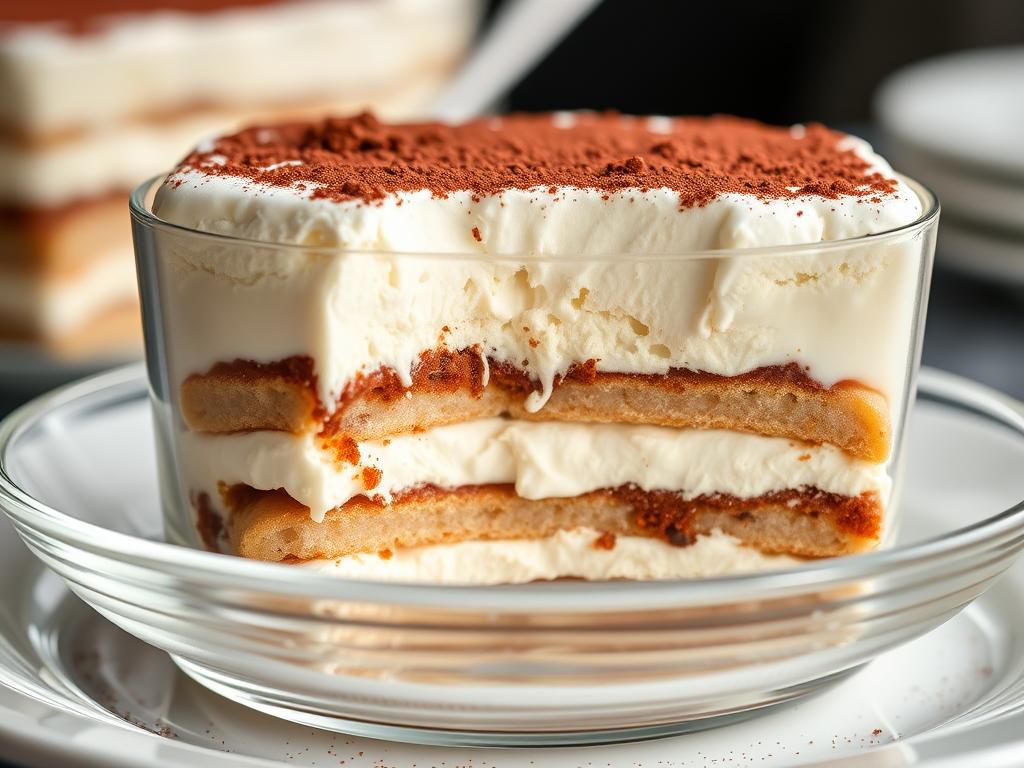
Tiramisu, which translates to “pick me up,” is the perfect ending to any Italian meal.
I learned this recipe from my grandmother, who insisted on using only the freshest eggs and authentic Italian mascarpone.
The contrast between the coffee-soaked ladyfingers and the light, creamy mascarpone mixture creates a dessert that’s rich yet not overly sweet.
Because this dessert contains raw eggs, I am always careful to use the freshest eggs possible, though you can also use pasteurized eggs if you’re concerned about safety.
| Ingredients | Quantity | Notes |
| Egg yolks | 6 large | Fresh, room temperature |
| Granulated sugar | 3/4 cup | Divided |
| Mascarpone cheese | 500g | Room temperature |
| Egg whites | 3 large | Fresh, room temperature |
| Strong espresso | 1 1/2 cups | Cooled |
| Marsala wine | 2 tbsp | Optional |
| Ladyfingers | 24-30 | Savoiardi type |
| Unsweetened cocoa powder | For dusting | High quality |
| Dark chocolate | 50g | Finely grated, optional |
Step-by-Step Instructions:
- In a large bowl, beat egg yolks with 1/2 cup sugar until pale and thick, about 3-4 minutes.
- Add mascarpone and beat until smooth and well combined.
- In a separate bowl, beat egg whites until foamy. Gradually add remaining 1/4 cup sugar and continue beating until stiff peaks form.
- Gently fold egg whites into mascarpone mixture, being careful not to deflate the whites.
- Mix cooled espresso with Marsala wine (if using) in a shallow dish.
- Quickly dip each ladyfinger into the coffee mixture (about 1 second per side) and arrange in a single layer in an 8×8 inch baking dish or trifle bowl.
- Spread half of the mascarpone mixture over the ladyfingers.
- Repeat with another layer of dipped ladyfingers and the remaining mascarpone mixture.
- Cover and refrigerate for at least 6 hours, preferably overnight.
- Just before serving, dust generously with cocoa powder and sprinkle with grated chocolate if desired.
Safety Note: This recipe contains raw eggs. If you’re concerned about consuming raw eggs, use pasteurized eggs or try a cooked zabaglione method where you heat the egg yolks with sugar over a double boiler until they reach 160°F before proceeding with the recipe.
7. Tuscan Panzanella – Summer in a Bowl
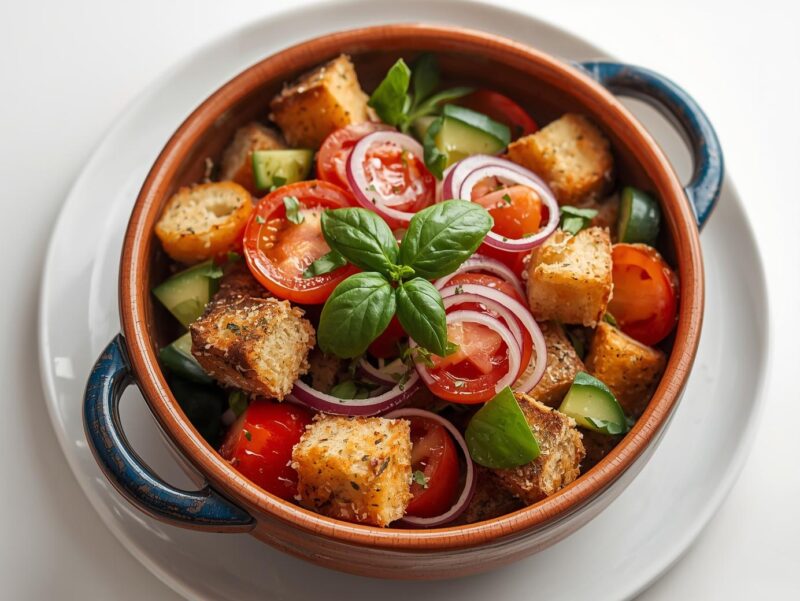
Panzanella is a rustic Tuscan salad that transforms stale bread into something magical.
I discovered this dish during a summer in Florence, and it quickly became my go-to lunch on hot days.
What I love about panzanella is how it celebrates simple, high-quality ingredients.
The juicy tomatoes soften the bread just enough while maintaining some texture, and the vinaigrette brings everything together with bright, tangy notes.
This is truly summer in a bowl and a perfect example of Italy’s waste-not philosophy.
| Ingredients | Quantity | Notes |
| Crusty Italian bread | 1/2 loaf (about 250g) | Day-old or slightly stale |
| Ripe tomatoes | 4-5 medium | Mixed varieties if possible |
| English cucumber | 1 medium | Partially peeled |
| Red onion | 1/2 medium | Thinly sliced |
| Fresh basil leaves | 1 cup | Torn or roughly chopped |
| Extra virgin olive oil | 1/3 cup | High quality |
| Red wine vinegar | 3 tbsp | Good quality |
| Garlic | 1 clove | Minced or grated |
| Dijon mustard | 1 tsp | Optional |
| Capers | 2 tbsp | Drained, optional |
| Salt and pepper | To taste | Be generous |
Step-by-Step Instructions:
- Preheat oven to 350°F (175°C).
- Cut bread into 1-inch cubes. Spread on a baking sheet and toast in the oven until dry and lightly golden, about 10-15 minutes. Alternatively, you can leave bread out overnight to dry naturally.
- Cut tomatoes into bite-sized chunks and place in a colander over a bowl. Sprinkle with a pinch of salt and let drain for 15 minutes to collect juices.
- In a small bowl, whisk together olive oil, red wine vinegar, garlic, Dijon mustard (if using), salt, and pepper to make the vinaigrette.
- Cut cucumber into half-moons or chunks. Thinly slice red onion and soak in cold water for 10 minutes to reduce sharpness, then drain.
- In a large bowl, combine bread cubes, drained tomatoes (reserve the juice), cucumber, red onion, and capers if using.
- Add the reserved tomato juice to the vinaigrette and whisk again.
- Pour the vinaigrette over the salad and toss gently to combine.
- Let the salad sit for at least 30 minutes at room temperature, tossing occasionally to allow the bread to absorb the flavors.
- Just before serving, add torn basil leaves and toss gently. Adjust seasoning if needed.
The key to great panzanella is using bread that’s stale but not rock-hard, and tomatoes that are perfectly ripe and juicy. The bread should soften but still maintain some texture.
8. Pasta al Pomodoro – The Essence of Italian Simplicity
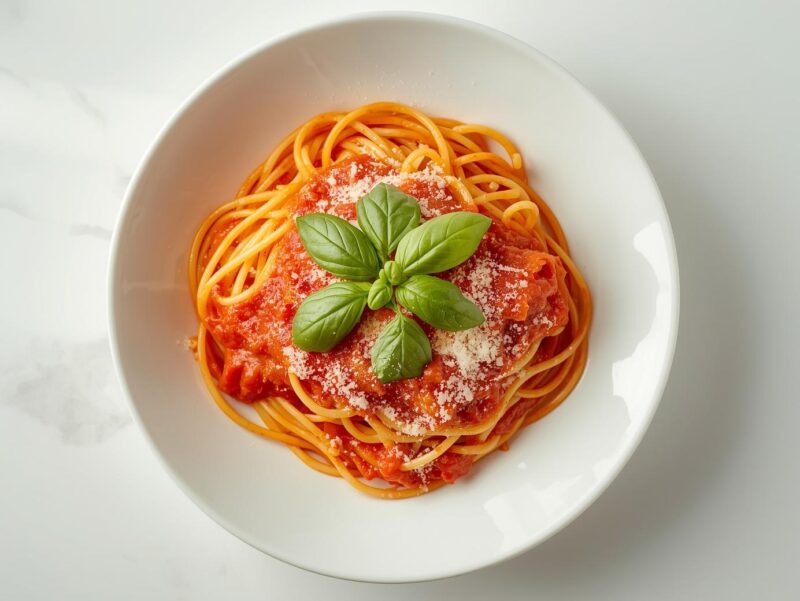
Pasta al Pomodoro might be the most essential Italian recipe everyone should master.
It’s deceptively simple just pasta and tomato sauce but when made with care and quality ingredients, it becomes something truly special.
I make this dish at least once a week because it’s quick, satisfying, and never fails to transport me back to Italy.
The key is using San Marzano tomatoes and finishing the pasta in the sauce to create that perfect marriage of flavors. This is comfort food at its finest.
| Ingredients | Quantity | Notes |
| Spaghetti or other pasta | 400g | High-quality dried pasta |
| San Marzano tomatoes | 800g can | Whole, crushed by hand |
| Garlic | 4 cloves | Thinly sliced |
| Fresh basil | 1 small bunch | Divided (stems and leaves) |
| Extra virgin olive oil | 1/4 cup | Plus more for finishing |
| Red pepper flakes | 1/4 tsp | Optional |
| Salt | To taste | For pasta water and sauce |
| Parmigiano-Reggiano | For serving | Freshly grated |
Step-by-Step Instructions:
- Separate basil leaves from stems. Reserve leaves for garnish and finely chop stems.
- In a large skillet, heat olive oil over medium heat. Add sliced garlic, chopped basil stems, and red pepper flakes if using. Cook gently until garlic is fragrant but not browned, about 2 minutes.
- Add hand-crushed tomatoes with their juice. Season with salt and bring to a simmer.
- Reduce heat to medium-low and simmer sauce, stirring occasionally, until slightly thickened, about 20-25 minutes.
- Meanwhile, bring a large pot of generously salted water to a boil. Cook pasta until very al dente, about 2 minutes less than package directions.
- Reserve 1 cup of pasta cooking water, then drain pasta.
- Transfer pasta directly to the sauce and add 1/2 cup of the reserved pasta water. Increase heat to medium-high.
- Cook, tossing constantly and adding more pasta water as needed, until the sauce coats the pasta and the pasta is perfectly al dente, about 2 minutes.
- Remove from heat and stir in a handful of torn basil leaves and a drizzle of olive oil.
- Serve immediately, topped with freshly grated Parmigiano-Reggiano.
Chef’s Secret: The starchy pasta water is crucial for creating a silky sauce that perfectly coats each strand of pasta. Don’t skip this step!
9. Saltimbocca alla Romana – Veal Cutlets That “Jump in the Mouth”
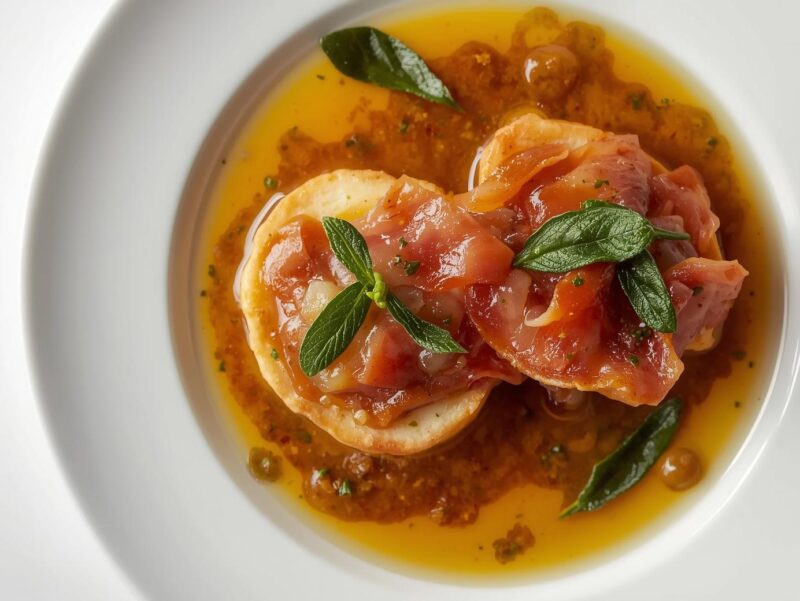
Saltimbocca alla Romana literally means “jump in the mouth,” and that’s exactly what these flavors do.
I first tried this dish at a small trattoria in Rome and was blown away by how the simple combination of veal, prosciutto, and sage created such a harmonious blend of flavors.
The best part is that it cooks in minutes, making it perfect for a special weeknight dinner.
The white wine sauce brings everything together with a bright, silky finish that’s irresistible.
| Ingredients | Quantity | Notes |
| Veal cutlets | 8 thin slices (about 600g total) | Pounded to 1/8-inch thickness |
| Prosciutto | 8 thin slices | High quality |
| Fresh sage leaves | 16 leaves | Large, fresh leaves |
| All-purpose flour | For dredging | Just a light coating |
| Butter | 3 tbsp | Divided |
| Olive oil | 2 tbsp | Extra virgin |
| Dry white wine | 1/2 cup | Such as Pinot Grigio |
| Chicken broth | 1/4 cup | Low sodium |
| Lemon | 1/2 | Juice only |
| Salt and pepper | To taste | Go easy on salt as prosciutto is salty |
| Toothpicks | 8-16 | For securing |
Step-by-Step Instructions:
- Lay veal cutlets flat and season lightly with pepper (go easy on salt as prosciutto is salty).
- Place a slice of prosciutto on each cutlet, trimming if necessary to fit.
- Place 2 sage leaves on top of each prosciutto slice.
- Secure the prosciutto and sage to the veal using toothpicks.
- Lightly dredge each cutlet in flour, shaking off excess.
- Heat 2 tablespoons butter and olive oil in a large skillet over medium-high heat.
- Once hot, add the veal cutlets prosciutto-side down. Cook for 2 minutes until golden.
- Flip and cook for another 1-2 minutes. Work in batches if necessary to avoid overcrowding.
- Transfer cutlets to a warm plate and cover loosely with foil.
- Add wine to the skillet and scrape up any browned bits. Simmer until reduced by half.
- Add chicken broth and lemon juice, and simmer for 2 minutes.
- Swirl in remaining 1 tablespoon butter to create a silky sauce.
- Return veal to the skillet just to heat through, about 30 seconds.
- Remove toothpicks, plate the saltimbocca, and spoon sauce over the top.
- Serve immediately, garnished with additional sage leaves if desired.
10. Sicilian Cannoli – Crispy Shells with Sweet Ricotta Filling

No collection of authentic Italian recipes would be complete without cannoli, Sicily’s most famous dessert.
I still remember my first bite of a freshly filled cannoli in Palermo the contrast between the crispy shell and the creamy, sweet ricotta filling was nothing short of magical.
While making the shells from scratch is a bit of a project, the results are well worth it.
However, I won’t judge if you use store-bought shells just make sure to fill them right before serving to maintain that perfect crispy-creamy contrast.
| Ingredients | Quantity | Notes |
| For the Shells: | ||
| All-purpose flour | 2 cups | Plus more for dusting |
| Granulated sugar | 2 tbsp | |
| Cinnamon | 1/2 tsp | Ground |
| Salt | 1/4 tsp | |
| Unsalted butter | 2 tbsp | Cold, cut into small pieces |
| Egg | 1 large | |
| Marsala wine | 3 tbsp | Or white wine vinegar |
| Water | As needed | To form dough |
| Vegetable oil | For frying | Enough for 2-inch depth |
| For the Filling: | ||
| Ricotta cheese | 2 cups (500g) | Drained overnight if very wet |
| Powdered sugar | 3/4 cup | Plus more for dusting |
| Vanilla extract | 1 tsp | Or orange blossom water |
| Cinnamon | 1/4 tsp | Ground |
| Mini chocolate chips | 1/3 cup | Optional |
| Pistachios | 1/4 cup | Chopped, for garnish |
| Candied orange peel | 2 tbsp | Finely chopped, optional |
Step-by-Step Instructions:
For the Shells:
- In a food processor or large bowl, combine flour, sugar, cinnamon, and salt.
- Add butter and pulse or cut in with a pastry cutter until mixture resembles coarse crumbs.
- Add egg and Marsala wine, pulsing or mixing until dough begins to come together.
- If needed, add water, one tablespoon at a time, until dough forms a ball.
- Knead dough on a floured surface for 2-3 minutes until smooth and elastic.
- Wrap in plastic and let rest at room temperature for 30 minutes.
- On a floured surface, roll dough out very thin (about 1/16 inch).
- Cut into 4-inch circles using a cookie cutter or glass.
- Wrap each circle around a cannoli form, sealing the overlapping edges with a bit of egg white.
- Heat oil to 350°F (175°C) in a deep pot or fryer.
- Fry shells 2-3 at a time until golden brown, about 2-3 minutes.
- Carefully remove with tongs and drain on paper towels.
- When cool enough to handle, gently slide shells off the forms.
- Let shells cool completely before filling.
For the Filling:
- If ricotta is very wet, drain in a fine-mesh sieve lined with cheesecloth overnight in the refrigerator.
- In a large bowl, beat ricotta with powdered sugar, vanilla, and cinnamon until smooth.
- Fold in chocolate chips and/or candied orange peel if using.
- Transfer filling to a piping bag fitted with a large round tip.
- Just before serving, pipe filling into each end of the cannoli shells.
- Dip ends in chopped pistachios if desired.
- Dust with powdered sugar and serve immediately.
Important: Only fill cannoli shells right before serving to prevent them from becoming soggy. If you need to prepare in advance, keep the shells and filling separate until ready to serve.
Want All 10 Authentic Italian Recipes in One Place?
I’ve created a printable PDF with all 10 authentic Italian recipes from this article, including detailed instructions, ingredient lists, and my personal tips for each dish.
Bringing Italy to Your Kitchen
These 10 authentic Italian recipes are more than just instructions they’re a gateway to experiencing the heart and soul of Italian cuisine.
I am constantly amazed by how these dishes, perfected over generations, can transport me back to the cobblestone streets of Rome or the sunny countryside of Tuscany with just one bite.
The beauty of Italian cooking lies in its simplicity and respect for quality ingredients.
Whether you’re making a quick pasta al pomodoro on a busy weeknight or spending a leisurely Sunday preparing lasagna bolognese, these recipes will bring the authentic flavors of Italy into your home.
I encourage you to try them all, make them your own, and share them with the people you love.
Because that’s what Italian food is all about bringing people together around the table to share not just a meal, but an experience.
Buon appetito!